






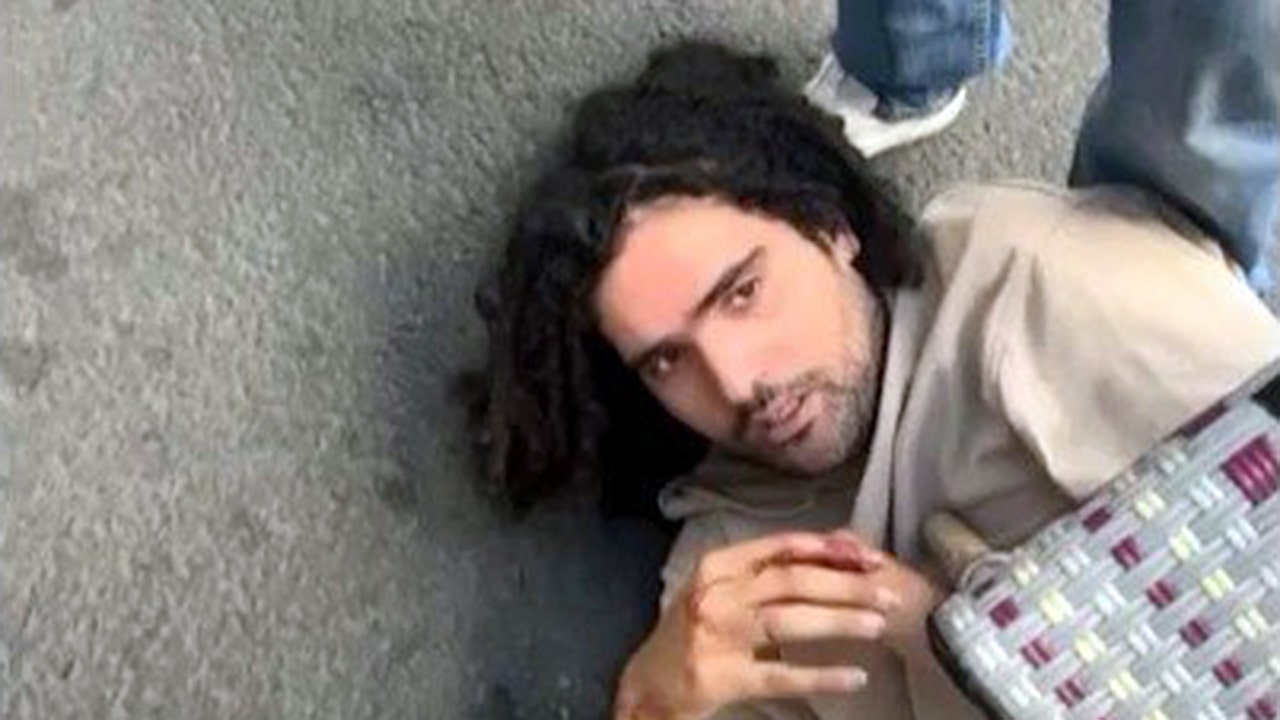
The fragile peace of a Parisian afternoon was abruptly shattered in the vibrant Porte de Clichy district when a horrifying scene of violence unfolded at the popular Two Domes brewery. A thirty-one-year-old man, armed with a knife in each hand, lunged at innocent bystanders in what became a frantic struggle for survival. Among the three women targeted was a pregnant victim whose life and unborn child were suddenly cast into grave peril by the assailant’s sudden and predatory attack. As panic rippled through the outdoor seating, the collective instinct of ordinary citizens took over, transforming terrified onlookers into protectors. A group of brave bystanders rushed the attacker, tackling him to the pavement and holding him down through sheer force of will. Pinning him to the cold concrete, they were met with a chilling exclamation from the suspect, who claimed that his violent actions were divinely ordained, shouting to the crowds that it was Allah who had commanded him to carry out the assault. In the immediate aftermath, as sirens wailed in the distance and emergency crews raced to treat those clinging to life, the community was left to grapple with the raw trauma of an ordinary day turned into a bloody nightmare, leaving two victims in critical condition and a neighborhood paralyzed by fear.
This shocking incident in the heart of France did not occur in a vacuum; rather, it represents a dark thread in a tapestry of recent violence that has left several major European cities reeling in anguish. Just days before the Parisian neighborhood was plunged into chaos, the community of Clapham in southwest London was struck by tragedy when a twenty-two-year-old man was fatally stabbed in the early hours of the morning near a bustling high street. The senseless loss of a young life sparked a massive police response, resulting in the arrest of six individuals under suspicion of murder, leaving a neighborhood mourning a life cut tragically short. Meanwhile, in Germany, the vibrant streets of Berlin were transformed into a scene of carnage when a vehicle deliberately plowed into a crowd gathered for a Pride festival, an event designed to celebrate love, inclusion, and identity. The driver, identified as Abdul Ballout, a German citizen of Lebanese descent who was eventually shot and killed by law enforcement, left one person dead and twenty-nine others injured, casting a pall of sorrow over a community that had gathered to celebrate their freedom. Together, these rapid-fire tragedies across Paris, London, and Berlin have created a profound sense of vulnerability among European citizens, shaking the foundational belief that public spaces should be sanctuaries of peace, leisure, and community.
In the wake of these attacks, the debate over the psychological state of the perpetrators has reopened deep wounds within the collective consciousness of these nations, as authorities struggle to separate the influence of radical ideologies from severe mental illness. Following the detention of the Paris suspect, a tense and deeply revealing dialogue erupted between the pinned attacker and the angry crowd, showcasing the raw emotional friction of the moment. When the suspect attempted to justify his heinous actions by invoking the divine, a bystander fiercely retorted that “there is no Allah, bro,” while others in the crowd, fueled by protective outrage, called for immediate justice against him. Some witnesses, however, quickly pointed out the obvious instability of the assailant, with one person noting that he was clearly deeply disturbed and out of his mind. This dual interpretation of the suspect’s behavior—whether he is a dedicated foot soldier of an extremist ideology or a deeply broken individual suffering from acute psychiatric collapse—is a central challenge for investigators. French Interior Minister Laurent Nunez urged the public and the media to exercise extreme caution regarding the motive, pointing to the suspect’s incoherent remarks and “unbalanced” psychological profile, highlighting the complex task of addressing violence that straddles the line between terror and madness.
The recurring patterns of violence have ignited a fierce political and social discourse throughout Europe, forcing societies to confront difficult questions about integration, public safety, and the preservation of democratic values. For many citizens, the suddenness of these attacks evokes a pervasive sense of anxiety, transforming routine activities like enjoying a morning espresso at a local café, attending a parade, or walking home at night into acts that require subconscious vigilance. This erosion of public trust is accompanied by a growing polarization within the political sphere, where every incident is immediately scrutinized through different ideological lenses. While some political figures and commentators point to these events as evidence of systemic failures in immigration, border security, and cultural integration, others warn against scapegoating entire communities, emphasizing that such division only serves the purposes of those who wish to tear democratic societies apart. The challenge for European leadership lies in addressing the legitimate grievances of a frightened public and ensuring robust national security, while simultaneously preserving the open, compassionate, and pluralistic societies that define the European identity.
Adding global weight to this domestic anxiety, international observers have increasingly voiced concerns about the long-term demographic and cultural shifts taking place across the European continent. References to strategic documents, including a National Security Strategy review from the White House, have highlighted the potential risks of “civilizational erasure” in Europe, linking rapid mass migration to a strain on social cohesion and an increase in violent crime. This perspective is bolstered by historical data and studies from various European nations, which point to the massive financial costs of processing asylum applications and managing illegal immigration, such as the estimated billions spent annually in France and the Netherlands. Furthermore, reports from nations like Denmark and Germany suggesting that non-Western migrants are disproportionately represented in violent crime statistics have become central to the debate. While the exact immigration status of the suspects in the Paris, London, and Berlin attacks remains unconfirmed, the political backdrop of these events ensures that they are viewed not as isolated tragedies, but as symptoms of a broader, systemic crisis that threatens the economic stability and cultural fabric of the West.
Ultimately, beyond the complex geopolitics, the economic statistics, and the heated debates over national sovereignty, the true cost of these tragedies is carried by the human beings whose lives are forever altered. It is felt by the families of the victims currently fighting for survival in sterile hospital rooms, by the loved ones of the young man lost in London, and by the survivors of the Berlin vehicle attack who must now carry the psychological scars of that terrifying afternoon. Yet, amidst the pain and confusion, stories of profound human courage continue to emerge, offering a glimmer of hope in dark times. The swift and selfless actions of the everyday citizens in Paris who ran toward danger to subdue an armed attacker demonstrate that the instinct to protect one’s fellow human beings remains unbroken. As Europe navigates this challenging chapter in its history, the path forward will require not only vigilant security and sensible policy, but also a renewed commitment to empathy, community solidarity, and the shared values that refuse to let fear dictate the rhythm of daily life.