


The story of the Smithsonian Institution is one of the most beautiful and unlikely narratives in modern history, tracing its lineage back to a man who never once set foot on American soil. In 1846, British scientist James Smithson passed away, leaving his immense fortune to a young, experimental republic across the Atlantic with a simple yet profoundly ambitious mandate: to establish an institution dedicated entirely to the “increase and diffusion of knowledge.” What began as a singular, red-walled castle on the National Mall has blossomed over nearly two centuries into a breathtaking, sprawling empire of human curiosity. Today, the Smithsonian stands as the undisputed titan of the global cultural landscape, the largest museum, education, and research complex on the planet. Its physical footprint is nothing short of staggering, encompassing nearly 700 facilities that span eight states, the District of Columbia, and the tropical research outposts of Panama. Covering roughly 13.6 million square feet of space, this monumental network includes twenty-one world-class museums, the beloved National Zoological Park, fourteen highly specialized education and research centers, and twenty-one libraries. It is a place where millions of visitors from every corner of the earth walk through grand marble archways to gaze at the wonders of our world, seeking a deeper connection to our collective past. Yet, behind the public-facing glamour of its exhibitions lies a quiet, tireless army of scientists, curators, and administrators who manage a staggering annual budget of over $1 billion. For generations, the Smithsonian has served as the sacred keeper of America’s soul, transforming Smithson’s eccentric, long-distance dream into a tangible sanctuary where the achievements, tragedies, and mysteries of humanity are preserved for all eternity. It is more than just a collection of buildings; it is a living monument to human curiosity and the endless pursuit of truth, capturing the hearts of millions of people each year.
While the grand exhibitions of the Smithsonian attract over thirty million in-person visitors every year, the glittering displays that the public sees represent only the tiniest tip of a colossal historical iceberg. Deep within the restricted corridors, high-tech laboratories, climate-controlled warehouses, and silent archives of the institution lies a staggering collection of more than 157 million artifacts and specimens. Incredibly, roughly ninety-nine percent of this vast treasure trove is kept safely out of public sight, preserved in state-of-the-art storage facilities where they are painstakingly studied, cataloged, and protected by dedicated researchers. To walk through these hidden vaults is to journey through the very fabric of time itself, passing row after row of jars containing specimens of forgotten marine life, drawers filled with delicate fossilized leaves, and racks holding historical garments that once clothed the architects of modern civilization. Whether it is preserving the fragile, threadbare fabric of the original Star-Spangled Banner, safeguarding Abraham Lincoln’s iconic top hat, or cataloging millions of insect specimens from the deep Amazon, the scale of curation is unfathomable. In these quiet spaces, removed from the chatter of tourist crowds, scientists and historians perform the sacred, slow work of discovery, using cutting-edge technology to unlock secrets from fragments of stone, pottery, and bone. Every single artifact, no matter how small or seemingly insignificant, is treated with the utmost reverence as a vital piece of the human puzzle. The immense responsibility of safeguarding this infinite catalog of existence falls upon the shoulders of passionate experts who understand that their work is not merely about hoarding relics of the past, but about preservation for the future. By maintaining this unparalleled repository, the Smithsonian ensures that even as the world changes at a dizzying pace, the raw, physical evidence of our natural world and our shared cultural journey remains intact, ready to be questioned, analyzed, and understood by generations of scholars yet unborn.
Beyond its physical walls and the millions of tourists who wander through its galleries each year, the Smithsonian operates as a vital, invisible nervous system feeding the minds of students and educators across the entire United States. Through innovative digital initiatives like the Smithsonian Learning Lab and the Smithsonian Science Education Center, the institution has successfully democratized access to its vast wealth of knowledge, quietly transforming the landscape of American education. It provides millions of free, high-quality lesson plans, interactive classroom activities, and virtual field trips that bring the magic of its museums directly into rural, suburban, and urban classrooms alike, ensuring that a child in a remote town in Alaska has the same opportunity to marvel at history as one standing in the heart of Washington, D.C. This educational mission extends far beyond basic school curricula; the Smithsonian actively shapes the next generation of intellectual leaders by partnering with colleges and universities nationwide. Each year, thousands of undergraduate, graduate, and postdoctoral students are welcomed into the Smithsonian’s inner circle through prestigious internships, fellowships, and joint academic programs that offer hands-on experience in research, conservation, and curation. By mentoring these young minds, the institution fosters a deep-seated passion for discovery and critical thinking, embedding its values of rigorous scholarship and curiosity into the academic fabric of the nation. These partnerships form an intellectual bridge, connecting local communities and regional history centers with a vast national network of over two hundred affiliate museums and cultural institutions. This collaborative ecosystem ensures that the Smithsonian’s treasures and expertise are not locked away in a capital city, but are actively shared with communities from coast to coast, inspiring the next generation of scientists, artists, and historians. It is an immense, nationwide classroom without walls, working tirelessly behind the scenes to inspire teachers, empower students, and cultivate a deeply informed citizenry capable of navigating the complexities of an increasingly interconnected world.
However, with such immense cultural power and educational influence comes an inevitable and highly charged responsibility, placing the Smithsonian at the very center of a fierce national debate over how history should be told. In recent years, the institution has found itself under intense scrutiny from conservative politicians and President Donald Trump, who argue that its messaging has drifted away from traditional historical narratives toward increasingly left-wing political activism. This controversy touches on a fundamental, highly sensitive question: Is a national museum meant to be a neutral, static mirror reflecting a celebrated past, or should it be an active, evolving forum that challenges visitors to confront the darker, more complex chapters of our history? For critics, the shift toward addressing systemic inequalities, social justice, and marginalized perspectives feels like a betrayal of the classic American story, replacing national pride with ideological critique. They argue that the focus should remain on the country’s founding principles, heroic triumphs, and exceptional progress, rather than dissecting historical failures through a modern lens. On the other hand, proponents argue that history is a living, breathing discipline that must evolve to include the voices of those who were previously silenced or ignored in the traditional history books, offering a richer and more honest representation of the American experience. This clash of philosophies has transformed the quiet, scholarly halls of the Smithsonian into a modern cultural battleground, where every exhibit caption, artifact selection, and educational resource is analyzed under a political microscope. Republican lawmaker demands for answers and accountability have intensified, especially after top leadership expressed views urging the nation to move beyond an “America First” mentality. The debate highlights the deep-seated anxieties of a divided nation struggling to define its identity, proving that the preservation of history is never a simple, objective task, but an ongoing, often painful negotiation over who we were, who we are, and who we want to become in the eyes of future generations.
The political tensions surrounding the institution reached a boiling point with the release of a sweeping White House report that raised alarm bells over what it described as a systematic infiltration of leftist politics within the Smithsonian’s leadership. The report, which conservative experts point to as a classic example of a “long march through the institutions”—a decades-long strategy by socialist and communist activists to reshape societal values by capturing cultural and educational strongholds—specifically targeted the philosophy of the National Museum of American History’s director, Anthea Hartig. Since taking the helm in 2019, Hartig has been open about her progressive vision, explicitly stating that she views the study of history as a “prime tool of social justice” and believes her role is to bridge the gap between academic research and active social advocacy. To her supporters, this approach is a compassionate and necessary evolution that makes history relevant to modern struggles for equality and human rights, transforming passive observation into active citizenship that addresses ongoing societal issues. However, to her critics and the authors of the White House report, this philosophy represents a dangerous departure from objective scholarship, turning a treasured public institution funded by taxpayers into a mouthpiece for progressive partisan ideology. This sharp divergence in perspective has placed curators, researchers, and administrators in an incredibly difficult position, caught directly in the crossfire between their academic aspirations to tell a more complete, inclusive story of America and the intense political pressure to maintain a traditional, unifying national narrative that aligns with the political sentiments of the governing administration. It exposes a deep trust deficit, as the very people charged with keeping the nation’s history find their motivations questioned and their professional methods debated on the floor of Congress and in the halls of the executive branch, leaving the institution’s future direction hanging in a delicate balance.
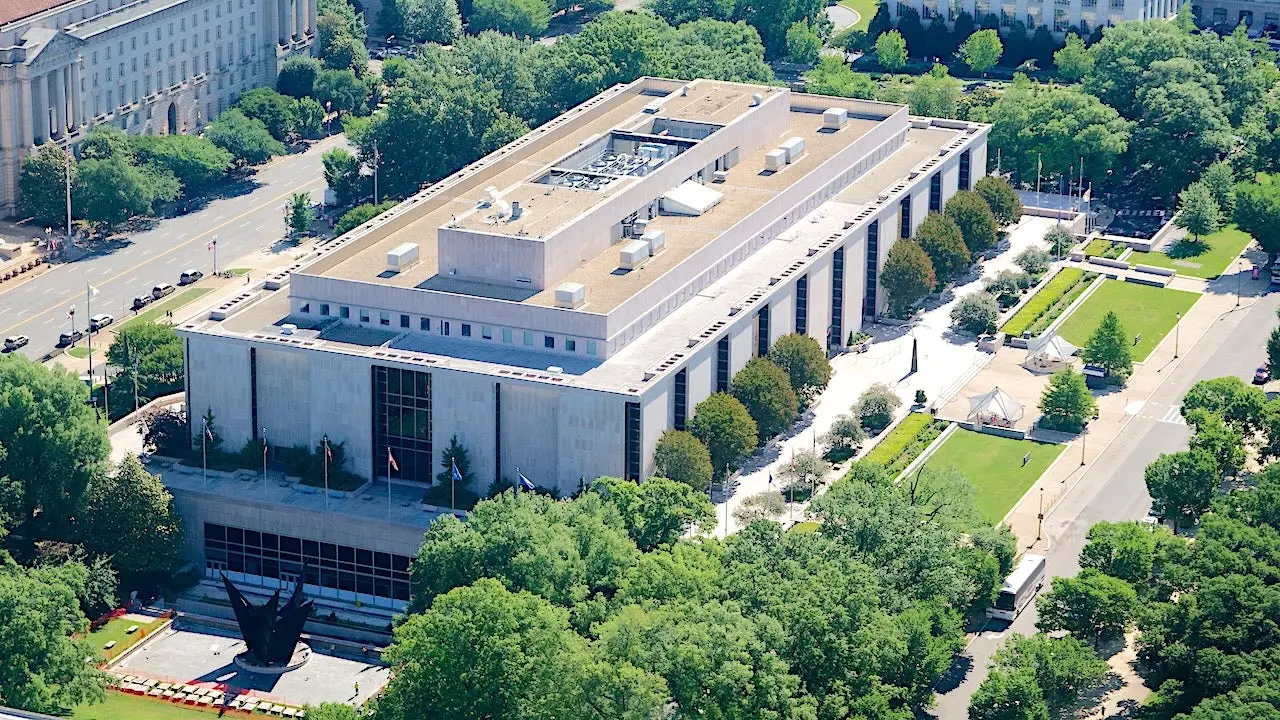
The escalating battle over America’s cultural memory took a highly visible, dramatic turn when President Trump ordered his administration to install prominent signs directly outside the National Museum of American History. These signs, designed to counter the museum’s internal narratives, are intended by the White House to direct visitors to what the administration describes as “accurate” and patriotic information about the nation’s past, effectively bypassing the curated exhibits inside. This unprecedented move brings the abstract, ideological debate over history directly into the physical space of the National Mall, forcing everyday tourists to navigate a literal and symbolic tug-of-war before they even step through the museum doors. It ensures that the controversy surrounding the Smithsonian’s cultural influence will remain a highly charged topic of conversation, debate, and media scrutiny for many months to come. As visitors stand on the steps of the museum, looking at these competing signs of historical interpretation, they are reminded that history is rarely a settled, peaceful archive, but rather a dynamic, contested ground where the present constantly wrestles with the past. The physical placement of these signs represents a watershed moment in the relationship between the federal government and its premier cultural institutions, signaling an era where cultural curation is directly contested by executive authority. For the millions of families, school groups, and international tourists who walk those steps, the museum visit has been transformed from a simple educational outing into an encounter with a deeply divided political reality. Ultimately, this clash underscores the profound power of the Smithsonian; because it holds the keys to the nation’s memory, the struggle to define its voice is a struggle to define the very soul of America itself. It leaves us to wonder how future generations will look back on this tumultuous chapter of our shared journey, and whether the institution can successfully navigate this storm while remaining a trusted, unifying sanctuary for the increase and diffusion of human knowledge.