





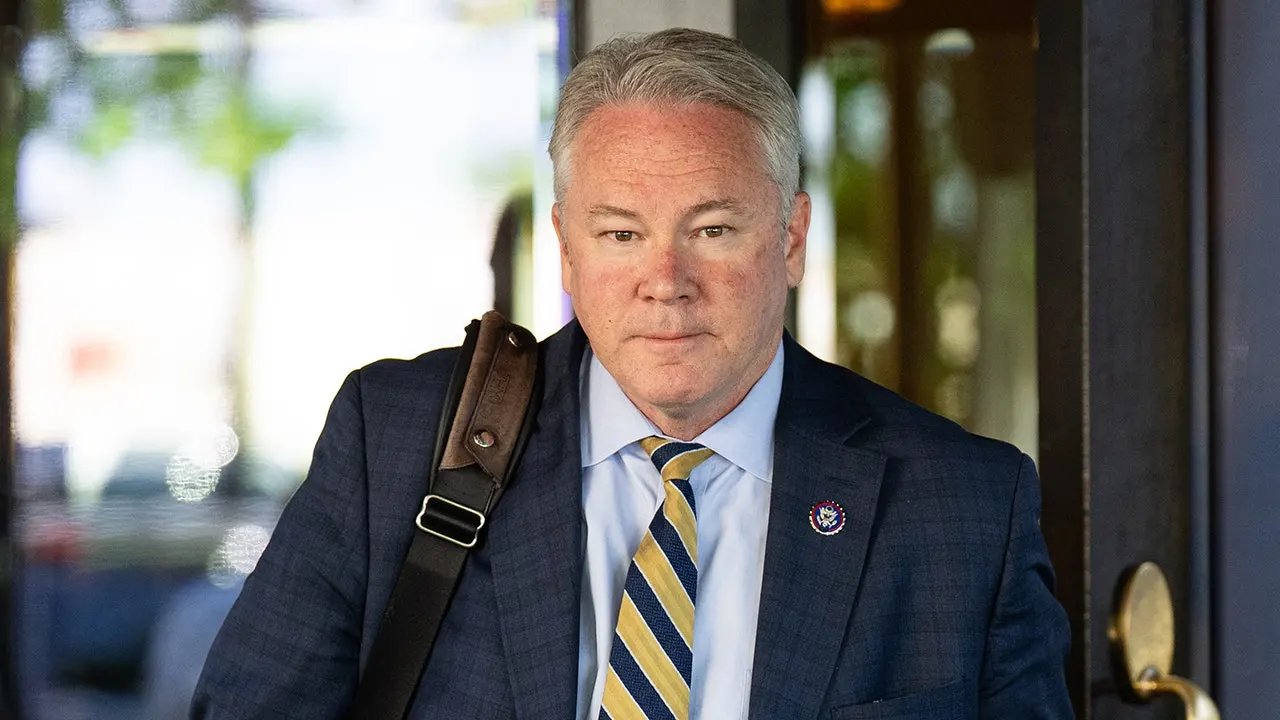
Politics can be brutal, especially when a family name is on the ballot and a seat in the United States Senate hangs in the balance. That is precisely the situation unfolding in South Carolina, where a special Republican primary has become a raw, emotional, and surprisingly personal fight over who truly belongs in Washington. In one corner stands Senator Darline Graham, the appointed successor to her late brother, Senator Lindsey Graham, and the front-runner after finishing first in the August 11 primary. In the other corner stands Congressman Ralph Norman, the second-place finisher, who is now hoping to force a runoff win on August 25 and turn his anti-establishment pitch into an actual seat in the Capitol. The tension between the two candidates exploded into the open when Representative Warren Davidson, a Republican from Ohio, took to social media to deliver a stinging verdict. His post on X was blunt, accusatory, and impossible to ignore. “Ralph Norman will work to drain the swamp,” Davidson wrote. “The swamp wants allies not adversaries. The swamp appointed an ally. These are the stakes in South Carolina.” With those few sentences, Davidson injected a major national talking point into a state-level race, turning a family tragedy, a governor’s appointment, and a runoff election into a larger battle about integrity, loyalty, and the meaning of public service in the modern Republican Party.
The context behind that accusation makes it all the more compelling. Darline Graham is not a politician who climbed the usual ladder of local office, statehouse debates, and hard-fought campaigns. She was chosen by South Carolina Governor Henry McMaster to fill the Senate seat left vacant by the death of her brother, Lindsey Graham, a man who had served in the Senate for decades and become one of the most recognizable voices in American politics. That appointment immediately raised questions. Was she the most qualified applicant? Was she simply the most familiar name? Or was the governor simply trying to keep a powerful political family in place during a moment of grief? These are the quiet questions that hover over any appointment, but in this case they became the central theme of the primary. Darline Graham’s campaign has tried to answer those questions by emphasizing her own identity and her intention to forge her own path in the Senate while honoring her brother’s legacy. She has spoken about the lessons she learned from Lindsey, about the values instilled in her growing up, and about her commitment to the people of South Carolina. But no matter how sincere her message, the shadow of the appointment remains. Davidson’s attack touched a nerve because it framed the appointment as part of a larger system of insider favoritism. In his telling, the swamp did not just support Graham; the swamp created her. That is a powerful and damaging storyline, especially for a candidate who is already trying to prove that she is more than a name on a ballot.
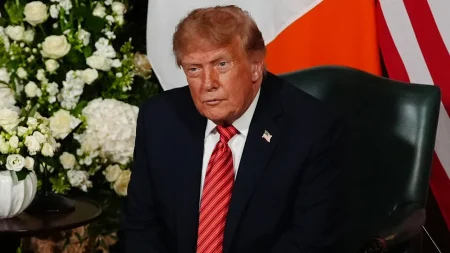
President Donald Trump’s involvement has made the race even more complicated, because Trump has thrown his considerable weight behind Graham. Trump urged her to run in the first place, endorsed her before the initial primary, and has continued to stand by her as the runoff approaches. On August 14, he issued a truculent call to South Carolina voters via Truth Social, declaring: “SOUTH CAROLINA: GET OUT AND VOTE FOR DARLINE GRAHAM ON TUESDAY, AUGUST 25TH. DARLINE HAS MY COMPLETE AND TOTAL ENDORSEMENT — SHE WILL NEVER LET YOU DOWN!” It was exactly the kind of full-throated endorsement that can move votes in a Republican primary. And he did not stop there. The president’s post included an image of a post from Congressman Russell Fry, who had placed third in the primary, urging his own supporters to back Graham in the runoff. That image was not an accident. It was a signal to the Republican base that the Trump-aligned wing of the party was consolidating behind Graham. But here is where the politics get strange: If the swamp appointed Graham, why would Trump, the self-proclaimed swamp-drainer, endorse her? Would the ultimate outsider embrace a candidate chosen by a governor and tied to a long-serving Senate dynasty? This question sits at the heart of the race. Davidson’s accusation implies that Graham is exactly the kind of establishment figure that Trump once built his career opposing. Trump’s endorsement, however, suggests that he sees something different in her—perhaps a loyal ally, perhaps a reliable conservative voice, perhaps simply a family friend in a state he wants to keep firmly in his corner. Either way, the alliance between Trump and Graham is a fascinating example of how personal loyalty and political calculation can blur together.
The endorsements from former rivals have only deepened the complexity. Russell Fry, the third-place finisher, did not hesitate to rally behind Graham after failing to advance. His decision to appear in Trump’s post and urge his supporters to vote for her was a strong sign that the anti-Graham faction is not as unified as Norman might have hoped. But Norman also has his own allies. Mark Lynch, who also ran in the special primary, has endorsed Norman, giving the congressman a boost among voters who may have supported Lynch in the first round. In a runoff, endorsements matter because they can help consolidate support quickly. Candidates who struggled in the first round often hold the key to victory in the runoff, simply because their supporters become the prized swing votes. Both Graham and Norman understand this, which is why the weeks between the primary and the runoff have been a frenzy of coalition-building. For Graham, the challenge is to turn her first-place finish into an outright majority. For Norman, the challenge is to convince the supporters of every other candidate that he is the true alternative to the swamp. The stakes are enormous. The winner of this runoff will almost certainly go to Washington, D.C., and the outcome will be read as a national sign about the direction of the Republican Party. If Graham wins, it will show that Trump’s endorsement can override anti-establishment anger. If Norman wins, it will prove that the swamp rhetoric still has power, even when a candidate is backed by the former president.
At its core, this race is a mirror of the broader conflict inside the GOP. There are those who believe that the party’s future depends on confronting the entrenched interests in Washington, the lobbyists, bureaucrats, and career politicians who make up what is dismissively called the swamp. There are others who believe that experience, relationships, and institutional knowledge are not dirty words, and that a qualified conservative can work within the system without being corrupted by it. Darline Graham represents the second view, albeit wrapped in the emotional story of a grieving sister carrying on her brother’s work. She has tried to present herself as a woman who can be independent, who can support the president when he is right, and who can stand up to the establishment when necessary. But Davidson’s accusation strikes at the very core of that narrative. If the swamp appointed an ally, then every vote she casts will be viewed through that lens. For many voters, the appointment itself feels like a violation of democratic principles, no matter how capable or well-meaning the appointee might be. They see a family seat, not a genuine opportunity. Norman, by contrast, is running as the anti-swamp candidate, the man who wants to go to Washington and shake things up. He has the advantage of being an outsider in the sense that he was never appointed to anything; he earned his place on the ballot through an election. And yet he lacks the institutional support that Graham enjoys. Trump is against him; the governor’s appointment machine is not on his side; and the weight of the Graham family legacy is not helping him. Still, that may be precisely why some voters find him more authentic. In a political climate where voters are increasingly skeptical of backroom deals and dynastic politics, Norman’s message can be powerful.
At the end of the day, the August 25 runoff is about more than one Senate seat. It is about what kind of representation the people of South Carolina want in Washington, and what kind of party the Republicans are becoming. If Darline Graham wins, she will have to work overtime to prove that Davidson was wrong, that she is not just another product of the swamp, and that she can carry on her brother’s legacy while writing her own story. She will need to show voters that she is an adversary to the special interests, not an ally, and that her name is a source of strength, not a shield for the establishment. If Ralph Norman wins, the victory will echo far beyond South Carolina. It will send a message that the swamp, and everyone connected to it, is vulnerable, no matter how high the endorsements reach. For the voters, this is not a simple choice between two people. It is a choice between a familiar name and a fiery challenge, between grief and grievance, between the past and the future. It is a choice about whether they trust the process that put Graham in the Senate or whether they believe that process itself is broken. South Carolinians will decide on August 25. But win or lose, the conversation around this race is already a reminder of how deeply personal politics can become, and how the accusations we make about other people often reveal what we believe about ourselves. The swamp may be a metaphor, but it is a metaphor with real consequences, and the people who go to Washington to face it are never the same again.