





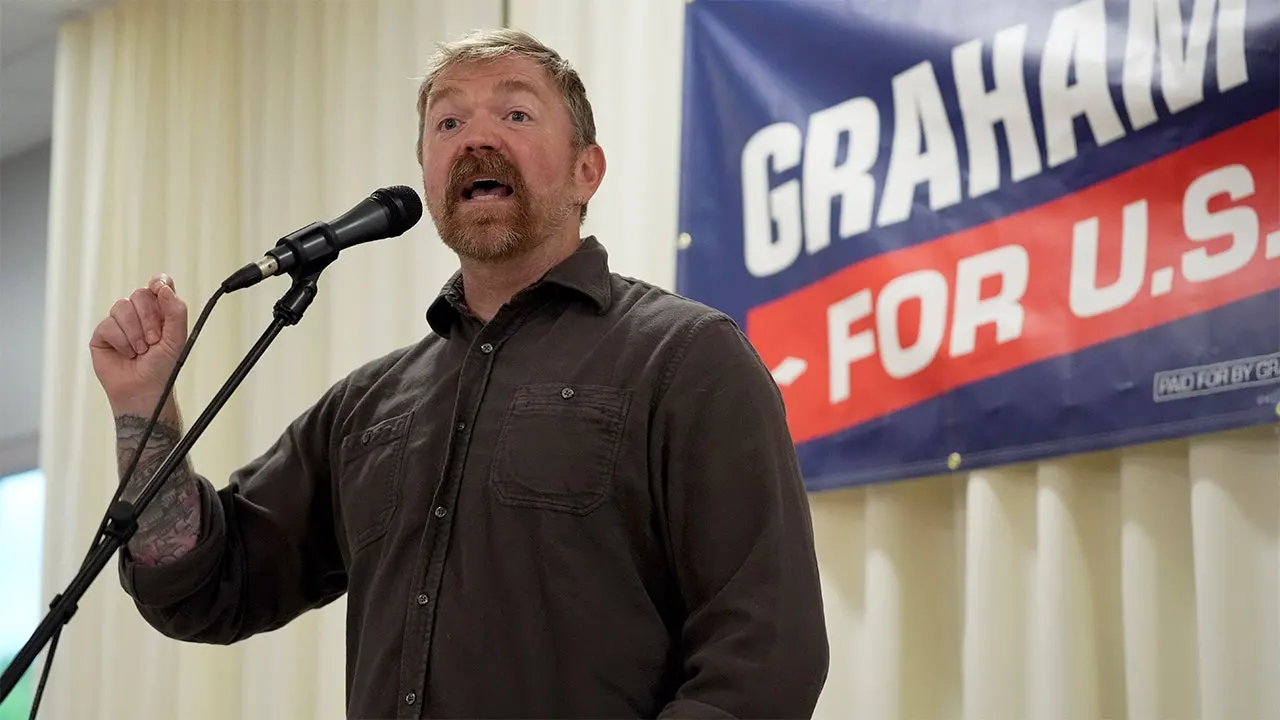
On the quiet, tension-filled eve of Maine’s highly anticipated primary election, a political earthquake shattered the carefully constructed image of Democratic Senate hopeful Graham Platner, forever altering the trajectory of the race. The tremors did not emanate from a standard opposition attack ad or a rival candidate’s standard stump speech, but rather from deep within Platner’s own inner circle, carrying the undeniable weight of an insider’s intimate betrayal. Genevieve McDonald, a highly respected former Maine state representative who had briefly stepped up to steer Platner’s campaign as his director the previous year, broke her silence in a devastating, deeply personal op-ed published by The Washington Post. With just hours remaining before the first polling stations opened across the state, McDonald took the extraordinary and politically risky step of publicly imploring voters to reject the man she had once worked to elevate, writing with painful, unambiguous clarity that Platner was simply unfit to represent the people of Maine or to serve the nation in the United States Senate. Her public defection was not a decision made lightly, in haste, or out of political opportunism; instead, it was the culmination of months of internalized conflict, ethical alarm bells, and the sheer exhaustion of trying to keep pace with a candidate whose public promises were completely detached from his private reality. By stepping into the media spotlight to write what she described as an urgent warning, McDonald laid bare the profound vulnerability of our democratic process, which is so often manipulated by carefully packaged marketing strategies designed to mask the deep moral failings and transactional nature of those seeking our trust. The bombshell piece instantly transformed the primary from a routine electoral stepping stone into a raw, emotional referendum on character, placing the psychological and ethical inner workings of a modern political campaign on full display for a state that has historically prided itself on independent thought, honesty, and a rejection of performative politics.
At the core of Platner’s appeal was a carefully curated, romanticized biography that painted him as a rugged, salt-of-the-earth working-class hero—a modern-day populist who divided his time between working as a humble local harbor master and pulling oysters from the chilly, unforgiving waters of the Maine coast. This narrative of a self-made man who had overcome a troubled youth to build an honest life on the sea was designed to resonate deeply with ordinary Mainers who felt forgotten by corporate elites. However, as McDonald quickly discovered during her brief, turbulent two-month tenure on the campaign, this compelling persona was little more than an elaborate, focus-grouped illusion that fell apart upon the slightest financial scrutiny. In reality, official financial disclosures revealed a far less heroic picture: Platner’s supposedly thriving, independent oyster farming business had precisely one customer—a local restaurant owned and operated by his own mother. Furthermore, the pristine coastal waters he claimed to harvest were leased off a luxurious private island owned by the wealthy family of his business partner, exposing a network of privilege that stood in stark contrast to his blue-collar rhetoric. Adding to the dissonance was the revelation that his transition into homeownership was secured not through years of grueling manual labor, but through a massive two-hundred-thousand-dollar personal loan gifted to him by his father. For McDonald, a woman who actually emerged from a genuine working-class background and understood the grueling reality of making a living in Maine’s coastal economy, this fabricated identity was more than just a campaign strategy; it was an insulting betrayal of the very people Platner claimed to champion. The realization that the campaign was built on a foundation of systemic dishonesty and class tourism shattered her faith in his candidacy, illustrating how easily the struggles of everyday working people can be commodified by ambitious political actors seeking cross-party appeal.
Beyond the deceptive financial framing of his personal life lay a much more disturbing catalog of personal and cultural controversies that began to emerge from Platner’s past, casting a long, dark shadow over the integrity of his entire campaign and testing the limits of political loyalty. The most visually shocking of these revelations was a Nazi-linked tattoo etched onto his chest, a hate-associated symbol that the campaign desperately attempted to neutralize through what McDonald described as “feigned ignorance” and deeply insulting deflection. This refusal to honestly and transparently address the dark, historically painful significance of such a symbol appalled his progressive staff, signaling a toxic internal culture that prioritized crisis management over basic ethical accountability. The campaign’s moral crisis deepened with the surfacing of highly offensive, lewd online Reddit posts in which Platner had historically ridiculed the very demographic he was currently begging to represent in the Senate, explicitly characterizing white, rural Americans as provincial, “racist,” and “stupid.” To discover that a candidate seeking to represent a highly rural state possessed such deep-seated contempt for his potential constituents was a severe blow to his credibility, showcasing a profound disconnect between his public platform and his private thoughts. The final, most devastating blow to his moral authority materialized when his former partner, Lyndsey Fifield, courageously stepped forward with harrowing, public allegations of physical violence and misconduct against him. This pattern of alleged volatility and online contempt painted a chilling caricature of a man who traveled the state preaching redemption and working-class solidarity while privately harboring a history of manipulation, forcing his ultimate supporters and campaign workers to confront the terrifying discrepancy between the progressive, healing values he preached on stage and the destructive behavior he allegedly practiced behind closed doors.
For Genevieve McDonald, working within this highly compartmentalized campaign environment quickly transformed from an exciting progressive endeavor into a grueling psychological battleground, eventually leading her to describe herself as one of the Platner campaign’s early “gaslighting casualties.” During her brief, eye-opening tenure from late August to October, she watched in real-time as legitimate ethical concerns were systematically buried under a deluge of internal deflections, manufactured rationalizations, and manipulative narratives that forced idealistic young staffers to question their own senses of moral reality. When her personal integrity finally compelled her to walk away from the campaign, the leadership attempted to handle her quiet departure with calculated, transactional cynicism, offering her a lucrative fifteen-thousand-dollar severance package that was strictly contingent upon her signing a legally binding non-disclosure agreement designed to permanently bury her concerns. In an era where political silence is routinely purchased and solid principles are regularly auctioned off to protect powerful entities, McDonald’s refusal to accept the hush money stood as a rare, inspiring testament to absolute personal ethics, demonstrating that her ultimate loyalty belonged to the people of Maine rather than a candidate’s political viability. This act of bravery resonated deeply with others who had survived Platner’s behavior; immediately following the publication of the op-ed, Lyndsey Fifield publicly stood in fierce solidarity with McDonald, praising her for sacrificing her own professional standing to protect the electorate from a dangerous man and noting that McDonald had kept her soul intact through the storm. This profound public connection between two women who had been minimized and silenced by the same charismatic political figure highlighted the true human cost of modern political ambition, transforming their shared vulnerability into a powerful, unified force for public accountability that refused to be suppressed by corporate payouts.
The urgent timing of McDonald’s public confession laid bare a systemic dilemma that frequently plagues modern American elections: the weaponization of “electability” and the false sense of scarcity weaponized by partisan institutions to coerce the electorate. For months, Maine Democrats had been fed a highly coordinated, inescapable narrative that Graham Platner was the only viable candidate possessing the unique profile and energy required to mount a successful challenge against the formidable, long-serving Republican Senator Susan Collins. This calculated anxiety was designed to leverage partisan fear, subtly encouraging primary voters to suppress their own moral reservations and overlook a candidate’s alarming array of personal scandals under the guise of securing a necessary legislative victory. McDonald, however, used her national platform to aggressively dismantle this defeatist logic, passionately reminding her fellow citizens that they are never truly trapped in a binary choice between moral compromises and that they do not have to accept damaged goods out of sheer political desperation. She pointed out that while the establishment had closed ranks around Platner, the actual primary ballot still offered alternative avenues for voter expression, despite the logistical chaos of the race; for example, Governor Janet Mills, once Platner’s primary competitor, had recently suspended her campaign due to funding issues, but because this decision occurred after official election materials were finalized, her name remained on the printed ballot as a viable protest vote alongside consultant David Costello. By bringing these structural options to light, McDonald sought to empower voters to break free from the psychological chokehold of tactical voting, arguing that the true defense of a healthy democracy requires citizens to reject the cynical notion that they must sacrifice basic decency at the altar of political pragmatism.
Ultimately, the painful public unraveling of Graham Platner’s campaign serves as a poignant, cautionary reminder that the democratic structures of our self-governing society are only as strong, honest, and representative as the physical and moral character of the human beings we elect to fill them. McDonald’s concluding reflections in her poignant essay were framed not around cold political calculations, partisan preservation, or electoral strategy, but around a deeply intimate, human concern for the future—specifically, the kind of society she wanted to build for her young daughters and the hardworking communities of her beloved home state of Maine. Her agonizing, highly public decision to blow the whistle on a candidacy she once helped coordinate was a powerful, symbolic declaration that a broken, increasingly cynical political culture can never be genuinely healed if we continue to enable its worst behaviors or accept systemic dishonesty as the unfortunate, inevitable cost of doing business in Washington. By standing firmly against a defensive, well-funded campaign apparatus, McDonald illustrated to a divided public that true leadership does not lie in the desperate acquisition of power at all costs, but rather in the rare and quiet courage to stand up and loudly declare, “Enough is enough,” when the pursuit of that power threatens to completely corrupt the foundational ideals it was originally designed to protect. As voters headed to their local community centers and town halls to cast their ballots, her story lingered as an eloquent, deeply humanizing testament to the enduring authority of individual conscience over organizational pressure. It served to remind an increasingly fatigued and disillusioned American electorate that the hard work of restoring a healthy, respectful, and vibrant democracy begins not with grand legislative acts, but when ordinary individuals finally resolve to stop making excuses for the indiscretions of the powerful and begin demanding real, unyielding integrity from anyone who seeks the privilege of public service.