



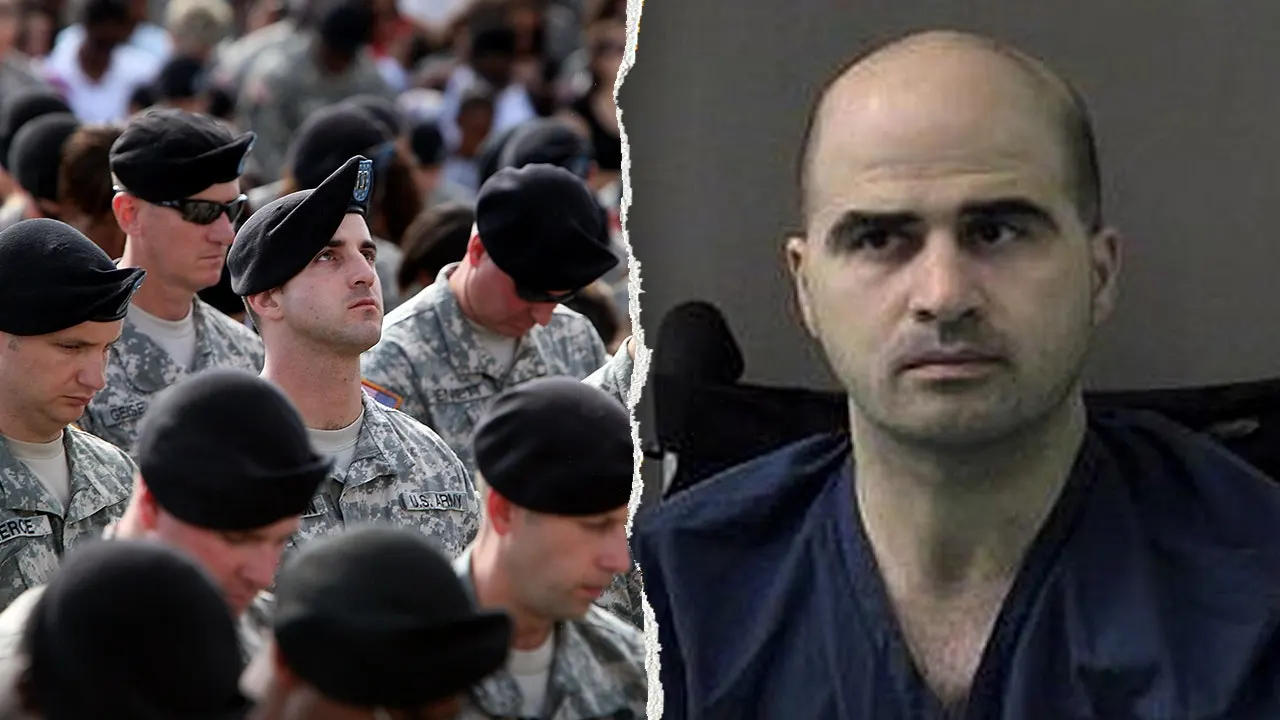
Julia Wilson still carries the weight of November 5, 2009, in her bones. Seventeen years after a gunman stormed the Soldier Readiness Processing Center at Fort Hood, Texas, she can still see the blood on the walls, hear the chaos of terrified voices, and feel the primal terror of a woman nine months pregnant, trapped in a nightmare. Now, as the man who shattered her world, Nidal Hasan, faces a firing squad in December 2026, Wilson finds herself wrestling with a contradiction that cuts to the heart of justice and vengeance. She wants him dead—wishes, in a raw moment of anger, that he could be executed thirteen times over, one for each soul he stole that day. Yet when she learned that Secretary of War Pete Hegseth had announced the execution would be livestreamed to the public, she recoiled. “Why would people want to see that?” she asked, perplexed and uneasy. This is a woman who has spent nearly two decades trying to wash the violence from her mind, and the idea of broadcasting that same violence to the world—especially to children who might stumble upon it—feels like a fresh violation. She is not opposed to the death penalty; she wants to be there, to look him in the eye. But the notion of turning his death into a public spectacle leaves her feeling shocked and unsettled, caught between a desire for retribution and a deep, protective instinct for the innocent.
The attack itself remains a scar on American military history. Hasan, an Army psychiatrist, walked into the readiness center on that fateful November day and opened fire, killing thirteen people and wounding thirty-two others. Wilson was just returning from a lunch break with her mother when the gunfire erupted. As she pulled into the parking lot, she saw soldiers down and heard the shots. Her instincts screamed at her to flee, freeze, or fight—she experienced all three in a dizzying panic. A supervisor urged her to stay in her car, but when he returned for her, she followed him into the building, only to be met by a scene of utter devastation. Desks were tossed everywhere, blood smeared the walls and floor, and people were desperately trying to save the wounded. A soldier burst through the door, shouting that the shooter was inside and they needed to get out. Wilson, in her ninth month of pregnancy, locked up—paralyzed by the sheer horror of it all. Miraculously, she and her unborn child survived, but the psychological wounds have never fully healed. Hasan was later convicted by military court-martial in 2013 and sentenced to death, but years of appeals and delays followed. It wasn’t until October 2, 2025, that President Donald Trump approved the death sentence, and days later, Hegseth announced that Hasan would face a firing squad—and that his execution would be streamed for all to see.
Wilson’s personal journey through this ordeal reveals a woman of profound complexity. She is not merely a victim; she is a survivor with a burning desire to confront her attacker one final time. “Personally, I do want to be there,” she told Fox News Digital, her voice carrying both steel and sorrow. “I do want to look him in the eye to let him know, ‘Look, I may have been your victim that day, but I’m not your victim anymore. I survived you. My child survived you, a lot of us survived you. You didn’t do as much damage as you thought you were going to.'” In that moment, she imagines herself standing before Hasan, not as a woman running for her life, but as a force of defiance. She continues, “You did what you did. Too bad we can’t kill you 13 times over.” That raw, visceral anger is understandable—the math of loss is cruel, and no single death can ever balance the scales. Yet even in her fury, she retains a moral clarity about the execution itself. “I have a lot of mixed feelings on it, to be quite honest,” she admits. “Yes, I’m glad that it’s moving forward. No, I… don’t ever want to see another human being die. But in the same fold, an eye for an eye.” She wants justice, but she does not want to become a spectator to bloodshed. That tension—between wanting Hasan to suffer and fearing the dehumanizing effect of public violence—lies at the heart of her unease.
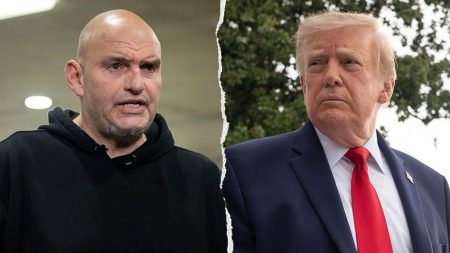
The controversy over livestreaming the execution has drawn sharp criticism from across the political spectrum, and Wilson echoes those concerns with a deeply personal urgency. “I’m kind of shocked that they’re going to go so far as to televise it,” she said. “I don’t really know how to feel about that.” Her primary fear is for the children—those who might accidentally witness the graphic footage and be scarred in ways she knows all too well. “Unfortunately, some children may end up seeing that, that don’t need to see something like that,” she said, her voice trembling. “Seeing my soldiers murdered that day, that was the first time I’ve ever seen anything like that. And I can never wash it out of my mind.” She wonders why anyone would choose to watch a man die, especially when the deaths of his victims were so senseless and brutal. Her concerns are shared by Senator Thom Tillis, R-N.C., who called the plan “beyond disgusting” and noted that public executions are characteristic of oppressive dictatorships like Iran and Afghanistan, not the United States. Even President Trump and Vice President J.D. Vance have signaled second thoughts, with Trump saying he will make the final decision on the livestream and Vance stating he would not personally watch it. For Wilson, the debate is not abstract—it is about protecting the next generation from the nightmare she has lived with for seventeen years, and about whether the nation should descend to the level of spectacle in its pursuit of justice.
Beyond the execution itself, Wilson has a larger grievance: the federal government’s classification of the Fort Hood shooting as “workplace violence” rather than an act of domestic terrorism. To her, this label is a betrayal that has added insult to injury for nearly two decades. “We’ve been betrayed by the government for 17 years,” she said, her anger palpable. “They left this as workplace violence. They never declared it domestic terrorism because it was all about, ‘Hey, we need to be politically correct and watch out for his rights.’ Well, what about my rights? And what about me? And what about my family? And what about those that were murdered? And what about those that were injured?” Hasan, an American-born Muslim, had shown signs of radicalization before the attack, and evidence suggested he was inspired by extremist ideology. Yet the government shied away from labeling it terrorism, a decision Wilson believes was driven by a desire to avoid political controversy. She has written a letter to President Trump, urging him to reclassify the shooting as an act of domestic terrorism—a move she feels is essential for true justice and closure. For Wilson, this reclassification is not just a semantic issue; it validates the nature of the attack, honors the victims, and acknowledges that the wounds inflicted that day were not random acts of workplace violence but a deliberate assault on American soldiers and civilians.
In the end, Wilson’s story is one of a survivor seeking healing in a world that often feels broken. She acknowledges that Hasan’s execution will not bring back the thirteen people who died, nor can it erase the trauma endured by the thirty-two wounded and the countless others who witnessed the horror. “It’s time for healing,” she says, and she insists that “healing cannot start until the situation is fully rectified, until there’s full justice.” For her, that means seeing Hasan face the ultimate penalty, but it also means having the attack recognized for what it truly was—an act of terror that should never be minimized or politically sanitized. She wants to be present at the execution, not out of bloodlust, but out of a need to close a chapter. She wants to look him in the eye and whisper her survival into his soul. At the same time, she worries about the cost of publicizing his death, afraid of what it might do to innocent minds. Wilson is a living paradox—a woman who demands justice with the fire of a hurricane yet retains the tenderness of a mother who wants to shield the world from further harm. As the date of Hasan’s execution draws near, and the debate over livestreaming continues to rage, her voice stands as a powerful reminder that behind every policy decision and legal maneuver, there are real human beings still bleeding, still praying, still hoping that one day they will find peace.