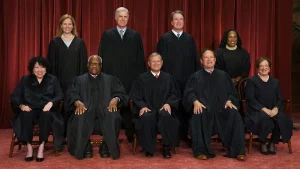




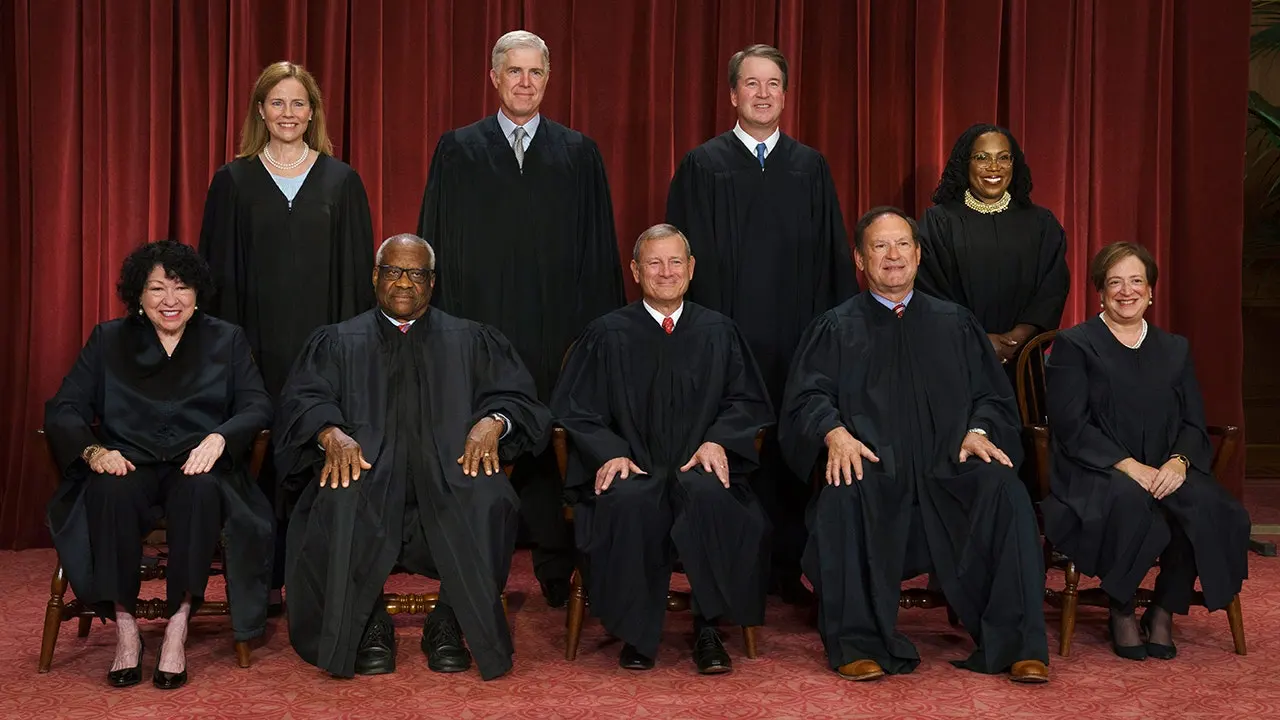
The fate of some of America’s most familiar names in energy—and, quite possibly, the price of a gallon of gasoline—now rests in the hands of the Supreme Court. At the center of the debate is a high-stakes legal battle over climate change, one that could determine whether cities and states are allowed to sue fossil fuel companies for the damages caused by global warming. Energy policy experts warn that if the justices side with local governments, the financial shockwaves could ripple far beyond the boardrooms of corporate giants. They say oil companies could be driven toward bankruptcy, gas stations could face crippling legal exposure, and everyday Americans could feel the pain every time they pull up to the pump. Jason Isaac, CEO of the American Energy Institute, put it bluntly: a wave of successful lawsuits would trigger a “mass exodus” from the fossil fuel industry, creating even more scarcity and driving prices even higher than they already are. For Isaac and others, the real goal of these lawsuits is not justice or compensation, but control—an attempt to force an end to the use of hydrocarbons through the courts rather than through democratic debate.
The case that brought this issue to the nation’s highest court is known as Suncor v. Boulder, and the arguments heard on Monday cut to the very heart of American federalism. The central question is whether federal law prevents cities and states from suing oil companies under state law for climate-related damage, especially when the emissions that caused the alleged harm crossed state and even national borders before settling into the atmosphere. During oral arguments, several justices seemed deeply concerned about the potential consequences of allowing such lawsuits to proceed. Justice Clarence Thomas pressed Boulder’s attorney, Kevin Russell, on whether the legal theory they were advancing could be applied to businesses far beyond the oil industry—asking, for example, whether large retailers could one day be dragged into court for their contributions to climate change. Russell admitted that “nothing in our theory prevents that,” though he tried to soften the admission by noting that state tort law might impose some limits. Justice Brett Kavanaugh, meanwhile, zeroed in on the financial dangers of a litigation free-for-all. He warned that a sufficient number of lawsuits could “bankrupt” defendants and wondered aloud whether virtually any manufacturer or business that emits greenhouse gases—which is to say, almost every business—could face similar claims. The exchange underscored just how broad the implications of this case could be.
At the heart of the dispute is a lawsuit filed in 2018 by the city and county of Boulder, Colorado, against two of the world’s largest oil companies, ExxonMobil and Suncor Energy. The municipalities accused the companies of knowingly contributing to climate change while misleading the public about the dangers of fossil fuels. In their complaint, Boulder officials pointed to a 1977 internal memo from ExxonMobil, circulated among the company’s highest-level managers, which reportedly stated that “current scientific opinion overwhelmingly favors” the view that fossil fuels contribute to rising carbon dioxide emissions. That memo, they argued, was proof that the oil giants had long known about the risks but chose to hide them from the public. Boulder is seeking damages to help cover the growing costs of climate-related harms—wildfires, floods, extreme heat, and other disasters that have become increasingly common in Colorado and across the West. The city’s legal team maintains that this is not an attempt to regulate national climate policy or impose a nationwide carbon regime. Instead, they say, it is a straightforward application of state law, which has always allowed people and communities to seek tort remedies for injuries that occur within their borders, even if the actions that caused those injuries happened somewhere else. “Since the founding, states have had the power to provide tort remedies for injuries occurring within their borders even when the conduct causing those injuries occurred elsewhere,” Russell told the justices. Boulder is not alone. Roughly thirty similar lawsuits are pending in courts across the country, including high-profile cases in Portland, Oregon, and Baltimore, Maryland, as cities and states try to hold the fossil fuel industry accountable for the costs of a warming planet.
To critics, however, these lawsuits are something far more calculated than a simple demand for justice. They see them as an end run around the democratic process—a way to achieve what climate activists have failed to accomplish through Congress. David Bookbinder, who previously served as counsel of record for Boulder but is no longer involved in the case, described the litigation strategy in stark terms during a Federalist Society forum last year, calling it a way to implement an “indirect carbon tax.” O.H. Skinner, executive director of the Alliance for Consumers, echoed that sentiment, arguing that when you strip away the legal jargon, the advocates behind these cases are remarkably open about their intentions. “It’s an effort to get a backdoor carbon tax, because carbon taxes have never passed in Congress, or to bankrupt the energy industry,” Skinner told Fox News Digital. The fear among critics is that a Supreme Court ruling in Boulder’s favor would open a kind of legal Pandora’s box. Isaac warned that there are more than 90,000 units of government in the United States—cities, counties, special districts, and other municipal entities—that could launch their own lawsuits against energy companies. Even if many of those cases lacked merit, the sheer cost of defending against them would be astronomical. “Driving up cost to consumers because the cost to defend those would be astronomical,” Isaac said. The financial burden would not be limited to oil giants like ExxonMobil and Suncor. Skinner argued that the logic of the lawsuits could sweep in gas stations, automakers, utilities, and any other business that sells, uses, or relies on fossil fuels. “From Boulder’s perspective, anybody who’s contributed to climate change would be liable, any sort of company, big or small,” Skinner said. “To the left, climate change is everything and everything is climate change. So it’s very hard to find a line for who isn’t contributing to climate change.”
But the comparisons to earlier legal battles against tobacco companies or opioid manufacturers, which also faced massive lawsuits, do not quite hold up, according to energy policy experts. The difference, they say, lies in the nature of the harm. Cigarettes and prescription painkillers cause direct, identifiable injuries to specific individuals. Greenhouse gas emissions, by contrast, are a global phenomenon. They come from countless sources across the planet—cars, power plants, factories, farms, and even natural processes—and they mix uniformly in the atmosphere, making it virtually impossible to trace any particular weather event or climate impact back to any particular company’s emissions. This is not like proving that a specific cigarette brand caused a specific smoker’s lung cancer. It is more like trying to hold a single factory responsible for a flood that was made worse by sea level rise caused by the accumulated emissions of every nation on Earth. Isaac stressed this point, noting that “emissions are a global phenomenon” and that no single company, state, or even country can be isolated as the sole cause of climate-related damage. That global nature, critics argue, is exactly why these disputes should be resolved by federal law and federal policymakers, not by state courts and local juries. Allowing one city or one state to impose its own climate policy on the entire country would be a recipe for chaos, they say, with different jurisdictions demanding different standards and different penalties for the same emissions. ExxonMobil and Suncor have made this exact argument in their defense, contending that because greenhouse gases travel across borders and affect the entire planet, Colorado cannot use state law to hold them liable for emissions that originated outside its borders. Such a case, they argue, raises federal questions that must be governed by national law.
The Supreme Court’s decision in this case—whether it rules on the merits or splits 4-4 due to Justice Samuel Alito’s unexplained recusal—could have profound consequences for the American economy and the way climate policy is made in this country. A 4-4 tie would leave the lower court’s ruling in place, allowing the lawsuits to proceed in Colorado and potentially across the nation, although it would not establish a binding national precedent. That prospect alarms conservative legal experts and energy advocates, who see the litigation as an attempt to bypass Congress and impose a carbon tax through the judiciary. Utah Attorney General Derek Brown warned that a loss for the energy companies would effectively drive up gas prices all across the country. “If the energy companies were to lose and Colorado were to win, this would in effect drive up the prices of gas all across the country,” Brown said. “Those kind of decisions ultimately, it’s the province of Congress.” Some states, including Utah, have already moved to block these types of state tort lawsuits, passing laws that prevent local governments from pursuing climate-related claims against fossil fuel companies. But in the absence of federal action, the battle is likely to continue raging in courtrooms across the country. The justices now face a momentous choice: whether to let cities and states chart their own course on climate change through litigation, or to insist that the problem of a warming planet, which affects every person on Earth, must be addressed through national and international policy, not by a patchwork of lawsuits driven by local interests. For ordinary Americans, the outcome could mean the difference between affordable energy and skyrocketing costs—and it could decide whether the future of climate policy is forged in the halls of Congress or in the nation’s courts.