


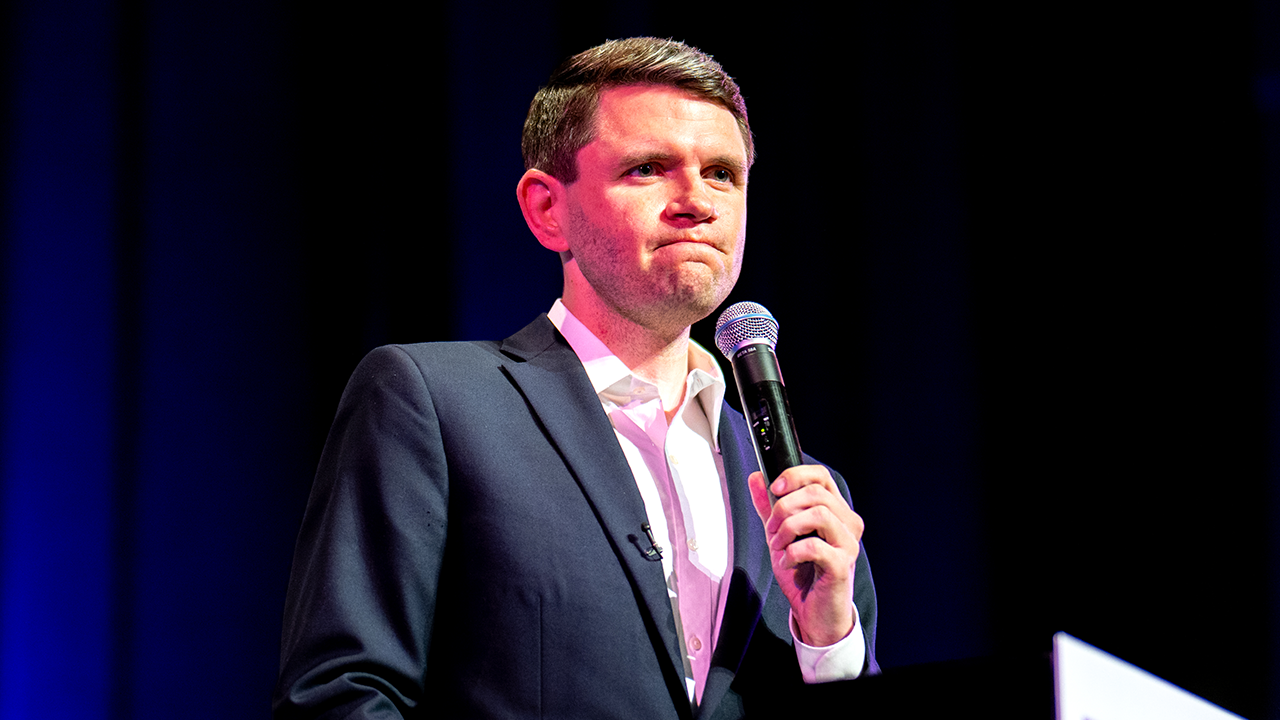
The conspiracy theorists could put their notebooks away. For nearly two weeks, James Talarico, the Democratic nominee for U.S. Senate in Texas, had been missing from the campaign trail. His schedule had gone quiet. His opponents were loud. Speculation filled the void, as it always does in politics. Then, on a Friday afternoon, there he was—alive, in motion, weaving through the crowds at the Austin City Limits Music Festival. His primary spokesperson, JT Ennis, delivered the news with a wink and a jab: “Hate to disappoint the conspiracy theorists, but James is still alive and meeting with voters at ACL today.” The post was accompanied by video of the candidate doing exactly that, moving through the festival grounds, shaking hands, greeting supporters, trying to look like a man who had never been away. It was a deliberately ordinary scene, but in the high-stakes world of a Texas Senate race, it felt like a small triumph. The reappearance was not just about health or scheduling. It was about narrative. It was about momentum. And it was about reclaiming a story that had slipped out of the campaign’s control.
To understand why that sighting mattered so much, you have to understand the silence that preceded it. Talarico’s last in-person event had been a news conference on September 26 in Carrollton, where he stood before cameras to address rising gas prices, a kitchen-table issue with broad appeal. Two days later, on September 28, he attended a fundraiser in New York City—a common enough ritual for a candidate chasing out-of-state money. The next day came the announcement that would upend the race: Talarico had been diagnosed with the flu. For more than a week after that, he essentially vanished from public view. No rallies. No press conferences. No staged photo opportunities. The campaign explained that he was suffering from a severe case of influenza and needed time to recover. But in an era when every quiet day is treated as a mystery, the explanation did not land as cleanly as the campaign might have hoped. Talarico’s team pushed back on the narrative of a twelve-day disappearance, noting that he attended a Zoom call on September 30 with the U.S. Hispanic Business Council after his in-person event was canceled. In their accounting, the absence was closer to nine days. That distinction may sound like math, but in politics, optics are everything. A candidate who is not seen is a candidate who is not campaigning. A candidate who is not campaigning is a candidate in trouble. And so the days stretched on, and the questions multiplied.
Then came the voice that could not be ignored. President Donald Trump, never one to let a political opportunity pass, waded into the matter with characteristic bombast. In a post on Truth Social, Trump mocked Talarico’s name, calling him “TalaFREAKo,” and declared that the Democrat had been “MISSING IN ACTION.” Trump claimed that after looking for the candidate “throughout all of Texas, and beyond, probably even weirder places than anyone would think possible,” Talarico had finally put out a statement saying he had the flu. “12 days is a long time to rid yourself of the so-called flu bug,” Trump wrote. “What’s going on?” It was a classic Trump attack: personal, derisive, and designed to create a lasting nickname. But more importantly, it underscored how much attention this race was drawing. A Texas Senate contest featuring a Democratic challenger and Attorney General Ken Paxton was no longer just a state matter. It had become a national referendum, a proxy battle in the larger war over the soul of the country. Trump’s attack elevated the story from a local curiosity to a national talking point, and it placed Talarico’s illness under the harsh glare of the political spotlight. The implication was clear: a real candidate, a serious contender, would not let a little flu bug keep him down. Whatever the intent, the message was simple—Talarico was not where he was supposed to be.
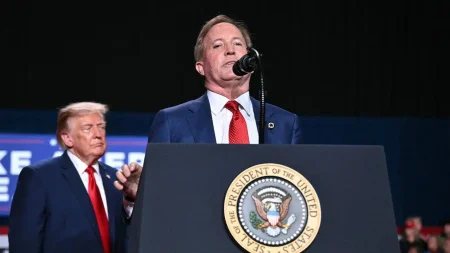
Paxton, for his part, was happy to amplify that message. At a rally in San Antonio, he looked out at the crowd and asked a question that had been echoing through political circles for days: “Where is James Talarico?” It was a simple question, but loaded with meaning. Where, indeed? Paxton’s campaign had been quick to capitalize on the absence, framing it as evidence that the Democratic nominee was not ready for the rigors of a Senate campaign, let alone a Senate term. The race itself had already become a fascinating collision of forces. Paxton, who had spent much of his political career battling Washington and the establishment, was now receiving help from national Republican power brokers eager to keep Texas red. Talarico was running as the challenger, hoping to tap into changing demographics and a restless electorate. The subheadlines that accompanied Fox News coverage told their own story: Paxton venting over a lack of campaign control, while the very D.C. establishment he once fought came to his aid. It was a strange landscape, one in which the old rules of political loyalty were bending in real time. And into this cauldron of strategy and spin, Talarico’s flu had poured a fresh element of unpredictability. The campaign could not control the news cycle. All they could do was wait for their candidate to recover—and hope that voters would understand.
When Talarico finally stepped back into the public eye at the Austin City Limits Music Festival, his campaign was determined to frame it as a return to normalcy rather than a crisis resolved. The video showed a candidate doing the work—meeting voters, pressing flesh, working the crowd with a smile. It was, in many ways, a humanizing moment. Here was a man who had been sick, who had taken the time to recover, and who was now back on the beat. His team pointed out that before the illness, Talarico had already completed more than one hundred public campaign events across the state. The implication was that one week of sickness should not erase months of tireless activity. The campaign also confirmed that he expected to return to a full in-person schedule through the weekend, with a major CNN town hall looming on October 14. That was the real deadline. The town hall would be Talarico’s chance to reintroduce himself to a broader audience, to show that he was more than a meme or a missing-persons report. It would be a high-stakes moment, the kind of televised appearance that can make or break a campaign. In the days leading up to it, every handshake at a music festival was a small act of defiance, a way of proving that the story had changed. The campaign was no longer defending an absence. It was accelerating into the final stretch, with a candidate who was, by all appearances, healthy, energized, and ready to fight.
In the end, this brief episode in Texas politics was about more than one man’s flu bug. It was about the fragile, human mechanics of a campaign—the way a body can betray a schedule, and the way a story can spin out of a simple virus. It was about the brutal nature of political warfare, where even illness becomes ammunition. Talarico’s return did not erase the days of speculation, nor the harsh words from Trump and Paxton. But it did offer a reminder that candidates are people, too. They get sick. They take time off. They come back. The voters who could break the GOP’s decades-long grip on a Republican stronghold were now watching with renewed interest. Would they judge Talarico by the days he missed, or by the days he showed up? Would they see a Democrat who was too fragile, or a fighter who refused to let a setback define him? As the festival crowds milled around him, as the music played on, Talarico made his case in the oldest way possible: by being present. And in a world where political absences are treated as mysteries, presence is everything. The next chapter would be written on the CNN stage, in the final weeks before the election, and perhaps in the quiet moments when voters made up their minds. But for now, at least, James Talarico was back. And for a campaign that had weathered a strange and turbulent week, that was enough.