


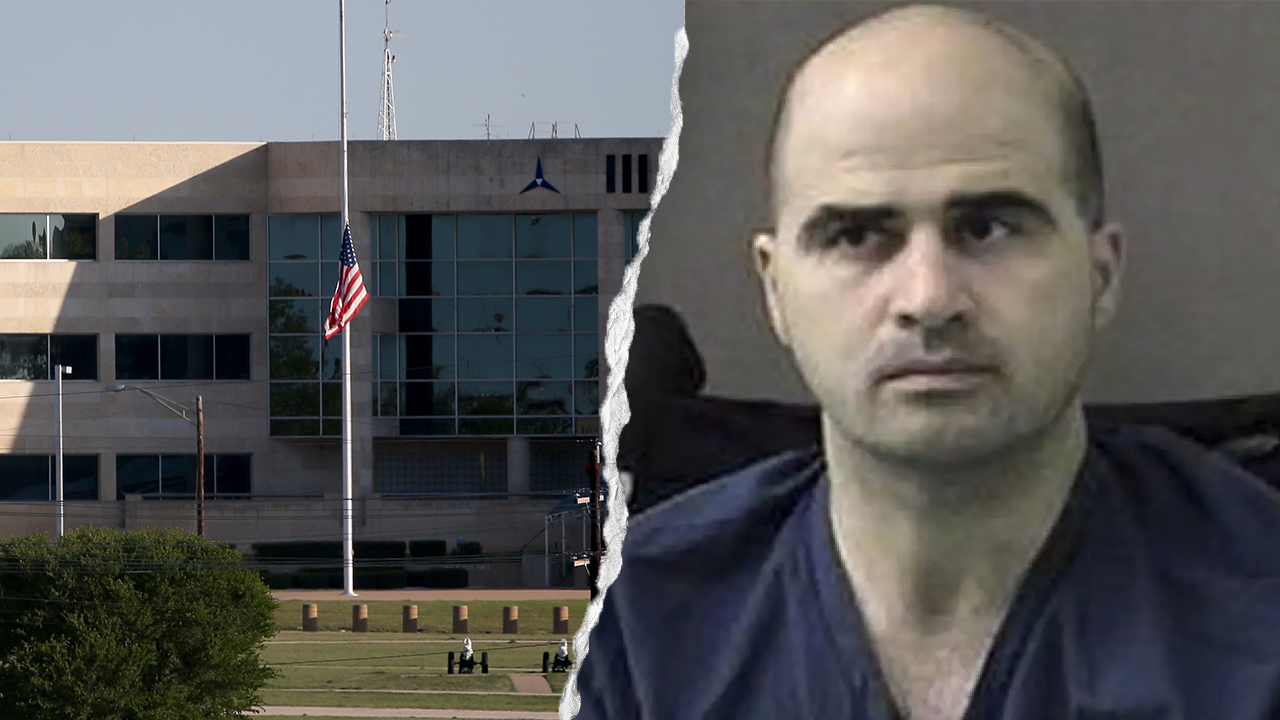
The Pentagon’s confirmation that the execution of convicted Fort Hood terrorist Nidal Malik Hasan will be livestreamed carries a deep and somber historical weight. In a brief but stunning announcement, a Pentagon official told Fox News Digital, “It will be livestreamed. Details will follow.” The execution is scheduled for December 3 at Fort Hood, Texas, a place that has never been the same since the horrifying morning when Hasan, then a U.S. Army major, turned his weapon on his own colleagues. This will be the U.S. military’s first execution in more than sixty years, and the first time the military has used a firing squad since 1945. For a nation that has wrestled with terrorism, sacrifice, and the meaning of justice for over a decade, the decision to allow the public to observe this historic moment by livestream forces a confrontation with an uncomfortable reality: the state is preparing to end a life, and it has chosen to let the world watch. It is a solemn, unprecedented act of transparency, one that invites both reverence and grief, and it will forever mark December 3 as a date of reckoning.
The story of Nidal Hasan is inseparable from the pain of November 5, 2009, when he entered the Soldier Readiness Processing Center at Fort Hood, a place where soldiers prepared for deployment, got their vaccinations, and completed paperwork. It should have been a routine day. Instead, Hasan, a psychiatrist and Army officer, shouted “Allahu Akbar” and opened fire on unarmed soldiers and civilians, killing thirteen people and wounding thirty-two others. The dead included young soldiers, many of whom were preparing for service in Iraq or Afghanistan, and one civilian. The attack left families shattered, children without parents, and a military community forever scarred by the realization that the enemy had been inside the gates all along. In the years that followed, the massacre became a touchstone for discussions about domestic terrorism, radicalization, and security inside military installations. Survivors endured ongoing surgeries, physical therapy, nightmares, and the quiet agony of post-traumatic stress. For them, Hasan was not a distant symbol of radical extremism; he was the man who looked into their eyes and shot them down where they stood. Their testimony at his trial painted a vivid picture of chaos, courage, and senseless violence, and the raw grief of families who buried their loved ones remains one of the defining sorrows of the American military experience in the post-9/11 era.
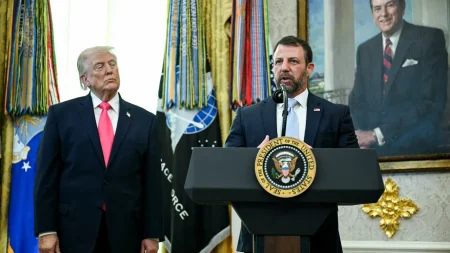
Hasan was convicted by a military court in 2013 and sentenced to death for his crimes. The military jury deliberated and decided that his actions warranted the ultimate punishment, and he was sent to the United States Disciplinary Barracks at Fort Leavenworth, Kansas, to wait on military death row. For years, appeals and legal procedures delayed the execution, leaving victims and their families in a strange limbo between judgement and closure. Then, with a series of decisions at the highest levels of government, the path to execution was finally cleared. President Donald Trump approved the use of an Army firing squad following the recommendation of Secretary of Defense Pete Hegseth, and Pentagon spokesperson Sean Parnell announced the decision on X, declaring with stark finality, “Judgment day for Hasan has finally come.” That sentence captures the long-held desire of survivors for accountability, but it also signals the beginning of an unprecedented ceremony of state-sanctioned death. Hasan remains behind bars at Fort Leavenworth, about five hundred miles from the site of his massacre, awaiting transfer to Fort Hood for the execution. It is a logistical as well as a symbolic journey, one that brings the story full circle: the community where he killed so many will now be the community where the military carries out his sentence.
The historical context of this moment is essential to understanding its gravity. The last execution carried out by the U.S. military occurred in 1961, when a soldier was hanged, but the last execution by firing squad occurred in 1945, during the final days of World War II. A firing squad execution involves a team of shooters, often with one rifle loaded with a blank round to give each shooter a degree of psychological distance, aiming at the condemned person’s chest. It is a method that many consider outdated, even barbaric, while others view it as a fitting punishment for a traitor and killer. The fact that modern technology will now livestream this scene to the public adds a layer of complexity that previous generations could never have imagined. Those who witness it will see the cold mechanics of military justice in real time, and the broadcast will almost certainly become a historical artifact, replayed and analyzed for decades. Supporters argue that the livestream is necessary to demonstrate that justice is being done openly, especially in a case involving terrorism and the slaughter of American soldiers. Critics, on the other hand, worry about the voyeuristic nature of such a broadcast, the psychological impact on the family members of both the victims and the condemned, and whether state executions should ever be treated as public spectacle. Either way, the livestream ensures that no voter, no citizen, no historian can claim ignorance of what the military does when it carries out its most extreme act of punishment.
Amid all the legal and historical analysis, it is essential to remember the human beings at the center of this story. One anonymous survivor, shot in the head during Hasan’s rampage, has vowed to watch the terrorist face the historic firing squad. That vow carries with it an almost unbearable weight: this person has spent over a decade carrying a bullet in their memories, enduring facial pain, seizures, operations, and the invisible scars of nearly dying. Watching the execution from somewhere far away might offer a measure of closure, or it might reopen old wounds. There is no one-size-fits-all path to healing. The families of the thirteen dead also face the agonizing choice of whether to observe the livestream, to attend the execution in person, or to stay away entirely. Some will want to see the moment when the man who murdered their loved one finally faces death. Others will find the idea of watching deeply disturbing and prefer to remember the dead as they were, full of life, not as a prelude to another killing. For survivors who continue to carry shrapnel in their bodies, who flinch at loud noises, who still hear the gunshots in the silence of the night, the execution may be a final chapter in a long nightmare. But it is also a stark reminder that violence breeds violence, even when dressed in the robes of justice. The human cost taxes beyond the murdered and wounded: spouses who became widows at a young age, children who barely remember their fathers, parents who have not missed a single year of visiting graves, and soldiers who were not shot but who saw their friends die and have never stopped seeing it.
As the execution date draws near, the nation is forced to reflect on what justice truly means. For many, the firing squad is the appropriate end for a man who committed a cold-blooded act of terrorism on American soil. They see it not as revenge but as accountability, the fulfillment of a lawful sentence handed down by a jury of Hasan’s peers and affirmed by both the military and the President. For others, the execution raises serious questions about capital punishment, its morality, its effectiveness as a deterrent, and the toll it takes on the society that authorizes it. The livestream intensifies those questions, because it transforms a private act of justice into a public experience. It challenges viewers to look beyond the abstract concept of punishment and see the physical reality of an execution: the measured movements of the soldiers, the aiming of rifles, the sound of shots, and the terrible finality of a life ending. It is a scene that no amount of legal language can soften. And yet, in the midst of that grim reality, the memory of the thirteen people killed at Fort Hood remains the true center of this story. Their names, their smiles, their futures cut short, and the fate of their families all demand that we not look away. Whether one believes Hasan deserves to die or wishes to see him stay in a cell until his natural death, the livestreamed execution ensures that America will face this moment together, with open eyes. It is not merely an event for the justice system; it is a human moment, raw and final, and when the shots are fired at Fort Hood on December 3, the echoes will be felt far beyond the walls of that Texas installation.