


The Troubling Rise of Somali-American Gang Violence in Minnesota’s Suburbs
The quiet suburban streets of Bloomington, Minnesota were shattered in the early hours of a recent morning when more than one hundred gunshots rang out, leaving residents shaken and one person injured. This wasn’t a scene from a crime drama or a distant war zone – this was an otherwise peaceful Minneapolis-St. Paul suburb, and the suspects were not what anyone might expect. Police Chief Booker Hodges found himself facing a puzzling reality: the young men allegedly involved in this violent exchange came from financially stable homes, with families who had resources and means. They weren’t the typical profile of gang members driven by poverty or economic desperation. As investigators dug deeper, they discovered that this violent outburst was connected to disputes that had originated online, spiraling from digital conflicts into real-world gunfire that could have had devastating consequences if it had occurred during daylight hours when families and children would have been out and about.
The situation has forced law enforcement and community leaders to confront uncomfortable questions about what drives these young Somali-American men from seemingly stable backgrounds into cycles of gang violence. Chief Hodges openly admitted that investigators are struggling to understand the root causes, acknowledging that they simply don’t have clear answers for why young people from families with resources and support systems would turn to such dangerous behavior. The violence isn’t happening in isolated incidents either – this shooting followed a string of similar incidents across the suburban Twin Cities area, suggesting a pattern that extends beyond any single neighborhood or dispute. What makes this particularly troubling is that these young men come from backgrounds that should, by all conventional wisdom, provide them with opportunities and alternatives to gang life. They have education available, family support, and economic stability – yet something is driving them toward violence in ways that traditional crime-prevention strategies and law enforcement approaches don’t seem to address.
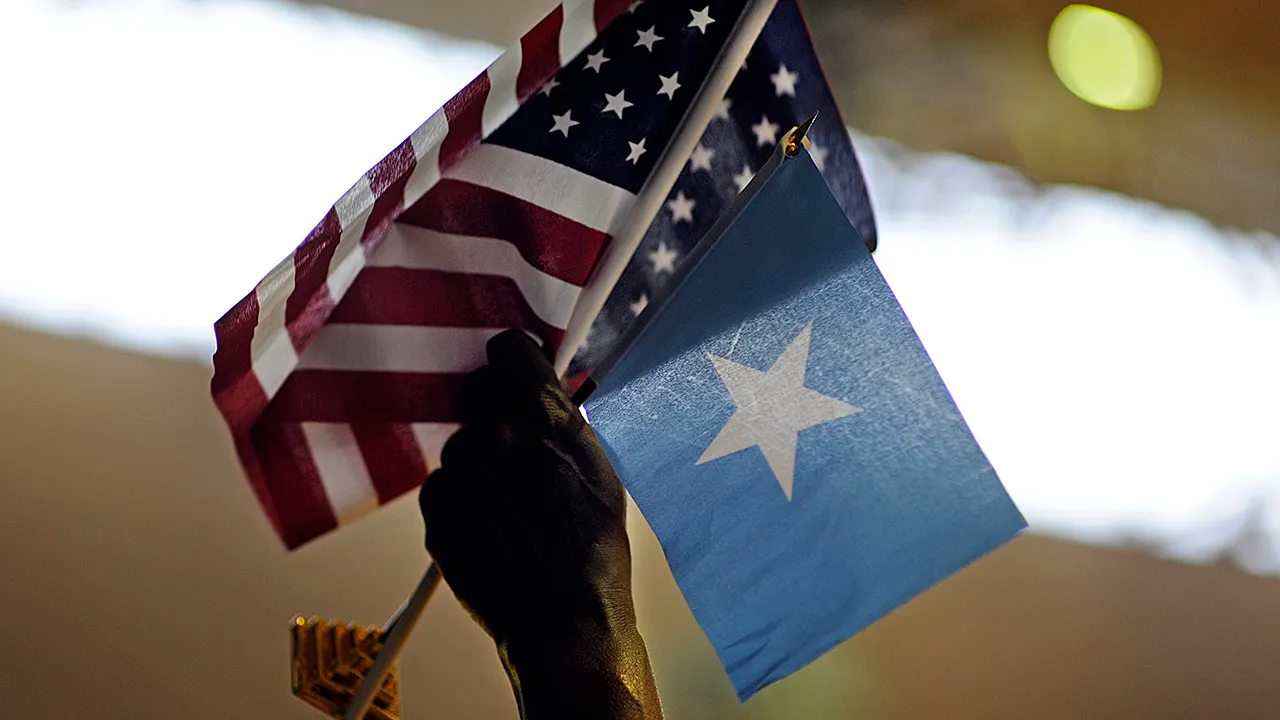
To understand this phenomenon, we must look back at the broader context of Somali immigration to the United States. Somalia’s history is marked by decades of clan-based conflict and the absence of strong central government authority, a situation that lasted until the mid-2010s according to United Nations assessments. The country’s turmoil, including the infamous Battle of Mogadishu depicted in the film “Black Hawk Down,” created waves of refugees seeking safety and stability in America. Between 2001 and 2023, more than 111,000 Somali refugees were admitted to the United States through the federal resettlement program, spanning multiple presidential administrations from George W. Bush through Joe Biden. Minnesota became a primary destination for these refugees, with significant communities also settling in New York, Texas, and Ohio. This resettlement pattern has created a concentrated Somali-American population in the Upper Midwest, but the transition from refugee camps and conflict zones to American suburbs has not been without complications.
Some experts point to resettlement policies as a potential contributing factor to the gang problem. Jessica Vaughan, who serves as director of policy studies at the Center for Immigration Studies, suggests that the way refugees were settled in clusters may have inadvertently created conditions conducive to gang formation. She argues that concentrating refugee populations in specific geographic areas removes incentives for assimilation, making it unnecessary for immigrants to integrate into broader American society to function day-to-day. This approach, she contends, creates what amounts to a separate society within the larger Minnesota community, where maintaining homeland culture takes priority over embracing American life. Vaughan’s perspective is critical of the choice to emphasize cultural preservation over integration, seeing it as a missed opportunity to help immigrants become part of the fabric of American society rather than remaining isolated communities with their own dynamics and pressures.
However, historians and sociologists caution against oversimplifying the relationship between ethnic identity and criminal behavior. Stanford sociologist Tomás Jiménez points out that gang involvement among a small subset of second-generation immigrants isn’t evidence that an entire community has failed to integrate. He emphasizes that assimilation is a complex, multigenerational process that unfolds slowly over time. Looking at the historical experience of Italian, Irish, Mexican, and Salvadoran communities in America, Jiménez notes that all these groups experienced gang activity or organized crime elements while broader integration continued apace. The Italian-American experience, for instance, spanned roughly seventy-five years of gradual integration, not an overnight transformation. Scholars like Donald Tricarico from Queensborough Community College draw direct parallels between the chain migration patterns of Italian immigrants who clustered in ethnic neighborhoods and the settlement patterns of contemporary refugee communities. Just as Italian families followed relatives from their home villages into the same neighborhoods and trades, Somali refugees found themselves in concentrated communities across the Twin Cities.
The comparison to Italian-American history becomes even more relevant when considering how criminal elements operate within immigrant communities. Tricarico notes that some Sicilian immigrants arrived in America with existing connections to Mafia networks overseas, representing a criminal element that was distinct from the broader Italian immigrant population. Similarly, while investigators haven’t found evidence that traditional Somali clan rivalries are driving the Minnesota violence, the conditions that allow criminal networks to form among immigrant youth may be similar across different ethnic groups and historical eras. Chief Hodges explicitly stated that investigators have found no evidence that longstanding clan conflicts from Somalia are fueling the current violence, noting that people from groups that have historically been in conflict in their homeland often belong to the same friendship circles and cliques in Minneapolis. This suggests that whatever is driving these young men toward violence, it’s not simply transplanted conflicts from their parents’ homeland.
Community members and religious leaders in the Somali-American community have offered their own perspectives on what’s going wrong. At a news conference in Eden Prairie, teacher Fardousa Yossuf suggested that immigrant parents working long hours may have unknowingly neglected their children’s emotional and spiritual needs. She expressed disbelief that young people raised with Islamic values could become involved in gun violence, pointing to a disconnect between the religious and cultural values taught at home and the behavior of these youth on the streets. Imam Yusuf Abdulle pushed back against characterizing the violence as purely a Somali problem, emphasizing that these young people were born and raised in America and are Americans themselves. His framing suggests that this is fundamentally an American problem reflecting broader societal issues, not evidence of some specific cultural failure within the Somali community. This perspective resonates with immigrant experience throughout American history, where each wave of newcomers has faced scrutiny and blame for social problems that reflect broader societal challenges rather than unique cultural deficiencies.
Law enforcement and policy experts warn that without intervention, the situation could escalate beyond its current state. Vaughan notes that while the gangs haven’t reached the sophistication of transnational organizations like MS-13, they could become more entrenched without targeted intervention. She points to families and schools as critical institutions for preventing recruitment and argues that local law enforcement and community organizations must act before these groups become more organized and dangerous. The challenge is compounded by questions about whether current prosecution policies in counties like Hennepin provide sufficient deterrents for gang involvement. Chief Hodges expressed concern about whether some local policies could limit law enforcement’s ability to intervene effectively before situations escalate into violence. The Bloomington police chief’s warning that the recent gunfight had the potential to be a mass casualty event if it had occurred during peak hours serves as a stark reminder of what’s at stake.
As the community grapples with these troubling incidents, the broader implications extend beyond Minnesota’s suburbs. The situation raises fundamental questions about how American society integrates immigrant and refugee populations, what resources are necessary to support successful integration, and how we address gaps that allow criminal networks to form among young people regardless of their economic circumstances. The answer, according to scholars like Jiménez, is not to abandon the process of assimilation but rather to understand it as a complex, gradual process that requires patience and support from all sectors of society. For the Somali-American community in Minnesota, as for the Italian, Irish, and Mexican immigrant communities before them, the path to full integration will likely take generations and require balancing cultural preservation with American identity. Meanwhile, for law enforcement and community leaders, the immediate challenge is preventing more young lives from being lost to violence while the long-term work of social integration continues. The 100-shot gunfight in Bloomington serves as both a warning and an opportunity – a chance for honest examination of what’s failing these young people and what can be done to redirect them toward productive futures before the bright potential of a new American community becomes another cautionary tale about the dangers of unchecked gang violence.