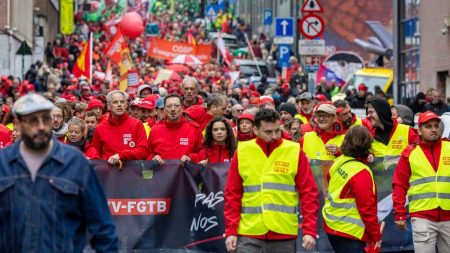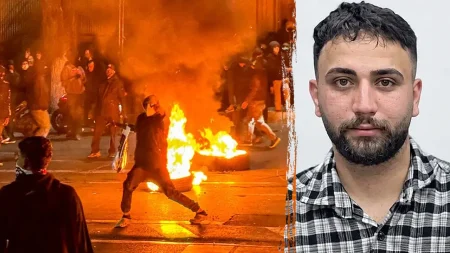



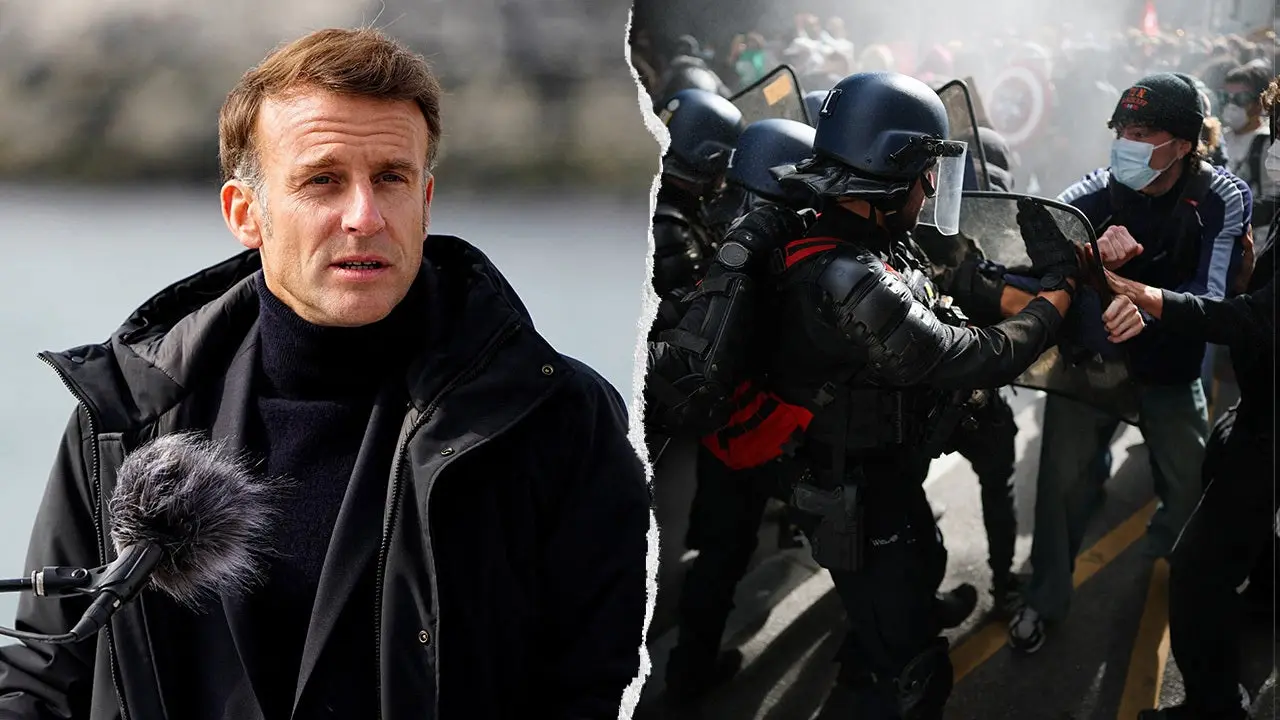
There is a moment in every country’s life when a small, specific grievance suddenly becomes a mirror held up to everything else. In France, that moment arrived in September, when students in the Paris suburbs walked out of overcrowded classrooms, past broken radiators and peeling paint, and into the streets to demand something basic: a school system that actually worked. The complaints were not revolutionary. Teenagers wanted smaller classes, functioning heating and cooling, teachers who showed up and were replaced when they didn’t, and buildings that did not feel like they were falling apart. But what began as a legitimate outcry over crumbling schools quickly turned into something much larger, and much more dangerous. Across the country, protests spread, violence flared, hundreds of students were arrested, and some were seriously injured, including a teenager whose hand was blown off by a police grenade. The scenes were chaotic, frightening, and deeply confusing. Were these really students? Were these really about education? According to Simone Rodan-Benzaquen, the Foundation for Defense of Democracies’ senior envoy for Europe, the answer is layered. The anger is real, she said, but the violence is organized. Political forces, especially on the far left, have stepped into a genuine crisis and are using it to push France toward a much broader confrontation with the state. It is a strategy that has little to do with fixing schools and everything to do with power. After all, as Rodan-Benzaquen pointed out, destroying a school is a strange way to improve education. The protests, in other words, are not just about classrooms anymore. They have become a referendum on France itself, on its broken politics, its crushing debt, and its inability to agree on a shared future.
The strangest part of this crisis is that France is not a poor country, at least not in the way we usually understand poverty. According to the OECD’s 2026 Education at a Glance report, France spent $16,674 per student in general upper secondary education in 2023, compared with an OECD average of $12,421. That is a significant amount of money, more than many countries that outperform France on educational outcomes. And yet teachers and students continue to describe a system in crisis, with basic shortages that no amount of per-student spending seems to fix. How can that be? The answer lies in where the money goes. France’s Education Ministry’s 2026 statistical overview shows that 72% of education expenditures go to salaries, social contributions, and pensions for teaching and non-teaching personnel. Only 8.5% goes toward investment, including infrastructure and equipment. In other words, the system is spending almost all of its resources on maintaining the people who run it, while the physical places where learning happens are left to rot. This is not necessarily a sign of corruption or mismanagement; it is a reflection of France’s broader financial reality. The country has made expensive social commitments for decades, and now it is trapped by them. According to Eurostat, French public debt stood at 117.6% of GDP in the first quarter of 2026, the third-highest ratio in the European Union, behind only Greece and Italy. Reuters reported in October that rising borrowing costs and investor concerns have severely limited the government’s ability to resolve unrest through additional spending, which was the strategy France used during previous waves of protests. You cannot keep borrowing your way out of a debt crisis forever. As Harvey Feigenbaum, a professor of political science and international affairs at George Washington University, put it, France is in deep debt and wants to cut expenses, but years of financial pressure and neglected school facilities have fueled frustration among students. The result is a paradox: a country that spends more than most on education, yet cannot provide its children with safe, comfortable places to learn, and a government that cannot simply throw more money at the problem without making the underlying financial crisis worse.
To understand how France reached this point, you have to look at the political wreckage left behind by President Emmanuel Macron. When Macron won the presidency in 2017, he promised something bold: to move beyond the traditional left-right divide that had defined French politics for generations. He would take the best ideas from both sides, combine them into a new centrist movement, and lead France into a modern, pragmatic future. On paper, it sounded brilliant. In practice, it was a disaster. Feigenbaum argues that Macron’s strategy attracted moderate voters from the established parties of the center-left and center-right, and in doing so, essentially destroyed those parties. The moderate left and moderate right were hollowed out, their voters absorbed into Macron’s movement, and their institutions left to wither. But Macron did not build a durable governing coalition to replace them. He built a movement around himself, and when his popularity faded, there was nothing left to hold the center together. “Macron is a smart man, but he’s a terrible politician,” Feigenbaum said. The collapse of the traditional political center created space for more ideologically polarized movements to grow. It also made governance nearly impossible. Macron’s controversial pension reforms, which aimed to reduce long-standing public benefits, triggered massive protests and had to be suspended until 2028. Then came the snap parliamentary elections in 2024, which produced a deeply divided National Assembly with no governing majority. The result is paralysis. Even if the government wanted to do something coherent, Feigenbaum said, it simply doesn’t have the votes. Prime Minister Sébastien Lecornu is left to handle the immediate unrest while Macron faces questions about the stability of the political system he helped reshape. The center has not just weakened; it has effectively disappeared, and in its place is a fractured landscape where extremists on both sides are thriving.
The far left, in particular, has seized the opportunity. France’s hard-left party, La France Insoumise, or LFI, led by the fiery Jean-Luc Mélenchon, has become a central and deeply contentious player in the school protests. Reuters reported in early October that French intelligence agencies had told a government crisis meeting that LFI and affiliated activists played a role in fomenting the unrest. Interior Minister Laurent Nuñez cited agitators moving between schools to encourage violence. LFI has denied responsibility and accused authorities of aggravating tensions through their response. But Rodan-Benzaquen sees something more calculated at work. “There is an obvious instrumentalization, obvious manipulation,” she said, arguing that activists are deliberately trying to push some protesters toward violence. She links this to Mélenchon’s broader political strategy ahead of the 2027 presidential election. Mélenchon, she argues, is playing a double game. On one hand, he wants to scare voters on the right and far right, pushing them toward the far-right candidate and making himself the only viable alternative. On the other hand, he wants to mobilize his own camp, especially younger voters and immigrant communities, by portraying the far right as an increasingly serious threat. Intensifying political confrontation helps him do both. It is a calculated strategy, not a spontaneous response to students’ concerns. French media have documented the involvement of LFI politicians in the demonstrations, though there is disagreement over whether the party helped initiate them or simply jumped in after they began. An investigation by Le Monde examined a police intelligence assessment describing radical left activity around schools in Seine-Saint-Denis but questioned whether the evidence proved that the entire movement was politically orchestrated. Feigenbaum offers a more cautious interpretation, describing some of the violent perpetrators as fringe provocateurs who exploit broader demonstrations without necessarily directing them. “They’re not being organized by some mastermind at the national level, at least as far as anyone knows,” he said. But even with that caveat, the presence of organized political forces within the protests has changed the nature of the crisis.
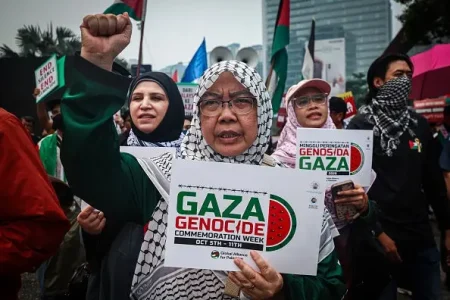
The unrest has also opened the door to a broader coalition of groups with very different agendas. Rodan-Benzaquen argues that Mélenchon’s emphasis on Gaza and the Palestinian cause has helped bring together political constituencies that might otherwise have little in common. “It’s the idea of an intersection of different movements where they manage to bring together the different groups, the far left, Islamist movements, pro-Palestinian activists,” she said. Palestinian flags have appeared at the demonstrations, a sign of how far the movement has expanded beyond its original educational demands. This is not just about schools anymore; it is about a wider narrative of oppression and resistance, with students cast as the latest victims of a brutal state. Rodan-Benzaquen cautioned against reducing the entire crisis to immigration or religion. “This goes far beyond the issue of immigration. It goes far beyond the issue of Islamism. It goes far beyond the issue of Islam,” she said. But she believes Islamist elements are attempting to capitalize on the turmoil, and the mixing of causes is creating a volatile, unpredictable environment. Perhaps even more worrying is the way social media is deepening the divide. Rodan-Benzaquen described how her own 17-year-old son created separate left-wing and right-wing Instagram accounts and encountered radically different portrayals of the same unrest. On one account, the story was about police violence and innocent students being attacked. On the other, it was about violent protesters and the need for order. “Now, if you live in two drastically different realities, it is very complicated to come to any form of dialog and end agreement,” she said. That polarization is not just a French problem, but in France, it is becoming existential. When people cannot even agree on what is happening, how can they possibly agree on a solution?
The government has tried to respond, but its concessions have only whetted the appetite for more. Reuters reported that Education Minister Édouard Geffray announced an emergency plan to deploy 3,000 qualified educators to particularly affected schools, at a cost of several dozen million euros. Student unions welcomed the measure as an initial victory but pledged to continue demonstrating. As of late October, 141 schools remained closed, and nearly 10% of teaching hours in French public high schools remained unstaffed. The protests have become a test of whether France can reconcile its costly promises with its financial reality before the divisions consuming its schools deepen further. The fundamental problem is not just a lack of money, or a lack of political will, or even a lack of competent leadership. It is a systemic failure of the country’s entire model of governance. France has built a state that promises its citizens security, education, and dignity, but it can no longer afford those promises, and it cannot agree on how to reform them. The moderate center that might have forged a consensus is gone. The far left and far right are using the crisis to tear the country apart. And ordinary people, especially young people, are left to suffer the consequences. Rodan-Benzaquen worries that the demonstrations reflect a society increasingly divided into competing political realities, where dialogue is nearly impossible. Feigenbaum sees a government burdened by accumulated financial obligations and deprived of the political consensus needed to reform them. The result is a country spending heavily to sustain its public institutions while struggling to deliver the services citizens expect. What began as a rebellion against broken classrooms has become something much deeper: a rebellion against the broken promise of France itself. And until the country finds a way to rebuild both its schools and its political center, the anger will only continue to grow, spilling out of classrooms and into the streets, over and over again.