


Paragraph 1
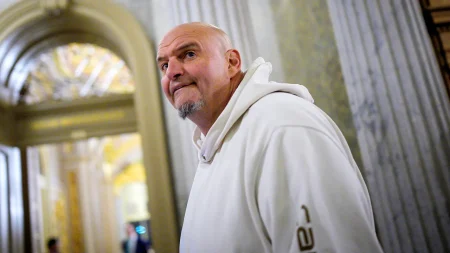
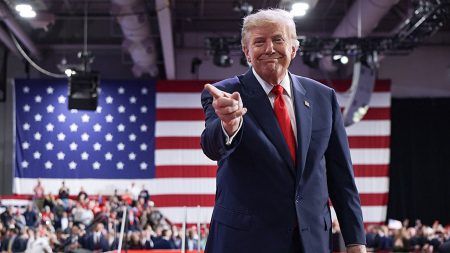
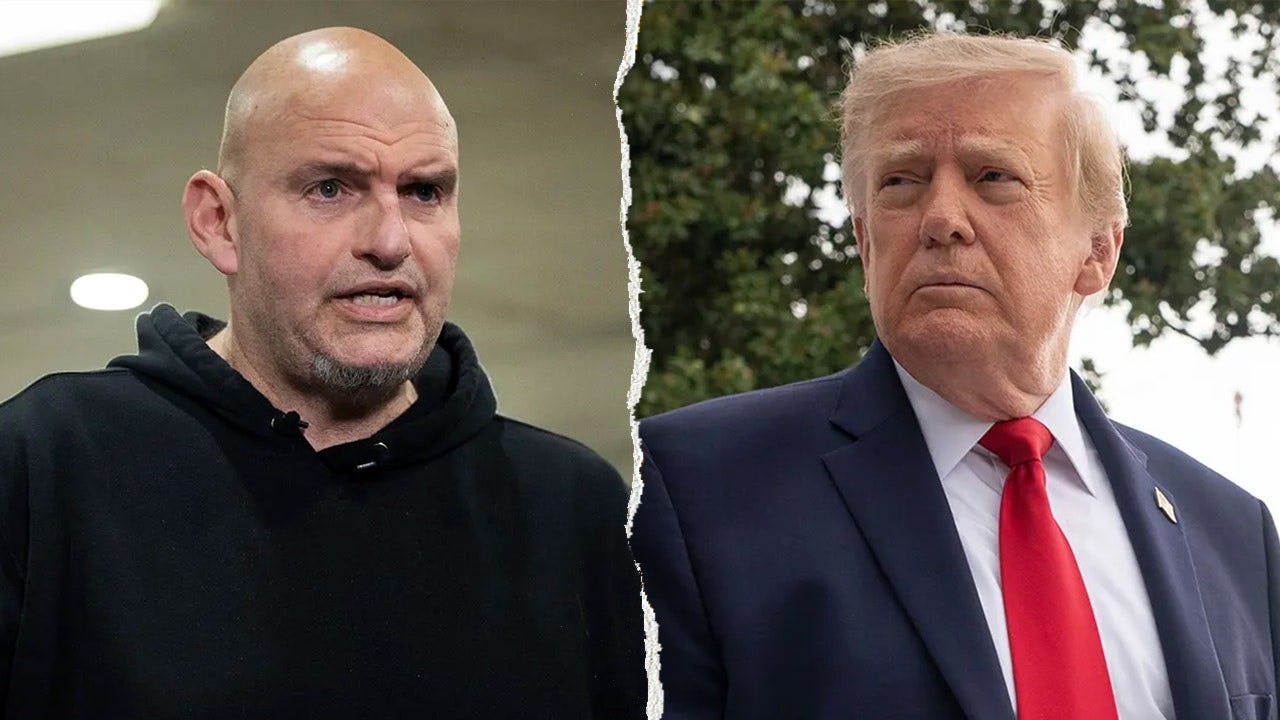
Politics can be a strange and unpredictable game, and every once in a while, a moment comes along that makes even the most seasoned political observers do a double take. This past weekend offered exactly that kind of moment, as President Donald Trump stepped off Air Force One at Joint Base Andrews and casually floated an idea that would have seemed almost unthinkable just a few years ago: that Senator John Fetterman, the famously progressive Democrat from Pennsylvania with the hoodie-and-shorts vibe, might be better off joining the Republican Party. And not just better off, but genuinely welcome, celebrated, even embraced. Trump didn’t hold back when a reporter asked whether he had spoken with Fetterman about switching sides, and whether such a move would be welcomed by the GOP. “I’d love to see it,” Trump said, with the kind of easy confidence that suggests he’s been thinking about this for a while. “I think he’s great.” It was a remarkable statement, not only because Fetterman remains a sitting Democratic senator who has voted with his party the vast majority of the time, but also because it signals just how much the political ground has shifted in recent months. Fetterman has become something of a maverick, a Democrat who isn’t afraid to break ranks on hot-button issues, and that has made him a fascinating figure in a deeply polarized Washington. Trump’s comments were more than just a passing compliment; they were an open invitation, a public courtship of a man who increasingly seems to occupy a space between the two parties, even if he hasn’t officially left his own.
Paragraph 2
Trump’s praise for Fetterman was warm and personal, and it went beyond the usual political flattery. “He’s a great guy,” Trump said, adding that Fetterman has “magnificent parents” and describing him as a “very solid person” with sharp instincts. But what seemed to resonate most with the former president was Fetterman’s practical, no-nonsense approach to governance. “He’s smart and all that, but he’s got great common sense,” Trump remarked, a compliment that carries extra weight coming from a man who has always prized street smarts and instinct over traditional political pedigree. Trump also suggested that Fetterman’s political future might be brighter outside the Democratic Party, noting that polling shows him performing better as a Republican than as a Democrat. “If you look at the polls, he does better as a Republican than he does as a Democrat,” Trump said, essentially making the case that Fetterman’s brand of politics—blunt, populist, and occasionally contrarian—fits more naturally with the GOP’s current energy. It’s a striking observation, especially when you consider that Fetterman was once seen as a progressive champion, winning his Senate seat in 2022 after a tough campaign that centered on working-class issues and a promise to fight for the little guy. But Washington has a way of changing people, or at least revealing who they really are, and Fetterman has increasingly seemed less like a traditional Democrat and more like a political independent who happens to caucus with the left.
Paragraph 3
The numbers tell part of the story. Since joining the Senate in 2023, Fetterman has voted with his Democratic colleagues nearly 90 percent of the time, which would seem to paint him as a reliable party man. But look a little closer, and the picture gets more complicated. During the current session of Congress, that voting alignment has dropped to just under 81 percent, a noticeable shift that hasn’t gone unnoticed by political insiders on either side of the aisle. Fetterman has broken with Democrats on a range of key issues, most notably the Iran war and immigration, where he has taken positions that align more closely with Republican hardliners than with the progressive wing of his own party. These aren’t minor disagreements; they’re fundamental questions about foreign policy and border security that have defined the current political moment. And Fetterman hasn’t been shy about voicing his dissent, often in his trademark blunt style, which has endeared him to Republicans even as it has frustrated many Democrats. His willingness to cross the aisle has fueled speculation that he might eventually make the jump official, and that speculation has only grown louder as Fetterman has continued to court conservative audiences and build relationships across the political divide. He has reportedly used Republican fundraising platforms to solicit donations, which is almost unheard of for a sitting Democratic senator, and he has developed a close friendship with Senator Katie Britt of Alabama, a rising Republican star. These are not the actions of someone who is simply trying to get along with the other side; they are the moves of someone who seems genuinely comfortable in a space that defies easy labels.
Paragraph 4
The signs have been piling up in recent weeks, and they point to a politician who is increasingly at ease with the GOP, even if he hasn’t formally changed his registration. Last month, Fetterman made a surprise appearance at the Republican Midterm Convention, where he recorded a video introducing Senator Dave McCormick, a Republican from his home state of Pennsylvania. For a Democrat to appear at a Republican convention is unusual enough, but to do so in such a supportive role was a striking moment that set the political world buzzing. Then came an even more telling slip during an appearance at the Texas Tribune’s TribFest, an annual gathering of political and policy heavyweights. An attendee asked Fetterman why he didn’t run for office as an independent, and Fetterman’s response was both revealing and hilarious in its honesty. “Because I’m a lifelong Republican,” he said, before catching himself and acknowledging the mistake. “I guarantee you that will break through. That will get clipped.” It was a momentary slip of the tongue, but as any political observer will tell you, these little moments often reveal more than carefully crafted speeches ever do. Whether Fetterman was joking, testing the waters, or simply making a Freudian slip, the comment captured the strange and fascinating place he now occupies in American politics. He is a Democrat who sometimes sounds like a Republican, votes like a maverick, and seems to enjoy the attention and controversy that comes with defying expectations. And with Trump publicly welcoming him into the fold, the pressure on Fetterman to make a definitive choice is only going to grow.
Paragraph 5
The bigger question is what all of this means for the broader political landscape, and for Fetterman’s own future. Republicans, for their part, have been openly courting him, with several senators saying they would welcome him into their caucus as the GOP eyes a larger Senate majority. The math is simple: adding Fetterman to the Republican column would be a major coup, both in terms of raw numbers and in terms of the symbolic message it would send. A Democratic senator from a key battleground state switching parties would be a seismic event, one that would dominate headlines for weeks and potentially reshape the balance of power in Washington. But it would also be a deeply personal decision for Fetterman, who has built his political identity on being an authentic, independent-minded voice for working-class Americans. He has spoken openly about his struggles with depression and his recovery from a stroke, and he has cultivated an image as someone who doesn’t play the usual political games. Switching parties would be the ultimate act of political independence, but it would also come with enormous risks. He would face accusations of betrayal from Democrats, scrutiny from Republicans who might not fully trust him, and the challenge of rebuilding his political brand in a new party. And yet, Trump’s comments suggest that the door is wide open, and that Fetterman would be welcomed with open arms, not just as a rank-and-file member, but as a valued voice in a party that is itself still figuring out its identity in the post-Trump era. It’s a fascinating dynamic, one that speaks to the fluidity of modern politics and the ways in which traditional party labels are becoming less meaningful.
Paragraph 6
For now, Fetterman remains a Democrat, and his office has not responded to requests for comment on Trump’s remarks. But the speculation isn’t going away, and neither is the attention. Every time Fetterman breaks with his party, every time he appears at a Republican event, every time he says something that sounds more like a conservative than a progressive, the conversation intensifies. Is he simply being true to his own beliefs in a system that punishes independence, or is he laying the groundwork for a more dramatic political transformation? The answer probably lies somewhere in between. Fetterman has always been something of a political outsider, a man who doesn’t fit neatly into the boxes that party leaders and pundits like to create. He has shown a willingness to work across the aisle, to speak his mind, and to challenge the orthodoxies of both parties. Whether he ultimately decides to stay with the Democrats, switch to the Republicans, or continue to exist in the gray area between them, one thing is certain: he has already become a symbol of the restless, unpredictable mood of the American electorate. In a time when so much of politics feels scripted and calculated, Fetterman stands out as a genuine, if sometimes contradictory, figure. And with Trump now publicly praising him and inviting him to join the GOP, the spotlight on Fetterman will only grow brighter. The next chapter in this story is yet to be written, but it promises to be one of the most intriguing political dramas of the year. Whether he ever makes the jump or not, Fetterman has already changed the conversation, and that might be exactly what he intended all along.