


As the clock ticks down to Election Day with just over three weeks remaining, a palpable sense of urgency grips the Democratic Party. Across the country, once-unthinkable opportunities are emerging in deep-red territory—South Carolina, Kansas, Alaska, Iowa, Ohio, and Texas are suddenly within striking distance. Democrats dream of expanding the electoral map and reclaiming majorities in both the House and Senate, but a gnawing fear undercuts their optimism: the staggering financial might of their Republican opponents. It’s a cold, hard numbers game that threatens to turn a promising landscape into a minefield of missed opportunities. The GOP has poured an unprecedented $400 million more into the midterms than Democrats this cycle, according to AdImpact, a leading advertising tracker. For Democrats, this isn’t just a statistic—it’s a daily struggle between ambition and reality, forcing them to make agonizing choices about which races to fund, which candidates to support, and which dreams to quietly shelve. The enthusiasm and momentum are real, but so is the anxiety that money—or the lack of it—could tip the balance in the final stretch.
The sheer scale of the Republican spending advantage has fundamentally reshaped Democratic strategy. It’s not just about having less to spend; it’s about having to justify every dollar while watching the other side flood the airwaves with seemingly limitless cash. Lauren French, communications director for the Senate Majority PAC, the leading outside group backing Democratic Senate candidates, puts it bluntly: “We are being outspent by the Republicans. That’s just a fact.” She describes a system where Republicans “have really transactionalized elections, so they have monopoly money to play with, whereas we are working with real resources.” That distinction—between Monopoly money and real resources—captures the emotional toll on campaign operatives who must stretch every donation, every grassroots contribution, to compete against super PACs fueled by billionaires and dark money. The Senate Majority PAC did raise record sums over the past quarter, but French admits, “of course, more recess resources would be helpful.” The word “recess” slips out, perhaps subconsciously, reflecting how this election feels like a frantic scramble during a school break—too much to do, too little time, and not enough supplies. Every decision to invest in one state means neglecting another, and the fear of leaving a promising candidate high and dry is a constant, gnawing presence.
Nowhere is this painful balancing act more visible than in the newly competitive battlegrounds that Democrats never expected to contest. In South Carolina, a state that hasn’t elected a Democrat to the Senate in decades, the Fox News Power Rankings recently shifted from Solid to Likely Republican—still an uphill climb, but a sign of new life. Kansas, reliably red, is now rated Lean Republican, while Alaska, Iowa, Ohio, and Texas are outright toss-ups. These are the races where Democratic groups are being forced to make unprecedented, risky investments. The Senate Majority PAC is rushing money into these states, and American Bridge PAC has dumped over $20 million into South Carolina, Kansas, Florida, and Mississippi. But for every dollar they spend, the GOP’s aligned groups—the Senate Leadership Fund, the Trump-allied MAGA Inc., and a super PAC bankrolled by Elon Musk—are spending three or four. A veteran Democratic Senate operative, speaking anonymously, captures the despair: “The hard reality is there isn’t enough funding to protect the toss-up states and also heavily invest in the red-leaning states where we’re playing offense.” These are not abstract choices; they are heartbreaking ones, made by people who know that a few hundred thousand dollars could mean the difference between a candidate’s message being heard or drowned out. French acknowledges the strain, saying this is the time when “everyone really has to make some of those belt-tightening decisions,” and that they are “looking at every race very closely” to ensure they aren’t leaving anyone shortchanged. But each decision leaves a residue of doubt.
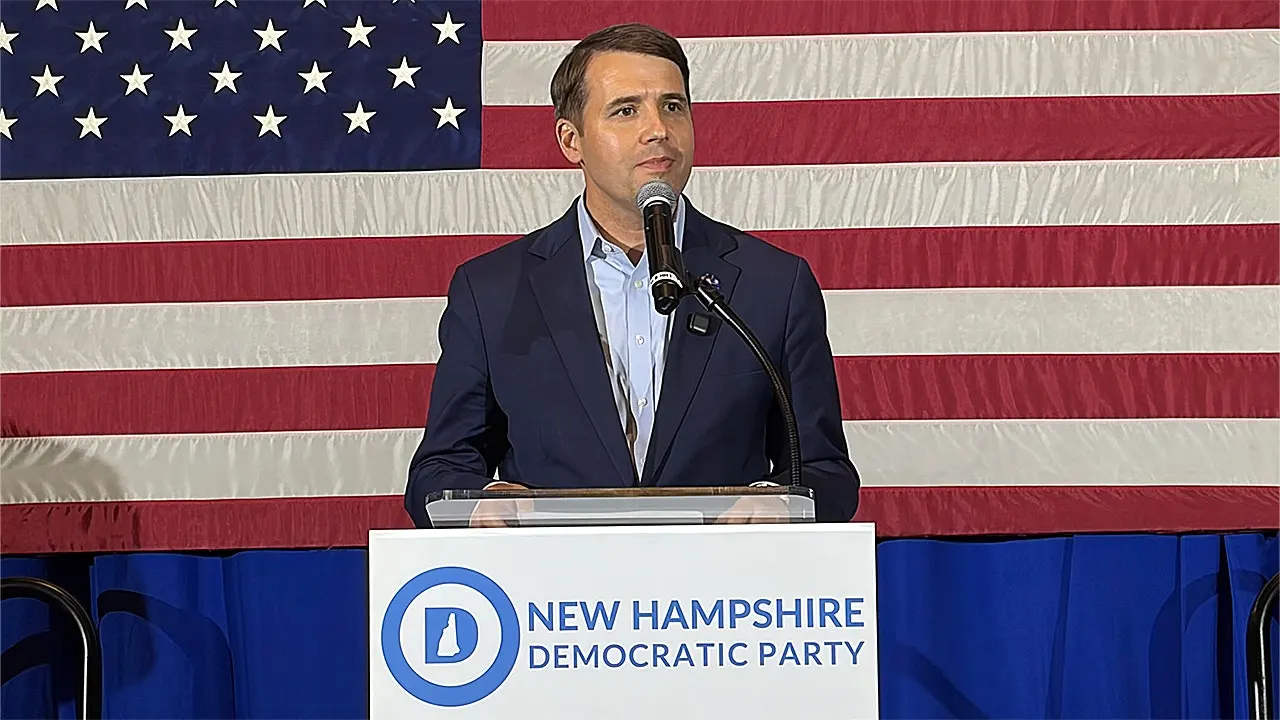
The struggle extends to the House, where the Democratic Congressional Campaign Committee (DCCC) is sounding alarms that sound almost like a cry for help. In a memo shared with donors, the committee warned that Republicans “are now flooding districts across our battlefield with MAGA Inc. and Trump super PAC money that we simply cannot match.” The memo, obtained by Fox News Digital, made a direct plea for an additional $17 million by October 22—just days away—to “close the sale” in winnable races. This isn’t a polite request; it’s a desperate, last-ditch call to arms. For grassroots supporters, the ask is deeply personal: they are told that their individual donations, no matter how small, are the only counterweight to the GOP’s war chest. In New Hampshire, Democratic Senate nominee Rep. Chris Pappas sent out a fundraising pitch noting that a pro-Trump PAC had reserved $10 million in advertising in his state, leaving him outspent three to one. The raw emotion in his plea—”we’re being outspent 3-to-1″—is a reminder that behind every poll number and ad buy are real human beings fighting against fatigue and disillusionment. They know history is on their side, with the party in power traditionally losing seats in midterms, and they see the political landscape—inflation, high gas prices, an unpopular war with Iran, and Trump’s negative approval ratings—working in their favor. Yet the financial gap is a more immediate, visceral threat. They can feel the momentum slipping away with every Republican ad that airs, every dollar they can’t match.
On the other side, Republicans are savoring this unusual position. Traditionally, the party out of power in the White House enjoys a financial edge, but this cycle the GOP has flipped the script. The Senate Leadership Fund, led by Republican Leader John Thune, claims “a financial advantage that neither party has had before.” Chris Gustafson, SLF’s communications director, proudly declares that they will “continue to invest unprecedented resources across the map to maintain the Republican Senate majority.” This isn’t just bravado; it’s a calculated strategy. Veteran GOP strategist Jesse Hunt points out that “Republican outside groups will have played a decisive role in positive Republican performance if they have a good election night despite what is strong headwinds working against them.” He emphasizes that this is “not an advantage Republicans typically have” and it’s “definitely a contributing factor to a lot of candidates on the ballot right now keeping their races close.” The GOP’s spending spree is not just about winning seats; it’s about smothering Democratic momentum under an avalanche of advertising. It’s a psychological warfare, a way to make Democratic candidates look weak and outgunned, and to convince voters that Republican inevitability is a fact, not an illusion. For Republican operatives, spending this money is exhilarating—a rare chance to play offense on a field traditionally tilted the other way.
But beyond the party battle stations, there’s a deeper human story unfolding in every competitive district and state. Campaigns are staffed by young, idealistic volunteers and seasoned operatives who burn the midnight oil, staring at spreadsheets that show red numbers they can’t seem to escape. They make tearful calls to donors, asking for one more contribution, knowing that the check might never come. They watch Republican ads dominate the local news, their own messages squeezed into smaller, less favorable slots. For candidates like Pappas or the long-shot Democrats in Kansas and South Carolina, this fight is intensely personal—they are risking their reputations, their time, and their private lives on a chance to represent their communities, and they deserve a fair shot. The financial imbalance feels like an unjust referee, tilting the field before the game even starts. Yet, these candidates and their teams persist, driven by a belief in the cause. They remind themselves that money doesn’t always determine outcomes, that voters can see through the constant ads, that ordinary people, not just billionaires, have a voice. The midterms are not just about policies and polls; they are about thousands of individuals working around the clock, hoping against hope that their efforts will make a difference. And as Election Day approaches, they hold on to the belief that passion, hard work, and a message that resonates can surmount the greatest financial obstacle—because otherwise, what’s left to believe in?