



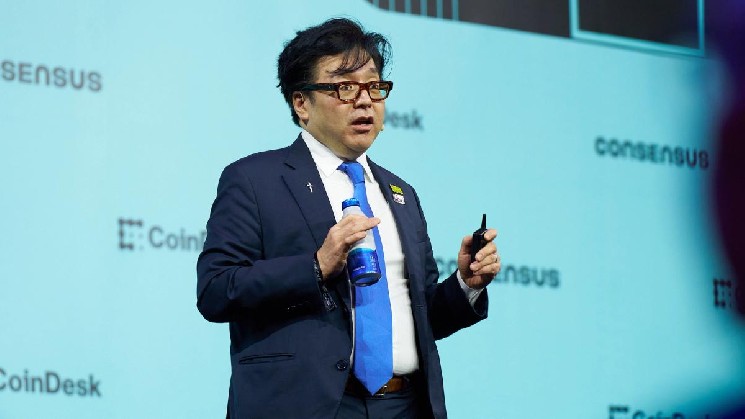
Bitmine Closes In on 5% of All Ethereum as Lee Points to Wall Street Tokenization, AI, and Long-Term Treasurey Holders as the Next Big Crypto Catalysts
Lee’s Market Outlook: A Convergence of Structural Catalysts
The cryptocurrency market has spent much of the past year looking for a clean narrative — a single catalyst that can push digital assets beyond their recent trading ranges and into a sustained rally. According to Lee, whose comments accompanied Bitmine’s latest digital-asset report, the next upward move may not be driven by one event at all. Instead, Lee said, a set of structural forces is quietly aligning: Wall Street’s growing use of blockchain technology to represent financial assets, the rapid rise of artificial intelligence applications in crypto, and the emergence of crypto treasury companies that are willing to hold tokens for the long term. Taken together, these trends could provide the foundation for a new rally — one built more on durable demand than on speculative momentum. Tokenization, in particular, has moved beyond the experimental phase. Traditional financial institutions are increasingly exploring ways to put real-world assets such as money-market funds, private credit, and real estate on blockchain rails, making digital settlement more practical and more mainstream. At the same time, AI tools are beginning to interact with on-chain protocols in ways that barely existed a year ago, from automated portfolio management to machine-driven trading strategies. Lee’s point is not that any one of these forces will trigger a sudden price spike, but that their convergence is slowly changing the character of the market. If that thesis is correct, the next crypto rally could be longer and more structurally grounded than the short-lived surges of past cycles.
Ethereum Takes Center Stage in the Corporate Treasury Movement
If there is one asset where Lee’s thesis is most visible, it is Ethereum. As the second-largest cryptocurrency by market capitalization, Ethereum has become the default platform for tokenized assets, decentralized finance, smart contracts, and staking-based yield. That makes ETH an especially attractive choice for corporate treasuries looking to hold a productive digital asset rather than a passive reserve. The corporate treasury movement was once almost exclusively associated with Bitcoin, but it is now expanding into Ethereum in a significant way. Bitmine Immersion Technologies is arguably the clearest example, having transformed itself into an ether-focused treasury company with a stated goal of owning 5% of the entire ETH supply. That ambition would have sounded extraordinary in the early years of crypto, but today it reflects a broader shift in institutional thinking. Companies are no longer treating digital assets as speculative line items. They are integrating them into long-term balance-sheet strategies, staking their tokens to earn yield, and positioning themselves as major stakeholders in the networks they support. Ethereum, with its deep ecosystem of applications and its transition to proof-of-stake, offers these companies something Bitcoin cannot: the ability to earn income while still holding the asset. For Bitmine, that combination has turned an aggressive accumulation campaign into something closer to a yield-generating treasury operation.
Bitmine’s Latest Buy: Another 12,532 ETH Added to the Vault
The latest numbers show exactly how aggressive that campaign has become. Bitmine purchased another 12,532 ETH last week, a transaction worth approximately $32 million at Monday’s price. That adds to a steady weekly cadence that has not stopped since the company pivoted to an ether-focused strategy in June 2025. With the purchase, Bitmine’s total holdings climbed to 6,028,946 ETH, worth roughly $15.3 billion at current market prices. Those numbers place Bitmine among the largest corporate ETH holders in the world, and the consistency of the buying pattern is noteworthy. This is not a company opportunistically buying dips or timing the market. It is a firm executing a disciplined accumulation strategy, week after week, regardless of short-term volatility. The approach resembles a large-scale dollar-cost averaging program, but with a level of commitment that is rare in the crypto market. By spreading its purchases across different market conditions, Bitmine also avoids the slippage and price disruption that could come from trying to acquire a massive position in one single trade. For market observers, the signal is clear: Bitmine believes Ethereum has long-term value, and it is prepared to keep building its stake until it reaches its target.
Nearly There: Bitmine Is Only 76,000 ETH Short of Its 5% Target
With the latest addition, Bitmine now controls approximately 4.9% of Ethereum’s token supply, which currently stands at around 122.1 million ETH. That leaves the company roughly 76,000 ETH short of the 5% threshold it set for itself. At last week’s pace, that gap could be closed in about six weeks. While moving from 4.9% to 5.0% may sound like a small step, the dollar amounts involved are enormous. The remaining 76,000 ETH is worth nearly $200 million at current valuations, and the final sprint toward that number is likely to draw more attention from analysts, traders, and institutional investors who monitor corporate crypto holdings. The 5% figure is more than a vanity metric. In a market where supply is often scrutinized for scarcity, a single corporate entity owning 5% of all ether is a meaningful structural development. It also matters because so much of Bitmine’s ETH is staked. Money that is staked is, by design, less liquid than ordinary holdings, which means that a growing portion of the circulating supply is being removed from active trading. As Bitmine pushes toward its goal, the combination of direct ownership and staked tokens could make ETH supply even tighter, potentially adding upward pressure on price if demand remains steady.
A Six-Week Window: What Happens When Bitmine Reaches Its Goal?
Lee said last week that Bitmine intends to stop accumulating ETH once it reaches the 5% milestone. That statement gives the current buying program a clear and predictable endpoint. If the company keeps up its recent pace, it will cross the threshold in roughly six weeks, ending one of the most consistent institutional accumulation campaigns in Ethereum’s history. The planned halt is significant for several reasons. First, it signals that Bitmine’s management views 5% as the optimal position size — enough to be a major network stakeholder without overextending the company’s balance sheet or inviting unnecessary regulatory attention. Second, it creates a finite window during which buyers know that Bitmine will remain active in the market. After that, the company will shift fully into a holding-and-staking phase, generating income from its massive treasury instead of expanding it further. Lee did not indicate any intention to sell, which suggests that the 5% threshold is more about portfolio management than about profit-taking. For the Ethereum community, the next few weeks will therefore be closely watched. The end of Bitmine’s accumulation phase does not necessarily mean the end of its influence. The company will still control a sizable share of the ETH supply, earn millions in staking rewards, and likely remain one of the most visible corporate supporters of the Ethereum network.
Staking Rewards Add a $336 Million Annualized Layer to Bitmine’s Treasury
Behind the headline numbers is a yield engine that makes Bitmine’s strategy even more compelling. The company has staked approximately 5.07 million ETH, or 84% of its entire holdings. At current yields, Bitmine projects roughly $336 million in annualized staking revenue. That income transforms the company from a simple cryptocurrency holder into a digital-asset income provider. Staked ETH is locked into Ethereum’s proof-of-stake protocol, where it helps secure the network and process transactions. In return, stakers earn rewards in the form of newly issued ETH and transaction fees. For Bitmine, staking more than five million ETH means its treasury is constantly generating value, rather than sitting idle. Even if Ethereum’s price remains flat, that annualized revenue stream provides a powerful buffer for the company’s operations. And if the price of ETH rises, the dollar value of those staking rewards rises with it. Lee’s broader argument — that Wall Street tokenization, artificial intelligence, and long-term treasury holders are converging to drive a new rally — is now being tested in real time on Bitmine’s balance sheet. The company is not merely betting on Ethereum’s future. It is building an operation that earns income from that future while simultaneously reducing the liquid supply of the asset. Whether that combination will be enough to spark a wider market rally remains to be seen, but the pieces are clearly in place. With roughly six weeks to go before Bitmine hits its 5% threshold, all eyes in the crypto world will be watching to see whether one company’s disciplined accumulation can help write the next chapter in Ethereum’s story.