


The Queen of the Skies Almost Touched the Ground
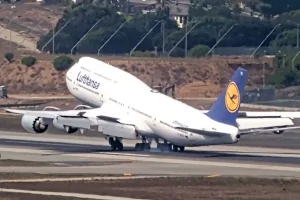
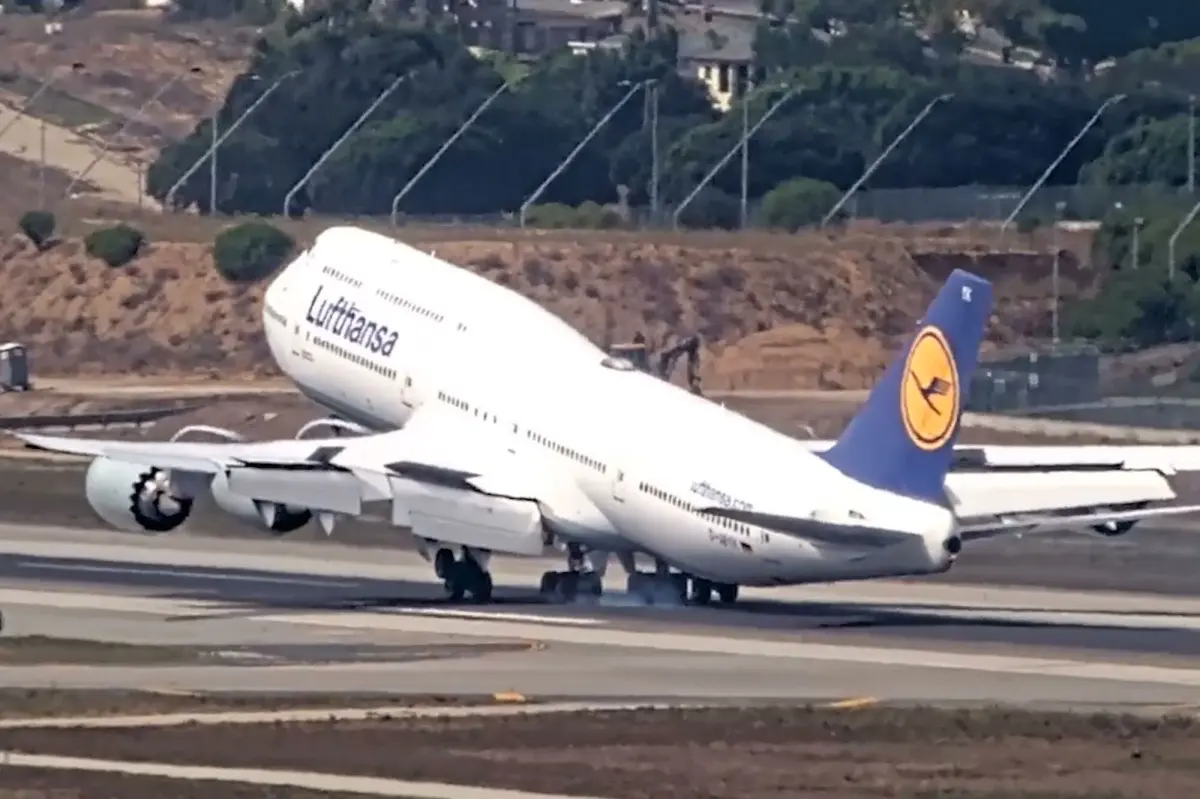
It was one of those afternoons at Los Angeles International Airport that proves why aviation enthusiasts never leave home without a camera. The sun hung over Southern California, the Santa Monica Mountains glowed in the distance, and the steady rhythm of arriving aircraft filled the air as spotters from Airline Videos Live trained their lenses on Runway 24R, hoping for something interesting. They got far more than a routine arrival. Lufthansa Flight 456, a magnificent Boeing 747-8 that had spent eleven hours crossing the Atlantic from Frankfurt, Germany, descended toward the tarmac in the kind of moment that makes aviation so mesmerizing. The massive jumbo jet, four engines thundering, landing gear lowered, wings spanning more than 220 feet, was on the final stage of a long journey. But as the aircraft closed in on the runway, it became clear to anyone watching carefully that this was not a perfect approach. The touchdown point seemed to be edging further down the runway than it should have been, and the seconds were ticking away as the pilots processed what they were seeing. Then came the decision that transformed an ordinary landing into a heart-stopping spectacle. The engines roared back to life, the nose of the magnificent 747 pitched up sharply, and the enormous aircraft began to climb again, aborting the landing in a maneuver known as a go-around. Yet the climb came with a terrifying twist. As the nose rose, the tail of the 250-foot-long aircraft dipped toward the asphalt, and in the video footage, the gap between the rear fuselage and the runway appeared to shrink to mere inches. For a long, breathless moment, it looked as though the giant was about to scrape its tail on the ground, an event that could have caused massive damage or even disaster. Then, slowly, the angle stabilized, the engines pulled, and the jumbo climbed away safely, carrying its passengers back into the sky to prepare for another approach. On the ground, the spotters looked at one another in disbelief, aware that they had captured something truly unforgettable.
The go-around that saved Lufthansa Flight 456 is a textbook example of how pilots recover from an approach that has gone wrong, and why aviation safety is rooted in training and judgment. Every pilot who trains for a living is taught the same thing from day one: there is no shame in aborting a landing and trying again. The decision to continue an unstable approach because you feel pressured, because you want to be on time, because you are tired, is the kind of mistake that has led to tragic accidents throughout aviation history. The crew of Flight 456 had every reason to abort. The touchdown zone was slipping past the safe envelope, the landing would have been too long to stop comfortably within the remaining runway, and the safest course of action was simply to add power and climb away. In a smaller aircraft, a go-around is simple enough. But for a Boeing 747-8, which stretches about 250 feet from nose to tail and stands more than 60 feet tall, the maneuver is far more delicate. When the nose pitches up for a climb, the tail swings downward, and if the pilot pulls back too aggressively, the rear of the fuselage can strike the runway in what is known as a tail strike. A tail strike can puncture the hull, damage critical flight controls, and take an aircraft out of service for weeks. The video captured at LAX shows just how close the crew came to that catastrophic outcome. The nose rose dramatically, far more steeply than usual, and for a fraction of a second, the tail of the 747 seemed to hover over the runway as if suspended by a thread. The fact that no physical contact occurred is a testament to the skill, composure, and split-second decision-making of the pilots, who kept the huge jet balanced on the edge of aerodynamics and pulled it back from the brink.
To understand the significance of this near miss, you have to appreciate the aircraft at the center of it. The Boeing 747 is one of the most iconic machines ever built, a four-engine giant that has carried generations of travelers across oceans and continents since its first flight in 1969. The design, with its distinctive upper deck hump and sweeping sweep of its wings, became an instant symbol of the jet age, making international travel accessible to millions and launching an era of mass aviation. The 747-8, the final and longest version of the family, entered service in 2012 with a stretched fuselage, advanced engines, and modernized avionics, and it holds a special place in Lufthansa’s fleet. The German airline is the largest operator of the 747-8, flying more than half of the remaining passenger 747s left in the world. For Lufthansa, these giants are not just aircraft; they are flagships, the pride of a carrier that looks back on a century of aviation history. On Saturday afternoon, that flagship was put to the test in front of a live audience, and it responded with the kind of drama that reminds us why the 747 still commands such devotion. From the ground, a 747 on final approach is an awe-inspiring sight, its sheer size dominating the runway, its engines producing a distinctive deep roar that resonates in the chest. But its size is also its vulnerability, as the go-around at LAX demonstrated. Maneuvering such a massive aircraft requires enormous skill and finesse, and the margin for error is razor thin. That a veteran crew navigated the moment so cleanly, with no damage and no injuries, is a small piece of near-miraculous aviation performance.
The incident also brings into focus the bittersweet reality that the 747 is nearing the end of its reign. Only around 50 of these majestic jets remain in airline passenger service worldwide, and Lufthansa operates more than half of them. The rest have been sold to cargo carriers, where their bellies are filled with freight instead of passengers, or scrapped for parts in the Arizona desert, where they rest in silent rows like monuments to a bygone era. The economics of modern aviation have turned against the jumbo jet. Twin-engine aircraft like the Boeing 777, the 787 Dreamliner, and the Airbus A350 are cheaper to operate, more fuel-efficient, and easier to maintain, and they can fly almost as far without the need for four engines. They represent the future of long-haul travel, while the 747 represents the past, and the gap between them is growing year by year. Every time a 747 lands at an airport now, it draws attention. Enthusiasts flock to fences with long lenses and aircraft-tracking apps on their phones, eager to capture the sight of a true queen of the skies before she retires for good. Saturday’s near miss gave those enthusiasts and the rest of us one more reason to admire the old giant, not only for its beauty but for the way it handled its own crisis. The video footage, shared across social media, topped the moment in perfect detail, and aviation commentators around the world weighed in on the significance of what the crew had achieved, turning a potentially catastrophic tail strike into a story of professionalism under extreme pressure.
But what was it like for the people on board, the hundreds of passengers who had settled into their seats after eleven hours in the air, their minds already in Los Angeles? They felt the go-around first as a sudden surge of acceleration, a push against their seatbacks that interrupted the calm of the descent. Then came the uncomfortable tilt, the nose rising, the floor angling backward, the instinctive gripping of armrests and glances at flight attendants for reassurance. A woman in the middle seat might have turned to her neighbor with wide eyes, both of them silently wondering if something was wrong. A child, too young to understand, might have laughed at the sensation while his parents exchanged tense whispers. The flight attendants, trained to remain calm and professional, would have looked toward the cockpit and then back at the passengers, offering gentle nods that were meant to soothe but betrayed nothing of their own concern. In the cockpit, the pilots were working quickly, communicating with each other in clipped, practiced phrases, monitoring the instruments as the huge aircraft pitched upward, checking the tail clearance with their eyes and their instrument displays, and gradually bringing the nose back down as the climb stabilized. It was, from the outside, a terrifying sight. On the inside, it was a controlled emergency procedure executed within seconds. When the captain’s voice came over the intercom, explaining that the landing had been aborted due to an unstable approach and that the aircraft would circle back for another attempt, a collective exhale swept through the cabin. Some passengers clapped, not out of celebration but out of pure relief. Others simply closed their eyes and whispered thanks. When the aircraft touched down safely on its second attempt, the applause was louder and longer, a small tribute to the crew that had turned a moment of danger into a story to tell at the baggage carousel.
In the end, Lufthansa Flight 456 landed safely with no reported damage, and the dramatic go-around became another entry in the long and storied history of the Boeing 747, a chapter that is rapidly closing. The incident at LAX was a powerful reminder of the skill required to fly these giants, and of the safety systems, both mechanical and human, that make modern air travel so dependable. It was also a moment of quiet farewell. The 747 has carried presidents and pilgrims, soldiers and athletes, lovers and dreamers, for more than five decades. It twice bridged oceans and continents, shrank the world, and made the incredible routine. Its silhouette, with that elegant hump and those four mighty engines, is one of the most recognizable shapes in the history of flight, and its retirement from passenger service will mark the end of an era in aviation. But as the video from Saturday shows, the queen still has a little drama left in her. Even as the industry moves on to leaner and quieter machines, the 747 remains a testament to an age of ambition, a time when humankind looked at the sky and decided that anything was possible. The crew of Flight 456, in a few tense moments over Los Angeles, reminded us that the old giant could still dance, could still hold its nerve, and could still carry its people home. That is a legacy worth celebrating, even as the last of the jumbo jets prepares to make its final landing.