



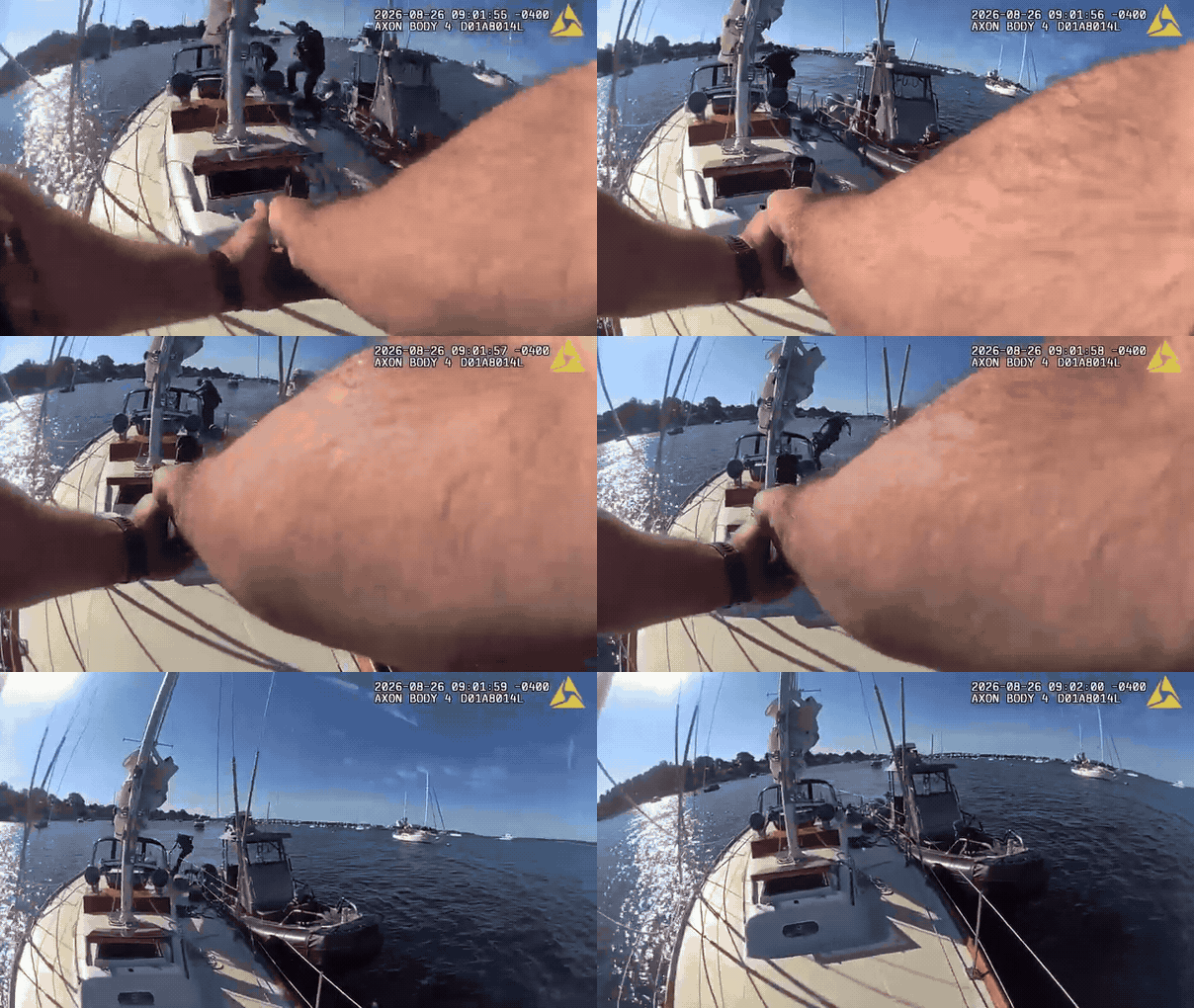
The serene coastal town of Newport, Rhode Island, is universally celebrated for its breathtaking Gilded Age mansions, its bustling and vibrant harbor filled with gleaming yachts, and the gentle, rhythmic lapping of the Atlantic waves against the docked vessels. It is a place where the most dramatic event of the day typically involves a competitive sailboat race, a high-society charity gala, or a leisurely summer afternoon spent watching the ferries glide across the bay. However, on a seemingly ordinary day in late August, the tranquility of this idyllic New England escape was shattered with a shocking, violent abruptness by the sharp, piercing echo of gunfire. The Newport Police Department has since made the momentous decision to release the body-worn camera footage from that harrowing, life-altering incident, offering the general public a raw, unfiltered, and visceral glimpse into the terrifying seconds that unfolded when a routine police call descended into a deadly, chaotic firefight. The footage, made public only after months of careful internal review, legal consultation, and due consideration, captures the nerve-shattering tension of the moments leading up to and during the full-fledged exchange of gunfire, painting a stark, uncomfortable picture of the split-second decisions that officers are forced to make in the line of duty, decisions that mean the difference between life and death. It was on the morning of August 26th when a frantic, urgent call came in to the Newport Police Department, reporting the presence of a stolen sailboat anchored right in the heart of the prestigious Newport Harbor. For the officers who responded to the call, the dispatch must have initially seemed like a standard maritime property crime. It was likely a situation that required careful attention and paperwork, but hardly one that suggested the mortal, overwhelming danger that was silently waiting for them just seconds away. They arrived on the scene expecting to confront a suspect who had apparently had the audacity to brazenly steal a valuable vessel from a marina. Instead, they inadvertently walked directly into a well-prepared ambush. The video begins with the officers approaching the designated location, their body cameras capturing the otherwise beautiful waterfront setting, the boats bobbing gently in the glistening water, and the suspect vessel, a distinctive and elegant two-masted sailboat called the “Pathfinder,” sitting ominously and silently against the dock. There was no preliminary warning, no opportunity for negotiation, no chance whatsoever to de-escalate the tense situation; within mere seconds of the officers being in the immediate vicinity, the suspect, who would later be identified as 27-year-old Brendan Norris, suddenly opened fire with a handgun, instantly transforming a serene coastal morning into a desperate, overwhelming battlefield.
The subsequent release of the bodycam footage serves as a grim and sobering reminder that for our law enforcement community, the transition from complete normalcy to lethal violence is often instantaneous and unforgiving. The raw audio track from the videos is jarring and deeply unsettling, capturing the sudden, staccato cracks of a handgun ripping through the previously peaceful air, the sound echoing eerily across the water. The officers, completely caught off guard by the unprovoked and murderous attack, scrambled desperately for cover, their rigorous training kicking in amidst the overwhelming adrenaline rush, the sheer terror, and the instinctive need for survival. The suspect, perched precariously aboard the stolen “Pathfinder,” held a distinct tactical advantage of elevation and surprise, firing down at the officers who were left dangerously exposed in the open. In the frantic, chaotic moments that immediately followed the initial volley, a Newport police officer was struck by the gunfire. The footage captures the chilling, gut-wrenching, and deeply human moment when the officer, finally realizing he has been hit and is bleeding, begins shouting into his police radio, repeating the same harrowing message over and over with a voice strained by pain, profound shock, and the primal, desperate urgency to survive. “I’m hit! I’m hit in the leg!” he yells into the microphone, his voice a raw mixture of agony and disbelief. The other officers present on the scene, despite the utter chaos and the deadly hail of bullets flying through the air, immediately sought to provide covering fire for their wounded comrade, returning fire at the suspect in an attempt to neutralize the imminent threat while simultaneously trying to reach the officer who was now bleeding on the ground. The entire exchange, from the first shot to the last, lasted only a matter of tense minutes, but for those who were involved, trapped in the moment, it must have felt like a terrifying eternity. The various bodycam angles show the erratic, desperate movements of the officers, their service weapons drawn and pointed towards the rigging of the sailboat, as they tirelessly tried to locate the elusive, active shooter who was seeking shelter amidst the complex geometry of the boat’s masts and sails. The serenity of the harbor was utterly destroyed, replaced by the horrific cacophony of gunshots, the frantic screams of bystanders, and the panicked, squawking flight of seagulls taking to the sky. This entire incident is a textbook, tragic example of the inherent dangers of modern police work, demonstrating how a simple, routine investigation can suddenly and violently escalate into a life-or-death struggle against an unpredictable adversary.
In the grim aftermath of the initial gunfire, the situation reached a bloody and definitive conclusion. The Newport officers, having absorbed the shock of the attack and sustaining a serious injury to one of their own, continued their engagement with the suspect without hesitation, demonstrating extraordinary courage under fire. The bodycam footage shows the officers moving with renewed purpose and intense focus, providing mutual support to one another, coordinating their tactical efforts to suppress the threat and protect the wounded officer. Eventually, their collective gunfire found its mark with lethal accuracy. Brendan Norris was struck by the officers’ return fire and was tragically pronounced dead at the scene. The area, which merely hours earlier had been a picturesque tourist destination drawing visitors from around the world, was now transformed into an active crime scene, meticulously cordoned off by bright yellow police tape, with emergency medical responders rushing to stabilize the wounded officer. The officer who had been hit in the leg was quickly stabilized and transported to a nearby hospital for emergency medical treatment of his gunshot wound, where he would undergo surgery and begin a long recovery. Fortunately, the injury was not deemed to be life-threatening, which came as a massive relief to the department and the community, but the psychological and physical scars from that day will undoubtedly linger for a lifetime. As the smoke from the gunfire cleared and the intense adrenaline finally subsided, investigators began the arduous process of piecing together the complete, tragic story. The sailboat, “Pathfinder,” was not just a random or arbitrary vessel; it had been officially reported stolen from the Liberty Harbor Marina, located in Jersey City, New Jersey. This was not a local or isolated incident of petty crime. The suspect, Norris, had allegedly stolen the vessel directly from its moorings in New Jersey and had successfully sailed or motored it all the way up the rugged Atlantic coastline to Rhode Island, a perilous journey of over two hundred nautical miles that requires a significant level of navigational skill, sheer determination, and intimate knowledge of maritime weather and currents. This raised a multitude of pressing questions, none of which can now be definitively answered. Why Newport of all places? Why that particular boat? Was he desperately fleeing from something in New Jersey, or was he heading towards a specific destination on the coast? The officers who responded to the call were simply in the wrong place at the wrong time, encountering a suspect who was seemingly fully prepared to use lethal force to avoid any form of apprehension or arrest.
The identity of the suspect, Brendan Norris, at 27 years old, sheds little light on the underlying motivations behind the brazen theft and the subsequent deadly shootout that rocked the Rhode Island coast. Police have officially confirmed his identity, but detailed information regarding his personal background, his history, or his mental state remains frustratingly scarce and under investigation. What is known is that he embarked on a significant maritime journey, successfully navigating a forty-foot sailboat from the industrial, busy waters of Jersey City out into the open and unforgiving Atlantic, and then up the beautiful yet treacherous New England coastline. The boat itself, described as a “2-masted Yawl Hinckley Bermuda 40,” is a classic, highly valued, and legendary breed of American sailboat, renowned for their sea-kindly hulls, beautiful lines, and enduring craftsmanship. These boats are highly prized by serious sailors and collectors alike, representing a significant investment of both money and passion. The “Pathfinder” was unquestionably someone’s pride and joy, a vessel that held countless memories. The human impact of the theft extends far beyond the police officers who were shot at. In the wake of the boat’s mysterious disappearance, a series of emotional social media posts from individuals claiming to be close friends of the owner circulated widely across the internet, issuing desperate pleas begging the boating public to keep a watchful eye out for the distinctive vessel. These heartfelt posts reveal the deep, almost spiritual connection that people develop with their boats, reflecting the countless hours spent on maintenance, the wonderful memories made on board with friends and family, and the sheer, substantial financial investment involved. The owner, who had no prior connection whatsoever to Norris, was suddenly thrust into a living nightmare, forced to deal with the concurrent loss of their prized vessel, the news of the thief’s death, and the shooting of a police officer. The posts were a desperate, final plea for help, showing clearly that the ripple effects of a single crime can extend far beyond the immediate incident. The tight-knit community of fellow sailors rallied around the owner, sharing the posts widely and keeping a vigilant watch on the waterways, a powerful testament to the close-knit nature of the boating world. In the end, the “Pathfinder” was successfully recovered, but it is now considered a piece of evidence in a homicide investigation, no longer just a beautiful sailboat. The entire tragic saga is a reminder that behind every breaking news story there are real people, real families, and real, enduring trauma. The owner of the “Pathfinder” lost their peace of mind, the officers lost their sense of safety and security, and the family of Brendan Norris lost a son, all because of a series of disastrous decisions made on that one fateful day.
The Newport Police Department’s decision to release the body-worn camera footage was not a decision that was made lightly, nor without significant deliberation. In a carefully crafted statement that accompanied the official release, the department explicitly and clearly articulated their primary rationale, stating, “Our goal in releasing this video is to provide the public and the media with an accurate, factual, and transparent presentation of the incident, allowing viewers to better understand the circumstances and information surrounding our officers’ actions.” This powerful, unambiguous statement reflects a growing and necessary trend in modern law enforcement toward proactive transparency, especially in the highly sensitive area of officer-involved shootings. By choosing to release the raw video footage themselves, the department aims to take control of the narrative, prevent rampant speculation and the spread of misinformation, and ultimately build a stronger foundation of public trust with the community they serve. They want the public to see exactly what they saw, to hear exactly what they heard, so that any judgment concerning their officers’ actions can be based on solid, verifiable evidence rather than hearsay. The video clearly and undeniably shows that the officers were fired upon first, making their return of fire a textbook case of self-defense and the defense of others. However, the release of such sensitive footage is a double-edged sword. It inevitably exposes police tactical procedures, carries the significant risk of being taken completely out of context by various factions, and can be emotionally distressing for both the community and the officers directly involved. The department’s statement suggests they are fully aware of these inherent challenges, but they believe that the immense benefits of transparency far outweigh the potential risks to public safety and perception. Following the incident, the Newport Police Department also confirmed that they are actively conducting a joint and comprehensive investigation into the shooting with the invaluable assistance of the Rhode Island State Police. This is a standard and crucial procedure for all officer-involved shootings, ensuring that an outside, independent agency provides a fresh perspective and a neutral review. This collaborative approach is designed to be methodical and exhaustive, leaving no stone unturned, and to ensure that the final report issued to the public is both comprehensive and credible. The investigation will involve rigorous ballistic analysis, a review of all available surveillance footage, in-depth interviews with all witnesses, and a thorough, frame-by-frame review of the bodycam footage. As of the date of the video release, the investigation is still officially ongoing, and the full, detailed investigative report has not yet been made public. The department hopes that by releasing the raw footage now, they can stem the tide of false rumors and establish a baseline of irrefutable facts that will guide all future discussions and legal proceedings.
As the dust finally settles on this shocking event, the primary focus inevitably shifts to the deep and lasting human toll that it has taken on everyone involved. The officer who was tragically shot in the leg will face a long, arduous, and painful road to recovery, both physically and mentally, undergoing extensive physical therapy and facing a prolonged absence from duty. Wounds heal, but the haunting memory of being shot at, of feeling the burning hot lead tear through one’s own flesh, does not easily fade from the mind. The other officers who were on the scene will also carry the heavy, invisible psychological weight of having been involved in a fatal shooting. They will now have to process the complex trauma of having taken a life, even in the clear and justified act of self-defense, a burden that no amount of training can fully prepare them for. The Newport Police Department has very likely offered comprehensive counseling services and peer support groups to all officers involved, a crucial and necessary step in mitigating the long-term risk of post-traumatic stress disorder, depression, and other mental health issues. The community of Newport itself is also grappling with the sudden eruption of violence in their midst, forced to reconcile their idyllic image of a safe haven with the stark reality of gunfire. Residents and business owners who heard the terrifying sound of the gunshots are left with a lingering, unsettling sense of vulnerability. The powerful image of their picturesque harbor, so often associated with relaxation, luxury, and leisure, will now be permanently tinged with the violent memory of the shootout. For the family of Brendan Norris, they are left with an unfathomable, heartbreaking loss. While his actions on that day were unquestionably criminal, dangerous, and ultimately fatal, it is still a profound human tragedy for those who knew him. They are now faced with not only the initial shock and grief of losing a loved one but also the intense public scrutiny of his actions and the heavy stigma associated with being the family of a man who shot a police officer. The true crime community and the public at large will continue to dissect the video, the timeline, and the potential motives, but the ultimate, hidden truth of why Norris stole the boat and why he decided to fire upon police officers is lost forever with him. The incident in Newport Harbor serves as a stark, powerful, and sobering reminder of the unpredictable nature of the world we live in. It highlights the incredible bravery of law enforcement who face the unknown every single day, the deep vulnerability of civilians who become accidental victims of crimes they had no part in, and the complex, often tragic, outcomes that can arise from a single criminal act. Transparency, as championed by the Newport Police Department, is the only viable path forward, allowing for public understanding, accountability, and the eventual beginnings of healing for a shaken community, one that will slowly rebuild its sense of peace, forever changed by the echoes of that summer’s day.