



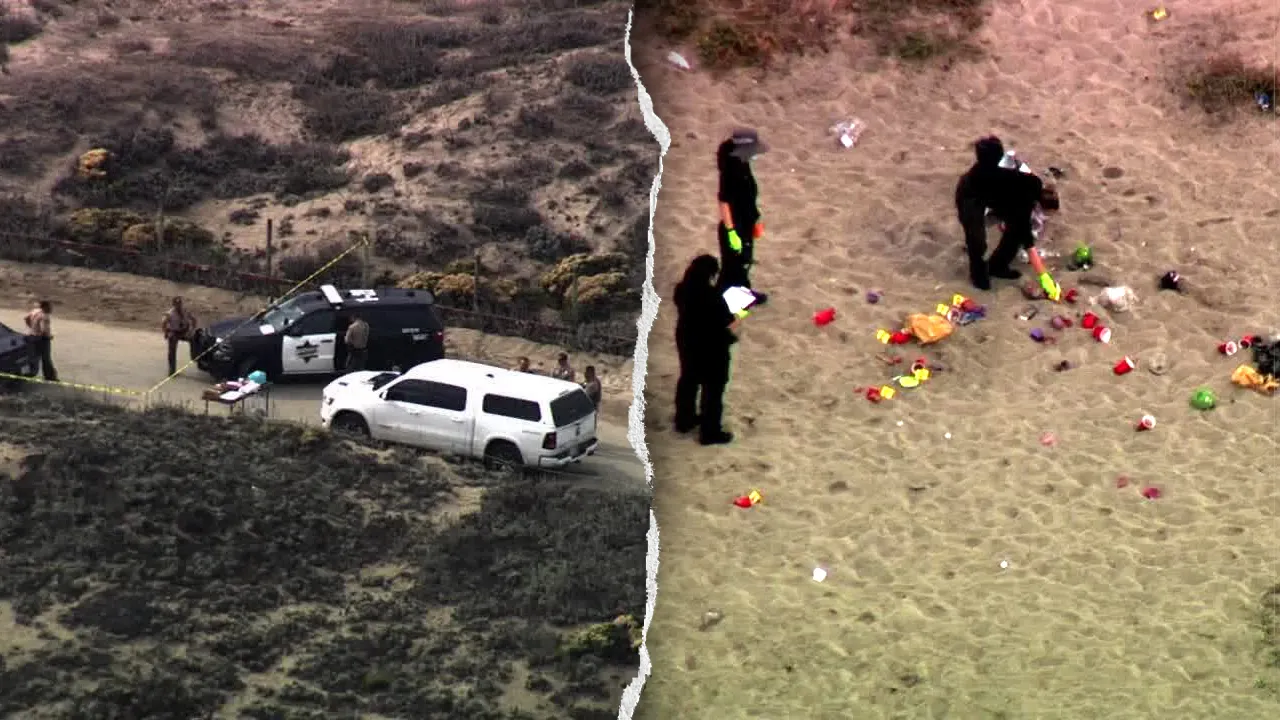
Beneath the silver veil of a typical Monterey Bay evening, the small coastal hamlet of Moss Landing is a place defined by profound tranquility. The salt-tinged air carries the rhythmic lullaby of waves washing against the shores, while the skeletal silhouettes of fishing vessels bob gently in the harbor. It’s a community where the loudest sounds are usually the cries of gulls and the distant hum of fishing boat engines, a sanctuary for marine biologists, local fishermen, and surfers. But in the chilling stillness of the early hours of a Monday morning, that serene quietude was violently obliterated. Just before 2:00 a.m., the night sky above Jetty Road, the slender strip of asphalt leading to the beloved Moss Landing State Beach, was shattered by the unmistakable, horrific cracks of gunfire. What had been a silent sanctuary tucked along the shoreline was instantly transformed into a scene of chaos and terror. The initial reports flooded into the Monterey County Sheriff’s Office, immediately mobilizing a coordinated emergency response, pulling in California State Parks personnel and California Highway Patrol officers. They raced towards the sound of violence, their flashing lights carving through the coastal mist, unaware of the devastating shock that awaited them on the cold, damp sand. They arrived to find that the peace of the beach had been irrevocably stained, and the consequences of the gunfire were far more severe than any mere disturbance.
The arrival of law enforcement at the beach initiated a painstakingly urgent and somber crisis. As deputies and officers swept the area with their flashlight beams, they were confronted with the grim reality of the incident—two individuals were discovered, their lives having been extinguished on the beach, their bodies lying still amidst the debris and the darkness. The air, which normally carried the fresh promise of the ocean, now hung heavy with the metallic scent of blood and the profound weight of a tragedy. While the two deceased were found at the scene, the human toll was still unfolding elsewhere. A third person, having been struck by gunfire, had managed to reach a local hospital in a desperate, frantic attempt to cling to life; their condition remained shrouded in uncertainty as medical professionals fought desperately to stabilize them. A fourth victim was located at the scene and subsequently transported, their injuries considered not life-threatening, yet they still carried the deep psychological scars of witnessing such inexplicable horror. For the first responders, the juxtaposition was surreal and deeply affecting; standing in the sand, they could feel the rhythmic push and pull of the tide against their boots, yet they were surrounded by the stark, silent evidence of human violence. The decision was made to immediately close Jetty Road and the entirety of Moss Landing State Beach, a necessary measure to freeze the scene in time and allow investigators to meticulously comb through the sand for shell casings, personal effects, and any shred of evidence that could provide a clue. The area, which would normally greet the sunrise with joggers and families, was now a sterile, cordoned-off crime scene, guarded by yellow tape fluttering in the ocean breeze.
In the aftermath of such catastrophic violence, the focus inevitably shifts towards the lives that were lost, and the many more that were shattered in an instant. Yet, at this agonizing stage, the victims were initially defined only by their fates—two lifeless forms awaiting forensic examination, one critically wounded individual in a hospital bed fighting for their next breath, and one injured survivor grappling with overwhelming trauma. The Monterey County Sheriff’s Office, in a procedural yet emotionally charged step, announced that the identities of the two deceased would be withheld pending the completion of forensic examinations and the difficult task of notifying their families. This cold administrative statement encapsulates a world of excruciating pain, signifying the agonizing moments before the loved ones of these individuals receive a knock on the door that will irrevocably alter their lives. These were not just statistics; they were someone’s son or daughter, someone’s best friend, someone’s entire world. The absence of any known motive deepened the confusion and fear that gripped the community. Why would someone open fire on a peaceful beach in the dead of night? Was it a personal dispute that spiraled out of control, an act of premeditated revenge, or the senseless, erratic discharge of a firearm? Sheriff Tina M. Nieto stepped forward to address the public, her statement reflecting the urgency and uncertainty of the investigation. Her direct plea to the community was a testament to the desperation for answers, urging anyone with information—”regardless of how insignificant it may seem”—to come forward and assist the detectives in establishing the circumstances surrounding the tragedy. The community was left not only with profound grief, but with a gnawing, unsettling anxiety born from the sheer lack of answers.
Moss Landing is far more than a mere point on a map; it is the heart of a vibrant, tight-knit ecosystem of human connection. It is home to dedicated researchers working at the prestigious Monterey Bay Aquarium Research Institute, to a generation of fishermen who know the ebb and flow of the tides better than they know their own reflections, and to artists who find endless inspiration in the dramatic and untamed seascapes. This shooting tore mercilessly through that social fabric, leaving a jagged, festering wound that would take far longer to heal than any physical injury. The closure of the state beach was a symbolic severance of the community’s public square—the very place where they gather to celebrate the beauty of life had now been transformed into a site of death and despair. As the news spread through the morning, a collective chill settled over the Central Coast; this was not a distant tragedy happening in a faraway city, but rather an unspeakable horror committed in their own backyard. The reverberations reached the highest levels of state government, where State Senator John Laird sought to articulate the communal shock and sorrow. His statement, which labeled the incident an “unspeakable horror,” resonated with the raw emotional truth of the situation. Senator Laird also drew a sobering connection between this local catastrophe and a broader, national crisis, noting the “numerous reports of shooting deaths across the country” over the same weekend. His contextualization transformed the event from an isolated incident into a stark reminder of a nationwide epidemic of gun violence, proving that even the most isolated coastal tranquility offers no sanctuary from a pervasive societal ill.
As dawn began to break over the Pacific horizon, casting hues of pink and gold across a sky that had witnessed a nightmare, the crime scene remained under the harsh, unforgiving glare of investigative lights. Detectives, some kneeling in the sand, meticulously cataloged evidence that might seem mundane to the outside observer but could prove pivotal to the case—a discarded phone, a torn piece of clothing, a series of footprints leading to the water. The investigation will inevitably become a marathon rather than a sprint, requiring immense patience, forensic analysis, and an unyielding pursuit of leads. The Sheriff’s office, while assuring the public that there is “no active threat” to the Moss Landing community, knew that this standard reassurance did little to calm the visceral fear that lingered in the air. People woke up on Monday morning to a headline that would define their day and perhaps their year, a dark cloud hanging over the bright, hopeful morning sun. The detective team began the daunting task of interviewing anyone who might have been in the vicinity, coordinating with forensic experts to analyze ballistics and DNA, and requesting surveillance footage from nearby businesses. The promise of no active threat provides a sliver of cold comfort, suggesting the shooter is not on a random spree, but it offers no name, no face, and no explanation. The frustration among the residents is palpable; justice for the victims feels achingly out of reach until a solid breakthrough occurs. In this void, the Sheriff’s office has transformed every resident into a potential guardian of justice, appealing to the community to be their eyes and ears, essentially asking the public to help solve a puzzle that is missing half of its pieces.
Eventually, the yellow tape will be removed, the road will reopen, and the beach will welcome visitors once more. The physical scars of the shooting will fade, gradually washed away by the relentless and indifferent tide, but the emotional and psychological wounds will endure far longer. For the families of the two deceased, there will be no returning to normalcy, only a profound sense of “before and after” marked by this moment of senseless violence. The injured will carry the heavy burden of their recovery, both physical and mental, for months or even years to come. The first responders who witnessed the carnage will have their own battles with lingering trauma, a secondary victimization that is seldom spoken of but deeply felt. As we reflect on this tragedy, it is crucial to hold space for the human element that statistics so often obscure. Two people with dreams, histories, and laughter are gone; their absence will leave an unfillable void in the hearts of those who loved them. We extend our deepest condolences, not just to the direct families, but to the entire town of Moss Landing, to Senator Laird who spoke out on their behalf, and to all those who feel the weight of this shared grief. In the face of such inexplicable violence, the only true response is one of profound humanity—to mourn together, to support the wounded, to seek justice relentlessly, and to cling to the hope that the community will rally together, proving to be stronger than the fear that seeks to divide them. The investigation will continue, but the spirit of the Central Coast, though battered and bruised, must remain resilient, ensuring that amidst the lingering echoes of gunfire, the soothing sound of the waves will eventually dominate the day once more, carrying with it the fond memories of the lives we tragically lost.