




Here is a summary of the Fox News report, humanized and expanded into a six-paragraph reflection. It stays close to the original reporting while trying to bring the story to life.
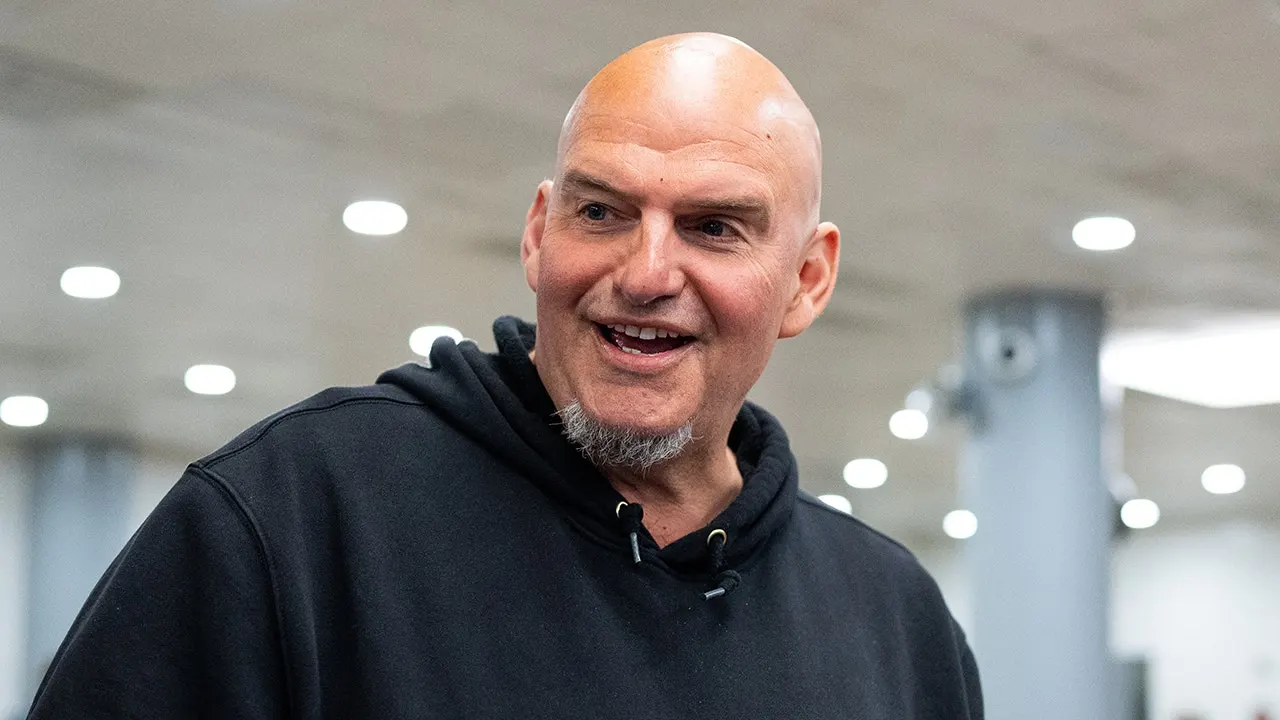
The debate over artificial intelligence has never been just a Silicon Valley story; it has become a full-blown geopolitical contest, a matter of who gets to set the rules for the technologies shaping the rest of the century. And on Saturday, Senator John Fetterman of Pennsylvania jumped right into that fight with the kind of blunt, no-frills language that has come to define him. Reacting to a Bloomberg analysis suggesting that China is rapidly closing the gap with the United States in AI deployment, Fetterman dismissed the fashionable hand-wringing that has become so common among politicians, pundits, and tech critics. He shared the report on X and said he rejects what he called “AI doomsdaying,” warning that these cries of catastrophe actually help Beijing. His message was short but unmistakable: if Americans talk themselves into fearing this technology, China will not show the same hesitation. He wrote, “China continues to fuel and benefit from our overreaction,” and he made clear that a retreat from AI is exactly the kind of move a superpower should avoid. For Fetterman, this isn’t a matter of convenience or hype. He believes AI superiority is part of national security. His choice of words, “AI supremacy and energy dominance underpins our national security,” ties the technology directly to how countries will protect themselves in the 21st century. By saying he rejects “the political pandering and hyperbole over data centers or AI doomsdaying,” Fetterman firmly positioned himself against both the concern about AI’s existential dangers and the local pushback to the physical infrastructure that makes AI possible. He is telling his party, and the country, that fear cannot be the guiding principle for the next great American industrial effort.
The Pennsylvania senator’s latest statement is not just an out-of-the-blue tweet, though. It is the latest in a series of moves that show a fierce determination to keep the United States, and American interests, at the front of the AI era. Fetterman has been quietly positioning himself as one of Democratic doves most willing to put national and technical and geopolitical rivalry with China above ideological comfort. Earlier this month, when reports surfaced that his colleague, senators Bernie Sanders of Vermont, was considering the pause on AI development, Fetterman did the exact opposite. He fired back with a stark warning: “America must lead in the development of AI, otherwise we live under China’s rules. That must not happen.” The implication was clear enough: pausing now isn’t a statement of moral purity, it’s a readiness test, and in this game someone else will just forge ahead and create the standards, the systems, and the rules. He is not content to merely cheerlead for this abstract concept, either. Fetterman has also condemned any effort to impose a moratorium on the data centers that AI projects depend on. To him, arguing for a pause is honest something worse, a “China First” policy dressed up as progressive caution. This is a remarkable moment for a Democrat, a party where the conversation is so often framed in terms of protecting against corporate greed. Yet Fetterman is almost singlehandedly walking his own path. He views the future of “American dominance” not as a colonial or military conversation but as a technological one, and he is willing to sound more like a defense analyst than a junior senator from the Northeast.
It is this reality—a narrowing American lead, a rising Chinese speed, and a collapsing window of technical superiority—that makes Fetterman’s remarks so timely. The Bloomberg analysis he shared in fits not exactly in the tidy, comfortable narrative that many Americans might expect. An ongoing conversation about AI has usually focused on whether the technology is inherently dangerous, whether it will have millions of jobs, or whether it will create some kind of digital uprising. The threat from China feels much more real, but somehow less press during the panic of today’s “AI gloom” era. Fetterman’s own assessment is built on the assumption that Chinese companies are not just catching up, but moving faster. The prolific article described a narrowing U.S. lead and with regard to Chinese businesses whose models and systems are being implemented in the real world at a breakneck speed. If caution, regulation, and overreaction in the United States slows down the deployment of artificial intelligence, then the Chinese have the opening they need. That’s exactly why Fetterman says China “benefits from our overreaction.” When every new scientific breakthrough is filtered through fears of extinction and doom, advanced most Americans, the U.S. is making a risky play, not at the Fortune table but in the international arena. It is also why the senator comments on data centers. Without a national infrastructure, the data cannot be processed, the models cannot be trained, and the economy cannot grow. He is trying to keep his foot on the pedal while others are begging for a brake.
The bigger surprise is perhaps that’s making common cause of another unpredictable leader, President Donald Trump. While Fetterman may have Democrat affiliations, he chose, in this conversation, to be from the same policy lane as Trump, and the two seem oddly aligned shared a simple premise: the established order cannot move fast enough, and no data center should be treated as a problem. In recent months, Fetterman’s put torch that undermine the state. And what Vera? is now telling governors and local officials to welcome artificial intelligence facilities with open arms. On Wednesday at the White House, Trump spoke directly to local leaders in a proud and energized tone, telling them they should be fighting for these developments. In his description, these new facilities aren’tbohemian protests, they are iconic American jobs. The construction work is enormous: “We’re building the biggest plants anywhere in the world,” he said. He encouraged local leaders to say yes, saying the tax revenue and jobs were almost unimaginable. But he also spent a little time admitting that there is a bridge problem. “The AI industry needs a great deal more than a little public relations help.” This is because it can be difficult for people to accept a massive data center in their community. They are large, energy-hungry, water-intensive buildings. A Gallup poll from May first found that a majority of Americans oppose building new data centers near where they live, and for very understandable reasons. Locals worry about their electricity grid, property values, water supply, and the long-term environmental cost. It is no wonder the issue has become a local lightning rod. Trump’s suggestion is not just to keep pushing the invisible border. Instead, it is to change the argument—help people see the data center as a job, not an dinosaur—while ensuring the permitting process gets faster. This drew an executive order in July aimed at accelerating the approval of these sites. Fetterman is paying attention to that message and repeating it in his own style: the overreaction of data centers as villains won’t crush America, but it will hand the advantage to Beijing.
This brings us to one of the greatest balancing acts of America’s next industrial age: regulation. More specifically, how to govern a technology “that may be called bigger than the internet.” The Trump White House has been shaking off the temptation to let get bogged down by fear. In his comments this week, the president said something that should tell you a lot about how the administration would treat the coming policy battles: the U.S. should maintain its current AI lead, but while regulating, it has to keep the regulator’s hand light enough not to slow the industry. He said: “We want to regulate, but we want to have regulation where they can continue to lead, not regulation that’s going to stifle a very important industry.” That is, in a way, a diplomatic version of Fetterman’s point. It is not that AI should be entirely free, but rather that the two should be produced in the full awareness of the opponent. And to keep up, they cannot keep dialing back, they can only push forward. The same logic applies to the tough political fight over energy. Fetterman’s mention of “energy dominance” matters in this context because AI doesn’t happen by magic. IT is extremely reliant on electric power. Data centers around the world are replacing entire towns in power consumption, so it is not a good idea to have a stable electricity grid if land is built there. If the U.S. deliberately stalls power development or refuses to build the necessary grid, it will essentially be giving China a head start. Fetterman’s position sees an AI policy as closely related to energy policy, land-use policy, tax policy, and, yes, foreign policy. It’s not just a regulation debate, it’s a security problem. He is not trying to downplay certain technology’s risks, but rather to put them in proportion for an environment where other nations are developing fast.
At the end of the day, the story that emerges from Fetterman’s comments is not just about one senator telling us to to stop worrying and love AI. It’s a bigger and more human story about how America feels today about the future. Fetterman is talking about the choice between confidence and panic, between building systems and being immobilized by fear. He is not attracted by the fact that AI can be unpredictable, even a little scary. But he is saying that while Americans stand at the doorstep, losing out and leaving the world to someone else is a bigger risk than anything else. If panic is seen as a security success, then we’ve already lost the field before the construction begins. The most “human” way to express his message might be that we should not have to be comfortable with doom to be careful. But the answer is more importantly to be more competitive. In his mind, there is no future in which the U.S. disappear. You have to be gone. The same leaders, mayors, utility workers, and industrial workers who would meet and conquer in that history should still be there. Could be just one politician moving on the streets of America, but behind his tough words is a warning about the bigger possibility of a leading America. It echoes on nearly every level of the media that today, where the young politician can photograph, every policy decision and moral fork is battle in some larger geopolitical contest. And in one clear, blunt message, Fetterman says this: America cannot afford the luxurious democracy through “overreaction.” It must have the state and seizing the future. It won’t be by covering its eyes. That is why, in his own blunt words, he is willing to reject the loud voices of doom and embrace the task of building—lest America wake up and find out China wrote the rules for all of it. (Fox News Digital’s Alex Nitzberg and James Cirrone contributed to this report.)