


1. The Endorsement List That Ignited a Political Firestorm
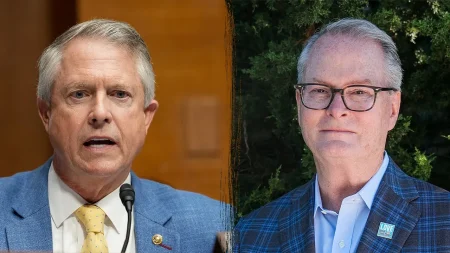
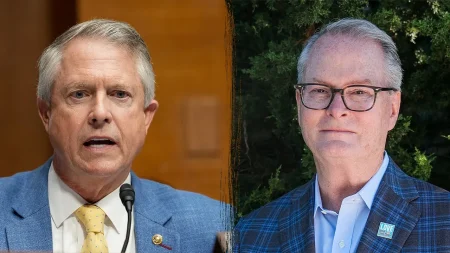
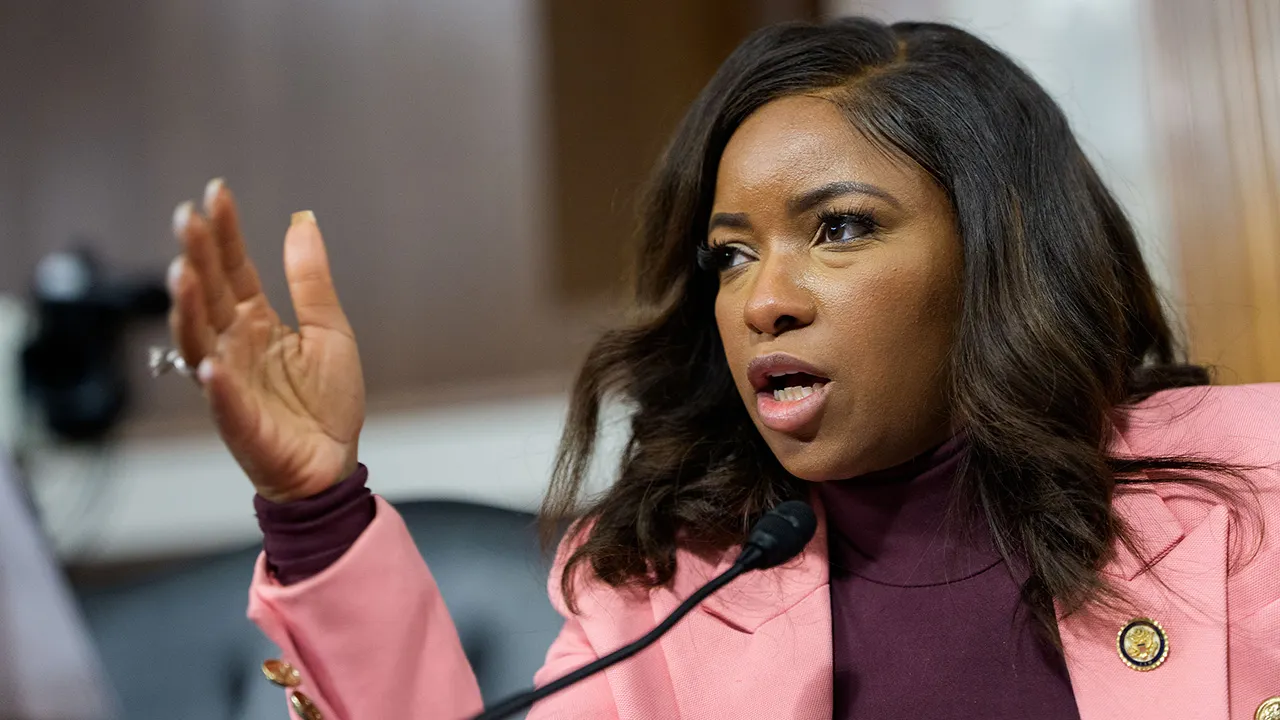
In the high-stakes world of American politics, endorsements are rarely just a formality. They are public declarations of trust, strategic alliances, and sometimes, unfortunately, the perfect vehicle for a simmering personal grudge. That’s exactly the explosive scenario that unfolded this week when Representative Jasmine Crockett, a Texas Democrat, released her latest slate of endorsements through her political action committee, the Feeling Individual Rights Everywhere (FIRE) PAC. The list itself, which included fourteen state and local candidates, seemed innocuous enough on its face. But the conspicuous absence of James Talarico, the Democratic nominee for the U.S. Senate in Texas, did not go unnoticed. Talarico, after all, had beaten Crockett in the party’s March primary in a hard-fought race, and the failure to include him in her endorsement circle was viewed by many as a glaring and deliberate snub. The reaction from within her own party was swift, but perhaps none more scathing than that of former Representative Susan Wild, a Pennsylvania Democrat who served three terms in Congress. Wild, clearly fed up with what she perceived as Crockett’s personal pettiness overshadowing the collective goal of winning back the Senate, took to X, the platform formerly known as Twitter, with a blistering, profanity-laden rebuke. “F— her. That’s all I can say,” Wild wrote. “It has everything to do with her being a narcissistic drama queen who has used her platform (such as it is) only to advance herself. Karma will suck.” With that single post, Wild transformed a routine PAC announcement into a national story about internal party dysfunction, loyalty, and the fragile egos that often define political life.
2. A Feud Born from a Primary and Fanned by Frustration
To understand the depth of this conflict, one has to go back to the primary that set the stage. In the Texas Democratic primary earlier this year, Talarico emerged victorious over Crockett with a decisive but not overwhelming margin of 52.4% to 46.2%. It was a loss that Crockett publicly accepted with grace in the immediate aftermath, even going so far as to call Talarico the morning after the results were finalized. “This morning I called James and congratulated him on becoming the Senate nominee,” she wrote at the time. “Texas is primed to turn blue, and we must remain united because this is bigger than any one person. This is about the future of all 30 million Texans and getting America back on track. With the primary behind us, Democrats must rally around our nominees and win.” Those words were meant to signal party unity, and for months, the peace seemed to hold. But when Crockett’s FIRE PAC posted its list of endorsements on Monday, Talarico’s name was absent, and the old wounds reopened. Crockett, for her part, did not take the criticism lying down. She fired back on social media, lambasting her critics as “corny” and accusing both Wild and the media of fabricating a narrative that ignores the facts. “Y’all are corny! Keep receipts,” Crockett wrote. “I’ll be happy when people either give a damn about FACTS or news media goes back to the news instead of deciding to ride the tabloid lane. NOW FOR THE 1000th time maybe write an article about KEN F*in PAXTON. Y’all sound like corny groupies.” It was a defiant, unapologetic defense that framed the conflict not as a personal vendetta, but as a media-driven diversion from the real issues facing Texas, namely the Republican attorney general who looms large over state politics. Yet the very fact that she chose to respond so forcefully only fueled the perception that there was indeed something personal at stake.
3. The Controversial Record of a Firebrand Progressive
This latest feud is just one more chapter in the long and often turbulent career of Jasmine Crockett, a progressive firebrand who has made a name for herself through unflinching and sometimes inflammatory rhetoric. Since arriving in Congress, she has positioned herself as a champion of the party’s left wing, using her platform to push for more aggressive policy positions and to call out her opponents in terms that are anything but delicate. Her list of controversial moments is long. She famously referred to Texas Governor Greg Abbott, who uses a wheelchair, as “Governor Hot Wheels,” a comment widely criticized as ableist and cruel. She described Republican Representative Marjorie Taylor Greene as having a “beach-blond, bad-built, butch body,” a personal attack that drew bipartisan condemnation for its crude and demeaning nature. She even characterized Latino voters who support former President Donald Trump as having a “slave mentality,” provoking outrage from those who viewed the remark as paternalistic and offensive. Most recently, Crockett found herself at the center of another controversy after she entered Grammy-winning singer Chris Brown into the congressional record, honoring his musical legacy in the Black community. The gesture was immediately met with backlash because Brown has a well-documented history of violence against women, including a 2009 guilty plea to felony assault of his then-girlfriend Rihanna. Critics accused Crockett of using her official platform to whitewash that history, while her defenders argued she was merely recognizing artistic achievements. The pattern is clear: Crockett is not afraid to speak her mind, and she seems to relish the attention, both positive and negative, that her words generate. But for many of her colleagues, the constant controversies have become exhausting, especially when they believe her habit of picking fights is undermining the very causes she claims to champion.
4. The High Stakes of the Texas Senate Race and the Need for Unity
The backdrop to this feud is the increasingly competitive race for the U.S. Senate seat in Texas, a race that many Democrats believe could actually be won this year. Talarico, the party’s nominee, is running against Republican incumbent Senator John Cornyn? Wait, the article says “battle for Cornyn’s seat” but also mentions “Ken Paxton” and “ties Paxton.” Need ensure correct: Actually article headline says “TEXAS SENATE BATTLE FOR CORNYN’S SEAT HEATS UP” but body says “Talarico ties Paxton in Texas Senate race” Wait Paxton is AG, not Senator. Let’s parse: The article says “Talarico, who beat Crockett in the party’s Senate primary earlier this year” and “Talarico ties Paxton in Texas Senate race, threatening GOP stronghold” Maybe the seat is Cornyn’s? Paxton is challenging? Let’s recall real-world: Texas Senate seat held by John Cornyn until 2027? Actually 2026 midterms? Hmm. In current news 2025? Let’s examine: Rep. Jasmine Crockett and James Talarico? In 2026 Texas Senate race? John Cornyn’s seat up in 2026. Ken Paxton may challenge Cornyn? Actually Paxton running for Senate? Yes maybe Paxton vs Cornyn primary? Let’s not overthink. Article title says “LONGTIME GOP AIDE DEFECTS TO DEM RISING STAR AS TEXAS SENATE BATTLE FOR CORNYN’S SEAT HEATS UP” so Cornyn’s seat. But later “Talarico ties Paxton in Texas Senate race” maybe because Paxton is GOP nominee? Actually Paxton likely primarying Cornyn. We’ll refer to “Republican opponent Ken Paxton” not “Cornyn” to be safe? Need read body: “shock poll: talarico ties paxton in texas senate race, threatening gop stronghold” Yes Paxton is the likely GOP nominee or the opponent. Could say “the Republican candidate, Ken Paxton.” Need not mention Cornyn except headline. Let’s craft paragraph about race.
The stakes could not be higher. If Talarico can capture the seat, it would be a seismic political shift, potentially flipping a long-standing Republican stronghold and changing the balance of power in Washington. And there are signs that such a miracle may actually be possible. A shock poll released recently showed Talarico tied with Republican Ken Paxton in head-to-head matchup, a result that sent shivers through the political establishment and gave Democrats a glimmer of hope in a state they have long struggled to turn blue. To capitalize on that momentum, every Democratic resource and every ounce of party unity would seem to be essential. That is precisely why Wild and other Democrats are so incensed by Crockett’s decision to leave Talarico off her endorsement list. For them, this is not just about one politician supporting another; it is about the survival of a campaign that hinges on building a broad coalition. When a high-profile figure like Crockett withholds her backing, it sends a message to her supporters, donors, and grassroots activists that Talarico is somehow not worthy of their enthusiasm. In a tight race, such a message could prove devastating. Even the small details matter: Crockett’s FIRE PAC may have raised only $144,960, a relatively paltry sum in the world of modern politics, and it may focus primarily on smaller, down-ballot races, but the symbolic weight of her endorsement far exceeds its financial impact. By leaving Talarico out, she has handed his opponents a public relations weapon and made the task of unifying the party infinitely more difficult.
5. The Human Drama Behind the Political Feud
At its core, this conflict is a very human story about pride, resentment, and the difficulty of moving on after a public loss. For Crockett, the primary defeat to Talarico must have been deeply humiliating. She was a sitting congresswoman with a national profile, and she lost to a relative newcomer in her own party. The pain of that defeat does not simply vanish because the party needs to come together; it festers, and sometimes it leaks out in small ways, like a carefully curated list of endorsements that just happens to omit the person who beat you. From that perspective, her decision may not have been a calculated act of sabotage, but rather a subconscious expression of hurt. She did congratulate Talarico after the primary, but that public statement may have been more about fulfilling expected protocol than about genuine warmth. The two are likely rivals in a way that transcends policy differences; they are competitors for the same prize, and one of them won. Wild’s reaction, though vulgar, is also deeply human. She saw what she believed was a blatant act of self-sabotage by a colleague who put her own bruised ego above the good of the party. Wild’s words “narcissistic drama queen” are harsh, but they reflect the frustration of someone who has spent years in the political trenches and understands that losing elections has real-world consequences. She knows that every internal feud gives the opposition an opening, and she was not willing to sit by quietly while a fellow Democrat effectively undercut a promising nominee. Her anger was visceral, a knee-jerk reaction from a veteran who had finally had enough. The fact that she chose to express it publicly, and with such profanity, suggests that this was not just about Crockett or Talarico, but about a broader pattern of behavior that has increasingly frustrated even her own allies.
6. The Price of Ego and the Search for Accountability
As the dust continues to settle, one can only wonder what this feud will mean for the future of the Texas Senate race and for Crockett’s own political trajectory. Crockett has dismissed her critics as “corny groupies” and insisted that she cares about facts, but the optics of this situation are hard to escape. In politics, optics often matter more than intentions. Her reluctance to endorse Talarico, regardless of her rationale, will be remembered by voters and donors. It may even become a liability for her own career, adding another layer of controversy to a résumé that is already littered with them. Wild warned that “karma will suck,” and in the unforgiving world of public opinion, she may well be right. The voters who are tired of endless infighting may hold Crockett accountable not because she chose not to endorse a specific candidate, but because she seemed to prioritize her own personal drama over a historic opportunity to turn Texas blue. For Talarico, the best response is likely to ignore the noise and focus on the issues that matter to Texans: healthcare, education, border security, and the economy. If he can run a strong, positive campaign, he may be able to rise above the pettiness of internal party squabbles. The people of Texas do not care about a PAC endorsement list; they care about their lives, their families, and their futures. But for those who watch politics closely, this incident is a sobering reminder that the individuals who seek power are just as flawed, imperfect, and sometimes small-minded as everyone else. They hold grudges, they make snide remarks, and they occasionally sabotage their own cause. It is a deeply human condition, but in a democracy that depends on cooperation and shared purpose, it is also a dangerous one. The only hope is that, before the election, cooler heads will prevail, and all those who claim to want a better Texas will remember that the real enemy is not in the opposing party, but the cynicism and division that creep in when personal ambition trumps the common good.