


Paragraph 1
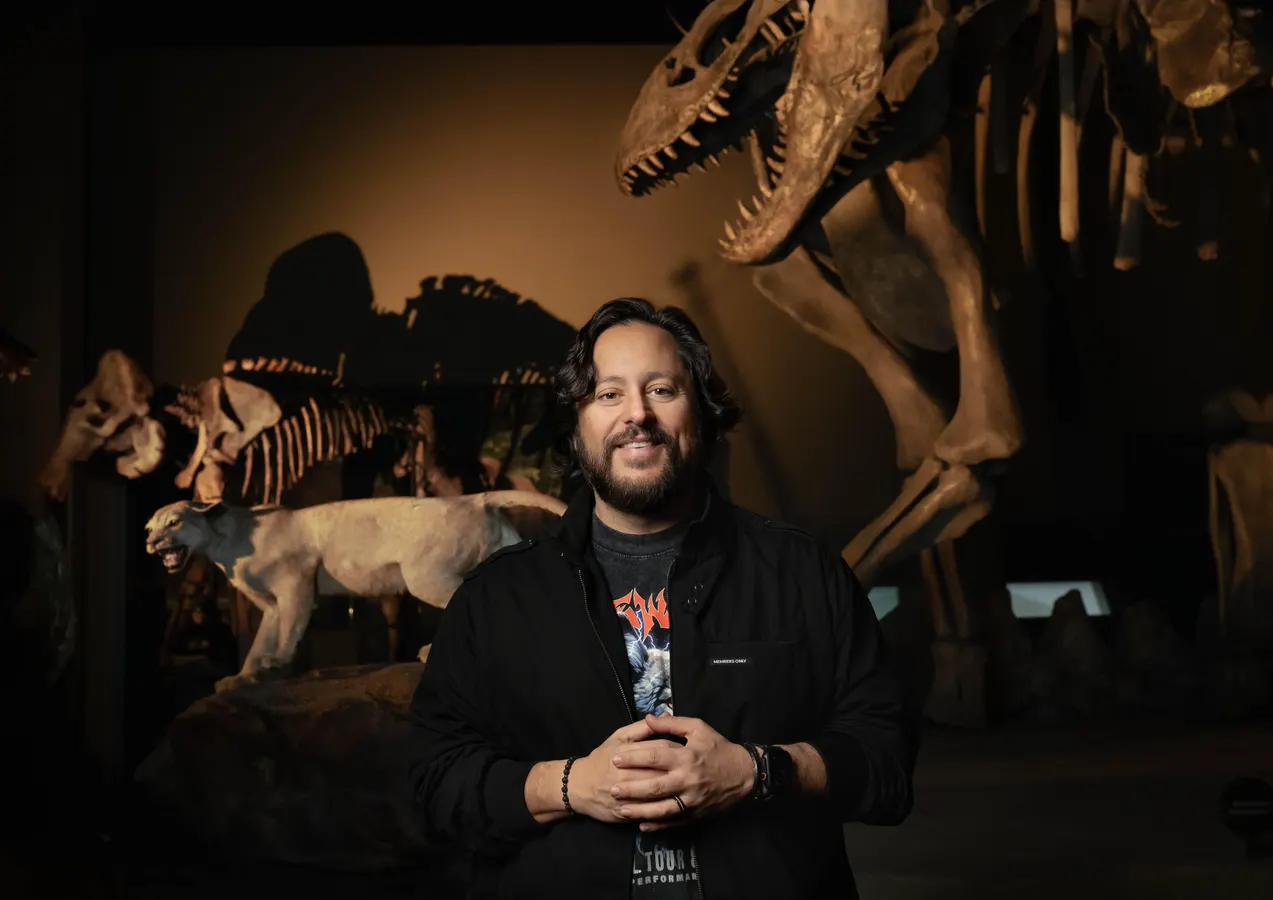
Imagine a military working dog that is not merely trained, but engineered for the job before it is even born. That is the audacious vision behind Warhound, a new startup co-founded by Ben Lamm, the billionaire entrepreneur behind Colossal Biosciences, and Palmer Luckey, the founder of defense technology company Anduril. Lamm is already known for his headline-grabbing, $11.5 billion effort to resurrect the woolly mammoth, and now he is turning his attention to something far closer to home: man’s best friend. Warhound aims to combine advanced cloning, gene editing, and high-tech hardware to create the next generation of bio-enhanced military dogs. After operating in near-total secrecy, the company has emerged from stealth with a staggering $200 million in funding at a valuation of $1.2 billion, led by Sequoia Capital partner Shaun Maguire. The investor list reads like a who’s who of both conventional finance and futuristic defense tech, including In-Q-Tel, ARK Invest, Franklin Templeton, 8VC, USIT, Bob Nelsen, Breyer Capital, CAZ Investments, Neogenesis, Builders VC, and Lux Capital. The concept is deceptively simple: take the military’s best-performing dogs, clone them, enhance their genetics for superior strength, health, and sensory ability, and then equip them with the most advanced gear Anduril can build—including, perhaps, a canine companion to its Eagle Eye mixed-reality helmet. As Luckey put it in a statement that perfectly captures the ethos of the project: “Man’s best friend deserves man’s best tech.” It is a phrase that sounds like a tagline from a science-fiction blockbuster, but for Lamm and Luckey, it is a very real, very well-funded pursuit that could change not just military operations, but the very meaning of human-animal partnership.
Paragraph 2
The origins of Warhound are as unexpected as the company itself. Lamm and Luckey first began talking about the concept a few years ago at a Moonshot event organized by Peter Diamandis, founder of the XPrize Foundation. Backstage, away from the crowds and the optimistic buzz about space travel, wearable tech, and radical longevity, Luckey started asking Lamm about Colossal’s program to bring back the dire wolf. It was a natural curiosity for someone interested in cutting-edge biotechnology, but the conversation quickly shifted to something more pragmatic and surprising: the problems with buying and training working dogs for the military. Luckey explained that most military dogs come from Europe, and the supply is dwindling. “We have dwindling supplies in Europe, and [getting them] is highly competitive with America’s adversaries,” Lamm later told Forbes. This is not a niche concern. The U.S. Department of Defense’s military working dog program currently encompasses more than 2,200 teams, and more than 80 percent of its dogs are acquired from Europe, according to Warhound. The Air Force’s 2025 budget alone allotted $45 million for its military working dog program. Yet the supply chain is fragile, expensive, and unpredictable. Dogs that do make it to the military must then undergo intensive training, and there is a staggering 55 percent chance that a dog will not meet the military’s rigorous standards. Even more heartbreakingly, at least some of those dogs that fail are euthanized. For Lamm and Luckey, this was a problem that seemed ready for a radical solution. Rather than relying on a pool of European-bred animals and hoping they would survive training, they decided to take the military’s top-performing dogs and effectively reproduce them at a higher caliber. They would clone the best of the best, enhancing their natural abilities—reducing conditions like hip dysplasia, sharpening their sense of smell, improving their agility and endurance—so that more dogs not only pass training but excel at critical tasks like bomb sniffing, search-and-rescue, and combat support. As Lamm says, “This is the sci-fi future we were promised.” But for him, it is not just a promise; it is a blueprint.
Paragraph 3
The science behind Warhound is already underway. Lamm says the company has biobanked its first cell lines and has begun gene editing to introduce and refine positive traits in these canine genomes. He expects to produce the first “warhounds” in the coming months, with the goal of deploying the first dog within two years. The underlying technology is rooted in Colossal’s expertise in genetic engineering, and in November 2025, Colossal acquired Viagen, a company that specializes in animal cloning, including dogs. That acquisition gave Warhound a head start, because, as Lamm says, “We know a lot about dog genetics.” The idea is to take a proven warrior, like a Belgian Malinois that has already handled multiple missions flawlessly, and clone it. But not just clone it—improve it. Through the centuries, humans have bred dogs for all kinds of traits, sometimes resulting in beneficial mutations and sometimes harmful ones. With modern gene editing, Warhound can go into the DNA of these elite animals and remove the mutations that cause muscle atrophy or hip dysplasia, while enhancing genes linked to agility, longevity, and, critically, olfactory capacity. “This could be transformative for ensuring that dogs make it through training,” Lamm says. The costs and stakes are high. Most military working dogs are Belgian Malinois, German Shepherds, and Labrador retrievers, sourced from breeders around the world. Around 13 percent are born and trained at a military base in San Antonio, Texas. According to a 2020 Bloomberg report, dogs can cost $9,000 from American breeders or $5,500 from overseas, and training one dog can top $60,000. With such high stakes and low success rates, cloning offers the potential for greater consistency. Lamm also emphasizes that the company is working with the American Humane Society on its programs, presumably to address animal welfare concerns from the start. It is a partnership that signals an awareness that this is not just a technical challenge, but a moral one.
Paragraph 4
The people behind Warhound are as intriguing as the project itself. Lamm, 44, is worth $5.7 billion, largely thanks to Colossal Biosciences, which he launched with Harvard geneticist George Church in 2021. Colossal was initially known for its ambitious plan to bring back the woolly mammoth, but it has since expanded into a broader bio-engineering empire, spinning out a number of companies. The most recent spinoff, Astromech, uses artificial intelligence to forecast evolutionary change and reached a $3.8 billion valuation in August. Luckey, 34, is a different kind of billionaire. He first made his fortune from virtual reality company Oculus VR, which he sold to Facebook in 2014 for $2 billion in cash and stock. Now worth $5.9 billion, he launched Anduril, a defense technology company, in 2017. Anduril has since grown into a behemoth, hitting a $61 billion valuation in its latest funding round in May. Luckey is known for his unapologetically pro-military stance and his love of flashy technology, which makes him a perfect partner for this project. But while Luckey is deeply involved in the vision, he does not own any equity in Warhound and is not on its board. Lamm has a stake and sits on the board. The company’s new CEO is Dave Spirk, a former senior advisor at Palantir and the Department of Defense’s first chief data officer. Spirk brings a combination of data science, defense, and operational experience that could be crucial for turning genetic innovations into real-world military assets. The leadership team is rounded out by advisors and experts from the worlds of biotech, defense, and animal science. This mix of backgrounds—biology and bleeding-edge tech, military discipline and venture capital ambition—is precisely what makes Warhound stand out. It is not just another startup; it is a meeting point between genetic engineering and the future of warfare, helmed by people who are used to thinking in terms of decades and global impact, not just quarterly returns.
Paragraph 5
But even as Warhound pushes forward, there are cautionary voices. Joshua Morton, founder of Canine Tactical, who started a combat dog program during his time in the Navy SEALs, acknowledges that cloning could be “game-changing.” Natural breeding programs are notoriously unreliable: Morton estimates that only 10 to 15 percent of a given litter of potential military dogs will measure up to U.S. military standards. Military dogs need to be able to accurately detect drugs and explosives and stay calm around gunfire and other loud, chaotic sounds. That kind of composed temperament is hard to breed consistently. Cloning, in theory, could offer a more predictable pipeline. But Morton warns that cloning also has significant risks. At its worst, he says, cloning can cause genetic issues to compound between generations. These problems can be as overt as a predisposition towards illness or as intangible as a trauma marker that makes a dog possessive, forceful, and hard to train. In other words, a cloned dog may inherit not just the physical strengths of an original, but also its psychological scars—or even new ones created by the cloning process itself. Morton’s words are a sobering reminder: “I hope they understand what it is that they are doing, or they’re just going to be spinning their tails.” This is a clever, punning caution that underscores the complexity of trying to engineer a living creature, especially one that has been bred for generations to be emotionally and psychically attuned to humans. Dogs are not just machines; they are sentient beings with their own temperaments, fears, and instincts. Even with the best genetics, a dog that is genetically perfect might still fail in unpredictable ways. And the ethical implications are immense. While Warhound emphasizes that it is working with the American Humane Society, there is no denying that the idea of creating genetically engineered, highly specialized animals for combat raises questions about consent, welfare, and the true nature of the human-animal bond. At what point does a working dog become something else entirely—a tool, a weapon, a product?
Paragraph 6
Ultimately, Warhound represents a collision of two powerful trends: the radical promise of bio-engineering and the ever-evolving demands of modern defense. The project feels like something torn from a speculative fiction novel, and Lamm and Luckey seem to embrace that. They are unapologetic about their ambition, and they have the financial backing to make it real. In the coming years, we may see the first genetically enhanced warhounds serving alongside soldiers, detecting explosives with superhuman noses and running missions with bodies less prone to injury and disease. Anduril will provide them with cutting-edge technology, creating a seamless integration between living animal and digital systems. But beneath the sci-fi surface lies a deeply human story: the desire to protect those who protect us. Military working dogs are already heroes, often completing their missions with bravery and loyalty that inspire their human counterparts. Warhound wants to give these heroes a better chance at life and success—by reducing the heartbreaking failure rate, decreasing suffering from genetic defects like hip dysplasia, and ensuring that more dogs can fulfill their potential. The project also highlights a growing geopolitical reality: the competition for resources, including skilled working dogs, is intensifying, and countries are looking for unconventional ways to gain an edge. Whether Warhound succeeds or fails will be one of the most fascinating stories in both biotechnology and military history. For dog lovers, there is something genuinely thrilling about the idea; for ethicists, it is a minefield. But one thing is certain: Lamm and Luckey are not thinking small. They are not just trying to make a better dog; they are defining what the future of military working animals should look like. “Man’s best friend deserves man’s best tech,” Luckey says. And in a world where technology increasingly touches every corner of our lives, it seems the next frontier is not just space or cyberspace, but the very genome of our most loyal companions.