


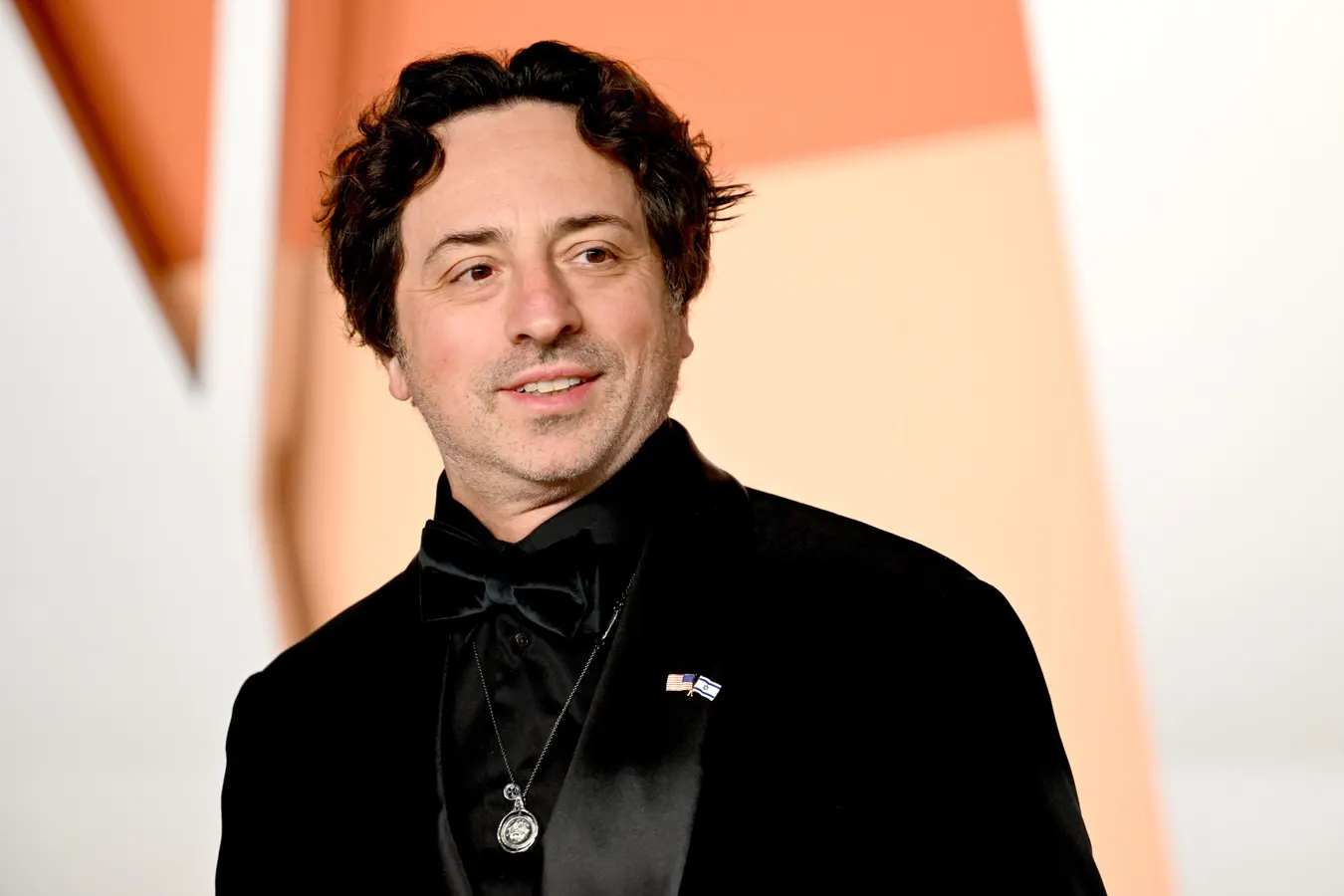
Sergey Brin has spent more than $100 million trying to convince Californians that taxing billionaires is a terrible idea. Through his political action committee, Build a Better California, the Google cofounder has poured more money into fighting the state’s proposed wealth tax than any other person. He has funded ads, commissioned studies, and warned that the tax would drive the state’s richest residents away. So it is hard to imagine a more fitting, almost poetic irony than this: when California voters finally get a chance to decide on the measure next month, Brin will not be allowed to cast a ballot. That is because, according to public records from the Nevada Secretary of State’s office, Brin quietly changed his voter registration to Nevada on December 10. His move was first revealed by Forbes, which noted that Brin had already bought a $42 million mansion on the Nevada side of Lake Tahoe that same month. His spokespeople confirmed that Brin now considers Nevada his home. With an estimated fortune of $263 billion, Brin instantly became the richest person in the Silver State, overtaking casino heiress and Trump megadonor Miriam Adelson, whose fortune is estimated at $31.2 billion. His voter registration lists him as “nonpartisan,” and his representatives did not respond to requests for comment. But the symbolism is unmistakable: the man who has spent a fortune opposing a tax on billionaires will not be around to vote against it.
The tax in question would apply only to California residents as of January 1, 2026, which helps explain why Brin’s residency change came when it did. Moving across the state line, even to a mansion high in the Sierra Nevada, is not just about a change of scenery. It is a financial calculation. For someone with Brin’s wealth, the difference between being a Californian and being a Nevadan is potentially astronomical. California has some of the highest personal income taxes in the country, and the proposed wealth tax would add another layer on top of that, targeting billionaires who call the state home. Nevada, by contrast, has no state income tax, no wealth tax, and a much friendlier regulatory environment. Brin’s opposition campaign was always about more than principle; it was about protecting his own pocketbook. But his decision to leave has a certain sad logic to it. He may believe that California is making a mistake, but rather than waiting to see what voters decide, he has chosen to hedge his bets and put himself beyond the reach of the law. The fact that he spent over $100 million trying to defeat the measure and then left anyway suggests that he did not trust his own arguments to persuade enough people. Or perhaps he simply decided that actions speak louder than ads. Either way, his departure is a powerful talking point for opponents of the tax, who will say that even the wealthiest man in the room saw the writing on the wall and got out.
Brin’s longtime partner in building Google, Larry Page, has made a similar escape, though his path has been less public. Page is not yet registered to vote in Florida, according to the Miami-Dade Supervisor of Elections Office, and Forbes could not find an updated declaration of domicile for him. But his spokespeople told Forbes that Page has changed his residency from California to Florida, and his bank account seems to confirm the story. In December 2025 and January 2026, Page spent a staggering $173 million on two mansions in Miami. That is the kind of money that makes a statement. With an estimated fortune of $286 billion, Page is now the second richest resident of the Sunshine State, trailing only Jeff Bezos, who is worth an estimated $374 billion. Together, Brin and Page were once the two richest people in California. Their departure reshuffles the state’s billionaire rankings. The top spot now belongs to Mark Zuckerberg, with an estimated $253 billion, followed by Nvidia’s Jensen Huang, at $188 billion. Huang is notable because he is the only centibillionaire who has publicly pledged to remain in California even if the wealth tax passes. Zuckerberg, meanwhile, has been less forthcoming. His representatives did not respond to requests for comment about his residency after he bought a $170 million mansion in Miami in March. The pattern is obvious: the ultra-rich are not waiting around to see what happens. They are voting with their feet, and their feet are heading to states with lower taxes and warmer winters.
The Google cofounders are not the first, and they will not be the last, to leave California. According to Forbes’ analysis of the richest people in every state, native Californians now top the lists in at least half a dozen other states. The most famous example is Elon Musk, the world’s wealthiest person, who is worth an estimated $925 billion. Musk moved to Texas in 2020, partly in protest of California’s strict Covid-19 restrictions, and has become an outspoken critic of the state’s politics and policies. His relocation was a huge symbolic blow to California’s self-image as the natural home of innovation and ambition. But Musk was not alone. Don Hankey, a formerly Los Angeles-based subprime car loan billionaire worth an estimated $10.5 billion, moved to Nevada earlier this year. “We’ve already lost a lot of wealthy people and a lot of good companies that have been moving out of California,” Hankey told Forbes in January. “This is just going to continue the trend.” The data backs him up. California is still home to 255 billionaires, far more than any other state. New York comes second with 153, followed by Florida with 137 and Texas with 88. But per capita, the balance is shifting. More importantly, California’s total billionaire wealth now ranks second to Texas, according to Forbes estimates. California’s billionaires are worth about $1.81 trillion, while Texas’s billionaires are worth about $1.82 trillion. The margin is slender, and it is largely due to Musk’s massive fortune. But the symbolic meaning is huge: for the first time, the state most associated with American wealth and technology is no longer the richest in terms of billionaire dollars.
The political landscape around the wealth tax is deeply divisive. Supporters argue that California needs to tax extreme wealth to pay for housing, healthcare, education, and other urgent needs. They point out that billionaires have accumulated enormous fortunes during a time of crisis, and they argue that the state has a right to ask Washington and Wall Street elites to give back. Opponents, including Brin, counter that the tax will drive away precisely the entrepreneurs and investors who created the state’s economy. They cite the growing exodus of millionaires and billionaires as evidence that the policy is backfiring even before it becomes law. The fact that Brin and Page have left is a gift to opponents, who can now say that the tax has already cost California two of its most iconic residents. But supporters might respond that these two men were never going to stay if they could avoid paying taxes anyway. They might argue that a state cannot keep wealthy residents by letting them dictate the rules. The truth is probably messy. Some billionaires will leave because of the tax; others will stay because California remains a unique center of talent, culture, and technology. But the timing of Brin’s move is hard to ignore. He waited until after the December deadline to establish his new residency, and he chose a mansion on the Nevada side of Lake Tahoe, just a short drive from the California border. It is almost as if he wants to remain close enough to watch what happens, while making sure he is protected from the consequences.
At its heart, this is a human story about how people respond to fear, uncertainty, and the lure of home. Sergey Brin did not become the world’s richest opponent of a tax by accident. He built Google with Larry Page in a garage, helped create the modern internet, and turned a startup into one of the most valuable companies on Earth. California gave him the space, the network, and the opportunities to do all of that. And yet, when faced with a tax that could cost him billions, he chose to leave. There is something sad about that, even to people who oppose the wealth tax. It suggests that money can sever the bonds between a person and the place that made them. It also suggests that California’s leaders have a choice to make. They can try to hold onto their richest residents by offering them something worth staying for, or they can embrace the loss and focus on building an economy that works for everyone, not just billionaires. The story of Brin and Page is not just about tax policy. It is about what we owe each other, what we value, and whether a state can remain both a beacon of opportunity and a place where the super-rich want to live. For now, the answer is unclear. California still has more billionaires than anywhere else, and new AI founders are minting fortunes every year. But the departure of its two most famous tech giants is a reminder that no one, no matter how powerful, is permanently anchored to one place. In the end, Brin and Page did what made sense for them. The rest of us are left to decide what makes sense for California.