



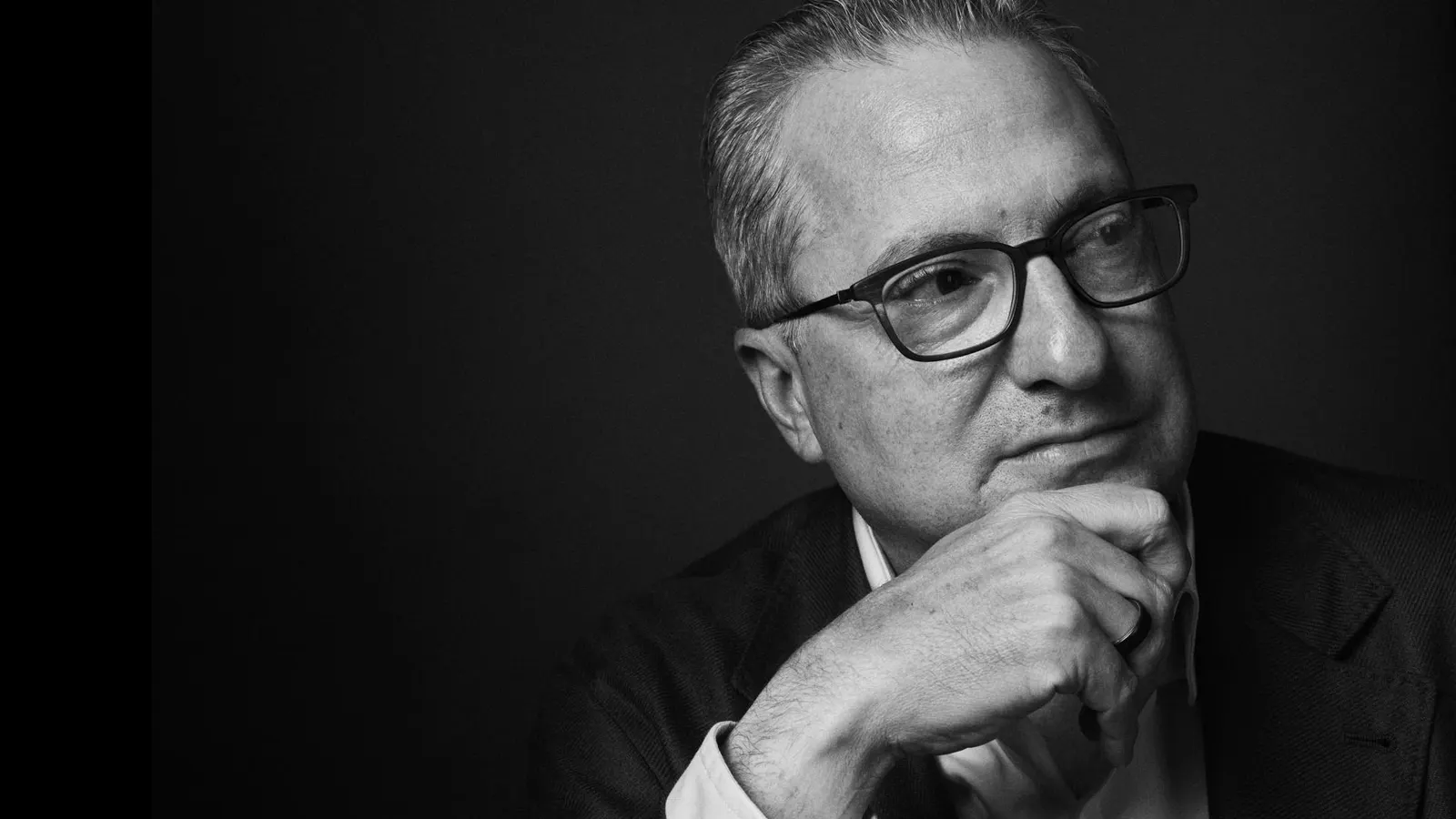
Tony Yoseloff’s first investing education didn’t happen on a trading floor or in a lecture hall. It happened in the mid-1980s, when he was a 10-year-old kid obsessed with the New York Yankees, and his parents lent him a couple of thousand dollars to buy and sell baseball cards. Young Tony would buy cases of Topps cards, sort through them, and repackage them into smaller themed sets—oriented around particular teams or standout players—then resell them. He even bought a few ads in Baseball Hobby News, a monthly print publication, to find prospective buyers. It felt like a real business: he had inventory, marketing, customers, and the thrill of seeing checks arrive in the mail. Looking back, he laughs that he forgot to account for the value of his own labor, so he probably earned little more than minimum wage. His parents probably didn’t realize they were seeding a future hedge fund manager, but they gave him something more valuable than the loan: a chance to make decisions with real money and live with the consequences. As a kid, he loved the hunt, the negotiation, and the satisfaction of turning a pile of cardboard into cash. The exercise taught him lessons that would define his career. He learned about bid-ask spreads and liquidity, because a shoebox full of common cards was worthless until you found the right buyer. He learned that packaging and presentation could create value. And he learned that you don’t need home runs—you just need to keep making small, sensible trades and let profits compound. The experience also taught him to be comfortable with small profits repeated over many trades—a philosophy he’d later apply to merger arbitrage. Decades later, after his allegiances shifted—he became a minority owner of the Baltimore Orioles in 2024 as part of David Rubenstein’s group—Yoseloff still approaches investing with that same patient, scrappy mentality. It’s a mindset that has served him well as the managing partner and chief investment officer of Davidson Kempner, a hedge fund with $40 billion in assets that rarely makes headlines but has quietly become one of Wall Street’s most important credit investors. The boy who once sorted baseball cards in his bedroom now sorts through distressed debt and merger arbitrage opportunities, still looking for edges that others overlook.
Davidson Kempner, known as DK, specializes in distressed debt and event-driven trades like merger arbitrage. The returns look unimpressive at first glance: the flagship fund has generated a net annual return of 6.5% over the past decade, according to an endowment report. Two private credit funds did better, with net internal rates of return of 12.3% and 8.6%. But DK’s real superpower is consistency. It hasn’t been a perfect record—there have been years when DK lagged its peers—but the firm has never blown up, and in a world of fund closures and celebrity blowups, that matters. In the last 25 years, its worst year was 2008, when it lost 9.7%—and it bounced back with a 20% gain the following year. Since its founding in 1983, it has generated $28.9 billion in net gains for investors, ranking 18th on the Edmond de Rothschild group’s 2026 list of the world’s most profitable hedge funds. For the pension funds and endowments that invest with DK, a 6.5% average isn’t flashy, but it’s reassuring; they value sleeping at night over adrenaline. Yoseloff, now 52, interned at DK in 1998 and joined full-time in 1999 after earning dual law and business degrees from Columbia. He took the top job in January 2020 after Tom Kempner retired. Forbes estimates his net worth at $1.3 billion, and regulatory filings show he owns between 25% and 50% of the firm—an unusually large stake for a hedge fund leader. Troy Rohrbaugh, co-president of JPMorgan, says Yoseloff’s legal training makes him exceptionally detail-oriented, equally focused on both the underlying story and the deal structure. In credit, Rohrbaugh notes, you can have a great underlying story but ruin it with bad terms, or structure a deal perfectly around a weak asset; Yoseloff obsesses over both. That combination is rare in an industry where many investors excel in one dimension and stumble in the other. It also explains why DK has become one of the largest credit investors on Wall Street while maintaining a low profile. Yoseloff likes to say that in this business, survival is the edge.
DK’s origins trace back to Marvin Davidson, who founded the firm in 1983 to manage his own money after 24 years at Bear Stearns. Tom Kempner joined a year later, and the firm opened to outside investors in 1987. A crucial early vote of confidence came in 1990, when Yale’s legendary chief investment officer David Swensen invested $20 million. Davidson eventually stepped back in 2004 and died in 2023 at age 87; Kempner ran the firm for years before handing the reins to Yoseloff. By the time Yoseloff spotted DK’s name on a bulletin board at Columbia Business School, the firm was managing about $1 billion. He took an internship and so impressed Kempner that he received a full-time offer before the summer ended. Yoseloff joined as an analyst just as the dotcom bubble was about to burst, and he spent his first two years mostly saying no. One story illustrates his instincts. A big bank tried to sell DK a block of debt in Integrated Health Services, a nursing home company struggling with federal funding cuts and falling occupancy rates. A senior executive from the bank personally called Yoseloff, then a 24-year-old analyst, to push the deal. Yoseloff trusted his gut and declined. Within a month or two, the debt had fallen another 75%. He later realized that when a lead partner at a big bank is calling an unknown junior analyst to unload something that looks bad, there’s probably a reason. “Sometimes it’s actually what you don’t do that really establishes your credibility versus what you do,” he says. For a young analyst, turning down a big bank’s pitch was risky; he could have offended an important relationship. But Yoseloff understood that the firm’s reputation depended on protecting capital, not on being agreeable. Kempner took notice. The nursing home debt was just the first of many opportunities he waved away. That early discipline became a hallmark of his style—and a reminder that in credit, the best trade is often the one you refuse to make. It also helped him build the internal authority that would eventually make him the firm’s leader.
Yoseloff made a bigger name for himself working as the day-to-day analyst on large distressed debt investments in Pacific Gas and Electric and Southern California Edison during California’s 2001 power crisis, and he spent years on a complicated Iridium Communications trade. Iridium was Motorola’s disastrous satellite-phone project: it launched dozens of satellites in 1998 to usher in a new wireless era, but costs ballooned and better cell phones arrived, forcing the company into bankruptcy in 1999. Yoseloff called it an “unmitigated financial disaster.” Yet he recommended buying Iridium debt at 30 cents on the dollar because Motorola was on the hook for a portion of it. When a judge released Motorola from that guarantee and the debt dropped to 15 cents, DK bought four times as much, sued Motorola alongside activist investor Elliott Management and other creditors, and after several years and multiple favorable court judgments, ended up being paid 70 cents. It was a vindication of patient, contrarian analysis. The Iridium case is the kind of trade that defines a career: it required nerve, legal creativity, and patience. Many investors would have cut their losses at 15 cents, but Yoseloff saw the guaranteed debt as a real asset and the legal fight as part of the return. Yoseloff rose steadily through the ranks: partner in 2004 while still in his 20s, deputy managing partner in 2012, co-head alongside Kempner in 2018, and sole managing partner in January 2020. By hedge fund standards, it looked like a smooth succession in an industry where founders are notoriously reluctant to let go. But his ascent hasn’t pleased everyone. Former partner Michael Herzog sued DK in U.K. courts this year, claiming he was denied $80 million of his partnership interest and that Yoseloff took steps to “consolidate power and silence opposition” after taking over. DK’s lawyers call the allegations “utterly lacking in merit, if not downright frivolous,” and a U.S. magistrate judge allowed the case to move to discovery in August. The lawsuit adds a rare dose of drama to a firm known for quiet competence, but for now, Yoseloff seems focused on the work, not the noise.
Yoseloff’s first big test as sole leader came quickly: the Covid pandemic. While others panicked, he stayed calm—partly because he spent April and May 2020 in Phoenix, Arizona, where people were moving on from lockdowns far sooner than his friends in New York and California. That optimism led DK to buy first-lien bank debt in Playa Hotels & Resorts, which operated luxury properties in Mexico and the Caribbean, at less than 80 cents on the dollar. Yoseloff considered it “bulletproof.” DK later provided rescue financing on attractive terms to keep Playa out of bankruptcy and bought about 15 million shares of equity at an average of $4.50 starting in the second quarter of 2020. When Hyatt acquired Playa for $13.50 per share in 2025—$2.6 billion in total—DK had profited at every stage: debt, rescue financing, and equity. John Waldron, president and COO of Goldman Sachs, recalls Yoseloff as a “relatively unique calm actor” during the chaos. He spent the spring of 2020 on the phone with management teams, trying to separate companies that would survive from those that wouldn’t. The hotel industry looked doomed, but Playa had tangible assets and a brand that would recover once travel returned. Most DK investments aren’t that lucrative individually. Much of its event-driven strategy is about making large, precise bets that mergers will close, earning a few percentage points at a time. For example, DK owned $915 million of Pioneer Natural Resources stock at the end of the first quarter in 2024, about 3% below the price Exxon Mobil had agreed to pay in its $60 billion acquisition, which closed in May. That’s the essence of DK: patient, methodical, and happy to collect modest profits repeatedly. The Playa trade, however, shows what happens when a crisis creates a genuinely cheap asset: Yoseloff not only bought the debt, but also kept adding exposure through rescue financing and equity, structuring the deal so that every possible outcome had a path to profit. It was a masterclass in using the firm’s balance sheet and legal expertise to control risk. Yoseloff’s calm wasn’t indifference; it was conviction born from experience. He had seen panics before.
Today, DK has around $12 billion in private credit strategies, money locked up longer for higher returns. The firm raised its first private drawdown fund in 2011 and has since raised five more, mostly focused on distressed private companies. In 2024, it closed a standalone liquid distressed investing fund and folded those investments back into its flagship liquid strategy, concentrating its firepower. But DK has deliberately avoided the direct corporate lending that has turned private credit into a $2 trillion asset class. That market has grown enormously, and the stocks of private credit specialists like Ares Management and Blue Owl Capital have fallen 30% and 40% this year, respectively, as higher interest rates and AI-fueled disruptions have stressed private software businesses. Yoseloff never bought the sales pitch. “We never bought into that narrative, and we still don’t buy into that narrative today,” he says. He expects default rates on public and private loans to settle around 5-6% over the long term, with direct lending returns in the mid-single digits. He points to the early 2000s, when high-yield default rates jumped from 5% to 12.8% after the dotcom and telecom busts. He acknowledges that AI-driven capital spending bailed out the economy after the Federal Reserve’s rate hikes, but he worries a slowdown in that spending combined with high rates could create a similar environment. He also thinks about the 2000s as a warning: back then, the Fed had been raising rates, the economy seemed fine, and then the air came out of a speculative bubble. In Yoseloff’s view, the current cycle may be different, but the math of debt doesn’t change. To prepare, DK has been loading up on asset-backed loans—lending secured by loan pools, real estate, ships, aircraft, and other collateral. “There’s tremendous competition in what’s called direct corporate lending. There’s much less competition in asset-backed lending,” he says. His favorite trades now are ones where the collateral does the heavy lifting, and where even in a downturn there is something to recover. If defaults do spike and distressed companies need rescue financing, Yoseloff wants DK to be ready. The kid who once repackaged baseball cards in his bedroom is still finding ways to create value—and avoid the cards nobody wants.