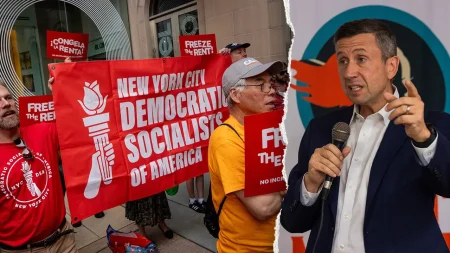



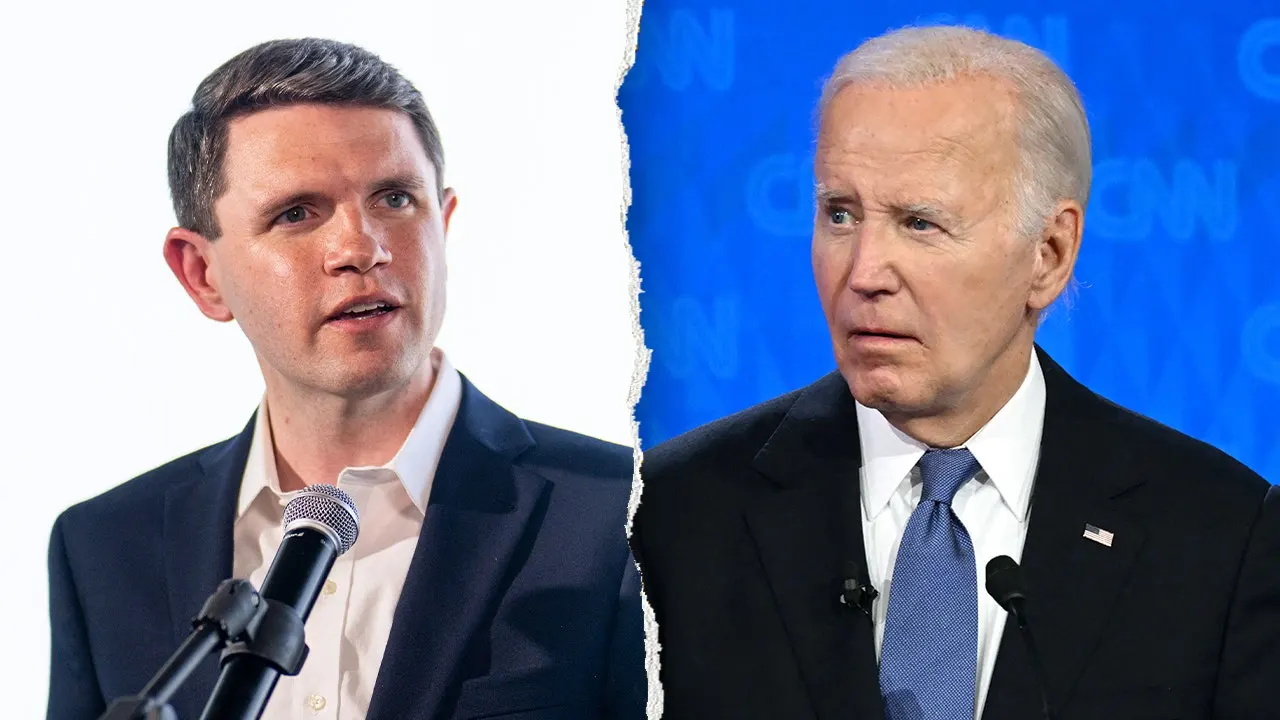
James Talarico is a man caught between two very different political portraits. In one, he is the hopeful Democratic Senate candidate from Texas, a former public school teacher with a boyish face and a gift for rhetorical heat, now running one of the most closely watched races in the country. In the other, he is the subject of a familiar and unforgiving political narrative: the ambitious progressive who, upon realizing that Texas remains deep red, suddenly discovers the virtues of border security and moderation. His latest campaign advertisement only deepens that tension. In it, Talarico looks directly into the camera and declares that Joe Biden failed the country on the border, a message meant to reassure Texas voters that he is not the open-border radical Republicans say he is. The ad is polished, tough, and carefully timed. But as with so much modern political communication, the video raises as many questions as it answers. Talarico’s own past words are not kind to the image he is trying to craft now. A video surfaced from a 2019 interview in which he suggested that the state’s entire border security budget should be redirected to public education, calling border enforcement expensive, ineffective, and largely political grandstanding. That contradiction is not just a minor footnote. It is the kind of contrast that defines a campaign, and it is exactly why Talarico’s opponents are already circulating the clip in a state where immigration is the emotional heart of conservative politics.
The new ad itself is a study in strategic reinvention. Talarico opens with a blunt appeal: “I called out Joe Biden for failing us on the border.” It is a line crafted for independents and moderate Democrats, and perhaps for the small but decisive number of Texas Republicans who cannot stand Ken Paxton. But Talarico’s campaign could not point Fox News Digital to any moment during Biden’s presidency when Talarico actually made such a criticism publicly. That gap between the claim and the record is exactly the kind of thing that political operatives call a “flip-flop” and that voters often call simply “fake.” The evidence of his earlier position, however, is not in dispute. In a 2019 interview with The Austin Chronicle, Talarico was explicit. He noted that Texas was spending roughly $800 million over two years on border security, and he argued that the money should instead go to public education, specifically to increase the basic allotment per student. He described border infrastructure—boats, planes, and patrol agents—as expensive and useless when it came to addressing the root causes of migration. He accused politicians of using border funding to appease the extreme wings of their parties. It was a coherent, progressive worldview: invest in schools, treat migration as a humanitarian issue, and stop pretending that a militarized border would solve anything. That worldview may be sincere, but it is not easily squared with the ad he now runs, which sounds like it could have been pulled from a Republican primary script.
Talarico’s history on immigration goes much deeper than that one interview. He has called for abolishing Immigration and Customs Enforcement, referring to the federal agency as a “secret police force” that needed to be torn down. He has referred to undocumented immigrants as his “constituents.” He has described Texas Governor Greg Abbott’s border security policies as “atrocities,” accusing the governor of “hunting” immigrants. He even told an audience that he had taught many undocumented students and that those young people were more patriotic than many American-born citizens. These are not stray rhetorical flourishes. They were consistent themes throughout his political career in the Texas Legislature. For years, he was everything conservative critics said he was: a progressive Democrat with little patience for border enforcement and a deep sympathy for immigrants in the country without legal status. There is nothing inherently wrong with that perspective, and in a more liberal state, it might even be an asset. But Texas is not that state. It is a place where border security is not just a policy preference but a kind of civic religion. In such an environment, Talarico’s past comments are political explosives buried beneath the careful rhetoric of his campaign. The challenge he now faces is not simply that he changed positions—people do that all the time—but that the change feels calculated, like a costume change rather than an evolution. Voters tend to forgive politicians who grow and learn; they are much less forgiving of politicians who seem to be wearing a mask.
The Talarico campaign, of course, sees things differently. When asked about the apparent reversal, his spokesperson JT Ennis emphasized that Talarico is the only candidate in the race who has put forward a border security agenda endorsed by both Republican and Democratic border county sheriffs. That is a genuine if unusual credential, and it suggests that Talarico is not simply inventing a new position for convenience. His campaign insists that he supports more border patrol agents, that he wants to arrest and deport violent criminals and human traffickers, and that his approach distinguishes between people who pose a threat and “moms and babies.” That last distinction is a familiar refrain in Democratic politics, and it may be genuinely held. It is possible for a person to believe that ICE should be dismantled and also believe that violent offenders should be deported. It is possible to oppose the $800 million border budget in 2019 and support a different border strategy in 2025. Policy positions can evolve, especially after elections change the landscape. But evolution is not the same as erasure. Talarico has not acknowledged his earlier statements in the ad. He has not explained why he changed his mind, or what new information prompted the shift. He simply presents himself as a “border security Democrat” and hopes voters do not look too closely. In a race as tight as this one, that hope is fragile. Every opponent ad, every news story, every social media post threatens to break it.
There is also a more human dimension to this campaign that deserves attention. Talarico disappeared from the campaign trail earlier this month, and the absence set off a storm of speculation. Rumors flew online, some suggesting he had checked into a behavioral health center. It was the kind of gossip that spreads quickly in a digital age where every absence is treated as a mystery and every politician is one weird weekend away from disaster. Talarico eventually reappeared, clearing the air with a simpler explanation: he had the flu. He reassured supporters that he was recovering and returned to the grind of a Senate campaign. That moment, brief as it was, is a reminder that candidates are not just ideological constructs. They are people who get sick, who feel the pressure of brutal schedules, who face the weight of expectations from parties and donors and family members. For Talarico, this race is not merely an intellectual exercise in positioning. It is his life. He is a young man running one of the most difficult races in the country, trying to unseat a Republican in a state that has not sent a Democrat to the Senate in decades. The stress of that effort is enormous, and the constant scrutiny of his past statements only amplifies it. Whatever one thinks of his politics, it is hard not to feel a pang of sympathy for a person whose every old video and every careless phrase is now subjected to the merciless archaeology of modern campaigns. The flu was probably a relief in some strange way—at least it was a problem that medicine could solve.
Ultimately, Talarico’s fate will be determined not by the sophistication of his ad campaign but by the willingness of Texas voters to believe that changed rhetoric can coexist with unchanged instincts. The Republican Party, led by his opponent Ken Paxton, is working hard to define Talarico by his past, not his present. Paxton’s campaign will repeat the 2019 interview, the calls to defund border security, and the comments about ICE until they are embedded in the minds of every swing voter in the state. Talarico’s only defense is to offer a coherent narrative of growth, one that acknowledges his earlier positions without being defined by them. Whether he can do that remains to be seen. The race remains close, and Texas Democrats are desperate for a win, but desperation often leads to self-deception. The question voters must answer is whether Talarico’s border security ad is a sincere change of heart or simply a survival strategy. No one outside of Talarico’s own mind can know for certain. What we can know is that words matter, records matter, and the gap between what a politician says and what a politician has done is almost always the truest measure of their character. In the end, Talarico is asking Texans to trust that the man they see now is the real one. But in a state where trust is the scarcest resource in politics, that is the hardest ask of all.