



Here’s the humanized and expanded summary in six paragraphs.
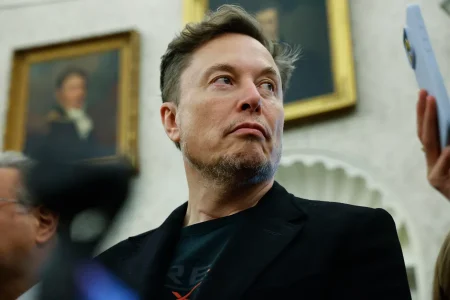
Elon Musk has never been shy about thinking on a scale that most people can barely wrap their heads around, but this week he took that tendency to a whole new level. On Tuesday, during a SpaceX earnings call, Musk revealed that the two giant companies he runs—SpaceX, valued at around $2 trillion, and Tesla, valued at roughly $1.5 trillion—have each formed special committees to investigate the possibility of a merger. The idea, in simple terms, would be for the rocket company to acquire the electric vehicle company, bringing two of the most valuable enterprises on the planet under one roof. It’s the kind of move that would make headlines for years, and it would also set off a chain of financial consequences for Musk himself. Because of a change-of-control provision written into the agreement behind his earlier Tesla CEO performance award, a merger would immediately unlock 286 million restricted Tesla shares. Those shares would otherwise have required Musk to stay on as Tesla’s CEO, or in a similar leadership role, until January 2028 before they vested. Based on Wednesday’s closing price, after anticipated tax withholdings and after accounting for the roughly $7 billion in Tesla stock Musk had set aside to cover the exercise price of the options that were converted into those restricted shares, the newly vested stock would be worth something in the neighborhood of $70 billion. Let that sink in for a moment. For context, a windfall like that would by itself make someone the 29th richest person in the world. But for Musk, whose estimated net worth hovered around $989 billion at Wednesday’s close, it was, as the phrase goes, just another day. In fact, by Thursday alone, his fortune had reportedly fallen by around $70 billion, which puts the scale of his wealth into perspective.
On the surface, this merger would also force Musk to walk away from what looks like an eye-popping payday. Because the deal would trigger the change-of-control provisions in his much talked about 2025 Tesla CEO Performance Award, Musk would have to forfeit 424 million Tesla restricted shares—before taxes and exercise costs—that he could have earned over the coming years if Tesla hit a series of staggeringly ambitious performance targets. Those targets included growing Tesla’s market capitalization nearly sixfold to $8.5 trillion, and boosting its adjusted EBITDA from roughly $15 billion in 2025 all the way to $400 billion by September 2035. For anyone else, losing out on something like that would be devastating. But here’s the thing: those milestones are, by near universal agreement, moonshots. Even Tesla itself has described them in terms that suggest they were always meant to be aspirational rather than realistic. So the forfeiture isn’t really the loss it appears to be. In fact, of the twelve equal tranches that make up the award, only one might still have a chance of vesting if the merger goes through, and that’s the tranche tied to Tesla hitting a $2 trillion market cap—a target that is still about 33 percent above where the company trades today. If that tranche vested, it would unlock 35 million shares currently worth around $13.5 billion before taxes and exercise costs. The next tranche would require a $2.5 trillion valuation, which suddenly seems less like a sure thing. So when you look closely at the math, Musk isn’t giving up certain billions; he’s trading away a lottery ticket with long odds, and in exchange he might get the kind of control he’s been craving for years.
There’s also a good chance that Musk would not simply walk away from the table empty-handed. Harvard Law School professor Jesse Fried points out that Musk could likely negotiate a new compensation package from the combined company that would offset some—or perhaps even all—of the upside he’d be losing by forfeiting the 2025 Tesla award. In other words, the merger could be structured in a way that gives him a fresh set of incentives, tailored to whatever the new enterprise looks like. And regardless of whether that happens, Musk’s finances are already so deeply intertwined with SpaceX that losing the Tesla award is barely a ripple. SpaceX has separately granted Musk two potentially enormous awards that could unlock 1.3 billion restricted shares, before taxes, if the company achieves its own outrageous milestones. Those milestones include growing SpaceX’s market cap to $7.5 trillion, which is subject to likely upward adjustments if SpaceX acquires Tesla; establishing a permanent human colony on Mars with at least one million inhabitants; and completing non-Earth-based data centers capable of delivering 100 terawatts of compute per year. That’s on top of the 4.8 billion SpaceX shares Musk already owns, worth about $759 billion, plus 350 million vested SpaceX options worth around $53 billion. Add in the 396 million Tesla common shares he already holds, worth roughly $153 billion, and it becomes clear that the rocket company is the dominant force in his personal fortune. Columbia Law School professor Dorothy Lund captured the sentiment simply: “I think Musk will be just fine even if he forfeits his 2025 Tesla package.”
Boston College Law School professor Brian Quinn went even further, suggesting that the money is almost beside the point. When asked whether there might be another way to structure the merger so Musk could keep his 2025 award, Quinn said he didn’t think money was the motivating factor behind the deal at all. “If it was you or me, we might think hard about that, but I think it’s all funny money for him,” he said. That idea—that this is all funny money—resonates when you look at the real reason a merger might appeal to Musk. It’s not about adding another few billion to an already astronomical net worth. It’s about control. Right now, Musk has voting power of just under 20 percent at Tesla, which he has described as uncomfortably low for a company he wants to lead into the future of artificial intelligence and robotics. At SpaceX, however, he controls more than 80 percent of the votes, thanks to special voting shares that give him an iron grip on the company’s direction. If SpaceX acquires Tesla, that control would effectively extend to the electric vehicle maker as well. Musk would no longer have to worry about activist shareholders, boardroom resistance, or the possibility that his vision for Tesla’s AI and robotics ambitions could be blocked by powerful investors who don’t share his appetite for risk. In that sense, the merger isn’t really about cashing out or collecting a prize; it’s about consolidating power in a way that lets Musk pursue his most ambitious ideas without constantly looking over his shoulder.
For most of us, the numbers involved are so large that they lose all meaning. A billion dollars is difficult to imagine, let alone the $989 billion fortune Musk had on Wednesday or the $70 billion swing he experienced on Thursday. But the human story here isn’t really about the money at all. It’s about what Musk wants, and what he’s willing to trade to get it. He appears willing to forfeit a compensation package that was designed to keep him motivated at Tesla for the next decade, because the milestones it required were never truly realistic and because the thing he actually values most—control over the companies he founded and built—would be secured by bringing SpaceX and Tesla together. The award was always a kind of golden carrot, dangled to keep him focused on growing Tesla’s value to astronomical heights. But if he can own the combined company through his SpaceX voting structure, he doesn’t need the carrot anymore. He can simply be the person who decides what happens next. That’s a far more compelling prize than a package of restricted stock, even one worth tens of billions of dollars. And if the merger does go through, Musk won’t have to burden himself with concerns about losing control ever again. He’ll have achieved, in one stroke, what he couldn’t get through years of Tesla board negotiations and shareholder votes.
Of course, none of this is guaranteed to happen. The special committees are still exploring the idea, and there are plenty of regulatory, legal, and financial hurdles that could stand in the way. Merging a car company and a rocket company would be an extraordinarily complex undertaking, and it would raise all kinds of questions about valuation, governance, and shareholder interests. But the fact that Musk has even floated the idea publicly, and that both companies have formed committees to study it, suggests that it’s more than just a passing thought. It’s a serious possibility, one that would rewrite the map of Musk’s empire. And if it happens, the forfeiture of his 2025 Tesla CEO Performance Award will likely be remembered not as a great sacrifice, but as a footnote. Musk’s fortune is so enormous, and so tied up in SpaceX’s speculative future, that the Tesla award was never the prize it seemed to be. The real prize is the ability to move freely, to make decisions without asking permission, and to push humanity toward Mars, AI, robotics, and whatever else he dreams up next—all while holding the levers of power firmly in his own hands. For someone like Musk, that may be worth more than any number of restricted shares.