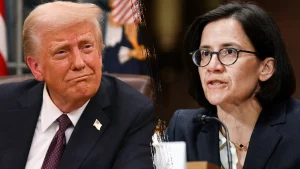



In the quiet hum of a New Hampshire Tuesday, Cinde Warmington’s path to the Democratic gubernatorial nomination was never truly in doubt — running unopposed, she claimed the party’s banner without a single challenger to contest her. For Warmington, the moment signifies more than a procedural victory; it marks the second time she has stepped into the ring for the state’s highest office, carrying with her a complicated and deeply personal history that has already become a flashpoint in the general election campaign. While the primary offered no drama, the significance of the day is not lost on her team or her opponents. The Republican Governors Association (RGA) quickly seized on what they consider her most disqualifying flaw: her past work as an attorney representing Purdue Pharma, the pharmaceutical giant that became the symbolic heart of the opioid crisis. Their attack wasn’t subtle. They called her connection to the drug “disqualifying,” suggesting that her role in the company’s strategy to push OxyContin—which they described as her calling it a “miracle drug”—makes her unfit to lead the Granite State. The RGA statement was blunt, referencing her perceived callousness toward the families devastated by addiction, saying she “chose a payday over protecting New Hampshire families.” But Warmington is not one to shy from the controversy; she has met it head-on, offering a personal and professional counter-narrative.
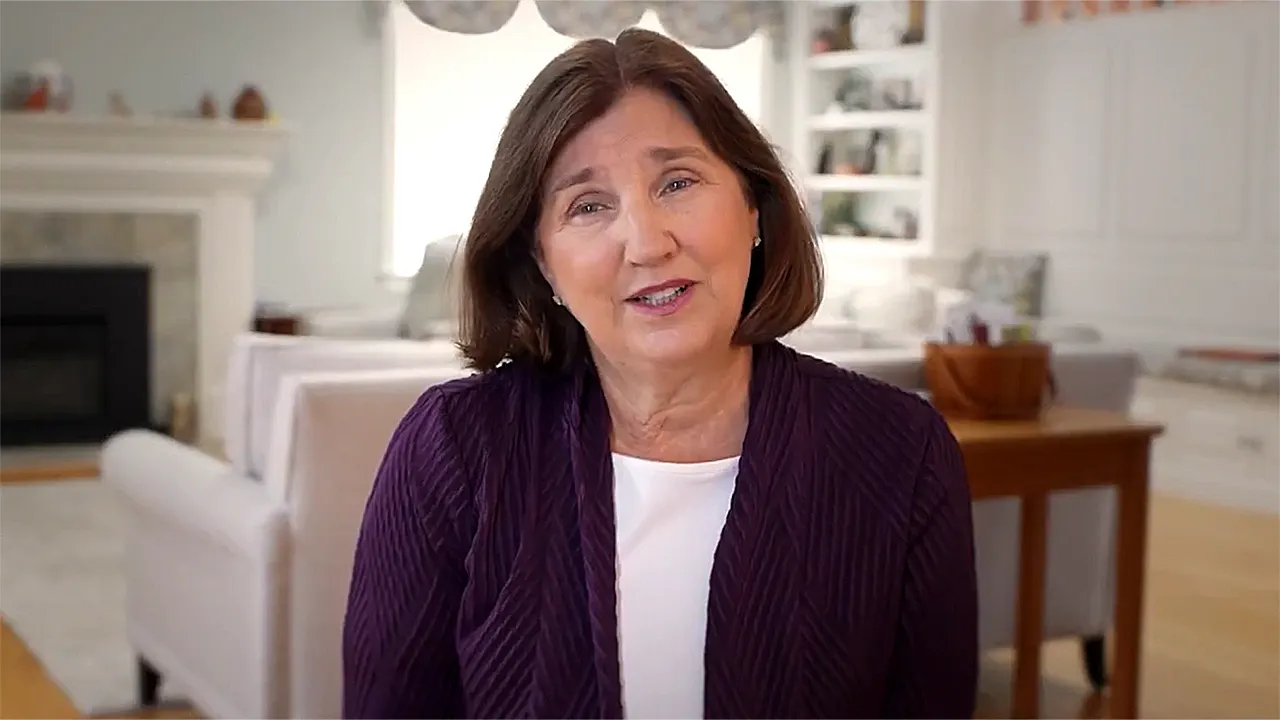
Her defense is deeply human, intertwined with a painful family story. In a video titled “setting the record straight,” Warmington didn’t retreat. She opened up about her late father, a man she loved “very, very much” who struggled with addiction. This revelation humanizes her, grounding the issue in deeply personal stakes rather than pure legal arithmetic. She says, “We did not escape the opioid crisis,” a line that resonates against the backdrop of a state that was ravaged by the epidemic. Warmington then explains her role, which she describes as limited and unsuspecting. She explains that in 2001, as an attorney, she was assigned a case representing Purdue Pharma by a partner. Her work, she insists, was not to market or glorify the drug, but to advocate for patients’ access to medication that their doctors prescribed. She claims she was unaware of the massive criminal fraud occurring behind the scenes, a fraud that was only exposed through years of litigation. Perhaps more critically, she frames her actions as those of an attorney doing their job for a client, not a complicit actor in a conspiracy. She takes no moral responsibility for the drug’s devastating effects, instead pointing out that the true architects were those in the company’s leadership who concealed the dangers.
Beyond this single controversial chapter, Warmington’s political biography is substantial and provides context for her current campaign. She served on the New Hampshire Executive Council, representing the state’s 2nd District from 2021 to 2025, a position that gave her oversight over state contracts, Medicaid expansion, and judicial appointees. In that role, she was not a quiet member; she was a vocal advocate for women’s healthcare and other social services. She pursued the governorship first in 2024, but lost a contentious primary to Joyce Craig, who then lost to Republican Kelly Ayotte in the general election. That loss ate at her; she saw the narrow margin—47.9% to 41.8%—not as a collapse, but as a foundation. Her persistence demonstrates a tenacity often seen in long-game politicians. She’s back, not just to stop a Republican, but to directly confront the same opponent who beat her party’s candidate in 2024. This sets a storyline of personal redemption and political comeback, a theme likely to dominate the next few months.
Warmington’s campaign platform is wrapped in the language of affordability, a theme resonating with voters across party lines. Like many Democrats in 2026, she has detected a political vacuum on the cost-of-living issue, where Republicans appear vulnerable. Her video introductions stress the crushing weight of everyday expenses: houses that are unattainable, grocery prices that seem to climb weekly, electricity that burns budgets, and property taxes that never seem to stall. She directly targets Governor Ayotte, saying, “Kelly Ayotte is making your life more expensive.” This sort of framing isn’t just a slogan; it’s an argument for a fundamental policy shift. But her platform extends beyond basic economics. She alignes hers with progressive principles; she pushes back against Trump’s immigration crackdown, specifically through ICE. She wants clear guardrails for data center construction, a notable issue as tech development expands. Perhaps more acute is her dedication to preventing investment groups from silently buying up housing, which has become a neighborhood-wholesale issue in many states. All this work she frames as “I know we can do better,” a phrase that positions her as a fixer for the New Hampshire of tomorrow.
What distinguishes her particular bout in the primary is her effort to appeal across the aisle. While embracing Democrats’ policy fights, she has publicly committed to a conservative-friendly financial principle: no sales tax, no income tax. This is a classic New Hampshire selling point, and it separates her from the national Democratic tax-and-spend reputation. Her platform is a balancing act—pushing back on federal policies that she finds harmful, yet keeping state priorities of low tax burden intact. This approach, she believes, will ensure a broad appeal. She also understands the pragmatic realities of serving as governor in a purple-leaning state; she seems committed to building consensus, acknowledging that a governor can’t be purely partisan. In her video, she was mindful of the sudden organic growth, but the governance will be about grappling with actual problems, not idealogical purity.
The general election contest on Nov. 3 against incumbent Gov. Kelly Ayotte is a major duel for early 2026. A vice president’s attendance and attention will be significant on the national stage, with both parties valuing the state’s symbolically important first-in-the-nation primary status. Ayotte is not a flippant adversary; she defeated Craig in 2024 by a decisive 53.4% to 44.3%, showing robust appeal in the state. But political circumstances shift. Warmington will have to confront her own baggage (the Purdue) and the intensified national attention from the RGA. Yet the state has a history of clot split-ticket voting, and if the affordability message sticks, she might have a chance to turn that bitter 2024 in her favor. This campaign will not only be about policy, but about trust, about narrative, and about whether Warmington can overcome the shadow of her previous work while painting a vision for a tenant that is more equitable, more affordable, and more compassionate than what exists now. Her journey, from daughter of an addict to nominee, is a testament to determination, and the next chapter will be written one town hall at a time.