

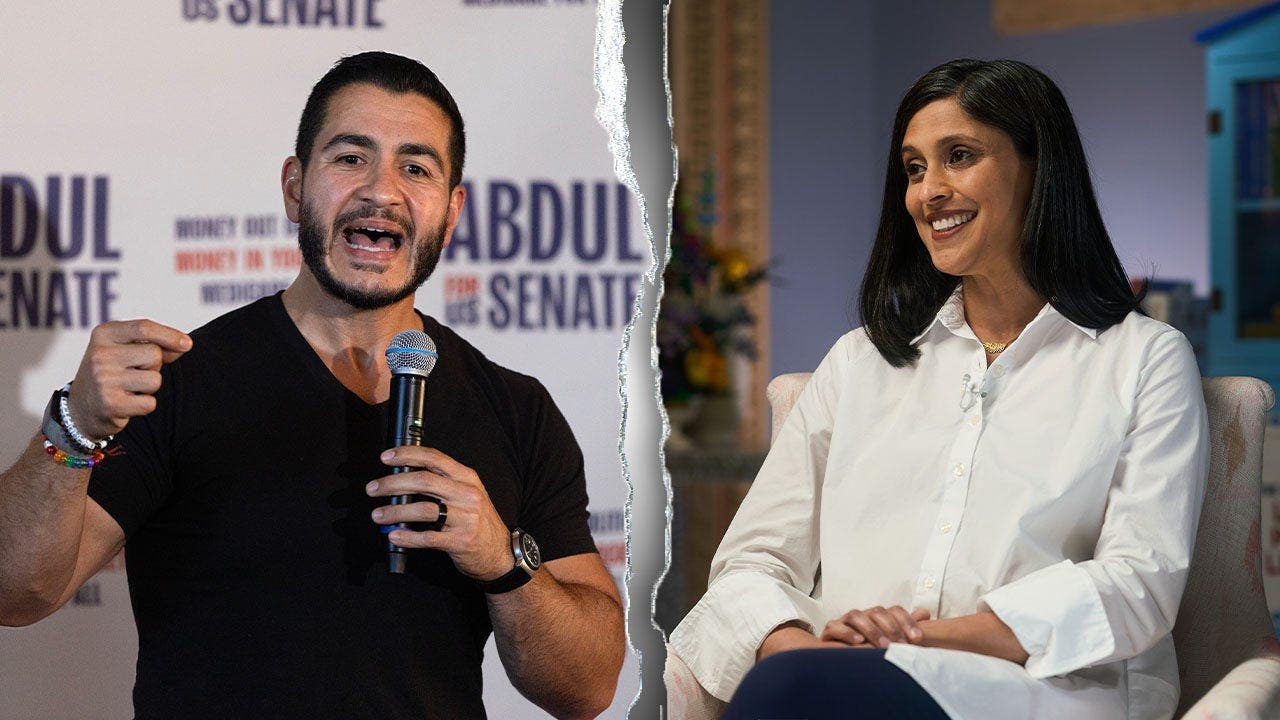
The Usha Vance Attack That Rocked Michigan’s Senate Race
The digital landscape erupted this week when controversial Senate candidate Abdul El-Sayed, a self-described socialist running in Michigan, decided to take a deeply personal swipe at Vice President JD Vance by dragging his wife, Usha Vance, into the political fray. The inflammatory post, which seemed to suggest something sinister about the second lady’s Indian ethnicity in relation to Vance’s beloved grandfather, has ignited a firestorm of criticism from across the political spectrum. Former Florida State Representative Ben Graber captured the sentiment of many when he questioned, “El-Sayed is now attacking Wives of US leaders? What a guy?” The remark has left political observers wondering what would possess a Senate candidate to go after a family member of a national leader in such a thinly veiled manner, and what it says about his judgment and fitness for office.
The controversy began when Vance, during a rally in Ohio, directly challenged El-Sayed’s public statements about his adherence to Sharia law, suggesting that such practices would have been completely alien to his own grandfather, affectionately known as “Papaw.” Vance’s criticism of El-Sayed’s religious stance was pointed and personal, reflecting a broader cultural clash over values and identity in American politics. Rather than addressing the substance of Vance’s critique regarding religious law and American values, El-Sayed chose instead to lob a juvenile and racially charged insinuation about the Vice President’s wife. His post read, “So do we think JD is taking Usha with him back in time to meet Papaw, or no…” The implication was clear to most readers – that Vance’s white midwestern grandfather would somehow be intolerant of his Indian-American wife – and it instantly became a rallying point for those who see El-Sayed as a divisive figure incapable of civil discourse.
The backlash came fast and furious from across the political landscape, with critics from both parties condemning what they viewed as a racist and sexist attack on a woman who has no role in the political arena. Republican Texas Representative Brandon Gill responded sharply, questioning why El-Sayed would assume all white midwestern grandparents are racist, while commentator Ryan Girdusky warned that Michigan residents should understand that El-Sayed seems to believe rural white Americans harbor racist views. Perhaps most damning was the response from an X account representing Democrats supporting his opponent, Mike Rogers, which highlighted a pattern of behavior: “This is why there were ads in the primary correctly highlighting how sexist and misogynistic Abdul is. He has so much contempt for women. If you’re over the politics of division. Reject Abdul El-Sayed.” This criticism suggests that El-Sayed’s problematic treatment of women is not an isolated incident but part of a concerning pattern that has followed him through his political career.
The attacks on women didn’t stop with Usha Vance, however, as El-Sayed demonstrated a troubling pattern of targeting female figures in positions they didn’t seek. Earlier that same day, he directed another pointed post toward Natalie Harp, an aide to President Donald Trump, joining the far-left chorus that has spent two weeks insinuating an improper relationship between Harp and Trump. His post patronizingly suggested that Trump had “had a little too much iPad for the week” and needed rest, dismissing the aide’s legitimate role and engaging in the same misogynistic tactics he claims to oppose. Republican strategist Matt Whitlock highlighted both posts together, observing that this is “just a bad campaign, bad candidate, bad instincts” and noting the absurdity of a Senate candidate “sitting at home on a Saturday morning tweeting bad takes that any normal campaign would shut down.”
Former Michigan gubernatorial candidate Tudor Dixon delivered perhaps the most pointed critique, drawing a direct line between El-Sayed’s public behavior and potential treatment of staff: “He goes after Usha. He goes after Natalie. This coward picks on women who are not in his fight. Imagine how he would treat female staffers in the halls of Congress.” This sentiment has been echoed across social media and political circles, with many questioning whether someone who demonstrates such contempt for women in public settings could be trusted to create a respectful workplace environment. Journalist Emily Schrader minced no words in her assessment, simply calling him “a racist creep,” while others noted the deeply ironic position of a self-proclaimed progressive engaging in the kind of identity-based attacks that progressives typically claim to oppose.
The controversy comes at a critical juncture in El-Sayed’s campaign, which has already struggled to gain traction against his Republican opponent Mike Rogers, with polling showing a tight race in a state that could determine control of the Senate. The candidate’s strategy seems to rely heavily on energizing the far-left base through provocative statements and celebrity endorsements, including campaigning with controversial socialist Hasan Piker, who has made headlines for saying “America deserved 9/11.” When Trump mentioned this alliance at a rally, El-Sayed’s response was yet another juvenile jab at a woman – this time directing his ire at Harp rather than addressing the substance of the criticism about associating with someone who celebrated the deadliest terrorist attack on American soil. The pattern reveals a candidate who seems more comfortable attacking women than defending his own controversial associations and positions.
The deeper problem for El-Sayed’s campaign extends beyond these specific incidents to a fundamental question about the nature of his candidacy and his appeal to Michigan voters. His willingness to make racially charged insinuations about the Vice President’s family, combined with his pattern of attacking women who aren’t even his political opponents, suggests either a shocking lack of judgment or a cynical calculation that such behavior will appeal to some base of voters. Both interpretations are troubling for a candidate seeking to represent all Michiganders in the Senate. The fact that his campaign declined to explain what El-Sayed was actually implying with his comment about Usha Vance’s ethnicity speaks volumes – when a candidate cannot or will not clarify a statement that most people read as racist, they’ve effectively conceded that point. As the election approaches, voters in Michigan face a clear choice about the kind of representation they want, and this episode has raised serious questions about whether El-Sayed possesses the temperament, judgment, and respect for all people that should be prerequisites for high office.