






The Political Storm Over Abdul El-Sayed’s Animal Control Record
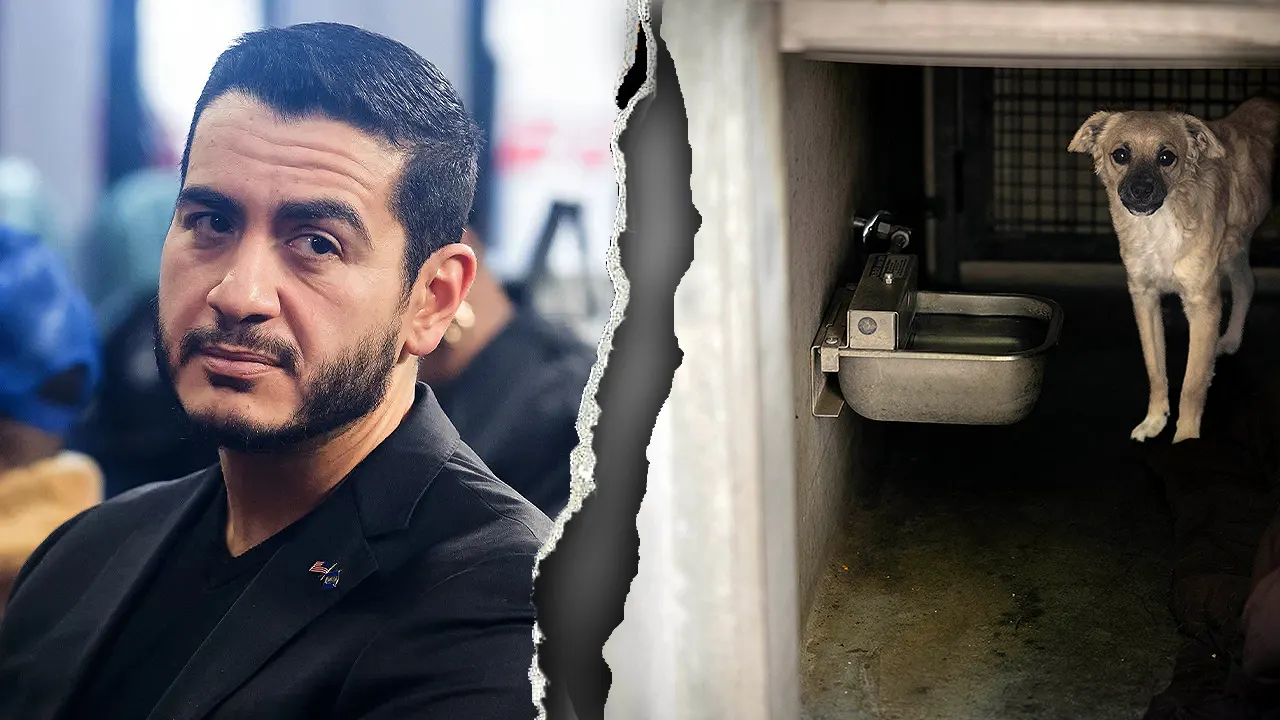
The road to political office is rarely a straight line, and for Abdul El-Sayed, Michigan’s Democratic nominee for the U.S. Senate, the path has taken a decidedly unexpected detour through one of the most unglamorous corners of municipal governance: Detroit’s animal control department. As El-Sayed now crisscrosses the state asking voters to send him to Washington, his tenure as the city’s health director from 2015 to 2017 has come under intense, renewed scrutiny. This is not a debate about policy wonkery or budget line items; it is a visceral and deeply emotional controversy that centers on the fate of thousands of stray and surrendered dogs and cats. The accusations, which gained national traction after a whistleblower lawsuit and a flurry of critical social media posts, paint a picture of a city shelter that was overwhelmed, under-resourced, and, according to some former employees, tragically neglectful. For El-Sayed’s supporters, this is a story of a public servant inheriting a broken system and heroically turning it around. For his detractors, it is an unforgivable chapter marked by the suffering of innocent animals, and it has become a potent weapon in the high-stakes battle for one of the most competitive Senate seats in the country.
The scrutiny erupted recently when a former staffer for First Lady Jill Biden publicly questioned the narrative, reacting with horror to the revelations about the euthanasia numbers and shelter conditions. This opened the floodgates for a torrent of criticism from political opponents, most notably El-Sayed’s Republican rival, Mike Rogers, who seized on the issue with a simple, cutting rebuke: Michiganders might not want to trust El-Sayed with their families if he couldn’t be trusted with their pets. The controversy is rooted in a period beginning in October 2015 when Detroit’s Animal Control was moved from the oversight of the Detroit Police Department to the Health Department, a department that El-Sayed had just been appointed to lead. This bureaucratic reorganization was part of a broader city effort to overhaul a system that was widely acknowledged to be failing. However, the timing was inopportune, as it coincided with the filing of a whistleblower lawsuit by a former animal control officer, Brittany Roberts, whose allegations of systemic neglect and mistreatment would become the defining narrative of the department’s failings for years to come.
Roberts’ lawsuit, filed in October 2015, alleged a litany of horrors at the city’s shelter. She described animals dying from lack of food and medical care, being kept in filthy, unsanitary conditions, and suffering from other violations of state law and departmental policy. In an interview at the time, she emotionally described the daily grim ritual of her job: walking through the kennels each morning to see which animals had survived the night before they could even be fed. Her words were a devastating indictment, and she reportedly went so far as to characterize the shelter as a “slaughterhouse,” alleging that many animals were not even properly euthanized but were instead left to slowly and painfully die from neglect and disease. These allegations painted a portrait of a facility in a state of profound crisis, where the basic tenets of animal welfare were being grossly violated on a regular basis. The lawsuit itself was a stark illustration of the immense challenge El-Sayed faced when he assumed responsibility for the department, but it also cast a long, dark shadow over his leadership, implying that the suffering continued under his watch.
Amidst this chaos, El-Sayed’s administration was tasked with a herculean effort to salvage the derelict operation. The statistics surrounding the shelter during this era are stark and difficult to reconcile. When El-Sayed took over in late 2015, the live-release rate—the percentage of animals that leave the shelter alive—was abysmal, hovering around 20% to 26%. By late 2016, his campaign points to data showing that rate had climbed to roughly 61% to 62%, a massive improvement. However, the raw numbers presented a more nuanced and sobering picture. According to reports, records obtained covering the period around El-Sayed’s tenure showed that 4,680 dogs and cats were euthanized, with 1,056 dogs and 29 cats euthanized in the first full calendar year under his department’s control. While the percentage of animals leaving alive dramatically improved, the total number of animals being killed remained a large and deeply troubling figure, a fact that critics argue cannot be obscured by a promising trend line. The improvement was real, but it was a long and painful climb from a very dark starting point.
In response to the overwhelming criticism, El-Sayed and his campaign have mounted a vigorous defense, framing his record as a story of rescue and reform. They argue that he inherited a department that was not just broken, but catastrophically so, a product of years of mismanagement, city bankruptcy, and a no-adoption policy that virtually guaranteed high euthanasia rates. His campaign emphasizes the concrete steps he took: raising the pay of frontline animal-care officers by 15%, working to fully staff the operation, moving the shelter into a more modern and spacious facility donated by the Michigan Humane Society, overhauling care protocols, and expanding partnerships with rescue and foster organizations. In a podcast interview, El-Sayed himself acknowledged the enormity of the task, describing the operation as “a mess” and explaining that he had to find a trusted person to take over the operational side. He appointed Melissa Miller as the new animal-control director in December 2015, and his campaign credits her with leading the transformation that ultimately saw the shelter’s save rate approach 80% in later years.
Despite these efforts, the legal and operational problems persisted well into El-Sayed’s tenure, and the fallout from the controversy has not fully diminished. In February 2016, a federal judge temporarily blocked Detroit Animal Control from seizing dogs from homes without a warrant, consent, or an emergency, following a lawsuit brought by residents who alleged their dogs had died at the city shelter or shortly after being released. This legal action underscored that the fundamental issues of trust and operational integrity had not been fully resolved, even as the save-rate statistics improved. Adding a final layer of ignominy, the city of Detroit ultimately agreed to pay out $63,000 to settle the original whistleblower lawsuit filed by Brittany Roberts in July 2016. The settlement, while not an admission of guilt, was a tacit acknowledgment that the city was willing to pay to make the case go away, leaving a lingering question mark over the official narrative. The combination of the federal injunction and the settlement shows a department still navigating a minefield of investigations and legal challenges even during the period when its leadership was touting its successful turnaround.
Ultimately, the debate over the Detroit Animal Control is about more than just statistics or political slogans. It is a poignant reminder of the moral complexities inherent in public service, where leaders are often forced to manage inherited crises with limited resources and under intense public pressure. For El-Sayed, the animal shelter serves as a powerful metaphor for his broader political pitch: that he is a reformer who can manage and turn around challenging bureaucracies. Yet, for his opponents, it represents a fundamental failure of compassion and competence. As he campaigns for the Senate, he must somehow reconcile these two conflicting narratives in the minds of voters. The images conjured by the whistleblower’s testimony are powerful and deeply upsetting, and for many, the statistical improvements will never outweigh the human (and animal) cost of the initial failure. In a race where character and judgment are paramount, the souls of the 4,680 animals represent a moral weight that El-Sayed is now carrying on the campaign trail, and it is a burden that his opponent is determined to make him bear all the way to November.