





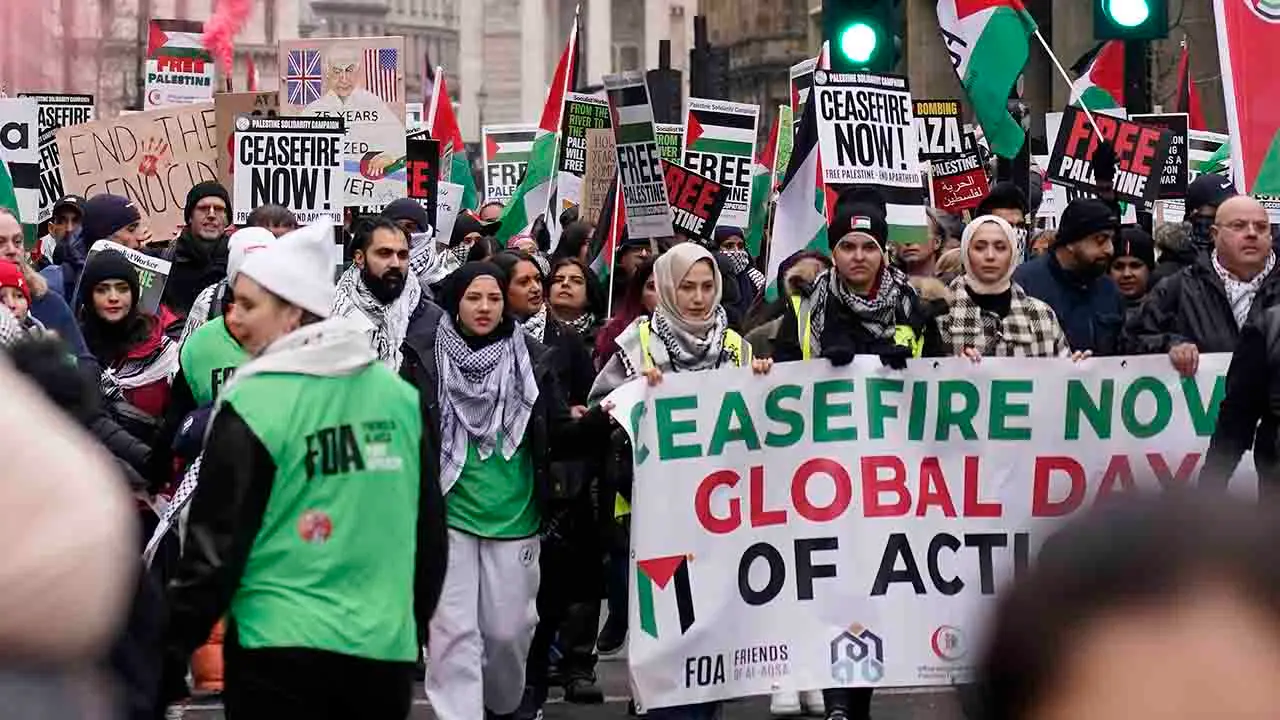
Across Europe, a quiet but consequential political convergence is taking shape, one that is reshaping the continent’s politics in ways that few anticipated only a generation ago. It is known as the “Red-Green Alliance,” a somewhat unlikely partnership between far-left political parties and Islamist-leaning movements and networks. On paper, these two forces should not have much in common. The traditional European left was built on class struggle, secularism, international workers’ solidarity, and a belief in universal progress. Islamist movements, by contrast, often emphasize religious tradition, conservative social values, and a worldview rooted in identity and faith. Yet in recent years, these two groups have increasingly found themselves on the same side of the barricades, united by a shared vocabulary of anti-imperialism, anti-Western resentment, and a passionate, often all-consuming opposition to Israel. What began as occasional convergence at protest marches has matured into something more durable: a political bloc that is shaping election strategies, foreign policy decisions, and public discourse across the continent. And as Europe experiences a deeply worrying rise in antisemitic incidents, critics are increasingly linking that surge to this partnership. The alliance does not require the far-left to abandon its principles or Islamists to adopt left-wing economics. Instead, it functions through a common narrative of victimhood and resistance, one in which the Palestinian cause becomes a symbolic battlefield, Israel is cast as the ultimate oppressor, and the West—especially the United States and its allies—is framed as the embodiment of historical injustice. It is a powerful narrative, and it has proven remarkably effective at bridging ideological gaps that once seemed unbridgeable.
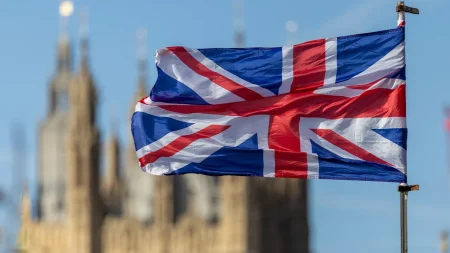
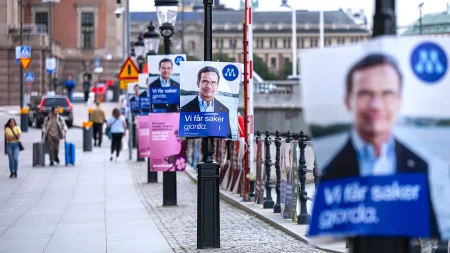
The electoral logic behind the Red-Green Alliance is blunt and increasingly difficult for mainstream political parties to ignore. Across Europe, the Muslim population has grown significantly over the past two decades, and in many countries Muslim voters now form a substantial and concentrated voting bloc, particularly in urban areas and industrial suburbs. For parties on the left and the far-left, appealing to this bloc has become a matter of political survival. That dynamic was on full display in the United Kingdom, where critics accused the Labour government of imposing sanctions on Israel not as a matter of principle but as a tactical move designed to win back Muslim voters who had drifted toward the far-left Green Party and independent anti-Israel candidates. Conservative lawmaker Tom Tugendhat described the sanctions announcement as “performative politics,” a phrase that captured the growing sense that Middle East policy is being used as a domestic electoral tool. In Sweden, the same forces are visible. Exit polling from the state broadcaster in a recent parliamentary election suggested that votes from non-European Swedes were giving an alliance of left-wing parties a narrow three-seat lead over the right-leaning coalition led by Prime Minister Ulf Kristersson. Swedish political researcher Tobias Hübinette pointed to the electoral success of Mayor Zohran Mamdani in New York City as a symbol of this broader shift, writing that the Swedish election represented a “Mamdanification” of urban Sweden. The gap between city and country, he argued, is now greater than ever. What connects these seemingly disparate examples is a simple reality: as the left struggles with its traditional working-class base, it is looking increasingly to identity politics and to Muslim voters as the foundation of a new electoral coalition.
Nowhere is the Red-Green Alliance more visible—or more controversial—than in Germany, where officials have issued repeated warnings that rhetoric from both Islamist and far-left circles is driving a spike in antisemitic attacks. Dresden University of Technology research fellow Janek Treiber described the relationship as “an intriguing alliance between the supposedly progressive Left and regressive forces within Islamism.” He explained that the unifying factor is a kind of victimization narrative. For the far-left, Muslims are the oppressed, and the West, including Israel, are the oppressors. Whether Muslims hold conservative-religious views is, in this context, entirely irrelevant. This narrative allows the far-left to see itself as a force for liberation while ignoring the illiberal, anti-democratic, and often misogynistic tendencies of its new allies. In Berlin, voters were heading to the ballot box with polls showing the far-left Die Linke party—literally translated as “The Left”—leading the center-right Christian Democratic Union by two points. That a far-left party with factions that share platforms, demonstrations, and slogans with networks linked by German security services to Hamas and the Popular Front for the Liberation of Palestine could be leading the capital’s election was deeply alarming to many observers. Alan Mendoza, executive director of the Henry Jackson Society in the U.K., noted that when chants of “Death to the IDF” and “Intifada” echo at election events, and when party leaders defend the people who led those chants, the red line has not been crossed—it has been erased. Simone Rodan-Benzaquen, senior envoy to Europe at the Foundation for Defense of Democracies, observed that Germany’s political “firewall” against far-right parties like the AfD seems to work more or less on the right, but not on the left. There is a perception, she said, that anything coming from the left, even the far-left, is morally less repugnant than anything coming from the right. That perception, she argued, has created a dangerous blind spot.
The pattern repeats in Spain and France, where the Red-Green Alliance has moved from the margins into the corridors of power. In Spain, the far-left Sumar party is part of Prime Minister Pedro Sánchez’s ruling coalition. Its strongest support in the last election came from areas with large Muslim populations, and its members have been seen attending demonstrations alongside groups with ties to the Muslim Brotherhood and participating in Gaza protests organized by Islamist-leaning networks. Sumar politicians have pushed for Spain to recognize a Palestinian state while referring to Israel as an “apartheid state,” and Spain did formally recognize a Palestinian state in 2024. In France, the far-left La France Insoumise, or LFI, has been accused by academics and government ministers alike of “Islamo-leftism,” a term that describes the blending of left-wing politics with Islamist sympathies. LFI’s de facto leader, Jean-Luc Mélenchon, refused to call Hamas a terrorist organization after the October 7 attacks, and party members have marched alongside Islamist-linked NGOs during pro-Palestinian demonstrations. LFI’s popularity has been rising in polls ahead of next year’s presidential election, and its electoral strength is concentrated in Muslim-majority suburban districts. The Israeli Ambassador to France, Joshua Zarka, delivered a stark warning, comparing Mélenchon’s rhetorical style to that of Adolf Hitler. Zarka said that the way Mélenchon speaks in front of a crowd, using the idea of uniting against one enemy by speaking of Israel, reminded him of the way Hitler used to speak about the Jews. Whether one accepts that comparison or dismisses it as hyperbolic, the fact that a senior ambassador feels compelled to make such an analogy reflects the depth of anxiety in Israel and among European Jews about the direction of French politics.
The consequences of this alliance are not merely theoretical or electoral; they are being felt in real time in the everyday lives of Jewish communities. In the United Kingdom, when the Labour government announced sanctions on Israel, Britain’s Chief Rabbi Sir Ephraim Mirvis called the announcement “a truly dark day for British Jews.” He warned that gesture politics of this kind feeds into an increasingly hostile discourse about Israel and that the cumulative effect of such policies could further embolden those, at home and abroad, who use hatred as a weapon against Jews. Rodan-Benzaquen argues that the Red-Green Alliance grew significantly during Jeremy Corbyn’s leadership of the Labour Party, when a far-left, anti-imperialist, anti-colonialist opposition to American power and to Israel itself found common cause with Islamist organizations. Despite deep disagreements on many topics, these groups adopted a common language, a shared enemy, and a mutual political agenda. The Labour Party, which once cared about class, social rights, and improving the lives of working people, transformed itself, in her telling, into a party focused on identity politics and electoral calculation. The Red-Green Alliance is not new, she points out. It was visible in the Islamic Republic of Iran when the Islamic Revolution happened, with leftists and Islamists joining forces against a common enemy only to find themselves on opposite sides once power was secured. But in Europe today, the alliance is playing out in democratic elections, and the stakes are different. For European Jews, the results are increasingly ominous.
Demographics make the Red-Green Alliance all the more significant. According to projections based on Pew Research Center data, Europe’s Muslim population is estimated to be between 45 and 46 million, up by roughly 15.9 percent from 2010. During that same period, the Jewish population of Europe fell to under 1.3 million, a decline of about 8 percent. Those numbers mean that in electoral terms, as Rodan-Benzaquen puts it, Jews simply do not weigh. They have become, once again, a political football, a convenient issue to be used or discarded depending on electoral advantage. When left and far-left parties say they want to fight antisemitism, she argues, they often say it not because they are genuinely committed to protecting Jewish communities, but because it is a tool to attack the far-right. The danger is that antisemitism does not become less dangerous because it arrives waving a progressive banner. Alan Mendoza put it succinctly: Europe has spent a decade training its anxieties almost exclusively on the far-right, and while that vigilance is warranted, it has left a blind spot on the other flank. That blind spot is now shaping elections, foreign policy, and public discourse from London to Berlin to Madrid to Paris. As Europe’s demographics shift and its political lines harden, the Red-Green Alliance may well decide not only who governs, but what kind of Europe emerges. And the troubling question that hangs over it all is whether Europe’s Jews will be sacrificed on the altar of that alliance, once again paying the price for political convenience.