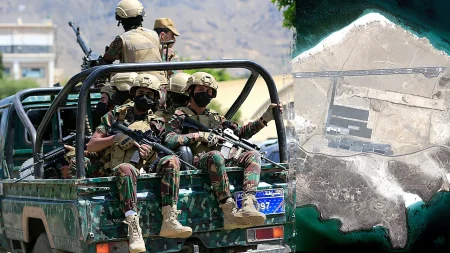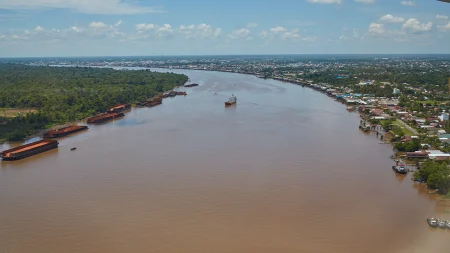







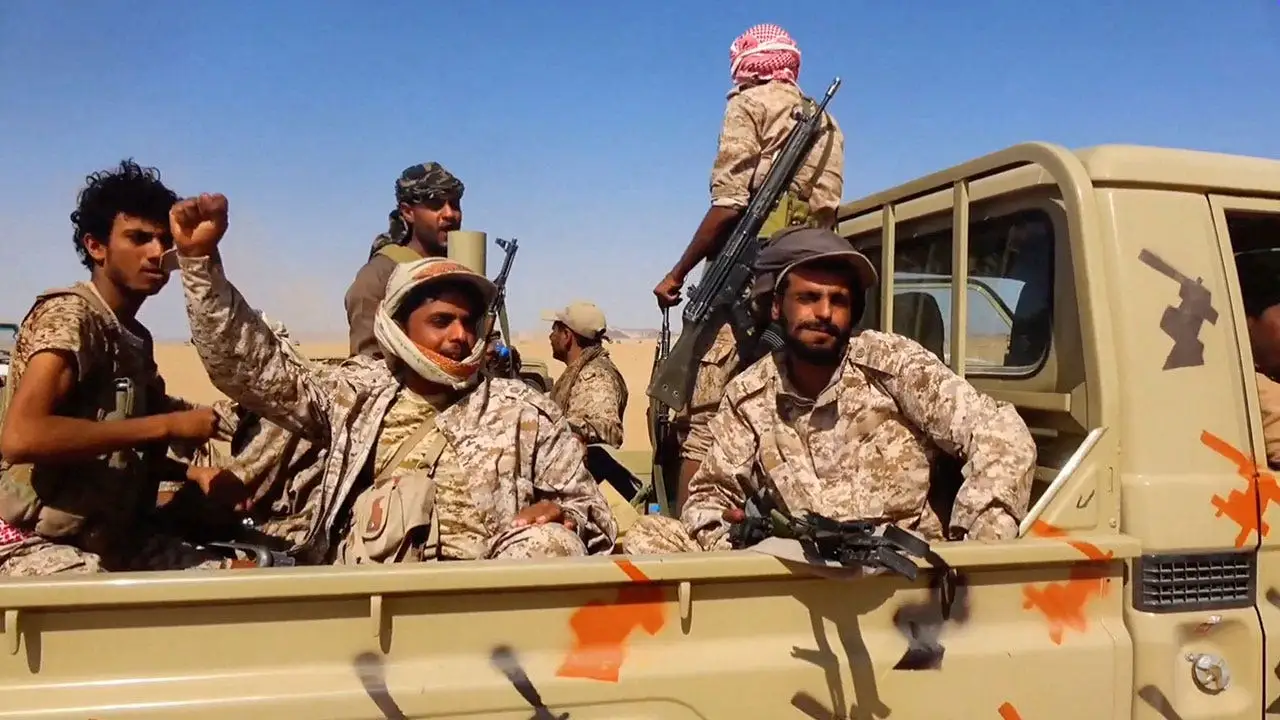
Along the Red Sea coast of Yemen, where the desert wind meets one of the world’s busiest maritime corridors, the Houthis are on the march again. Their fighters have pushed into new territory along the shoreline, including the strategic port city of Mocha, and are edging ever closer to the Bab el-Mandeb Strait, the narrow chokepoint that connects the Red Sea to the Gulf of Aden and carries a significant share of global maritime trade and energy shipments. The advance has sent ripples far beyond the region. For the Trump administration, it is becoming as much a financial challenge as a military one. Washington has responded with escalating sanctions designed to choke off the money that sustains Iran and its network of proxies. But the Houthis are not a typical proxy force. Over years of war, they have built a sprawling sanctions-evasion network, controlling ports, trade routes and the livelihoods of millions of Yemenis. They have turned the country’s dependence on imports into a revenue machine, and they have woven themselves into the global financial system in ways that are not easy to unwind. The result is a dilemma that Treasury Secretary Scott Bessent is now confronting in real time: how do you cut off the cash fueling the Houthis without cutting off the food, fuel and other lifelines that keep civilians alive? It is a question with no easy answer, and the stakes grow higher with each mile the Houthis advance. For years, the international community has watched the Houthis transform from a mountain insurgency into a heavily armed regional power capable of threatening global trade. Airstrikes have degraded their capabilities at times, but the group has always regenerated. The reason, according to analysts, is money. And the way they raise money is as sophisticated as any state-backed enterprise.
To understand the Houthis’ financial power, it helps to stop thinking of them as a traditional insurgency living off foreign handouts. The group operates what investigators describe as a deeply embedded commercial enterprise, one that raises money inside Yemen and moves it across the world through networks that are deliberately hard to trace. Adam Rousselle, the founder of Between the Lines Research, spent months tracking these connections for a 2025 investigation published by the Global Network on Extremism and Technology. What he found was not a single pipeline running from Tehran to Sana’a, but a web of ports, tariffs, oil tankers, informal hawala money-transfer systems, cryptocurrency exchanges and middlemen based in Russia, Turkey and Southeast Asia. “We’re dealing with a very well-capitalized group,” Rousselle said. “It’s a bit of a misunderstanding that the Iranians just give them money.” Iran does provide crucial support, including free monthly oil shipments routed through Iranian-owned or affiliated companies in Dubai. But most of the Houthis’ revenue is generated locally, inside Yemen. The U.S. Treasury estimates the group makes more than $2 billion a year from oil sales alone, and it also collects taxes on petroleum imports and imposes steep fees on goods moving through ports under its control. The Houthis have effectively turned Yemen’s dependence on imports into a tax base. Every container of rice, every barrel of fuel, every shipment of medicine that enters their territory comes with a price tag that helps finance their war machine. Add in the group’s control of Hodeidah and Ras Isa, two of Yemen’s most important ports, and you begin to see why sanctions have struggled to slow them down. At the center of this system sits Sa’id al-Jamal, an Iran-backed Houthi financial official whom the Treasury Department says operates an international network that sells Iranian commodities and channels the proceeds toward the group. Treasury announced in April 2025 that al-Jamal’s network had procured tens of millions of dollars in weapons, sensitive goods and commodities from Russia, and identified eight digital-asset wallets used by the Houthis. Blockchain analytics cited in Rousselle’s research found nearly $900 million moving out of those wallets. Rousselle cautioned against treating that number as a complete picture of Houthi wealth. “The system is more important than the number itself,” he said.
Territory is the foundation of this financial empire. Nadwa Al-Dawsari, a Yemen expert and associate fellow at the Middle East Institute, told the House Foreign Affairs Committee in September that the Houthis’ ability to resist international pressure rests on the ground they control. “The most important source of that leverage is territory,” she said. “The Houthis have been able to consolidate their power and build increasingly sophisticated military capabilities because they control significant territory, a large population, ports, infrastructure, and resources.” That territorial base allows the group to recruit fighters, generate revenue, manufacture and store weapons, control smuggling routes and rebuild capabilities damaged by airstrikes and sanctions. Miad Maleki, a senior fellow at the Foundation for Defense of Democracies, put it bluntly: “The Houthis aren’t sanctions-proof; they’re sanctions-adapted. Most of their money is made inside Yemen — customs and taxes at Hodeidah and Ras Isa, and fuel above all.” The latest push along the Red Sea coast, including the seizure of Mocha, is therefore about more than expanding a map. It is about protecting and deepening the economic engine that makes the Houthis so difficult to defeat. With every port they capture, they gain new leverage over international shipping and new tolls on commercial traffic. With every mile of coastline, they tighten their hold on the Bab el-Mandeb Strait. For the Houthis, territory and money are two sides of the same coin. But here is the uncomfortable part: that same territory is also where millions of Yemenis live, work and depend on imports for survival. Yemen has long been one of the world’s most fragile humanitarian environments, and the Houthis control the very ports and roads through which civilians receive food, fuel and basic goods. That means any attempt to strangle Houthi finances risks strangling the civilian population at the same time. It is a dilemma that has haunted U.S. policymakers for years, and it has no obvious solution.
The Houthis have also diversified their international relationships in ways that go far beyond Iran. Al-Dawsari told lawmakers the group is “deepening ties with other U.S. adversaries, particularly Russia and China.” In Russia’s case, the support appears increasingly direct. Investigators have documented reports that Russian officials provided targeting data used by the Houthis to attack Western ships in the Red Sea. Russian petroleum products have been transferred ship-to-ship into a Houthi-controlled tanker before reaching the port of Ras Isa. Adam Rousselle said Moscow has become particularly important in the Houthi financial ecosystem. “The Russians are definitely more hands-on in their support,” he said. The Chinese role is more complicated. There are clear signs that Chinese-linked commercial actors are involved: Iranian oil flows to privately owned Chinese “teapot” refineries, and transactions connected to Southeast Asian financial networks show up in Houthi money trails. Rousselle was careful to distinguish private commercial activity from direct Chinese government involvement. “The Chinese are kind of turning a blind eye,” he said. Al-Dawsari, however, pointed to a more active Chinese role. Citing U.S. officials, she said a Chinese satellite company with ties to the Chinese military provided satellite imagery that supported Houthi attacks against American warships and international shipping. She also cited interdiction data showing that 60 percent of the components and materials used in the Houthi Qasef-2K drone came from China, compared with roughly 15 percent from Iran. None of this means Beijing is openly funding the Houthis. But it does mean the Houthis have access to a global supply chain that no single sanctions regime can easily sever. The group has become a node in a much larger network of illicit commerce, one that connects the Middle East, Europe and Asia through oil trades, weapons shipments and layered financial transactions. The Houthis have learned to play great powers against one another, using Russian and Chinese commercial interests as cover for their own operations while keeping Tehran at the center of their strategic alignment.
For Treasury Secretary Scott Bessent, the challenge is not just identifying the Houthis’ financiers, but finding the pressure points where their money touches the formal economy. The Houthis operate through decentralized networks that are designed to regenerate. “You’re dealing with a ‘you shut down one, another pops up’ kind of situation,” Rousselle said. That makes traditional sanctions, which target specific individuals or entities, less effective unless they are paired with broader financial measures. Maleki argues that Washington should focus on the places where Houthi money crosses into the regulated banking system. “The soft spots are wherever Houthi money touches the formal system,” he said. “Treasury has named the Yemeni banks and the Sana’a exchange houses that pay for missile components; it should now name the foreign correspondents still clearing for them. That is the one tool that changes behavior overnight.” In other words, the Houthis can move money through hawala brokers and crypto wallets, but eventually someone needs to convert that value into goods, services or hard currency. If the exchange houses, correspondent banks and middlemen who make that conversion possible are afraid of being sanctioned, the flow starts to slow. Oman, which shares a long border with Yemen and has historically served as a diplomatic intermediary, is another potential pressure point. “Oman is the Houthis’ land bridge and their mailing address,” Maleki said. Pressuring Omani banks and businesses to tighten oversight of transactions linked to Houthi-controlled Yemen could deprive the group of one of its most important lifelines. But even as Washington looks for these pressure points, it must grapple with the humanitarian reality that Yemenis depend on the same commercial infrastructure that enriches the Houthis. Maleki’s solution is to separate humanitarian goods from the tolls that fund the group: keep food and medicine flowing, but prevent the Houthis from taxing it. That strategy sounds clean in theory, but in practice it requires an extraordinary level of coordination among governments, aid agencies and private companies operating in one of the most dangerous and unstable environments on Earth.
That is easier said than done. The Houthis control the ports, the checkpoints and the roads. They decide what enters and what is taxed. Rousselle acknowledged the difficulty, saying he would be lying if he had a concrete answer to how Washington could disrupt Houthi revenue without worsening the humanitarian crisis. “The humanitarian argument is the Houthis’ best shield, and it’s backwards,” Maleki said. “Food and medicine are licensed and should stay that way. Keep the goods flowing and take away the toll.” In practice, that might mean expanding humanitarian exemptions, working with aid organizations to verify imports, and using technology to track shipments so that goods intended for civilians are not diverted and taxed by the Houthis. But none of that is simple in a country where the Houthis control the ports and have every incentive to complicate oversight. The broader lesson, Rousselle warned, extends far beyond Yemen. “This isn’t just about the Houthis,” he said. “This is about any sanctioned actor worldwide capable of harnessing financial systems that are completely outside of regulatory control.” The Houthis have become a case study in how small, determined groups can exploit globalization, decentralized finance and great-power rivalries to build power that exceeds their territorial reach. Their advance toward the Bab el-Mandeb Strait is not only a threat to global shipping; it is a reminder that the financial systems underpinning the global economy have dark corners that are very hard to police. The Treasury Department did not immediately respond to a request for comment, and the question of how to solve the Houthi financing puzzle remains open. But one thing is clear: as long as the Houthis can move money through ports, oil tankers, exchange houses and digital wallets, they will keep fighting. And as long as their territory overlaps with the civilian population, every economic weapon the United States deploys will come with a moral and humanitarian cost. The Houthis know this. That is why they have built their finances the way they have. And that is why the next phase of this conflict will be fought as much in banks and shipping lanes as on the battlefield.