




Somewhere in Australia, if you know where to look, a gentle rustle of a she-oak tree might reveal something extraordinary: a tiny insect no bigger than a lentil, with oversized eyes and a name that could make a Taylor Swift fan stop mid-track. Meet Swiftiephylus, a newly described genus of Australian plant bugs. These small, big-eyed creatures have just been formally introduced to the scientific world, and their name carries a heavy dose of pop-culture magic. Researchers named the genus in honor of Taylor Swift, one of the most celebrated musicians of the modern era, recognizing her “show-stopping talent, heart-wrenching lyrics, and the joy and comfort she has brought to many,” according to a paper published September 9 in Insect Systematics & Evolution. The announcement may sound like a playful headline, but it represents years of careful scientific work. Australia is rich in insect life, yet much of it remains unstudied and unnamed. Among the herbivorous plant bugs found across the globe, the Australian ones had, for a long time, been largely overlooked. To find a completely new genus—a group of species sharing a common evolutionary history—is a thrilling event in entomology. It speaks to how much remains undiscovered, even in familiar landscapes. For the scientists who made the find, the experience was electric. The tiny bugs may not be as glamorous as birds or mammals, but under a microscope they reveal complex patterns, vivid colors, and a delicate beauty that rewards close attention. And in their newly chosen names, they also carry a story of human devotion, gratitude, and the strange, wonderful ways that life and art intersect.
The story behind this unusual name stretches back more than two decades. In the early 2000s, a group of researchers including entomologist Christiane Weirauch at the University of California, Riverside, began to tackle a puzzling gap in scientific knowledge. Although herbivorous plant bugs are found all over the world, their diversity in Australia had never been carefully documented. The team traveled through the country, shaking branches and sweeping nets through native vegetation, gathering specimens that would later become a treasure trove for research. They collected from she-oak trees and other plants, carefully preserving the tiny insects for study. For years, the specimens sat in collections, waiting for someone with the patience and curiosity to examine them. In 2022, Sarah Schroeder began her PhD work with Weirauch, and those mystery bugs became a central part of her project. It was a perfect match: Schroeder came with sharp observational skills, a deep interest in evolutionary relationships, and, as it turned out, a lifelong love of Taylor Swift’s music. As she began to sort through the specimens, she found herself handling insects that had never been formally named or described. Every detail mattered. The shape of the head, the texture of the exoskeleton, the color patterns, the genetic markers—all had to be studied and compared. The opportunity to describe a species for the first time is rare, even for seasoned scientists, and for a young researcher it felt like reaching a mountaintop. “I was really excited,” she recalled. “It’s a dream thing for a scientist to get to describe new species.” That excitement never faded, even when the work demanded long hours at a microscope or the meticulous analysis of DNA sequences. The bugs were revealing a hidden world, and Schroeder was one of the first people to see it.
The team’s approach was as meticulous as it was adventurous. Schroeder and Weirauch compared the physical shapes, colors, and genetic sequences of the Australian specimens with those of known species from around the world. They looked at the tiny hairs on the body, the texture of the cuticle, and the patterns of pigmentation that give each species its own signature. Molecular data helped confirm what the outward appearance suggested: these Australian bugs were not just odd populations of familiar insects; they represented something genuinely new. In the end, the researchers identified twelve new species, and they organized them into five distinct genera. It was a substantial contribution to Australia’s insect inventory, filling a gap that had existed for decades. Among these new genera was one that stood out both biologically and emotionally: Swiftiephylus. This group of big-eyed bugs is distinguished by its association with she-oak trees, its feeding habits, and a combination of physical traits that sets it apart from its relatives. For Schroeder, naming it was an opportunity to express something personal. She had grown up listening to Taylor Swift, had sung the songs at sleepovers and road trips, and had found words for feelings she had not been able to articulate herself. The music had accompanied her through school, through relationships, through the uncertainties of starting a career in science. To give a newly discovered genus the name Swiftiephylus was, in a way, to say thank you to the soundtrack of her life. It also made the science more joyful. In a discipline where names are often drawn from Latin or Greek, honoring a living artist felt like a playful break from tradition—and a reminder that taxonomy, for all its seriousness, can also be a form of storytelling.
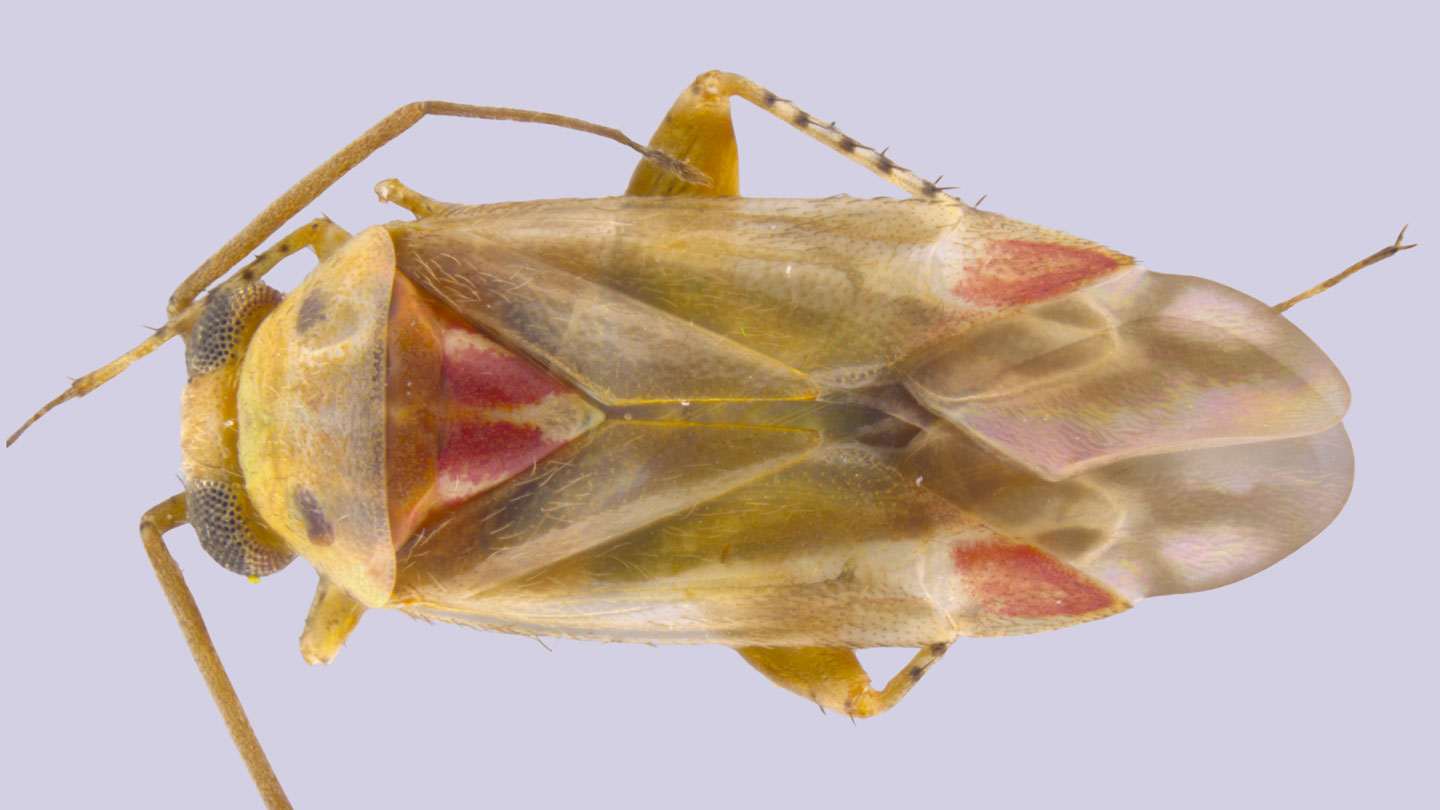
Selecting the names was not a random act. Schroeder chose four species within Swiftiephylus to carry Taylor Swift’s influence into the scientific literature. The most straightforward is Swiftiephylus taylorae, a direct nod to the artist herself. But the other three show a little more linguistic creativity. One is Swiftiephylus amator, named for the album Lover. Another is Swiftiephylus intrepidus, the Latin word for fearless, mirroring Swift’s 2008 album. The third is Swiftiephylus poetorum, a reference to The Tortured Poets Department, Swift’s most recent album at the time of the study. Together, the names read like a track list, a discography carved into the small bodies of Australian plant bugs. Why these particular species? Schroeder noticed that the four bugs share a distinctive palette: their bodies are yellow, highlighted with striking red accents. To a devoted Swiftie, the colors are impossible to miss. Taylor Swift is famous for her red lipstick—a signature look she has referenced in lyrics and public appearances for years—and her fans have long affectionately called her “Blondie” because of her blonde hair. The yellow bodies with red markings, then, are a perfect visual pun. It is as if the bugs themselves are dressed for a Swift concert, wearing the colors of their namesake. The detail shows how deeply personal naming choices can be. A scientist can spend years studying an animal, and when the moment comes to give it a name, they can choose to tell a story about their own life, about the culture they belong to, or about the beauty they see in the natural world. In this case, the story is both scientific and heartfelt.
For Schroeder, the decision to honor Taylor Swift was not a publicity stunt or a fleeting whim. It came from a deep, long-standing appreciation. “I’ve been a lifelong Swiftie,” she said. “Taylor’s music has underscored so many of the major milestones of my life, so it felt authentic to me to honor her by naming these species after her and giving her a gift back for all of her music.” That sentiment will resonate with anyone who has ever felt that a particular song was written just for them. Music has a way of attaching itself to memory, of becoming the soundtrack for late-night study sessions, first dances, broken hearts, triumphant celebrations, and quiet moments of reflection. For Schroeder, Swift’s albums were not just background noise. They were companions. As she worked through the careful, sometimes tedious work of insect taxonomy—measuring body parts, recording observations, comparing specimens—the songs were there, providing rhythm and emotional support. The tribute in the species names is her way of giving something back, a small token from the world of science to the world of pop. But the paper itself is careful to frame the homage in broader terms. The researchers explicitly connect the name to Swift’s “show-stopping talent, heart-wrenching lyrics, and the joy and comfort she has brought to many.” It is a rare acknowledgment that music and science are not opposites. Both require patience, creativity, attention to detail, and a willingness to look closely at something and ask what it means. Both, in their own ways, help us understand the world and our place in it. A tiny bug named after a global superstar is a reminder that human beings bring their whole selves to their work, including the songs they love.
The discovery of Swiftiephylus is, in many ways, just the beginning. Schroeder notes that the new genus “barely scratches the surface” of what remains to be found among insect life. Australia’s ecosystems are vast, complex, and under threat, and the number of undescribed insect species worldwide is estimated in the millions. That uncertainty is not just a scientific problem; it is a conservation problem. As Schroeder points out, you cannot protect a species if you do not know it exists. Every newly named insect is a small victory for biodiversity, a permanent record that something unique lives here and deserves a place in the story of life on Earth. The researchers’ work demonstrates that taxonomy—the quiet, painstaking science of naming and classifying organisms—is far from obsolete. It is urgent, essential, and deeply rewarding. And the Swiftiephylus bugs are only a tiny fraction of the hidden diversity waiting in the branches of Australian trees. There are likely countless other species, similarly small and overlooked, that will never have a chart-topping single or a stadium tour. But they matter. They pollinate plants, provide food for other animals, and play their own unseen roles in the ecosystems they inhabit. In a way, the whimsical names are an invitation to care more, to pay closer attention to the little things. The scientists who named these bugs clearly know that a catchy name can open doors. It can make people smile, make them curious, and perhaps make them think twice before dismissing an insect as a nuisance. With potentially millions of undescribed species still out there, the scale of what we don’t know is daunting—something the researchers, Swifties themselves, know All Too Well. So the next time you walk past a tree and hear the wind rustle its leaves, consider what might be living there. A tiny bug with enormous eyes, perhaps, wearing yellow and red like a secret fan, waiting for someone to discover it. And if you happen to be a Swiftie, you can take comfort in knowing that somewhere in Australia, Taylor Swift has a genus of her own—and that its story, like a good song, is only just beginning.