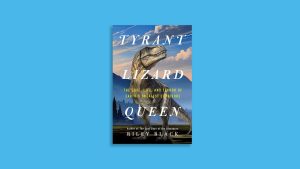






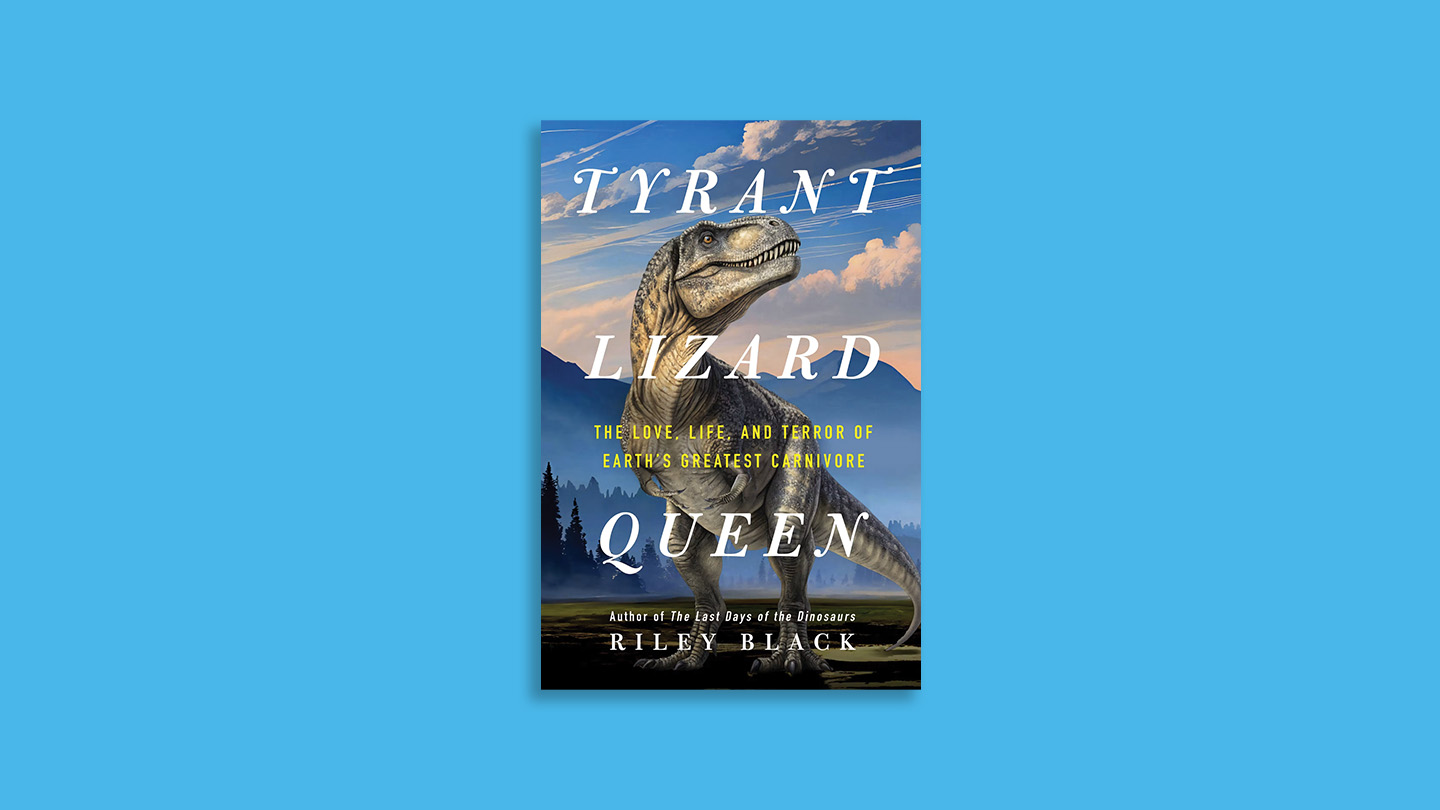
Every generation gets the Tyrannosaurus rex it deserves. For decades, the most famous carnivore in history has been a cartoon villain—a stomping, roaring beast whose only purpose was to destroy. Paleontologist Riley Black’s latest book is a gentle but firm refusal of that story. She sees Tyrannosaurus rex not as a monster but as a living, breathing organism that lived a real life in a real world. The book is an invitation to drop our Hollywood expectations and step into the ancient floodplains of what is now North Dakota and Montana, to feel the wet ground beneath our feet, to hear the river, to smell the swamp. Black writes as a scientist, but she also writes as a human being who has spent countless hours watching vultures, tracking lizards, and wondering what it is like to be another animal. That instinct—disciplined anthropomorphism, perhaps—helps her take a skeleton and turn it into a creature. She isn’t trying to make T. rex cute. She is trying to make it real. And that requires acknowledging that the real T. rex was terrifying, but also tired, vulnerable, hungry, and at many points in its life probably scared. It had bones, blood, muscles, and maybe even feathers. It had a life story that began with an egg, passed through a dangerous childhood, and ended, for most individuals, far earlier than we might imagine. T. rex may have been the apex predator of its ecosystem, but apex predators do not have an easy life. They eat, or they die. Black wants readers to feel that weight, not as an abstract fact but as a daily reality. The “tyrant lizard king” of our dreams was, in her telling, an animal carrying an enormous body through a difficult world, trying to find enough food, avoid injury, and survive long enough to leave something of itself behind.
Part of the misunderstanding starts with the body. Our image of T. rex was shaped by early reconstructions that made it stand almost upright, dragging its tail on the ground like a scaly kangaroo. That posture made the animal look clumsy, slow, and vaguely ridiculous—a monster that needed to prop itself up with its tail to keep from falling over. Modern science has changed all that. T. rex carried its body nearly horizontally, with its heavy tail balancing the enormous head and running as a dynamic counterweight. Its legs were massive pillars of muscle designed to carry huge weight and deliver powerful, sustained strides. Its three-fingered hands—wait, two-fingered, actually—were short but surprisingly strong, and Black writes about them the way you might write about a toolbox that gets used rarely but matters a great deal. The skull is the star of the show. It was long, deep, and packed with senses. The eye sockets faced somewhat forward, giving T. rex better depth perception than most dinosaurs probably had; it could judge the distance to a moving prey animal in a way that a crocodile cannot. The nasal cavity was a maze of specialized tissues, suggesting a sense of smell so acute that it could find a rotting carcass from miles away. The inner ear, preserved in the fossil bones, hints at an animal that could hear low-frequency sounds, perhaps the steps of a distant herd or the call of another tyrannosaur. And then there was the bite. Everything about the T. rex skull seems engineered for one horrifying moment: the jaws coming together, the thick teeth sinking into bone, the sheer force breaking ribs and cracking pelvises. Scientists have estimated that the bite force of a large T. rex could exceed the weight of three cars. The teeth were not sharp knives so much as crushing, piercing anchors, with serrated edges that allowed the animal to tear away chunks of meat and bone. Black does not dwell on this out of gore. She dwells on it because the mouth was the T. rex’s whole world. Without a working mouth, a T. rex was doomed. With it, a T. rex could reshape the ecosystem around itself.
Even more interesting than the body is the life story. Black asks us to think of T. rex not as an unchanging monster but as a creature with a childhood. A newborn T. rex was probably no bigger than a puppy, a tiny predator with enormous eyes and a vulnerable skeleton. It did not look like a miniature adult. It was long-limbed, slender, and fast, built to survive in a world where large tyrannosaurs were, quite probably, a danger. We know from other tyrannosaur fossils that juveniles had different skull shapes and tooth structures, and paleontologists once argued that these young animals were a separate species—a small, graceful dinosaur they called Nanotyrannus. Black explains that these differences are exactly what we would expect from a dinosaur that changed dramatically as it grew. A teenage T. rex was not just a smaller version of the adult; it had its own way of life, perhaps hunting smaller prey and moving in the shadows while the adults ruled the open ground. Growth rings in fossilized bones show that T. rex went through explosive growth spurts in adolescence, packing on hundreds of pounds in a single year. This rapid growth was costly. It required an enormous amount of food, and that meant the young predator had to be efficient, lucky, and tough. The fossil evidence also gives us glimpses of individual animals. One famous specimen, known to paleontologists as B-rex, had preserved medullary bone in her skeleton—a type of bone laid down in females when they are developing eggs. That means we know this T. rex was a female, a mother or shortly before motherhood, living in a world familiar to modern birds. In Black’s hands, this discovery becomes deeply moving. A skeleton is not just evidence of anatomy. It is evidence of a life. That dinosaur nested, protected eggs, and perhaps—like some modern birds—kept watch over young for at least a short time. We cannot say for certain that T. rex cared for its babies, but we know it was a dinosaur, and all dinosaurs lived in a branch of the tree of life that includes birds. Parental behavior did not suddenly appear with the first robin. It has deep roots, and T. rex may well have had at least some version of it.
But T. rex did not live in a vacuum. Its world was crowded. In the Hell Creek ecosystem, it shared the landscape with Triceratops, a rhino-like herbivore with enormous horns and a bony neck frill. It also lived alongside duck-billed Edmontosaurus, armored Ankylosaurus, small mammals, crocodiles, turtles, fish, and a whole host of insects and plants. Black paints these scenes with a loving eye, showing how every living thing was connected. The T. rex was not the center of the world; it was a part of it. It had to know the habits of its prey, the seasons of the year, the places where water could be found, and the territories of other tyrannosaurs. One of the oldest debates in paleontology is the question of whether T. rex was a hunter or a scavenger. Black dismisses this as a false choice. Predators are opportunists. A T. rex would happily steal a carcass if the original hunter wasn’t around. It would also hunt for itself when the chance came. Fossilized Triceratops bones show bite marks that healed, proof that some animals managed to escape a T. rex attack and limp away. Other bones show deep punctures near the eye socket or the base of the skull, targeting the most vulnerable areas. The back of a Triceratops frill was not armor; it was a roof over the neck, and a T. rex that knew what it was doing could try to go from behind, or wait until the victim was distracted, or deliver a series of devastating bites until the herbivore collapsed. Black imagines these encounters the way a wildlife filmmaker would—as tense, full of movement, full of luck. The T. rex did not always win. A kick from a Triceratops horn or a sweeping blow from an Ankylosaurus club could fracture bone or puncture a lung. Even the top predator could starve, become infected, or die of an injury while hunting. The world of T. rex was not a gentle garden. It was a dangerous, bloody, ancient landscape, and every adult T. rex alive was a survivor.
Black’s greatest skill is her ability to humanize without reducing. She knows we can never truly understand what it felt like to be a dinosaur. Their brains were structured differently from ours, their senses were different, their world was different. But Black argues that we do not need to know their inner thoughts in order to take their lives seriously. Pain is pain. Hunger is hunger. The need to breathe, the terror of being chased, the relief of shelter, the thirst of an animal that cannot find water—these are not modern inventions. They are ancient biological realities. By asking us to think about T. rex this way, Black is doing something more important than correcting scientific facts. She is asking us to expand our circle of empathy. The most popular dinosaur in history should not be an object of mockery or a symbol of violence. It should be an animal that we mourn, in a small way, because its species is gone. The book is also about extinction—not just the extinction of one species, but the end of the age of dinosaurs. In the final days of the Cretaceous, the world was warm, lush, and full of life. Then came an asteroid. When it hit, it did not just kill the dinosaurs. It destroyed the world they knew. Forests burned, the skies darkened, the oceans acidified, and a long winter began. The T. rex could not adapt to that because no animal could adapt to a planet turned inside out in a day. Black writes about these final hours with a kind of sorrow, as though she is attending a funeral rather than describing an event. She still feels the loss. That is what humanizing the T. rex means: caring about it enough to grieve its disappearance, and perhaps, in the same breath, caring more about the animals around us now because we know how much life can cost.
By the end of the book, the Tyrannosaurus rex that has haunted our imaginations for over a century becomes something else entirely. It is still terrifying—a bone-crushing predator with a face only a mother could love, if we are being honest. But it is also strange, beautiful, and deeply alive. Black shows us that a fossil is not a photograph of a dead animal. It is a shattered echo of a life that was lived, and if we look closely enough, we can see the struggle and the joy and the ordinary business of survival written in every scar, every growth ring, every healed fracture. The T. rex that emerges from her work is not a monster, not a tyrant, not a joke. It is a carnivore that did what carnivores have always done, with more power and more skill than almost any other predator on land has ever achieved. It had a body shaped by millions of years of evolution. It had senses tuned to the rhythm of its environment. It had a life cycle that connected it to birds, to crocodiles, and somehow, distantly, to us. And it died because of a rock from space, not because it was a failure. In that sense, the T. rex deserves something better than to be a movie villain. It deserves our wonder, our respect, and our attention. Riley Black gives it that. Her latest book is not just a scientific account; it is a love letter to a creature that was never given a fair hearing. By the final page, it feels as though we have spent time in the company of a real animal, not a shadow. And maybe that is the greatest gift a paleontologist can give: to make us feel, for a moment, that the thunder of those terrible footsteps is still echoing through the deep time inside us, and that the tyrant has finally found someone who understands it.