




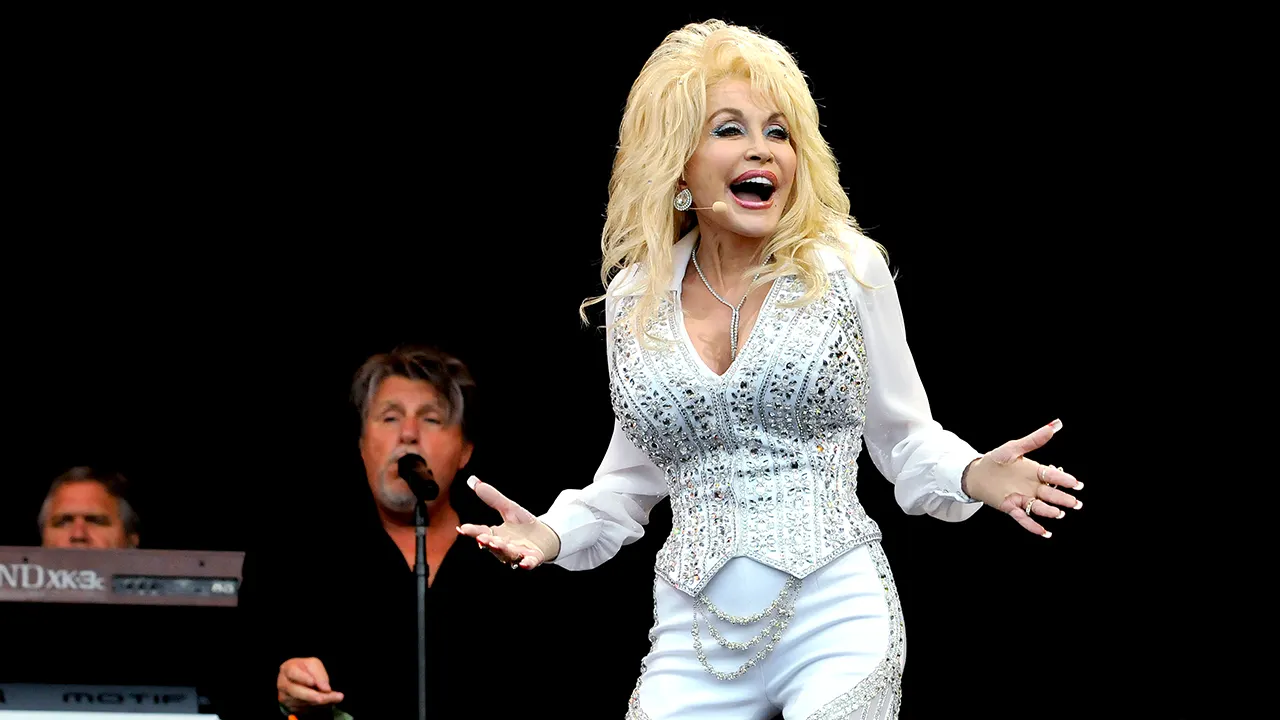
The sprawling, repetitive, and distorted text presented here attempts to piece together an interview-driven profile of country music legend Dolly Parton, focusing on her famously strict refusal to engage in partisan politics. Beneath the confusing swirl of repeated headlines and misattributed quotes lies a clear, consistent narrative: Parton has spent her entire career carefully cultivating an image of universal love and acceptance, deliberately avoiding political endorsements, controversial stances, and public partisan battles. The text highlights her refusal of the Presidential Medal of Freedom, her explanations about her diverse fan base, her witty jokes about her parents’ political affiliations, and her defense of collaborations with politically controversial figures like Kid Rock. However, the text is also severely corrupted with error—most notably, its final section falsely claims that Parton died of cancer, a fabrication that must be addressed. By separating these factual errors from the core wisdom she has shared, we can extract a deeply humanized portrait of an artist who mastered the delicate art of staying above the fray without silencing her own values.
At the heart of Parton’s political philosophy is her profound respect for her audience, which spans the entire American political spectrum. The text recalls that she told USA Today in 2020, “I have as many Republican fans as I do Democrats.” This simple acknowledgment is the foundational pillar of her entire public persona. Coming from a poor, rural upbringing in the Smoky Mountains of Tennessee, Parton understood from an early age that music was a unifying force, not a dividing one. She witnessed firsthand how a shared song could bring together neighbors who disagreed on everything else. When she articulates this sentiment, she does not sound like a politician hedging her bets; she sounds like a pragmatic woman who has worked her entire life to entertain people from all walks of life. She elaborated on this stance, telling the same publication, “I don’t want to offend anybody, I have a right to myself.” This is not a cop-out; it is a deeply held conviction that an entertainer’s primary job is to provide joy and connection, not to alienate half of their potential audience. She extends this logic to the concept of free speech, reflecting, “Like God gave us free will, America gave us free speech, but you’ve got to be responsible for anything you say and do.” For Parton, freedom of expression carries an inherent weight—the responsibility to use that voice constructively, to build bridges rather than burn them, and to recognize that a careless word spoken from a massive platform can have devastating, unintended consequences for everyday fans.
The text further illustrates this steadfast avoidance through a specific 2019 interview with ABC’s David Wright, which was recounted by the Knoxville News Sentinel. When Wright attempted to draw a direct parallel between the predatory, misogynistic boss in her classic film 9 to 5 and President Donald Trump, Parton skillfully deflected. Instead of engaging in a political comparison that would have made headlines and ignited controversy, she famously replied, “I’m not addressing that.” She then offered a piece of hard-won career wisdom that perfectly captures her ethos: “I learned a long time ago, keep your damn mouth shut if you want to stay in show business. … I’m not in politics, I’m an entertainer.” This is not a sign of intellectual weakness or a lack of conviction; it is a conscious, deliberate, and incredibly successful survival strategy for a celebrity operating within a deeply polarized society. When Wright pressed her on the notion that she is a role model, Parton agreed wholeheartedly: “Yes I am. That’s why I don’t talk about people.” She understood that role models hold a unique place in the public trust, and dragging that role into the mud of partisan sniping would betray the very essence of what made her beloved. The text tangentially references Johnny Carson and Jimmy Kimmel in scrambled headlines, but the underlying implication is clear: Parton has watched her peers in Hollywood suffer public backlash and career damage by wading into politics, and she has consciously chosen a different path, viewing herself as a rarefied figure of entertainment rather than a political pundit.
The most prominent political episode detailed in the text is Parton’s repeated decline of the Presidential Medal of Freedom, the nation’s highest civilian honor. The text reveals that she was twice offered the award by the Trump administration—once declining because her husband, Carl Dean, was ill, and a second time due to her refusal to travel to Washington, D.C., during the peak of the COVID-19 pandemic. Later, the Biden administration also approached her, but Parton declined that, too. She explained to NBC’s Today show in 2021, “Now I feel like if I take it, it’ll be doing politics, so I’m not so sure.” This is perhaps the most revealing statement in the entire passage. She astutely recognized that accepting a presidential honor from one administration, regardless of the intrinsic merit of the award, would be perceived as a tacit endorsement of that president’s politics. By refusing all offers equally, she maintained her sacred neutrality. She reiterated this careful calculus to People magazine, stating, “I know whatever I say, people are going to listen, and they’re going to make more of it than maybe what I meant. So I have to be careful.” This awareness of her immense influence is what separates her from many hyper-political celebrities. She further elaborated that while she has her own personal opinions (“Of course I have my opinion”), she refuses to wield them as weapons. Her poignant metaphor—”You’re allowed your own beliefs and your own faith, but you don’t have to use it like a weapon when it could be a tool”—encapsulates her philosophy perfectly. She views her fame as a tool for kindness, charity, and musical connection, not as a weapon for partisan warfare.
Parton’s folksy humor is a crucial element of her political defiance, and the text captures this through her famous joke about her parents’ divergent politics. She famously quipped, “My daddy was a Republican, my mama was a Democrat, and I’m a hypocrite!” (playfully pronouncing “hypocrite” as “hypo-crat” to emphasize the pun). This joke is not merely about her own indecision; it is a commentary on the absurdity of strict party lines when they intersect with real human relationships. She further demonstrated her ability to bridge ideological divides when she recorded a duet with conservative musician Kid Rock for her 2023 rock album, Rockstar. When questioned about the collaboration in the wake of Kid Rock’s own political controversies, Parton defended the choice to The Hollywood Reporter, explaining that she recorded the song before the controversy erupted, but she would likely have worked with him anyway. Her justification was pure Dolly: “Hey, just because I love you don’t mean I don’t love Kid Rock. Just because I love Kid Rock don’t mean I don’t love you. I don’t condemn or criticize. I just accept and love.” She anchored this inclusive stance in her Christian faith, noting, “We all make mistakes. We don’t all get caught at it,” and expressing her desire to let God’s light shine through her actions rather than through divisive sermons. In a separate 2016 interview, she famously called that year’s presidential race “the greatest show on television,” describing both major candidates as “nuts” and joking that “we’ve had enough boobs in the White House,” a pun on her own physical attributes and a dismissive critique of the political theater.
Beyond the Medal of Freedom and her celebrity collaborations, the text reveals Parton’s deeply held conviction that she is not suited for political office, nor does she desire it. She told Metro in 2023 (via People), “I’m not smart enough to be in politics, or maybe I’m too smart. Either way, I’m not qualified for that type of a job.” This rhetorical flourish both acknowledges the complexity of governance and cheekily implies that she has better things to do with her intelligence. Instead of running for office, she prefers to utilize her God-given talents: “I’m pretty qualified to do what I do, which is to point people in the right direction, to write about it in songs or speak about things.” This is the essence of her humanization—she sees her role not as a legislator or a pundit, but as a moral compass, a storyteller who uses melody and lyrics to inspire empathy, resilience, and love. When she sings about heartbreak, faith, or even the struggles of working women in 9 to 5, she is speaking to universal human experiences, not partisan agendas. Her refusal to engage in politics is therefore not a withdrawal from social responsibility; rather, it is an alternative, arguably more effective, avenue for influence. She addresses social issues through her philanthropy—most notably her Imagination Library, which has gifted hundreds of millions of free books to children—and through songs that champion the underdog, without ever needing to say the word “Democrat” or “Republican.”
Finally, a critical point must be made regarding the text’s concluding, entirely fabricated claim that Parton “died after a ‘brief battle with cancer'” and that a private funeral would be held. This is categorically false. Dolly Parton is alive and well, continuing to produce music and engage in public charity work. This glaring error serves as a stark reminder of how quickly misinformation spreads, even in the context of a fairly benign celebrity profile. It is likely a product of a garbled AI generation or a malicious hoax that has been appended to an otherwise insightful collection of her quotes. By acknowledging this falsehood, we can refocus on the genuine legacy of the real woman—a legacy built not on death or political conflict, but on vibrant life, relentless positivity, and an almost radical commitment to unity. Dolly Parton’s genius lies in her ability to entertain a fractured nation without ever asking her fans to check their politics at the door. She proves that one can possess strong personal convictions and yet choose to prioritize connection over confrontation. In an era of hyper-polarization, where every public figure is forced to pick a side, Parton stands as a testament to an older, perhaps wiser, show-business tradition: that the songs matter more than the speeches, that kindness transcends party lines, and that sometimes, the most powerful political statement one can make is to simply refuse to make one at all. Her deliberate neutrality is not a lack of courage; it is a profound act of love for her audience, a lifelong commitment to being the unifying country girl who belongs to everyone, and no one, all at once.