





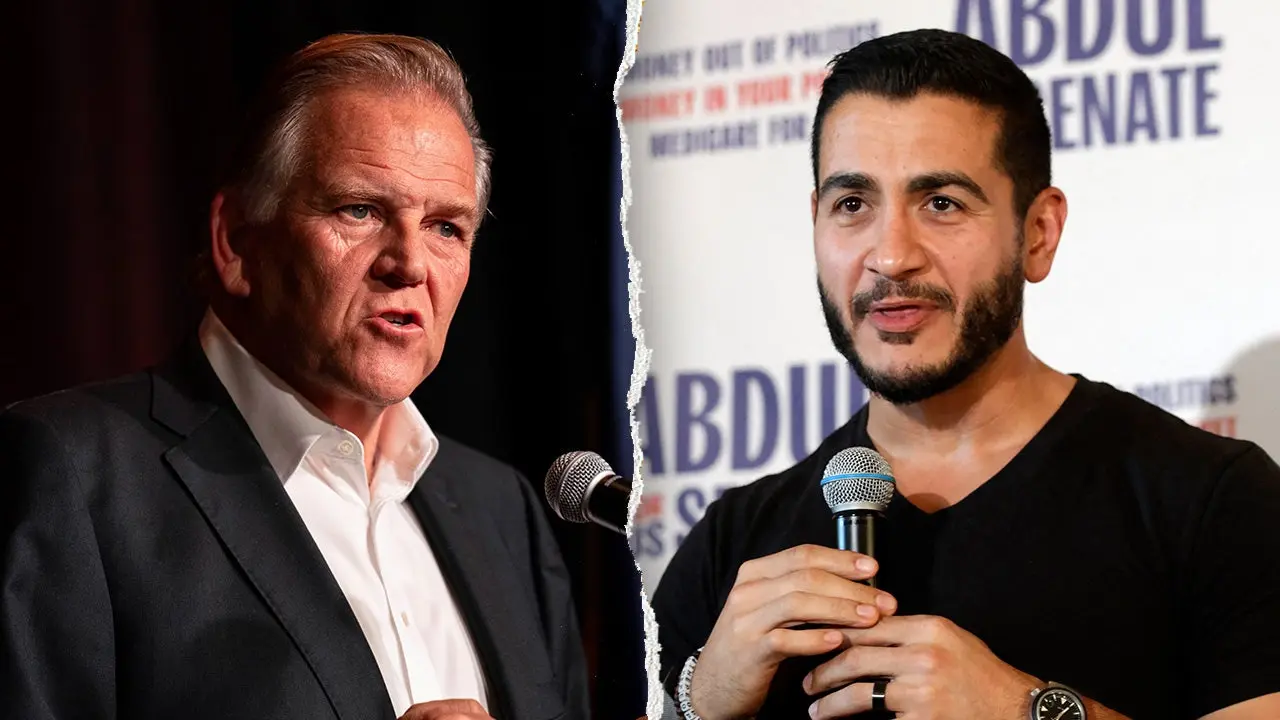
The late summer air in a quiet, tree-lined residential street in western Detroit carried a weight that felt far heavier than the typical humidity of a Michigan afternoon. Inside a modest, comfortable living room, a group of strangers had gathered, united not by a shared political history, but by a shared sense of unease and a decisive, deeply personal break from their past. At the center of this unlikely assembly stood Mike Rogers, a former congressman and FBI agent, who was not merely launching a campaign coalition, but issuing an earnest, heartfelt invitation to political wanderers. “You have a home with us,” Rogers said, his voice carrying a tone of consolation rather than conquest. He was speaking directly to lifelong Democrats who, after watching their party’s brutal and divisive primary season culminate in the victory of the unabashedly progressive Abdul El-Sayed over the moderate Haley Stevens, found themselves feeling like political orphans in their own party. For Rogers, this wasn’t just a strategic opportunity; it was a human moment. He wasn’t asking them to abandon their principles or to suddenly embrace the Republican banner. Instead, he was offering a pragmatic, values-based sanctuary, promising to earn their trust one voter at a time, all while recognizing the profound emotional toll it takes for a die-hard Democrat to even consider pulling the lever for an “R” for the very first time.
The atmosphere in the room was thick with the tension of personal transformation, a space where political identities were being quietly shattered and carefully reassembled. Standing beside Rogers was Chelsea, a resident of West Bloomfield, whose testimony embodied the very essence of this cross-party appeal. She did not speak like a disillusioned cynic, but rather like a patriot wrestling with a painful choice. “I’m a lifelong Democrat,” she began, her voice steady but tinged with a sense of profound loss. “I voted for Obama. I voted for Hillary. I voted for Biden. I voted for Slotkin. I heavily supported Haley Stevens throughout her race.” The recitation of her voting history was not a boast; it was a eulogy for her own political past. She was describing the lineage of her values, a tradition she had faithfully upheld for decades. Yet, looking ahead to November, she declared her support for Rogers, not out of a newfound love for conservatism, but out of a desperate need to protect the world she wants her children to inherit. “The Democratic nominee that we’ve been given does not share my values,” she explained, her words cutting through the partisan noise to reveal the stark reality facing many voters in the battleground state. For Chelsea and others like her, the choice was no longer about party loyalty, but about a visceral reckoning with the direction of the Democratic Party, one that felt increasingly foreign, hostile, and out of step with the moderate, Middle-American sensibilities she had grown up with.
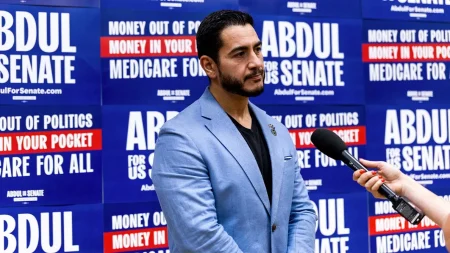
Beyond the emotional testimonies, this coalition reveals a cold, hard mathematical reality that could very well decide control of the United States Senate. Public opinion polls, including a recent survey from AARP, show El-Sayed and Rogers locked in a statistical dead heat, a margin-of-error bulge that makes Michigan one of the most critical toss-up states in the nation. However, a closely watched Fox News poll conducted in early August presented a fascinating divergence that explains Rogers’ optimism. While Rogers enjoys near-universal support from his own base—with a staggering 96% of Republicans falling in line behind him—El-Sayed’s support among Democrats is not only slightly softer at 91%, but it fractures significantly along ideological lines. The data illuminated a vulnerability that the Rogers campaign intends to exploit with surgical precision: while 98% of Democratic Socialists of America (DSA) members firmly back El-Sayed, that figure plummets to just 69% among non-DSA Democrats and independents. This 30-point gap represents a massive bloc of persuadable voters—people who may agree with El-Sayed’s economic populism but are deeply troubled by his far-left stances on everything from defunding ICE to his inflammatory rhetoric regarding the conflict in Gaza. “We definitely think it’s an opening. This is going to be a tight race. It’s Michigan,” Rogers acknowledged in an exclusive interview following the event, his voice betraying a calm confidence rooted in the polls. He emphasized that these are voters who have never once cast a ballot for a Republican, yet they are pausing, doubting, and now, crucially, listening.
Perhaps the most poignant and emotionally charged battleground within this fractured coalition is the Jewish community, which finds itself at the epicenter of a political and moral crisis. Rabbi Asher Lopatin of Huntington Woods, who stood shoulder-to-shoulder with Rogers at the campaign rollout, articulated a dilemma that transcends mere policy disagreements. Lopatin is not a conservative; he readily admitted to having “a lot of issues with a lot of policies of the Trump administration” and voiced concerns about the Supreme Court. Yet, his decision to back Rogers is driven by an existential imperative: “We cannot let someone like Abdul El-Sayed get into the Senate.” For Lopatin, the calculus is brutally stark. He paints a picture of a Jewish electorate that is “traumatized” by the current state of Democratic politics, pointing directly to the party’s state convention in April where supporters of Israel were met with hostility and where Stevens, a staunch ally of the Jewish state, was actively booed. This public display of incivility and isolation left a deep scar. Rogers, listening intently, reinforced this sentiment, sharing conversations he’s had with students at the University of Michigan who are “afraid to walk to class” and feel they cannot safely display the Star of David. The fear is palpable, and in the face of rising antisemitism and the visceral imagery of campus hatred, Lopatin argues that the traditional political priorities evaporate. For him, and for a growing movement of Jewish voters who are willing to cross the aisle for the first time in their lives, supporting Rogers is not an endorsement of Republicanism; it is a necessary act of self-defense and a moral stand against a candidate they view as dangerously divisive on this singular, life-or-death issue.
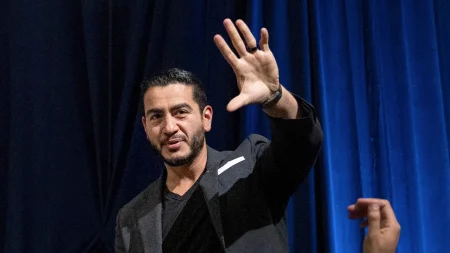
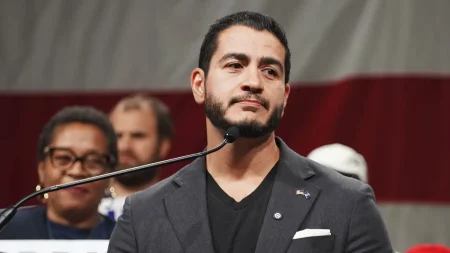
The counter-argument from the El-Sayed camp is quick, sharp, and centers on the looming shadow of Donald Trump. In response to the “Democrats for Rogers” event, El-Sayed’s campaign spokesperson, Cole Wozniak, fired back with a warning that cuts directly against Rogers’ appeal. “Mike Rogers will put Donald Trump ahead of Michigan every single time,” Wozniak charged, reminding voters of Rogers’ past willingness to carry water for Trump’s election conspiracy theories. The claim frames the election not as a choice between two individuals, but as a referendum on the former president. Wozniak pivoted to El-Sayed’s own historic candidacy—which, if successful, would make him the first Muslim senator in American history—and his progressive platform designed to energize the base. El-Sayed, a former Wayne County Health Department director and epidemiologist, represents the insurgent left of the party. His campaign promises, including “Medicare-for-all,” the abolition of ICE, and his unyielding criticism of Israel’s actions in Gaza, have electrified progressive activists but have simultaneously terrified moderates and suburban voters. The coming months will force the electorate to choose between two diametrically opposed visions: one that longs for a return to a more traditional, if imperfect, political decorum represented by Rogers, and another that seeks revolutionary structural change, represented by El-Sayed. The Michigan election is shaping up to be a proxy war for the very soul of the Democratic coalition, and Rogers is betting that the exhaustion with extremism will outweigh the gravitational pull of party allegiance.
Ultimately, the “Democrats for Mike Rogers” coalition is more than just a campaign tactic; it is a reflection of a deep, undeniable human yearning for civility and stability in a chaotic political landscape. Rabbi Lopatin captured this sentiment perfectly when he mourned the “violent, uncivil kind of setup for politics” that has taken root, pointing to the “danger” of losing civility altogether. This coalition is a testament to the idea that shared values—such as protecting one’s family, ensuring safety, and preserving a sense of decency—can sometimes transcend the rigid boundaries of partisan affiliation. As Rogers stands on the precipice of what promises to be a razor-thin battle, he is consciously positioning himself as the political adult in the room, the bridge between a forgotten moderate past and a chaotic future. He is not pandering to Democrats so much as providing them with an alternative on the ballot that doesn’t feel like a betrayal of their own self-respect. In a polarized nation where crossing the aisle is often viewed as an act of treason, this coalition offers a rare haven for those who feel their own party has left them behind. Whether this gamble will pay off in November remains entirely uncertain, but the very existence of this movement—the image of a lifelong Democrat like Chelsea standing beside a Republican nominee, and a rabbi supporting a candidate backed by Trump—serves as a powerful reminder that in the heat of an election, the most potent force is often the quiet, unshakeable conviction of a voter who has finally decided that their conscience matters more than their party line.