




The political landscape in Kentucky has grown increasingly tense as Democratic Governor Andy Beshear intensifies his public campaign demanding transparency from longtime Republican Senator Mitch McConnell regarding his undisclosed health issues. In a social media post, Beshear heightened the stakes by drawing comparisons to past national debates, reminding voters that he had previously urged the former administration to address public concerns regarding the former president’s health. By framing his demand as a consistent stance on leadership accountability rather than a partisan attack, Beshear called on the 84-year-old senator to address the mounting questions surrounding his physical capacity to serve, urged him to “end the crazy speculation,” and pleaded with him to simply let the public know what is happening.
This public push follows a formal letter the governor sent to McConnell earlier in the week, expressing concerns on behalf of Kentucky constituents who are increasingly worried about their senior senator’s well-being and his ability to effectively represent them in Washington. Beshear emphasized that holding public office carries a fundamental duty of clear communication, especially when it comes to a leader’s physical and mental fitness to perform their official duties. For a state represented by one of the most powerful figures in modern congressional history, the sudden silence from McConnell’s camp has created a representation vacuum that the governor argues must be addressed.
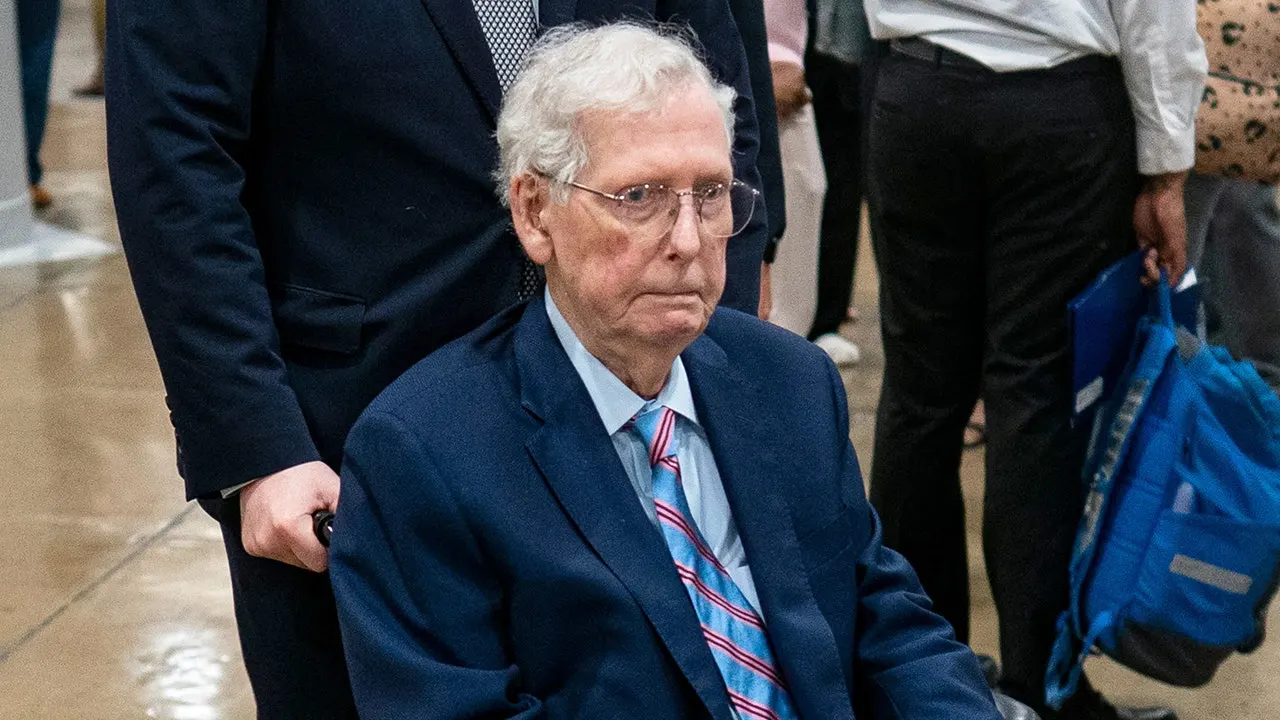
The anxiety surrounding McConnell’s status is compounded by his prolonged absence from the Senate, having been away from Capitol Hill for three weeks following his hospitalization in early June for an unspecified medical event. The mystery deepened after leaked emergency dispatch audio from mid-June surfaced, suggesting that first responders found the senator unconscious in his home, leading to widespread rumors that he may have suffered a serious cardiac event. Despite these alarming developments, McConnell’s office has kept tight-lipped, offering no concrete timeline for his return to legislative duties and leaving both colleagues and constituents in the dark.
Adding a layer of complexity to the situation is the behavior of McConnell’s inner circle, which has sent mixed signals to the public. Shortly after his hospitalization, his wife, former Transportation Secretary Elaine Chao, proceeded with scheduled travel to China, with her office publicly stating that the senator’s medical state was not severe enough to require her to cancel her trip or rush back to the United States. While this was likely intended to project a sense of calm and normalcy, the contrast between a suspected life-threatening emergency and his family’s travel schedule has only fueled further speculation and skepticism among onlookers.
Meanwhile, Republican leadership in the Senate has attempted to project business-as-usual operations, with Senate Majority Leader John Thune and Senate Majority Whip John Barrasso both reporting that they have had lengthy, productive phone conversations with McConnell. According to his colleagues, these discussions covered critical legislative matters, recent landmark Supreme Court rulings, and ongoing political controversies, suggesting the senator remains intellectually engaged. However, this reassurance stands in stark contrast to comments from former President Donald Trump, who, when questioned by reporters aboard Air Force One, admitted he had no insight into McConnell’s current condition.
As pressure mounts from both local leaders and the national media, the silence from the federal government and McConnell’s immediate team remains deafening. Neither the White House nor the senator’s personal office has responded to pressing inquiries regarding his prognosis or a projected date for his return to the Senate. This ongoing standoff highlights a growing debate in American politics regarding the right to personal privacy for aging leaders versus the public’s right to know if the individuals shaping national policy are physically capable of carrying out their constitutional responsibilities.