





Here is a summary and humanization of the provided information, presented in six paragraphs.
The tragic story begins in the quiet, upscale community of Reston, Virginia, where a morning jogger’s routine was shattered by a horrifying discovery. The jogger alerted authorities to a woman lying unconscious beside her vehicle near a popular trail, and first responders quickly determined the scene was a violent crime. The victim was identified as 42-year-old Carmen Puch, a local woman described as a devoted mother to a young daughter and a hardworking employee at a nearby restaurant. Despite the swift reaction from emergency services, Puch was pronounced dead at the scene, her death the result of severe trauma to her upper body that investigators would later determine was caused by a stabbing. The shock of this sudden, violent loss reverberated through the tight-knit community, leaving neighbors in disbelief and law enforcement scrambling for answers.
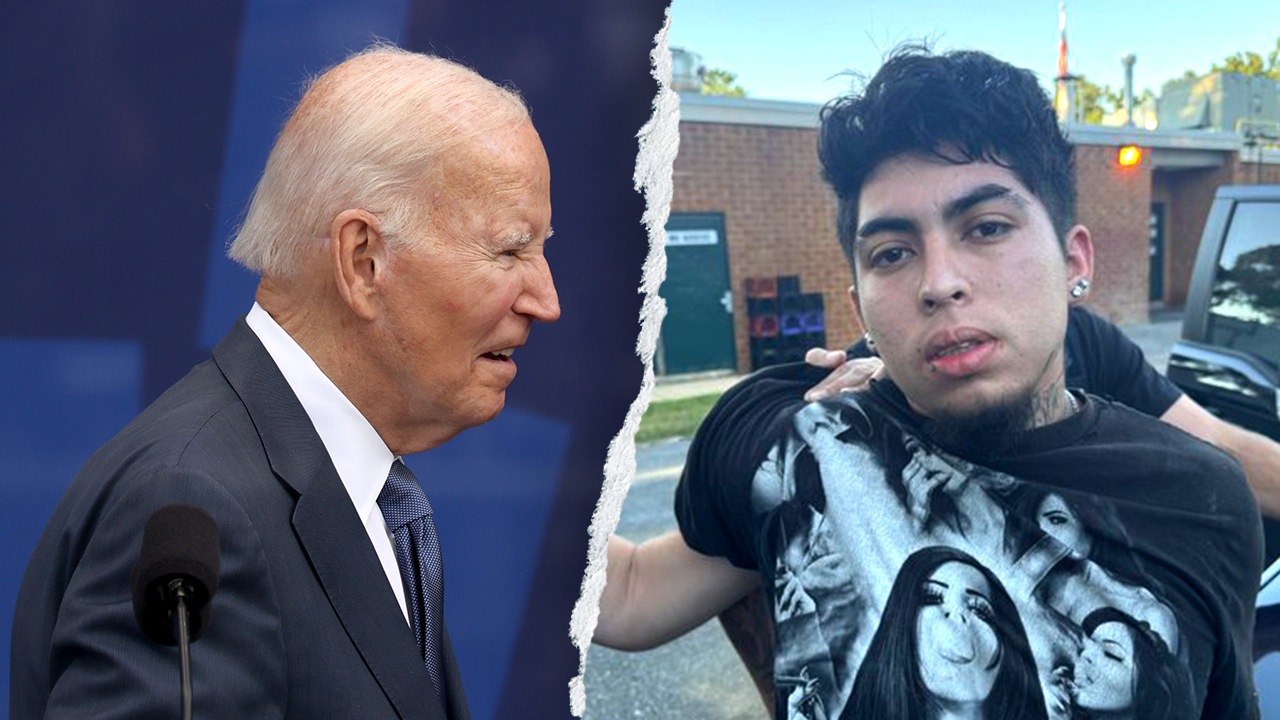
Within days, police announced an arrest in connection with Puch’s death, identifying the suspect as Alexis Antonio Cedillos-Campos, a 19-year-old Salvadoran national. The arrest quickly pushed the case from a local tragedy into the center of a heated national debate over immigration policy. According to federal sources, Cedillos-Campos’s immigration history became the immediate focus of scrutiny. He had allegedly entered the United States illegally, crossing the southern border in El Paso, Texas, in April of the previous year. Following his apprehension, he was not held for deportation but was instead released into the country pending his immigration proceedings, a practice often criticized as a “catch and release” policy. This detail transformed the case from a simple murder investigation into a flashpoint for political arguments about border security and the consequences of sanctuary policies, as local officials and federal authorities began to trade accusations over who was responsible for allowing the suspect to remain in the country.
The political fallout was swift and intense, with figures from both sides of the aisle seizing on the case. A spokeswoman for the White House issued a stark statement directly blaming the previous administration for the tragedy. She argued that the Biden administration’s immigration policies had “released this illegal alien MURDERER into our country,” and that his presence on American soil was a direct and preventable consequence of “open border policies.” In her view, the murder of Carmen Puch was a grim example of the violent crimes that can occur when federal immigration laws are not strictly enforced. Conversely, the criticism was not just aimed at Washington; it also targeted state leadership. Democratic Governor Abigail Spanberger came under immediate fire for her recent executive actions, which had rescinded her predecessor’s orders that directed state and local law enforcement to cooperate with federal immigration authorities and had dismantled agreements like 287(g) that allowed local police to act as immigration agents. Critics argued that these policy changes made communities like Reston less safe by creating a more permissive environment for undocumented individuals.
The case was further amplified by comparisons to other incidents in the same Virginia county. News reports highlighted a previous case involving an 18-year-old Salvadoran immigrant named Israel Flores Ortiz, who had also entered the country illegally in 2024. Ortiz was convicted of assault and battery for groping several underage girls at a local high school, receiving a relatively lenient 360-day sentence. This prior case, along with the murder of Carmen Puch, was cited by immigration enforcement advocates as evidence of a concerning trend—a series of violent and sexual crimes allegedly committed by individuals who entered the country without authorization. For these advocates, the incidents were not isolated but rather symptomatic of a broken system that prioritizes leniency over public safety. The repetition of these stories in the press fueled a narrative that the county’s policies, and the broader federal approach, were putting citizens at risk, turning individual tragedies into political ammunition.
In response to the intense scrutiny, officials from the Department of Homeland Security issued a pointed rebuttal, framing their actions as a correction to the previous administration’s failures. Their statement clarified their position: “Biden and Mayorkas hand-delivered alleged killer Cedillos-Campos to the streets of Fairfax County. They recklessly unleashed millions of unvetted illegal aliens into American communities and abused the law to do so. Trump and Secretary Mullin are now enforcing the law, arresting illegal aliens who have no right to be in our country—and have reversed Biden’s deadly catch and release policy.” This messaging drew a stark contrast between the two administrations, presenting the current one as tough on crime and the previous one as complicit in facilitating it. They positioned the arrest of Cedillos-Campos not just as a routine police action, but as a tangible victory in the ongoing effort to restore law and order and reverse the perceived lax policies of the past.
As the legal process moves forward, Cedillos-Campos remains in custody in Prince George’s County, Maryland, awaiting extradition to Fairfax County to face a charge of second-degree murder. The young man accused of ending Carmen Puch’s life now awaits his day in court, where the specifics of the case will be determined. Meanwhile, the political and social arguments ignited by this case show no signs of abating. The murder remains a painful reminder of a life cut short and a community shaken, but it has also become a symbol in a larger, ongoing conflict over immigration policy. The fight over who is to blame—the federal government, the state governor, or the suspect himself—continues to rage, with the memory of a mother and daughter tragically separated serving as the most human and heartbreaking element of a deeply polarizing national conversation.