






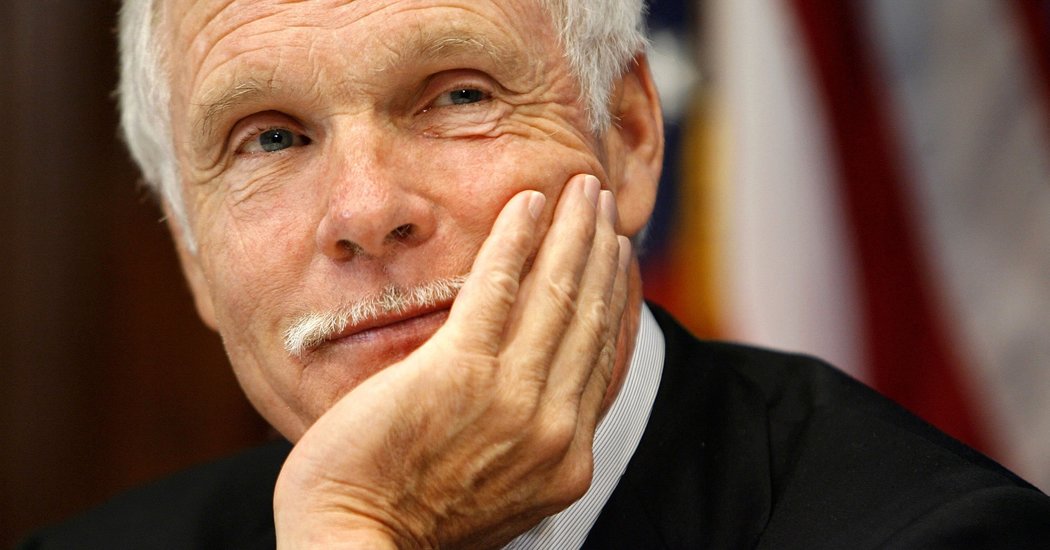
Ted Turner, that larger-than-life media mogul whose wild spirit shaped the 20th century, passed away on Wednesday at 87 in his home near Tallahassee, Florida. He wasn’t just a businessman—he was a force of nature, boldly reinventing television news and building an empire that touched everything from sports to environmental causes. A family spokesman, Phillip Evans, confirmed the news, sharing that Turner had been battling Lewy body dementia since publicly announcing it in 2018. Think about it: here was a man who dreamed big, clawed his way to the top, and left a mark so deep that even his rivals had to tip their hats. His CNN wasn’t just a channel; it ushered in the 24-hour news cycle that we all take for granted today, making history feel immediate and alive. Beyond that, Turner dabbled in owning baseball teams, sailing yachts, and turning barren land into protected wilderness. He was philanthropic too, tossing a billion dollars to the United Nations when conservatives were scratching their heads. Yet, despite the admirers calling him a visionary, his personal life was a whirlwind of charm and chaos—infidelities, boozy outbursts, and three marriages, including one to Oscar winner Jane Fonda. Loved by many as an American legend, he was, at his core, an adventurer who chased thrills over profits, saying himself that he was “more of an adventurer than a businessman.” This obituary paints him as brash, brilliant, and utterly human—a guy who grabbed life by the reins and rode it hard.
Robert Edward Turner III, known to everyone as Ted, wasn’t born into glamour; his roots were in the American South, edged with hardship. Growing up in Savannah, Georgia, he watched his father, a billboard ad man named Ed, battle alcoholism and depression, culminating in a tragic suicide when Ted was just 24. That loss hit him like a storm, especially after losing his sister Mary Jean to a brutal illness. “Alone” and determined, Ted dropped out of Brown University after racial incidents that showed his youthful flaws—no saint, he admitted to biases common in the era. He took over his dad’s company, Turner Outdoor Advertising, against all advice, turning it into a regional giant. But tedium wasn’t his style; sailing became his escape, a passion that led him to win the America’s Cup in 1977 aboard Courageous. Off the water, he bought a failing Atlanta TV station in 1970, plunging into debt but refusing to fold. Folks called him “Captain Courageous” for his steel nerves—dressed like a cowboy, signing deals on impulse. This was Ted’s launchpad: a risky dive into broadcasting that proved he could bet big and win, even if his style was more roar than refinement. By buying the Atlanta Braves for peanuts in 1976 and beaming their games nationwide via satellite, he birthed TBS, a “superstation” that filled cable’s promise. His empire grew explosively, but so did his debts, forcing gambles that left him teetering. Personally, it was turbulent—marriages marred by affairs and drinking. Yet, through it all, Ted’s unrelenting drive painted him as a folk hero, a self-made titan who turned setbacks into comebacks.
One of Ted Turner’s boldest strokes was CNN, launched in 1980 as the world’s first 24-hour news channel, far from the East Coast elites in Atlanta. It was a revolution, showing history unfold in real-time—from the Berlin Wall’s fall to the Gulf War, where CNN’s Peter Arnett scooped others by being in Baghdad. President George H.W. Bush quipped he learned more from CNN than the CIA. Ted poured millions into it, hiring unknowns like Larry King and battling rivals who mocked it as the “Chicken Noodle Network.” He fought tooth and nail for access, suing to join the White House pool, and eventually won respect with Peabody Awards and Time’s “Man of the Year” in 1991. Expanding, he spun off Headline News and CNN International, then scooped up MGM’s film vault for $1.5 billion in 1985, adding Hanna-Barbera for Cartoon Network in 1992. These moves were risky—debts piled high, critics slammed his film colorizing, and he even tried a hostile takeover of CBS, pulling back amidst poison-pill defenses. But brilliance shone through; TNT and TCM turned old movies into gold, reaching millions. Ted’s business savvy was instinctive, not strategic—he thrived on chaos, yelling pitches and dodging bankruptcy. Even his failures, like the 1979 Fastnet yacht race where 15 sailors died (yet he finished), fueled his myth. He adapted, mellowing with lithium for his moods, but his mouth stayed sharp, sparking controversies with slurs or praising Castro as “a great guy.” Ted’s world was a paradox: a “pinko” hater who allied with evangelicals, a hunter who became a green giant, owning two million acres of preserves.
Ted Turner’s personal life was as dramatic as a soap opera, full of passion, flaws, and fleeting joys. His first marriage to Julia Nye ended acrimoniously—he literally rammed her boat in a race when she was winning. Second wife Jane Smith endured public humiliations with his girlfriends at Braves games, their breakup messy by the late ’80s. Then came Jane Fonda in 1991, a match of opposites: the feminist activist and the womanizing billionaire. She loved his charisma, calling it a “3-D stereophonic show,” but his infidelities and her spirituality tore them apart after 10 years. Nicknamed “Mouth of the South,” Ted was notorious for outbursts—throwing papers, dropping to the floor in meetings. Yet, he was forgiven, seen as a roguish legend, his craggy face and mustache beaming charm. Politics? Contradictory: claiming conservatism, he rubbed shoulders with Birch Society folks but defended Castro and China, donating to the UN despite conservative disdain. He adored hunting but flipped, buying ranches to preserve buffalo and land, becoming America’s fourth-largest landowner. Socially, he mellowed later, though controversies lingered, like seminar slips. Ted was human in his turbulence—boozing, bluffing—but his heart showed in philanthropy. He created foundations for peace and the environment, fought nuclear threats, and urged others to give. Family-wise, survivors include daughters Laura and Jennie, sons Teddy, Rhett, and Beau, plus grandchildren. In essence, Ted was a walking contradiction: boisterous yet visionary, flawed yet irresistible, teaching that life’s riches come from chasing dreams, not just dollars.
Sailing wasn’t just a hobby for Ted—it was his soul’s calling, where he found purpose beyond the boardroom. Starting at Savannah’s Yacht Club, he raced to fame, earning Yachtsman of the Year honors in 1970 and 1973. The 1977 America’s Cup victory came despite rowdy antics that got him tossed from clubs—flirting, pub-crawling, and even forced apologies. Yet, Ted prevailed, captaining Courageous to glory. Tragedy struck in 1979’s Fastnet Race, with fierce storms sinking boats and killing 15; he sailed Tenacious to win, but called it “exhilarating” despite the loss of life, emphasizing sailing’s thrill through adversity. This mirrored his Braves ownership—buying in 1976 for $500,000, he boosted their profile on WTCG, turning losses into wins worth billions decades later. Sports were his playground; he also owned the Hawks briefly. Philanthropy evolved too—he launched Goodwill Games in 1986 to bridge Cold War divides, though they folded after 15 years. By 1996, his ranches spanned 1.3 million acres, home to 12,000 buffalo. He opened Ted’s Montana Grill to promote bison, fought extinction, and built eco-tours at properties like Armendaris in New Mexico. Late-life mergers sealed his legacy: in 1995, his Turner Broadcasting merged with Time Warner for $7.5 billion, later through AOL deals. He stepped back, content as No. 2 after 33 CEO years, joking it was like marriage to Jane. Ted shifted focus—more to causes than cash, proving age granted perspective without dimming his fire.
Reflecting on Ted Turner’s journey, it’s clear his impact was profound, blending innovation with personal flair that resonated deeply with folks. From cable pioneer to environmental steward, he embodied the relentless American dreamer, flaws and all. His philanthropy—a billion for the UN, spread over a decade—aided refugees, battled diseases, and cleared mines, he’d say it was just surplus from his soaring wealth, urging billionaires to “learn to give.” Critics saw contradictions: a McCarthyite pal who backed communists. But Ted’s charm won over; he spoke truth bluntly, even offending—calling Christianity “a religion for losers” or blaming Tiananmen protesters. Yet, his eco-efforts earned admiration, preserving wild lands when others developed. Family grounded him: kids in environmental roles like the Turner Foundation. In his final chapter, dementia dimmed his vigor, but memories of tackling giants linger. Ted wasn’t perfect—impulsive, divisive—but his legacy thrives in 24/7 news, classic films on TCM, and acres of untouched wilderness. He aimed for records alongside greats like Gandhi, admitting, “That puts you in pretty big company.” We forgave his excesses because, underneath, Ted Turner was us: ambitious, flawed, eager to leave the world a tad better. His 87 years were a grand adventure, reminding that true success mixes business brilliance with a generous heart.