Miracle in the Mountains: Inside the High-Stakes Subterranean Extraction of Trapped Miners in Laos
The Dramatic Breakthrough of Saturday’s Extraction
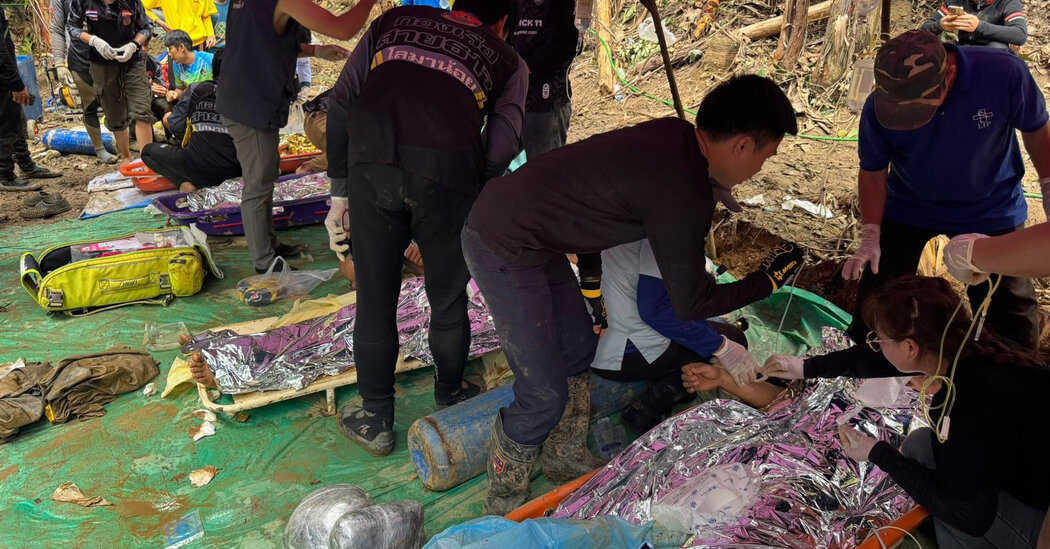
The heavy, damp air outside a remote cavern in the rugged verticality of central Laos’s Xaysomboun Province erupted into a chorus of cheers, claps, and emotional weeping at mid-afternoon on Saturday. After more than a week of being entombed in absolute darkness, four exhausted but living gold miners emerged into the blinding daylight, marking a triumphant milestone in an international rescue operation that has gripped the region. The men, caked in mud and visibly weakened by their subterranean ordeal, were met by a elite team of rescue divers who had spent days battling rising waters and claustrophobic channels to secure their release. Among them was Mikko Paasi, a renowned Finnish rescue diver who helped lead the hazardous cave extraction and who expressed immense relief following a grueling week that pushed both rescuers and victims to the absolute limits of human endurance. While a wave of jubilation swept through the base camp as one tearful rescuer embraced an recovered miner, the celebration remained measured, as emergency personnel quickly shifted their focus back to the dark mouth of the cavern, where the search continued for two additional miners who remained missing deeper within the flooded mountain.
CROSS-SECTION OF THE XAYSOMBOUN CAVE SYSTEM[Entrance] [1,000 Feet In]
/
===/===~ ~ ~ ~ ~ ~ ~ ~ ~ ~ ~ ~ ~ ~ ~ ~ ~ ~ ~ ~ ~~===============[Deep Cave]
/ | Flooded Tunnels (“The Drinking Straw”) | Huddled Chamber
/ |===~ ~ ~ ~ ~ ~ ~ ~ ~ ~ ~ ~ ~ ~ ~ ~ ~ ~ ~ ~| [5 Miners Found]
| | | [2 Missing]
| v v v
| High-Volume Divers Tunnels
| Water Pumps Deliver Gels/ Unexplored
| Lowering Level Rice Water
The Descent and the Sudden Deluge
The harrowing ordeal began a week prior when a group of seven local miners ventured into the extensive, labyrinthine cave network, a geological characteristic of the mountainous terrain located approximately 70 miles northeast of Vientiane, the capital of Laos. Equipped with basic provisions, water, and tools, the group had anticipated a short-term, self-sustained excursion slated to last only a few days as they scouted for precious gold deposits within the limestone formation. However, their calculated venture turned catastrophic when early, unyielding monsoon rains swept across the province, unleashing torrents of water that rapidly drained into the mountain’s natural sinkholes. The sudden hydrological surge did not merely flood the low-lying sumps; it triggered a subterranean landslide of gravel, mud, and loose debris that locked the exit shut, trapping the seven men behind a formidable barrier of saturated earth. Cut off from the outside world and plunged into pitch darkness, the miners retreated to an elevated chamber roughly 1,000 feet from the cave entrance, where they huddled together to conserve body heat and oxygen, unaware of the massive multi-agency rescue expedition assembling at the surface.
Technical Audacity: Navigating the “Drinking Straw”
To reach the trapped men, rescue squads had to navigate a terrifyingly tight, water-filled passage that one diver, Kengkard Bongkawong, graphically likened to crawling through a plastic drinking straw. The operation required the specialized expertise of international cave diving veterans, including Paasi and Bongkawong, both of whom had gained global prominence during the legendary 2018 Tham Luang cave rescue in neighboring Thailand. Drawing on lessons from that historic event, the recovery team faced a critical tactical dilemma: attempt a highly dangerous dive extraction through the zero-visibility currents using specialized breathing apparatus on the weakened survivors, or deploy massive industrial pumps to aggressively drain the system’s narrow conduits. While prepared for an immediate dive rescue as an absolute last resort, the engineering contingent prioritized lowering the vertical water levels, monitoring the unpredictable May weather patterns with agonizing vigilance to ensure a sudden flash flood would not overwhelm their pumps and drown both the trapped miners and their would-be saviors.
Inside the Chamber: Daily Sustenance and the First Extraction
On Wednesday, search divers achieved a historic breakthrough when their dive lights finally pierced the gloom of the isolated chamber, illuminating five of the lost miners who had managed to stay together on a muddy ledge. Recognizing that immediate physical extraction was impossible due to the high water levels, the divers initiated a meticulous medical stabilization protocol, supplying the malnourished men with calorie-dense energy gels, essential electrolytes, and warm, easily digestible rice water to combat hypothermia and metabolic shock. By Friday, as high-volume pumps successfully lowered the water level in key bottlenecks, the rescue team capitalized on a critical window of opportunity to extract the first miner. Outfitted with diving gear and guided through the submerged, jagged passages by a team of elite international divers, the first survivor was successfully ushered to the surface, proving the viability of the rescue pipeline and laying the operational groundwork for the remaining four to crawl to safety the following day.
The Agony of the Unresolved Search
Despite the miraculous success of reclaiming five survivors from the depths of the Xaysomboun wilderness, a heavy cloud of anxiety and grief still hangs over the muddy base camp, where families and small children of the remaining two missing miners wait in agonizing suspense. The two men, who reportedly split from the primary group before the flooding occurred, are believed to be located in the deeper, unexplored recesses of the mountain’s complex hydrological pathways. Rescue divers have committed to a relentless, around-the-clock search of the remaining dry chambers and air pockets, focusing their efforts on a narrow, challenging side-conduit that represents the most logical sanctuary where the missing duo could have sought refuge from the rising waters. As the threat of further monsoon rains looms over the province, the rescue teams are racing against geological time, navigating unstable, mud-slicked passages in a desperate bid to deliver a second miracle to the families waiting anxiously at the cave’s mouth.
The Hard Economic Reality of Artisanal Mining
The dramatic rescue in Xaysomboun Province casts a revealing spotlight on the complex socio-economic realities of rural Laos, where informal, small-scale mining acts as a dangerous economic lifeline for marginalized provincial communities. While Xaysomboun is celebrated for its abundant commercial deposits of gold, copper, and silver, the wealth generated by large-scale leases rarely trickles down to the local agrarian population, driving impoverished villagers to risk their lives in unregulated, abandoned, or wild mines. These artisanal miners frequently brave structurally unsound shafts and volatile weather conditions to extract raw gold ore, which they sell to independent Chinese operators active in the region to supplement their meager agricultural incomes. As the global community celebrates the courage of the international divers and the resilience of the survivors, this incident serves as a stark reminder of the extreme risks rural populations endure daily, highlighting the urgent need for safer economic opportunities and robust regulatory oversight in Southeast Asia’s mineral-rich highlands.