






For generations, the global traveler has associated the airport experience with a distinct sense of sterile anxiety—a chaotic gauntlet of concrete corridors, blinding fluorescent lights, endless security queues, and the ubiquitous hum of rolling suitcases on industrial carpeting. Historically treated as mere functional transit factories, these massive architectural undertakings prioritized high passenger volume and strict security protocols over human comfort, environmental harmony, or aesthetic pleasure. However, a profound cultural renaissance is currently reshaping the gateway to our skies, turning these monumental spaces into breathtaking cultural sanctuaries that celebrate both the local heritage of their regions and the cutting-edge innovations of sustainable design. Leading this charging revolution is the prestigious Prix Versailles, an esteemed group of architectural competitions that honors global achievements across museums, educational campuses, and massive public hubs. Focusing intensely on the dual pillars of ecological responsibility and operational fluidity—the ultimate “need for speed” to eliminate traveler stress—the Prix Versailles has unveiled its definitive list of the seven most beautiful airports of 2026. This selection represents a major paradigm shift in civil engineering, where the cold, utilitarian logic of yesterday is permanently replaced by structures that breathe, inspire, and deeply connect with the human spirit, reminding us that the journey itself is just as sacred as the destination.
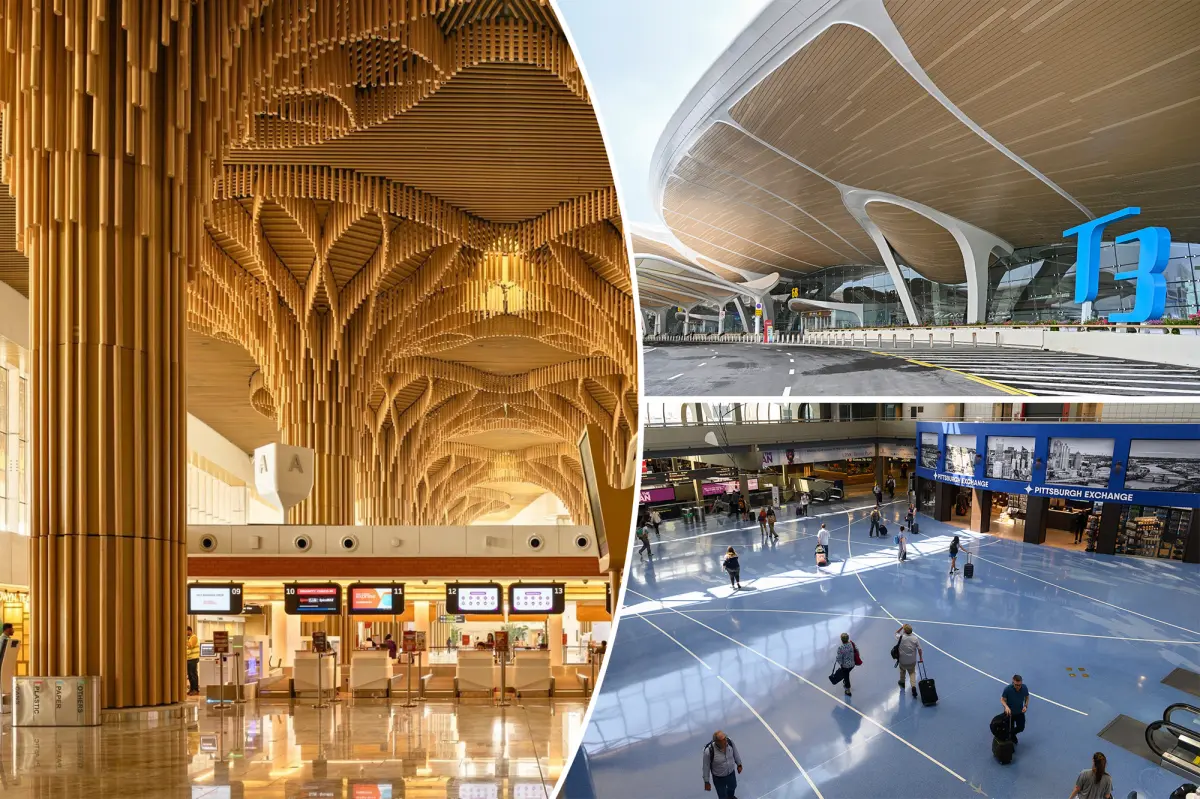
Among these monumental marvels, the United States claims two stunning transformations that prove even the most congested hubs can be reimagined as eco-friendly, light-filled sanctuaries. At the San Diego International Airport (SAN) Terminal 1, the world-renowned design firm Gensler undertook the monumental challenge of streamlining America’s busiest single-runway airport. The result of this ambitious redesign is a gorgeous, 244-meter curved glass structure that floods the terminal with Southern California’s signature golden sunlight, seamlessly marrying the indoor environment with the sweeping coastal beauty and temperate climate of the region. By boldly removing heavy structural columns, the architects remarkably decreased the terminal’s carbon footprint by a staggering 30 percent, while simultaneously opening up breathtaking outdoor terraces where passengers can enjoy local culinary delights and lounge comfortably while gazing out over the pristine San Diego Bay. Meanwhile, thousands of miles away in Pennsylvania, the newly envisioned Pittsburgh International Airport offers an architectural love letter to the rugged, forested landscape of the nearby Allegheny Mountains. Featuring dramatic tree-shaped columns and warm, earth-toned finishes that mimic the dappled light of woodland canopies, this terminal invites travelers to decompress amidst four sprawling outdoor terraces. To truly root the airport in the cultural identity of its hometown, the design includes a whimsical “Petal Tunnel” inspired by Pittsburgh’s historic Fort Pitt Tunnel, transforming what is usually a stressful walk to the gate into a delightful, sensory stroll through a simulated mountain passage.
Crossing over to East and Southeast Asia, the architectural dialogue shifts toward a majestic fusion of ancestral craftsmanship and futuristic engineering, creating spaces that feel less like terminals and more like living cultural monuments. China’s Guangzhou Baiyun International Airport Terminal 3 achieves this delicate balance beautifully by weaving ancient Lingnan culture into its ultra-modern design. Here, the sterile atmosphere of typical departure lounges is replaced by a rhythmic sequence of terraced gardens, sunlit atriums, and delicate, hand-crafted woodwork that recalls the region’s historic architectural roots. Perhaps its most breathtaking feature is the inclusion of the highest open-air public observation deck found in any Chinese airport, offering travelers a rare opportunity to step outside, breathe fresh air, and feel grounded before taking to the skies. Similarly, in Cambodia, the stunning Techo International Airport in Phnom Penh serves as a physical bridge between the country’s ancient spiritual heritage and its modern ambitions. Designed with a massive, soaring roof canopy that pays architectural homage to Cambodia’s historic royal palaces and sacred stone temples, the interior ceiling is a masterpiece of design, cleverly emulating the intricate geometric patterns of traditional Cambodian bamboo and rattan basket weaving. Yet, this celebration of ancient draftsmanship does not compromise modern functionality; the interior layout has been meticulously optimized to dramatically shorten walking distances from the vehicle drop-off zone straight to the boarding gates, relieving passengers of the physical exhaustion often associated with navigating mega-terminals.
In South Asia, India asserts its status as a vibrant global powerhouse of design with two separate terminals making the coveted Prix Versailles list, each using very different architectural philosophies to honor the country’s deep emotional connection to nature and communal storytelling. At the Lokapriya Gopinath Bardoloi International Airport Terminal 2 in Guwahati, architect Nuru Karim has crafted a breathtaking homage to the region’s rich natural resources and indigenous artistry. Drawing profound inspiration from the versatility and structural strength of bamboo, Karim engineered majestic vaulted ceilings supported by soaring, bamboo-styled structures that evoke the comforting feeling of standing in a sacred, ancient forest. Every corner of the terminal’s spacious passenger arrival and waiting areas is adorned with delicate tribal narratives, heritage-rich indigenous artwork, and masterfully curated local craftsmanship, purposefully transforming a transient zone into an emotional, educational encounter with the soul of Northeast India. On the other hand, the newly opened Navi Mumbai International Airport Terminal 1, envisioned by the legendary minds at Zaha Hadid Architects, takes a decidedly futuristic approach to organic design. Guided by the symbolic purity of the sacred lotus flower, the terminal features breathtaking, curved ceilings that mimic delicate flower petals unfurling naturally under the morning sun. Throughout this fluid, state-of-the-art terminal, passengers encounter numerous tranquil “pause points” designed specifically to slow down the frantic pace of travel, integrating interactive digital installations and cutting-edge art exhibitions that make wandering through the terminal feel like exploring a world-class contemporary art museum.
Europe’s avant-garde architectural vision is represented on the list by the highly anticipated Terminal 3 at Frankfurt Airport in Germany, a project that completely redefines how we interact with space during long, stressful layovers. Celebrated architect Christoph Mäckler approached this massive project not by designing a standard airport, but by conceptualizing a vibrant, living urban neighborhood. Rather than confining passengers to sterile, linear boarding gates and closed-off waiting rooms, Mäckler’s design actively emulates the lively, warm environment of traditional European city streets, bustling public squares, and cozy cafés. To counteract the disorientation and confinement often felt in major international hubs, the architecture features three spectacular, gravity-defying, rotating ring-shaped sculptures suspended high above the main walkways. These kinetic installations serve as modern landmarks, gently rotating to reflect a visionary, evolutionary aesthetic that captivates the eye and provides a comforting sense of wonder and curiosity. By utilizing architectural principles normally reserved for public parks and community plazas, Frankfurt’s Terminal 3 turns transient international travel into a deeply human, shared civic experience, offering a cozy sense of place even to those who are only passing through for a brief moment in time.
Ultimately, the seven airports recognized by the Prix Versailles for 2026 stand as magnificent testaments to the fact that our physical environments have a profound, measurable impact on our mental well-being and our relationship with the planet. By championing revolutionary structural designs that actively reduce carbon emissions, celebrate local craftsmanship, shorten long walks, and flood sterile spaces with natural light and biological life, these visionaries are successfully dismantling the cold, industrial legacy of aviation architecture. They prove to the world that high-efficiency travel and deep artistic beauty do not have to be mutually exclusive concepts, but can instead work in perfect, harmonious tandem. For the modern global citizen, these airports represent a welcome dawn of a new era of exploration—one where the stress of rushing to a gate is dissolved by the calming presence of a mountain canopy, an indoor bamboo forest, or a delicate lotus petal of light. As these masterfully designed hubs open their gates to millions of eager passengers around the world, they remind us that the act of traveling is not merely a logistical necessity, but a beautiful, shared cultural ritual that deserves to be celebrated with grace, dignity, and awe-inspiring art.