






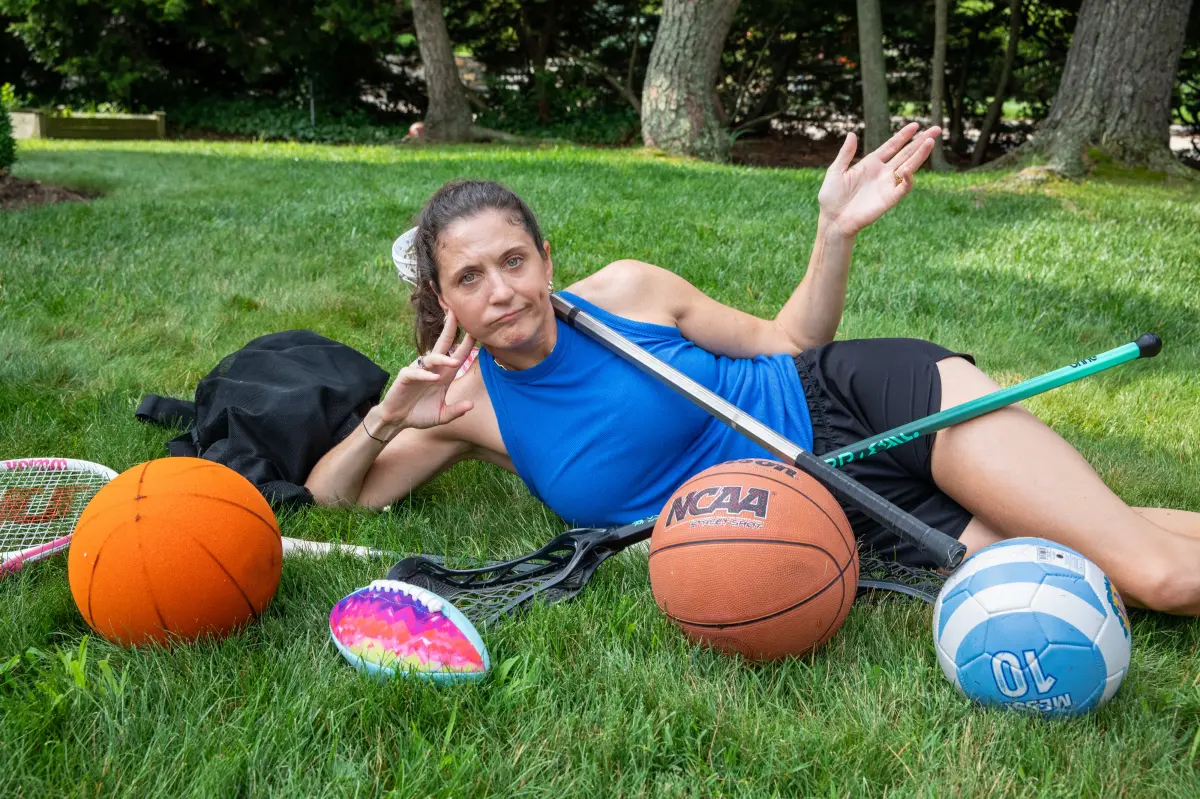
For generations, youth sports in America were a rite of passage defined by simplicity, community, and the unadulterated joy of play. Children would lace up hand-me-down cleats, head to the local park, and spend their afternoons learning the values of teamwork and resilience under the guidance of volunteer parent coaches, returning home only when the streetlights flickered on. Today, however, this idyllic landscape has been systematically dismantled and replaced by a hyper-commercialized, multi-billion-dollar youth sports industry. Parents across the nation are finding themselves trapped in an exhausting, high-stakes system dominated by elite club and travel teams that can easily demand up to $10,000 a year per child. This cultural shift has turned youth athletics into a grueling second job for families, replacing casual weekend games with high-pressure, year-round travel schedules that stretch both household budgets and family dynamics to their absolute breaking points. Caitlin Murray, a content creator and mother of three from Westchester, New York, who once excelled as an All-American, national championship-winning lacrosse captain at Middlebury College, stands in disbelief at the current state of play. Having mastered her own sport through local summer leagues and affordable camps, Murray notes that the modern landscape leaves virtually no room for casual participation after the second or third grade. Instead, families are funneled into expensive club programs requiring constant travel and immense financial sacrifices. The grueling routine demands that she and her husband adopt a “divide-and-conquer” lifestyle, spending their weekends traveling to separate tournaments in different states, rarely seeing each other during the competitive season.
This relentless scheduling is matched only by the staggering financial burden placed on modern families, turning what was once a leisure activity into an aggressive line-item expense that rivals mortgage payments. The costs extend far beyond basic registration fees to include specialized gear, mandatory team uniforms, tournament entry fees, and astronomical travel and lodging expenses. In Newberry, Massachusetts, Megan Sherr shares the daunting reality of managing youth sports for her four children, all of whom play club hockey at a seasonal cost of $3,000 per child, with two also participating in highly competitive club lacrosse. When adding the cost of private coaching sessions—which can easily run up to $150 an hour—alongside continuous travel, the family’s annual investment easily reaches into five-digit territory. The financial strain is so pronounced that Sherr frequently hears of local parents taking on second jobs or sacrificing their personal savings just to keep their children on the ice and field. What used to be a fun, accessible extracurricular activity has transformed into a major financial commitment, forcing middle-class families to make deep personal and economic compromises just to ensure their children do not fall behind their peers.
This financial gatekeeping has profound societal implications, effectively transforming youth sports into an elitist playground that systematically excludes lower-income families and diminishes the overall talent pool of American athletics. Landon Donovan, the legendary former captain of the United States Men’s National Soccer Team and current broadcaster, has openly criticized this “pay-to-play” model, attributing some of the national team’s international struggles to this deeply flawed system. Donovan pointed out a startling statistic: only two percent of children playing organized soccer in America come from households earning less than $50,000 a year. This economic barrier means that countless talented, passionate children across the country are locked out of competitive sports simply because their parents cannot afford the steep entry fees. By treating athletic development as a premium commodity rather than a public good, the current youth sports system has created a stark class divide, ensuring that only the most affluent families can access the coaching, exposure, and opportunities required to excel on a national or global stage.
The physical and psychological toll of this high-pressure environment on young athletes is equally concerning, raising serious questions about whether this intense, year-round focus is truly beneficial for growing children. Three-time Olympic gold medalist beach volleyball player Kerri Walsh Jennings, who now runs her own tournament and has three teenagers navigating the club volleyball circuit in Nevada, believes the youth sports culture has gone entirely too far. She recalls an era when sports had distinct, defined seasons that allowed children to rest, recover, and explore different interests. Today, however, many young athletes are pushed to specialize in a single sport year-round at an incredibly early age, deprived of a true offseason and the simple freedom of just being kids. Walsh Jennings emphasizes that children thrive when they play multiple sports, interact with diverse groups of teammates, and experience different coaching styles. Without regular periods of rest, young athletes face a heightened risk of severe overuse injuries, chronic physical fatigue, and acute psychological burnout, often leading them to walk away from sports entirely before they even reach high school.
The commercialization of youth sports has also birthed a predatory ecosystem of micro-transactions, where families find themselves continuously nickeled-and-dimed by organizations capitalized on parental devotion. Courtney Altamirano, whose thirteen-year-old daughter plays club volleyball in Phoenix, Arizona, describes the financial reality as a direct threat to long-term family stability, absorbing funds that would otherwise be allocated toward vacations, new cars, home down payments, or college savings. Altamirano highlights the sheer absurdity of being forced to pay $20 to $50 per family member just to gain entry to tournaments to watch her own daughter play—on top of the $10,000 annual club fee they already pay. The financial fatigue is so pervasive that she recalls friends dressing up a younger sibling in an athletic uniform just to smuggle him past the gate collectors so he could sit quietly in a corner without costing the family an extra fee. Beyond the financial extraction, the emotional pressure on the children is intense; Altamirano notes that the competitive environment is so unforgiving that if her daughter requests to sit out a single practice due to physical exhaustion, coaches will immediately bench her in subsequent games, cultivating an atmosphere of fear and compliance.
Faced with these enormous sacrifices, many parents hold onto the hope that their children’s athletic endeavors will eventually culminate in a coveted college scholarship, helping to offset the mounting expenses and validate years of family hardship. However, the statistical reality of securing a college athletic scholarship is incredibly slim, leaving many families to realize that the money spent on youth sports over a decade could have easily funded a private university education outright. Recognizing this high-stakes pressure, Altamirano strives to shield her daughter from carrying the emotional burden of the family’s financial investments. She actively reassures her daughter that while they will gladly open every door and make sacrifices to support her passion for volleyball, there is absolutely no expectation or obligation for her to parlay that support into a professional or collegiate career. Ultimately, the crisis of modern youth sports serves as a powerful reminder of the urgent need to reclaim the playing field for children, shifting the focus away from profit, prestige, and endless competition, and returning to the foundational human values of joy, camaraderie, and simple, unstructured play.