





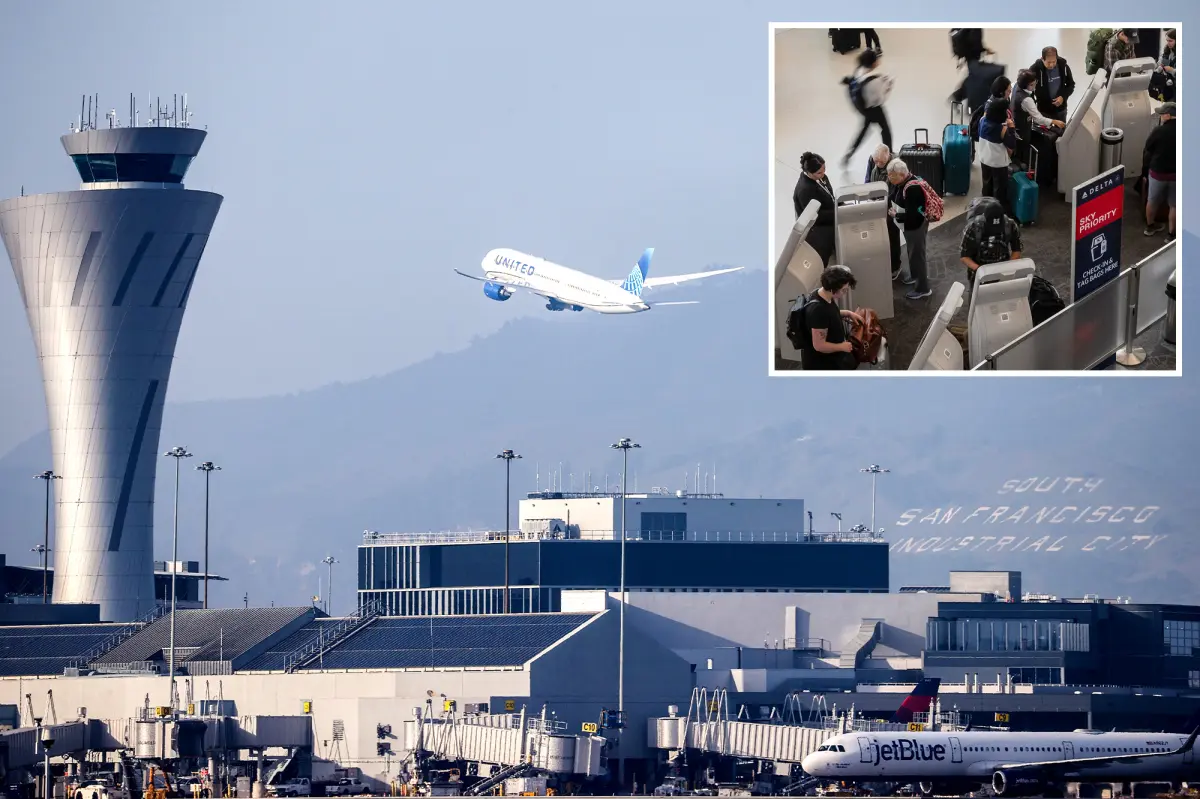
For months, the terminals of San Francisco International Airport have served as a crucible of human frustration, a place where the anticipation of travel routinely dissolved into the quiet despair of the delayed flight board. Travelers bound for family reunions, critical business meetings, or long-awaited vacations found themselves trapped in a limbo of blue carpets, overpriced terminal food, and endless, apologetic gate announcements. The culprit was a perfect storm of regulatory caution and infrastructure limitations that choked the airport’s capacity, leaving up to forty percent of flights running late and transforming one of the nation’s premier transit hubs into a notorious bottleneck. But a significant wave of relief is finally on the horizon for these weary passengers. In a highly anticipated move, the Federal Aviation Administration has officially signed off on a series of revised regulations designed to safely but substantially increase the frequency of plane landings at the bay-side airport. Under the newly approved guidelines, SFO is poised to see its arrival capacity rise from a constrained thirty-six aircraft per hour to forty per hour by mid-August, with a subsequent boost to forty-two landings per hour by the end of the month. This regulatory shift represents far more than a adjustment of air traffic control spreadsheets; it is a vital lifeline for millions of passengers who have spent the spring and summer watching their travel schedules unravel. By restoring a measure of predictability to the airport’s daily operations, the federal government is offering a long-overdue sigh of relief to a traveling public that had grown deeply weary of SFO’s chronic bottlenecks, signaling a return to the seamless connectivity that modern travelers expect.
To understand the depth of the recent travel chaos, one must look back to March, when the FAA enacted a series of stringent safety mandates that fundamentally altered how aircraft approach San Francisco’s unique airfield. SFO’s parallel runways, specifically the east-to-west configurations, are famously close together—separated by a mere 750 feet, a distance that requires extraordinary precision from pilots and air traffic controllers alike. For decades, during periods of clear weather, pilots were permitted to perform side-by-side, visual parallel landings, a highly coordinated aerial ballet that maximized the airport’s efficiency. However, amid a rising national conversation regarding aviation safety and a series of high-profile near-misses across the country, the FAA chose to err on the side of absolute caution, abruptly banning these simultaneous side-by-side arrivals even when pilots had the adjacent aircraft in clear visual sight. Instead, flight crews were ordered to adopt a strictly staggered approach, essentially forcing planes into a single-file, extended queue that stretched far out over the Pacific Ocean and the Northern California hills. While the safety benefits of this conservative posture were undeniable, the operational consequences were immediate and severe. Overnight, the airport’s capacity was artificially suppressed, sparking widespread industry warnings that up to a quarter of all scheduled flights would suffer significant delays, a prediction that quickly proved to be a conservative estimate as the reality on the ground deteriorated.
The newly announced remedy, scheduled to take effect next Wednesday, represents a sophisticated operational compromise designed to balance the unyielding demands of passenger safety with the economic necessity of an efficient transport hub. Rather than returning to the unfettered side-by-side landings of the past, the FAA will begin permitting “staggered parallel landings,” a highly structured protocol that ensures safety by keeping one arriving airplane mathematically and visually ahead of the other during their final descent. This diagonal separation serves as a protective physical buffer, preventing aircraft from flying directly abreast while still allowing air traffic controllers to utilize both parallel runways concurrently. By implementing this staggered framework, the FAA can gradually ramp up the hourly arrival rate to forty-two planes, a crucial step toward restoring SFO’s operational rhythm. However, this compromise comes with a vital caveat: if the region’s notorious marine layer rolls in, reducing visibility and cloaking the Bay Area in its characteristic heavy fog, all parallel landing procedures will be immediately suspended in favor of single-stream arrivals. Doug Yakel, a spokesperson for San Francisco International Airport, captured the collective sentiment of the aviation community by characterizing the new rules as a significant “step in the right direction,” acknowledging that while it does not fully restore the peak efficiency of true side-by-side landings, it provides a vital safety valve for an airport operating under immense operational pressure.
The severe impact of the FAA’s springtime safety restrictions was heavily compounded by a massive, pre-planned infrastructure project that effectively cut the airport’s physical capacity in half. In March, SFO initiated a major runway rehabilitation project that took two of its primary runways completely out of commission for a scheduled six-month period, a physical closure that is not slated to conclude until October. The confluence of these two events—the sudden loss of runway space alongside the implementation of much stricter spacing requirements—created a logistical nightmare for airline dispatchers and air traffic control teams. According to historical data shared by airport officials, the percentage of flights delayed by fifteen minutes or more skyrocketed to over a third of all daily operations under the joint weight of the construction and the safety rules, a dramatic increase from the roughly twenty percent delay rate observed during the same period in previous years. Data from independent flight-tracking services like Flightly painted an even grimmer picture for weekend travelers, with up to forty percent of arrivals and departures running nearly twenty minutes late on any given Saturday. For the average passenger, these statistics translated directly into ruined plans, missed cruise departures, and hours of anxious pacing in terminal concourses, illustrating how acutely vulnerable our highly integrated modern transportation networks are to the compounding effects of regulatory changes and routine physical maintenance.
The FAA’s initial decision to impose such restrictive landing rules at SFO must be viewed within the context of a broader, highly charged national climate surrounding aviation safety and regulatory oversight. Following a series of alarming close-calls on runways across the United States and a tragic, fatal plane crash at LaGuardia Airport in New York earlier this year, the federal government and the aviation industry have found themselves under intense scrutiny from both congressional investigators and a highly anxious public. In an era where every minor runway excursion or turbulence-related incident is instantly broadcast to millions via social media, the FAA has faced immense pressure to adopt a zero-tolerance posture toward potential operational hazards. At SFO, where the physical proximity of the parallel runways has long been a subject of intense engineering study, the margin for human error is exceptionally thin, making it a natural focal point for regulators seeking to eliminate risk. However, this hyper-vigilant approach created a profound tension between the theoretical pursuit of absolute safety and the practical, daily necessity of moving hundreds of thousands of people across the country. The transition to staggered parallel landings represents a mature, data-driven recognition that risk management in modern aviation is not about achieving static immobility, but rather about utilizing advanced technology and precise operational procedures to maintain a world-class safety record while keeping the gears of commerce and human connection turning.
As SFO prepares to transition to these new landing protocols, there is a palpable sense of cautious optimism spreading through the airport’s terminals, airline offices, and the wider Bay Area community. For the thousands of airport employees—from baggage handlers and gate agents to concession workers and flight crews—who have spent the last five months on the front lines of passenger frustration, the increased flight frequency represents a welcome return to a more manageable, predictable workday. For travelers, the change promises a near-term future where booking a flight through San Francisco is no longer a roll of the dice, but rather a journey defined by the efficiency and beauty that has historically characterized travel in the region. As the final weeks of summer give way to the autumn travel season, and as the sidelined runways prepare to reopen in October, the gradual easing of these constraints marks a quiet victory for collaborative problem-solving between federal regulators and local airport authorities. Ultimately, the resolution of SFO’s landing crisis serves as a poignant reminder of the invisible, highly complex systems that govern our modern lives, and of the dedicated professionals who work tirelessly behind the scenes to ensure that when we take to the skies, we can do so with both absolute confidence in our safety and the quiet assurance that we will arrive at our destinations on time.