





Paragraph 1: A September afternoon, a Brooklyn sidewalk, and a family’s ordinary world turned upside down.
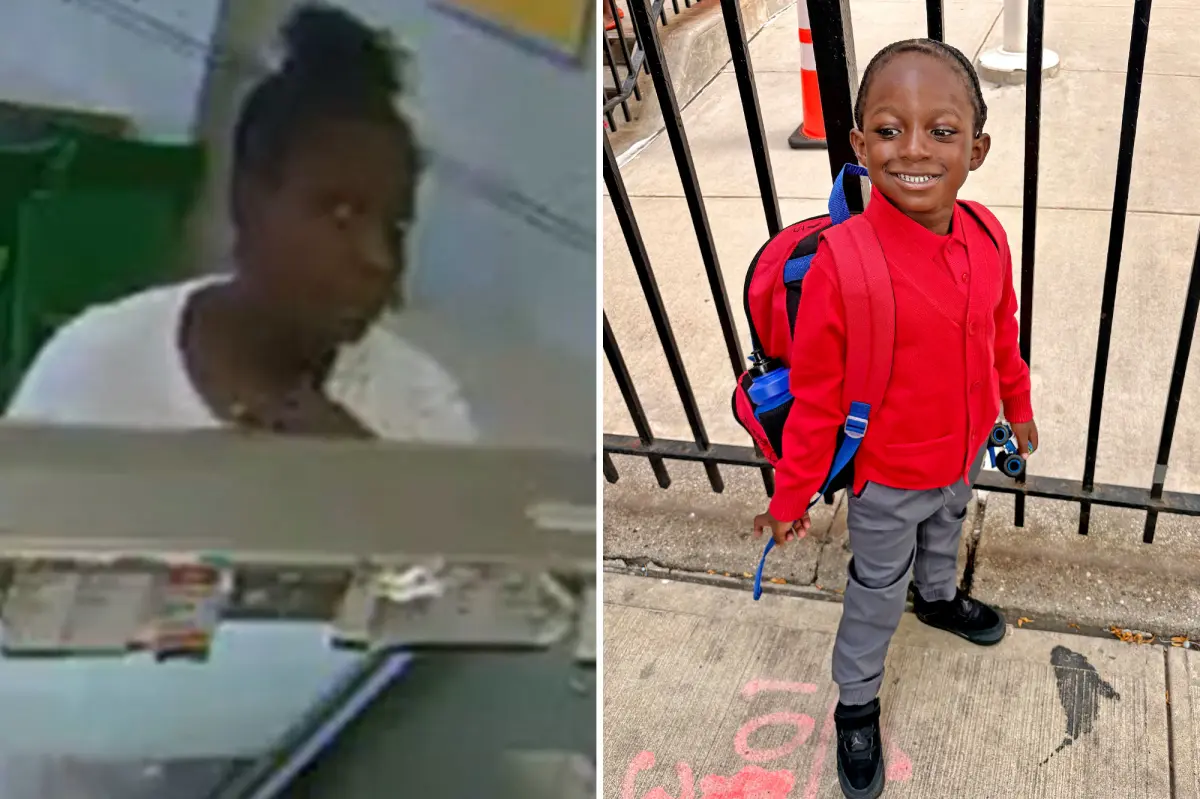
It began like any other afternoon in Crown Heights, Brooklyn, where the low hum of traffic, the smell of fries drifting from a McDonald’s, and the chatter of passersby made up the familiar soundtrack of the neighborhood. A 66-year-old grandmother sat on a bench just outside the fast-food restaurant, watching over her four-year-old grandson. The boy’s mother, an off-duty NYPD officer named Anyia James Roberts, was nearby, seven months pregnant, perhaps already thinking about the baby she was carrying and the older son who adored her. Nothing suggested danger. Then a 47-year-old woman named Chrissy Payne approached the bench. According to prosecutors, Payne was not there to ask for directions or to make small talk. She allegedly looked at the little boy and said, “Come with Mama, that’s my son,” before reaching out and grabbing the child’s arm. The boy, startled and terrified, was being pulled by a stranger. His grandmother, likely frozen for a split second before adrenaline kicked in, watched as her grandson was touched by someone who had no right to be near him. In that instant, an ordinary family outing became a nightmare. The fact that the child’s mother was a police officer did not matter in that first terrifying moment; she was just a parent, and her child was in danger. The incident, which would eventually land Payne in Brooklyn Criminal Court on attempted-kidnapping and endangering-welfare charges, was not merely a legal matter. It was a traumatic interruption of a family’s daily life, a reminder that violence and abduction can strike in bright daylight, in a familiar place, in front of a loving grandmother, and only the quick instincts of a pregnant mother prevented the worst outcome. Roberts, despite her condition, moved toward Payne, grabbed her son, and did what any mother would do: she shielded her child and forced the stranger to flee. Payne got away at that moment, but the emotional damage had already been done. The little boy, who had been sitting innocently beside his grandmother, would carry the memory of a stranger’s hand on his arm, a voice pretending to be his mother, and the shocking chaos that followed.
Paragraph 2: The attempted abduction, the mother’s quick reaction, and the aftermath that left a family shaken.
The details of the attempted snatching, as described by Assistant District Attorney Che Aroyewun during Payne’s arraignment, paint a picture of a brazen act that could have ended in tragedy. Payne allegedly approached the bench where the boy sat with his grandmother and said, “in sum and substance, ‘Come with Mama, that’s my son,’” before “grabbing onto the 4-year-old baby’s arm and pulling it.” The grandmother, who had presumably raised children of her own and understood the dangers of the world, was suddenly confronted with a nightmare. The boy, young and vulnerable, might have believed for a moment that this woman really was someone he should listen to, or he might have cried out in confusion and fear. What is certain is that his mother, Roberts, heard or saw something that made her spring into action. She was seven months pregnant, carrying another life inside her, yet she did not hesitate. Roberts grabbed her son, pulling him away from Payne, and the would-be kidnapper, realizing that the situation was no longer under her control, ran off. The incident happened on September 14, and for the next five days, the family had to live with the knowledge that the person who had tried to take their child was still out there. Payne was eventually picked up and charged with attempted kidnapping and endangering the welfare of a child. But for the little boy, the trauma was not erased by an arrest. He might have clung to his mother more tightly, resisted sitting on benches, or asked questions that no four-year-old should have to ask. His mother, a trained police officer, had likely seen many crimes, but this was different. This was her child, her family, her flesh and blood. The fact that she was wearing a badge and carrying a weapon did not protect her son from the terror of a stranger’s grasp. The grandmother, too, had to live with the guilt, the fear, and the memory of that moment. The arrest, while important for public safety, could not undo the harm. Payne, a 47-year-old woman with a series of prior charges, had allegedly crossed a line that no one should cross, and the consequences would be felt in courtrooms for months, but the deepest consequences were already etched into the hearts of a family who had come too close to losing everything.
Paragraph 3: Inside the courtroom: charges, bail, and a defendant who refused to stay silent.
Nearly two weeks after the incident, Chrissy Payne stood before Judge Emily Ruben in Brooklyn Criminal Court, facing the weight of multiple accusations. The arraignment brought together two separate, disturbing allegations: the attempted kidnapping of a four-year-old boy and a felony hate-crime assault on a woman riding a city bus. Assistant District Attorney Che Aroyewun outlined the case for the judge, describing not only the September 14 incident but also an earlier attack on August 19. On that day, Payne was allegedly riding a city bus when she turned to a female passenger and said, “I don’t want to sit next to no white B-word,” before hitting the woman in the face with a closed fist. That assault, prosecutors said, was motivated by race and therefore constituted a hate crime. But Payne did not sit quietly in court. She tried several times to interrupt the proceedings, visibly frustrated and perhaps overwhelmed by the gravity of the situation. At one point, she attempted to defend her actions in the August bus attack, addressing the judge directly. “Number one, I only had a court date. I didn’t have no convictions,” she said. “Second of all, I didn’t just hit somebody. She did something to me, too.” Her words revealed a woman who saw herself as aggrieved, as someone who had been provoked, rather than as a violent offender. In her mind, the bus incident was not an unprovoked hate crime; it was a reaction to something the victim had done. Yet the prosecution’s account painted a different picture: a woman speaking a racial slur and then striking another person without warning. Judge Ruben, after hearing the arguments, ordered Payne held on $50,000 cash bail or a $100,000 bond. Payne’s lawyer immediately objected, arguing that such a high bail amount was, for his client, effectively a remand—a sentence before trial, because she could not afford to pay. The bail decision highlighted a familiar tension in the American justice system: wealth and freedom are often intertwined. A person with $50,000 in savings could walk out the door and await trial at home. Payne, whose financial situation was precarious, would remain in jail, not because she was presumed guilty but because she was presumed too poor to be trusted.
Paragraph 4: The bus attack and a pattern of alleged violence that casts a dark shadow.
The hate-crime assault on the bus, which occurred about a month before the kidnapping attempt, was not an isolated incident. According to records, Payne had four other open cases dating back to April, including charges of petty larceny, assault, and an earlier hate-crime assault in July. The pattern is troubling: a woman who allegedly engages in a series of violent and aggressive acts, often targeting strangers, with a possible racial component. In the August bus incident, prosecutors say Payne directed a slur at a woman and then punched her in the face. The victim, who was simply trying to ride the bus, was suddenly attacked for no reason other than the color of her skin. The fear and humiliation of that moment are hard to overstate. Public transportation is a space where people are forced into close proximity, where etiquette and tolerance are necessary for coexistence. To be assaulted in that space, especially with a hateful word on the attacker’s lips, is to feel both violated and dehumanized. Payne’s earlier alleged hate-crime assault in July adds another layer of concern. If the allegations are true, this is not a single impulsive act but a recurring pattern of selecting victims based on race, and then using physical violence to express hostility. Yet Payne’s own words in court—“She did something to me, too”—suggest that she does not see herself as the aggressor. She may feel that others are mistreating her, that she is responding to something, or that she has been unfairly targeted by the legal system. This is not to excuse her alleged actions; a punch in the face is never an appropriate response to a perceived slight. But it does humanize her, in the sense that she is a complex individual with her own narrative, one in which she is the victim rather than the perpetrator. That narrative, however, is difficult to reconcile with the prosecutor’s description of a woman who approached a four-year-old boy and tried to pull him away from his grandmother, claiming to be his mother. If Payne is driven by delusion, mental illness, or rage, the public deserves to know. The legal system will now wrestle with that question, but for the victims, the fear and pain are already real.
Paragraph 5: The tangled life of Chrissy Payne: four open cases, poverty, and the long shadow of a troubled past.
Chrissy Payne, at 47, appears to be a woman whose life has spiraled into a series of criminal charges and unresolved conflicts. Her court record, as of the arraignment, included four other open cases dating to April, covering a range of offenses from petty larceny to assault. This suggests a person who has been in and out of the criminal justice system, unable or unwilling to break a cycle of destructive behavior. Petty larceny might indicate poverty or addiction; assault might indicate anger or instability; and the hate-crime charges add a toxic layer of racial hostility. Payne’s lawyer argued that the $50,000 cash bail was effectively a jail sentence for his client, since she did not have the funds to secure her freedom. This is a stark reminder that the justice system does not treat everyone equally. A wealthy defendant might pay bail without a second thought and return to their home while awaiting trial, preserving the presumption of innocence. Payne, depending on the court system for her liberty, would remain locked up, perhaps for months, simply because she could not post the required amount. Her outburst in court, her interruptions, and her attempts to justify her actions may have hurt her case, or they may have been cries for help from a woman who feels cornered by the world. She told the judge that she did not have convictions, perhaps trying to present herself as less dangerous than the prosecution claimed. But the sheer number of pending cases—petty larceny, assault, two hate crimes, and now attempted kidnapping—tells a more complicated story. Payne is not a first-time offender who made a single mistake; she is a woman with a pattern of alleged behavior that has escalated from minor theft to attempted child abduction. Yet even as we recoil from her alleged actions, it is worth remembering that she, too, is a human being. She may be mentally ill, homeless, addicted to substances, or simply overwhelmed by life’s failures. None of that excuses what she is accused of doing, but it explains why the legal system must do more than simply punish; it must try to understand what drove a 47-year-old woman to grab a child outside a McDonald’s and claim him as her own. The courtroom, with its harsh fluorescent lights and procedural formalities, is not a place for healing, but it is the only place where Payne’s story will be examined.
Paragraph 6: Reflections on justice, trauma, and the fragile safety of everyday life.
In the end, the most haunting image from this story is not the angry woman in the courtroom or the alleged hate crime on a public bus; it is the image of a small boy sitting on a bench with his grandmother, waiting for nothing in particular, when a stranger’s hand closed around his arm. That child, who is only four years old, was nearly taken from his family. He was saved by his mother’s courage, a pregnant woman who risked her own safety and the safety of the baby she was carrying to protect her son. The boy is safe now, but safety is a fragile thing. The family, including the grandmother, will have to process the memory of that moment for years to come. They may find themselves looking over their shoulders, distrusting strangers, changing their routines. The community in Crown Heights, too, will be affected by the knowledge that such a brazen act could happen in broad daylight. As for Payne, she sits in jail awaiting trial, unable to afford her release. Her alleged actions are deeply disturbing, and the public has a right to feel anger and fear. But a society that hopes to be just must also ask why a woman like Payne reached such a low point. What led her to lash out at strangers on a bus? What made her look at a four-year-old child and call him her own? The answers may never be fully known, especially if her mental health is not evaluated or if she is simply treated as a villain to be locked away. The legal system will decide whether she is guilty of attempted kidnapping, assault, and hate crimes. But beneath the charges and the bail hearings lies a more human question: how do we stop the cycle of violence and despair that leads people to commit such acts? There are no easy answers, only the painful reality that a grandmother, a pregnant mother, and a little boy will never forget what happened outside that Brooklyn McDonald’s. And neither, perhaps, should any of us, because it is a reminder that the world can be dangerous, that evil can wear an ordinary face, and that the only thing that stood between a child and abduction was a mother’s love, quick enough and fierce enough to overcome even the most terrifying threat.