







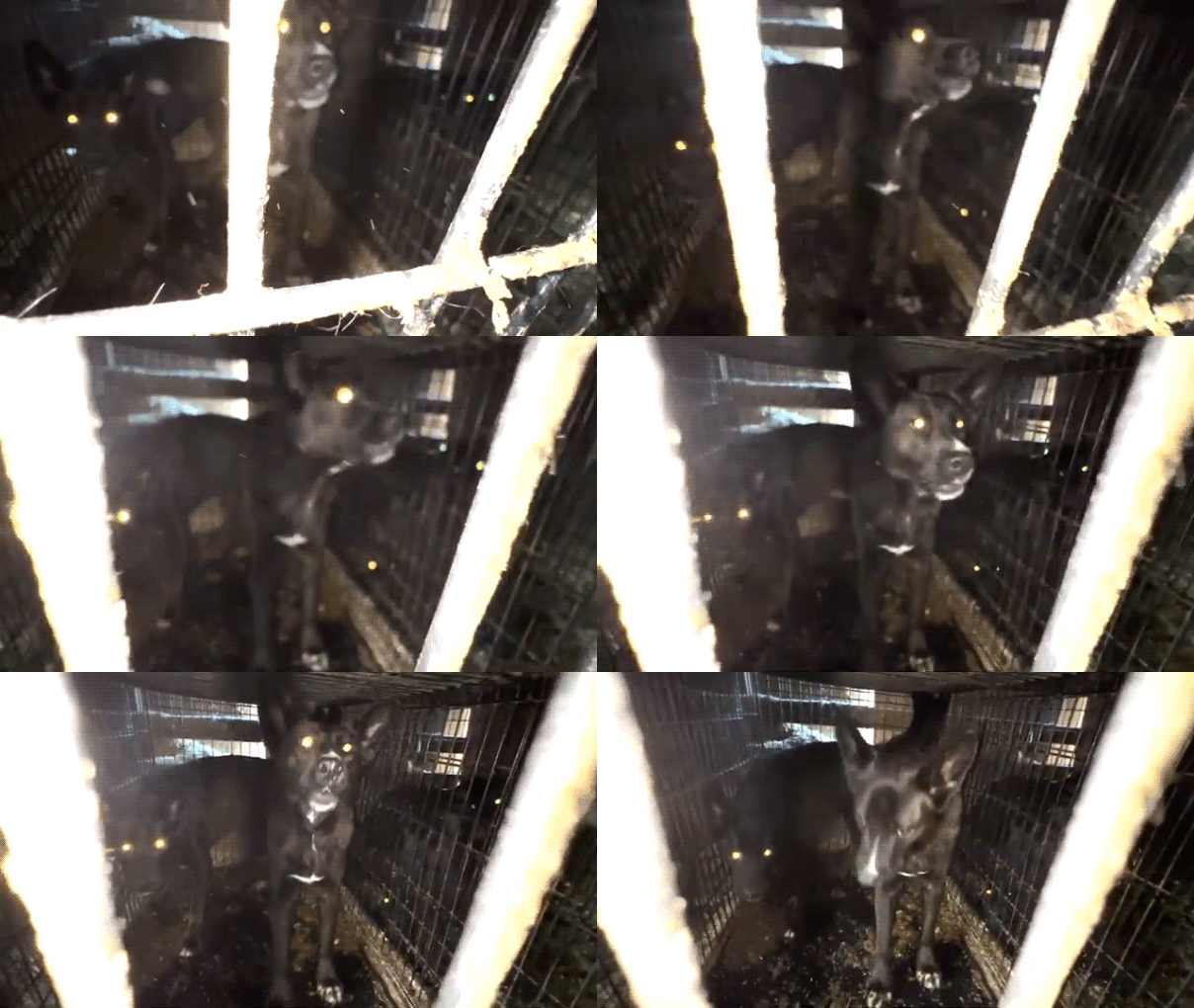
Few stories are harder to read than one that begins with an animal rescue and ends with hundreds of suffering creatures. The case of Christine De Anda, the 57-year-old operator of Rock ‘N’ Pawz in California, is exactly that kind of story, and it has left animal lovers and law enforcement alike struggling to understand how someone who called herself a rescuer could allow so many innocent lives to deteriorate in such horrifying conditions. De Anda now faces up to 24 and a half years in state prison after being charged with 35 total counts, including 14 felonies and 21 misdemeanors, according to the Los Angeles County District Attorney’s Office. The charges include 12 felony counts of animal cruelty, two felony counts of grand theft of labor, and 21 misdemeanors ranging from failure to provide care to operating an unlicensed kennel. Prosecutors requested bail be set at $914,500 ahead of her arraignment at the Antelope Valley Courthouse. For anyone who has ever held a dog’s paw, looked into a cat’s trusting eyes, or watched a pig wag its curly tail, the allegations feel like a betrayal of the deepest kind. This was not a case of a few too many pets. This was an alleged system of neglect so severe that more than 300 animals were packed into filth, many unable to move comfortably, many sick, many starving, and some beyond saving. The word “rescue” suggests hope, safety, and a second chance. But according to authorities, De Anda’s rescue became a place where animals were allegedly left to suffer and die, and the heartbreak is made worse by the fact that so many of these animals likely arrived at her door with nothing but trust.
District Attorney Nathan J. Hochman did not mince words when announcing the case, and his statement captured the profound sense of betrayal at the center of the entire tragedy. “For someone who calls herself an animal rescuer, there’s a fundamental responsibility to protect and care for the animals entrusted to her,” Hochman said. “Instead, purported rescuer Christine De Anda allegedly left these animals to suffer or die from starvation, dehydration, untreated injuries and painful urine and fecal burns in filthy conditions.” He went on to say that after repeated citations and warnings, De Anda allegedly continued taking in animals she could not care for, leaving hundreds to endure prolonged suffering. “These animal victims cannot speak for themselves and look to us to protect them,” he added. “My office will hold their victimizer fully accountable for her inhumane actions.” The charges stem from a March 20, 2026, search warrant executed by Los Angeles County Animal Care and Control, known as DACC. Investigators removed more than 300 animals—primarily dogs, but also cats, a pig, a rabbit, a goose, and two goats—in what DACC Director Marcia Mayeda called the largest companion animal search warrant and rescue operation ever conducted in the department’s history. That sentence alone is staggering. Think of the work it takes to care for one healthy, happy dog: daily walks, nutritious food, fresh water, vaccination records, grooming, playtime, a comfortable bed, and veterinary care when needed. Now multiply that by three hundred, and imagine the sheer scale of what was required—and what allegedly was not provided. The animals were not living in a sanctuary. According to officials, they were living in and saturated with their own excrement, suffering from serious untreated illnesses and injuries, emaciated, and forced into small crates without enough room to lie down comfortably.
The physical conditions described by officials are the kind that haunt animal control officers, veterinarians, and first responders for years. Animals were found in a state of severe squalor, with many showing signs of prolonged neglect that could not have happened overnight. This was not a sudden illness or an unexpected financial crisis that spiraled out of control; this was, according to prosecutors, a pattern of behavior that continued despite multiple chances to change course. One of the most heartbreaking details is that at least one cat was found dead from starvation and dehydration at the start of the investigation. That single cat is not just a statistic. It was a living being with a personality, a history, and a life that ended in pain and fear. It likely spent its final days hungry, thirsty, alone, and unable to understand why no one was helping. Mayeda acknowledged the grim reality in her own statement, saying, “More than 300 animals were removed from severely inhumane conditions. Animals were living in and saturated with their own excrement, had serious untreated illnesses and injuries, were emaciated, and were forced to live in small crates without adequate room to properly lie comfortably. Our teams have worked tirelessly to stabilize them, provide the medical care they needed, and help them recover.” The rescue effort itself was immense, requiring coordination across multiple shelters and agencies. DACC received support from the Society for the Prevention of Cruelty to Animals Los Angeles, Pasadena Humane, and Kern County Animal Services. Mayeda also paid tribute to the sad reality that not every animal could be saved: “Sadly, despite all efforts, we were unable to save every animal due to the extent of their illnesses and injuries.” For the shelter workers, volunteers, and veterinarians who came face to face with this misery, the emotional toll must have been overwhelming. They came to help, to heal, and to give these animals a voice, but some of them arrived too late to make a difference.
At the heart of this case is a complicated and uncomfortable question: how does a person who genuinely loves animals become someone accused of such profound cruelty? De Anda, according to prosecutors, kept taking in more and more animals despite years of citations and warnings about her inability to properly care for them. This pattern suggests something more complex than simple malice. It resembles the tragic reality of animal hoarding, a phenomenon where well-intentioned individuals accumulate animals beyond their capacity to care for them, often convinced that they are saving lives while the situation spirals into neglect, disease, and death. Hoarding is frequently driven by a deep emotional attachment to animals, a compulsive need to rescue, and an inability to recognize or acknowledge the harm being done. But whatever the psychological explanation, the animals are the ones who pay the price. They do not understand delays, excuses, or intentions. They only know hunger, pain, fear, and the absence of a gentle hand. The criminal charges against De Anda include not only animal cruelty but also two felony counts of grand theft of labor, suggesting that she may have taken advantage of volunteers or others who believed they were helping the animals. She is also accused of violating multiple county codes, including operating an animal kennel without required land-use approval, maintaining unsanitary conditions, and having structures with unpermitted construction, plumbing, electrical, and grading work. These are not minor paperwork issues. They all point to a facility that was operating outside the law and outside the basic standards of care required to keep animals safe. The fact that De Anda had been cited and warned before, and allegedly continued anyway, makes the situation even more infuriating. It means that there were chances to intervene earlier, to save the animals before things got so terrible, and yet somehow the situation was allowed to continue until it became the largest rescue operation in the department’s history.
This case is also a reminder that the word “rescue” is not regulated by law alone; it is regulated by the conscience of the people who use it. Every day, people across the country open their homes and hearts to foster animals, transport dogs from overcrowded shelters, and volunteer at local rescues, and they do so with tremendous love and dedication. But stories like this one cast a shadow over legitimate rescue work and make it harder for ethical animal organizations to earn public trust. It is deeply unfair that caring rescuers, many of whom sacrifice sleep, money, and comfort to save animals, are placed in the same category as someone accused of leaving hundreds of animals to suffer. At the same time, the story of Rock ‘N’ Pawz should prompt animal lovers to ask hard questions about oversight, licensing, and the warning signs of hoarding. Rescue organizations should be held to high standards, not only because the law demands it, but because animals are entirely dependent on humans for their survival. They cannot file complaints. They cannot call for help. They cannot explain that their crate is too small, that their wounds have been ignored for too long, or that their stomachs are empty. They rely on the vigilance of neighbors, animal control officers, veterinarians, and strangers who notice something wrong and decide to say something. The 300-plus animals removed from De Anda’s care were given a second chance because humans refused to look away. But for the cat that was found dead, and for any others that did not survive, justice will have to be more symbolic than satisfying. Still, accountability matters. Holding De Anda responsible sends a message that animal cruelty, even when committed in the name of rescue, will not be tolerated.
As this case moves through the legal system, the focus must remain on the animals and on the steps needed to ensure this never happens again. For the survivors, the road ahead will be long. Many will need weeks or months of veterinary care, nutrition, grooming, training, and patience to overcome the trauma of what they endured. Some will struggle to trust humans again. But they are alive, and thanks to the tireless work of DACC and its partner organizations, they now have a chance at the kind of life every animal deserves. For the public, this story is a powerful reminder to support legitimate shelters and rescues, whether through donations, fostering, volunteering, or simply choosing to adopt rather than shop. It is also a reminder to recognize the differences between a struggling rescue that is trying its best and a hoarding situation that is causing harm. Too often, animal hoarders are seen as eccentric animal lovers, and neighbors may hesitate to report concerns because they are afraid of being cruel or interfering. But the real cruelty is silence. The real cruelty is letting a person continue to take in animals they cannot care for, while those animals slowly fade away in filth. The Los Angeles County District Attorney’s Office has shared video of the conditions that led to the charges, hoping that the public will understand the severity of what transpired. In the end, this is not just a legal matter. It is a moral tragedy about human failings, silent suffering, and the responsibility we all share to protect the voiceless. Christine De Anda is presumed innocent until proven guilty, and the courts will determine her fate. But whatever the outcome, the memory of those animals, the ones who made it out and the ones who did not, should remain in the hearts of everyone who reads this story. They deserved better. And with justice, compassion, and meaningful change, the next animal in need will get better.