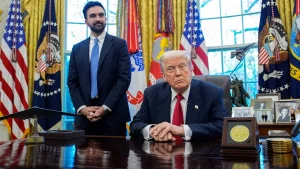






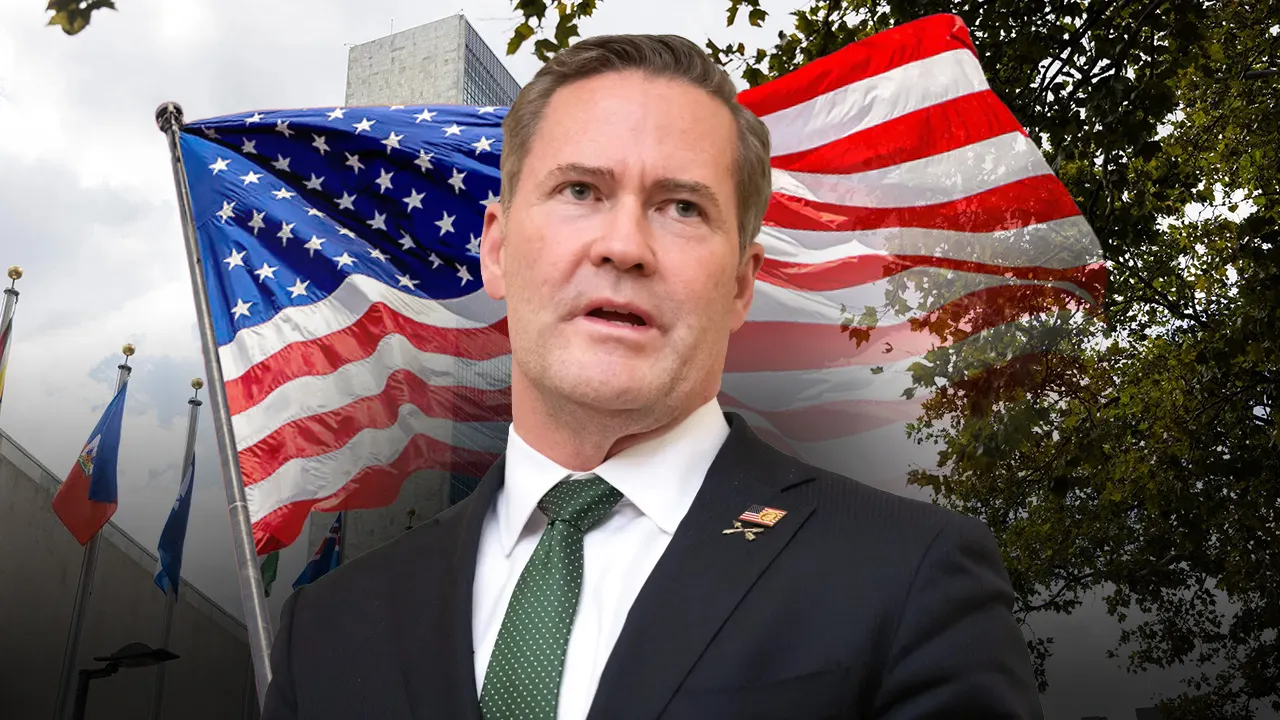
When President Donald Trump returns to the United Nations this week, he will walk into a building he has spent years criticizing, a stage he has often mocked, and a room full of leaders who are watching to see whether his brand of confrontation can actually produce cooperation. It is a homecoming with an edge. The U.S.-Iran war is in its seventh month. The global economy is wobbling under the pressure of disrupted shipping lanes. European allies are distracted by Russia’s grinding war in Ukraine. And running underneath it all is a quieter but equally consequential drama: the Trump administration’s determined effort to shrink, reshape, and perhaps save the United Nations from itself. In an exclusive interview with Fox News Digital before the gathering, U.S. Ambassador to the United Nations Mike Waltz made clear that Trump is not coming to New York to make friends or trade pleasantries. He is coming to demand action—especially on Iran. Waltz said the president expects the international community to stop talking about sanctions and start enforcing them, with real consequences for countries that refuse to comply. The message is meant for friend and foe alike. “They will reinforce that message, but importantly, it’s all of these countries actually enforcing the sanctions and what they’re going to hear is there will be consequences for friend and foe,” Waltz said. “The president is doing this for the future security of the world.”
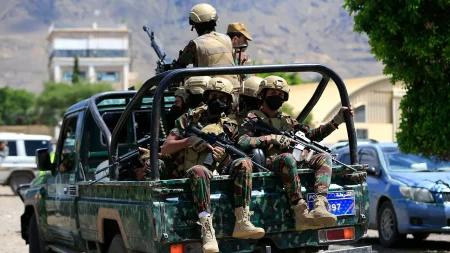
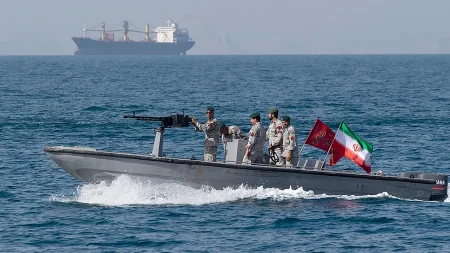
The centerpiece of Trump’s week will be his address to the General Assembly on Tuesday, followed by meetings with Gulf leaders whose nations have been caught in the crossfire of a conflict that began with U.S. and Israeli strikes in February. The war has sent shockwaves through energy markets, with Iran obstructing tanker traffic through the Strait of Hormuz and its Houthi proxies tightening control over a critical Red Sea corridor. European and Asian allies have mostly resisted Washington’s repeated requests to step up their involvement, according to Reuters. But Waltz insisted the administration would not relent. He pointed to Iran’s cratering economy, its collapsing currency, skyrocketing inflation, and the U.S. naval blockade as proof that pressure is working. “One way or another, the president has been crystal clear on our goals here that Iran cannot and will not have a nuclear weapon,” Waltz said. The diplomatic pressure campaign faces a major legal and political hurdle: on September 17, Russia and China blocked a United Nations Security Council resolution that would have extended independent monitoring of international sanctions on Iran. That means Washington now has to rely on its own intelligence, its own partnerships, and its own willingness to punish violations. The message from the administration is simple: if the United Nations won’t monitor sanctions, the United States will make sure that countries think twice before breaking them. Treasury Secretary Scott Bessent has also warned Iran’s outside backers to “stay away,” using the same blunt language the president favors. For Trump, the Iran issue is not just a regional security matter—it is a test of whether the international system can still enforce its own rules when one of its most dangerous members openly defies them.
But this year’s gathering is not only about Iran. It is also about the future of the United Nations itself, an institution Trump has called weak, wasteful, and biased against American interests. The administration has been pushing a dramatic overhaul of the organization, and the numbers are beginning to show results. On September 16, the United States paid $725 million toward the U.N.’s regular budget and an additional $102 million for peacekeeping operations. Those payments staved off the immediate threat of losing Washington’s General Assembly voting rights in 2027, but the United States still owes roughly $1.312 billion to the regular budget, according to U.N. figures. That reality raises an uncomfortable question: why should American taxpayers keep funding an organization the administration keeps attacking? Waltz answered by pointing to the administration’s success in cutting costs. He said the administration has secured more than $1 billion in budget reductions, eliminated roughly 3,000 headquarters positions, and trimmed about 25 percent of peacekeeping personnel. “We have the U.N. on a diet,” he said. In other words, the administration’s stance is not based on abandoning the institution, but on reshaping it into something leaner, more focused, and more aligned with its original mission. Waltz made that point with a striking warning: if the United States walked away, the world would not stop meeting. It would simply meet without Washington. “There’s got to be one place in the world where everyone can come together and put diplomacy first and can actually talk,” he said. “We don’t ever want to see a U.N. in Beijing or Moscow or Brussels.” The message is both practical and philosophical. The United Nations, in Trump’s vision, should not be a global government or a moral referee. It should be a clearinghouse for hard-nosed diplomacy, a place where nations can argue, negotiate, and occasionally find common ground without pretending that power doesn’t matter. Whether the membership is willing to accept that transformation is another question—one that will shape every debate during High-Level Week.
The administration’s approach to Gaza offers a useful example of how it wants to use the United Nations without being dragged into another costly military entanglement. Waltz pointed to the U.N.-endorsed Board of Peace and the planned International Stabilization Force, both designed to support security and a postwar transition in Gaza. The U.N. Security Council endorsed Gaza’s peace plan and authorized the stabilization force in November 2025, a move the administration sees as a model for burden-sharing. The key detail, according to Waltz, is that American troops will not be on the ground. Instead, the international community is expected to step up and carry the weight. “We don’t want American boots on the ground there,” the ambassador indicated, arguing that international security operations should allow other nations to share the responsibility. This is a delicate balance. The administration wants to remain a dominant force in shaping the postwar order, but it also wants to avoid repeating the mistakes of previous conflicts where the United States ended up occupying countries for years at a time. Gaza is therefore a proving ground for the administration’s broader philosophy: using the U.N.’s legitimacy and institutional machinery to distribute the costs and risks of stabilization across many nations, while the United States focuses on its core strategic interests. Secretary of State Marco Rubio will be in New York from September 20 through 23 to reinforce that vision. According to the State Department, he will meet foreign counterparts, advance U.S. security and economic priorities, and continue the campaign for U.N. reform. In that sense, Gaza is both a humanitarian concern and a bureaucratic test case. Can the United Nations actually deliver security and governance when no single Western power is willing to take the lead? The answer remains uncertain, but the administration is determined to make the institution try. If it succeeds, the model could be applied to other conflicts where the United States has limited appetite for direct involvement. If it fails, the administration will likely use that failure as fresh evidence that the organization must change more quickly and more fundamentally.
Just days before arriving in New York, Trump announced another breakthrough that adds an unexpected dimension to this year’s diplomacy: a new security agreement with Denmark and Greenland aimed at expanding the American military presence in the Arctic. The deal falls short of Trump’s earlier, much-publicized ambition to acquire Greenland, which remains an autonomous territory within the Kingdom of Denmark. Danish and Greenlandic officials have stressed that the arrangement does not compromise the island’s sovereignty or its right to self-determination. Still, the agreement is significant. It is designed to restrict adversaries from establishing bases or making sensitive investments on the island, and it opens the door for the United States to strengthen its defensive footprint in a region that is becoming increasingly important as climate change melts Arctic ice and opens new shipping routes. Waltz described the agreement as “incredibly significant,” pointing to Russia’s Arctic military capabilities and the potential for new sea lanes to transform global trade. “It took some tough tweets, maybe some tough language,” he said. “We now have an agreement with our ally Denmark.” This is classic Trump diplomacy: a heavy dose of public pressure, a willingness to offend allies, and then a negotiated outcome that gives both sides room to claim victory. For Denmark, it preserves the formal boundary of Greenland’s autonomy while strengthening ties with Washington at a moment of acute European anxiety about security. For the United States, it secures a strategic foothold in a region where Russia has been building up its presence for years. The timing is important because European leaders arriving in New York are dealing with overlapping crises: Russia’s war in Ukraine, Arctic defense, uncertainty about transatlantic security guarantees, and Washington’s demand for allied cooperation against Iran. The Greenland agreement is not just an Arctic matter. It is a signal that the administration is rethinking the map of global power, moving beyond traditional flashpoints like the Middle East and Europe to focus on the northern frontiers where the next generation of strategic competition may unfold. Trump, by inserting himself into that conversation just before the U.N. gathering, reminded everyone that his agenda spans far beyond the crises dominating the headlines.
Now the world’s leaders are descending on New York for what promises to be one of the most unpredictable United Nations gatherings in years. The U.N. expects 73 heads of state and 45 heads of government, along with 49 ministers, 11 vice presidents, and one crown prince, to attend High-Level Week, according to spokesperson Stéphane Dujarric. Member states have submitted approximately 1,000 requests for bilateral meetings, and some 168 events are scheduled alongside the official proceedings. The General Debate begins Tuesday and runs through September 28. The formal agenda includes Russia’s invasion of Ukraine, the future of Gaza, international security, and the United Nations’ capacity to respond to emerging global challenges. But the real substance of the week lies in the private conversations, the hallway negotiations, and the quiet meetings on the sidelines. Waltz summed up the administration’s attitude with a slogan borrowed from the president’s playbook: “Make the U.N. great again.” Whether that is a genuine goal or a provocation depends on whom you ask. To supporters, it means restoring the organization to its original purpose of preventing war and facilitating diplomacy, without turning it into an expensive bureaucracy that often works against American interests. To critics, it means an attempt to bend the institution to Washington’s will, defund the programs the administration dislikes, and demand loyalty from nations that have their own priorities. The immediate diplomatic questions are concrete and unavoidable. Will European and Asian allies finally step up and enforce sanctions on Iran, or will they continue to keep their distance? Can Gulf leaders agree on a path toward ending a conflict that is destabilizing the entire region and threatening global energy supplies? And can the administration’s push for a leaner United Nations coexist with its simultaneous demand that the organization take on more responsibility in places like Gaza? These questions do not have easy answers, and Trump’s presence—combative, unpredictable, and impatient—will not make them easier. But the president is clearly betting that the world’s most important diplomatic stage needs a disruptive force, and he intends to provide it. The United Nations, for all its flaws, remains the only place where nearly every country on Earth can sit in one room and confront the same problems. Whether they can agree on solutions, or even on the basic facts, is another matter entirely. This week will determine whether the institution is capable of evolving to meet the moment—or whether it will remain a symbol of a world order that no longer matches the realities of power. For Trump, the answer may be less important than the fight itself, because in his vision, pressure, confrontation, and negotiation are not failures of diplomacy. They are the very heart of it.