





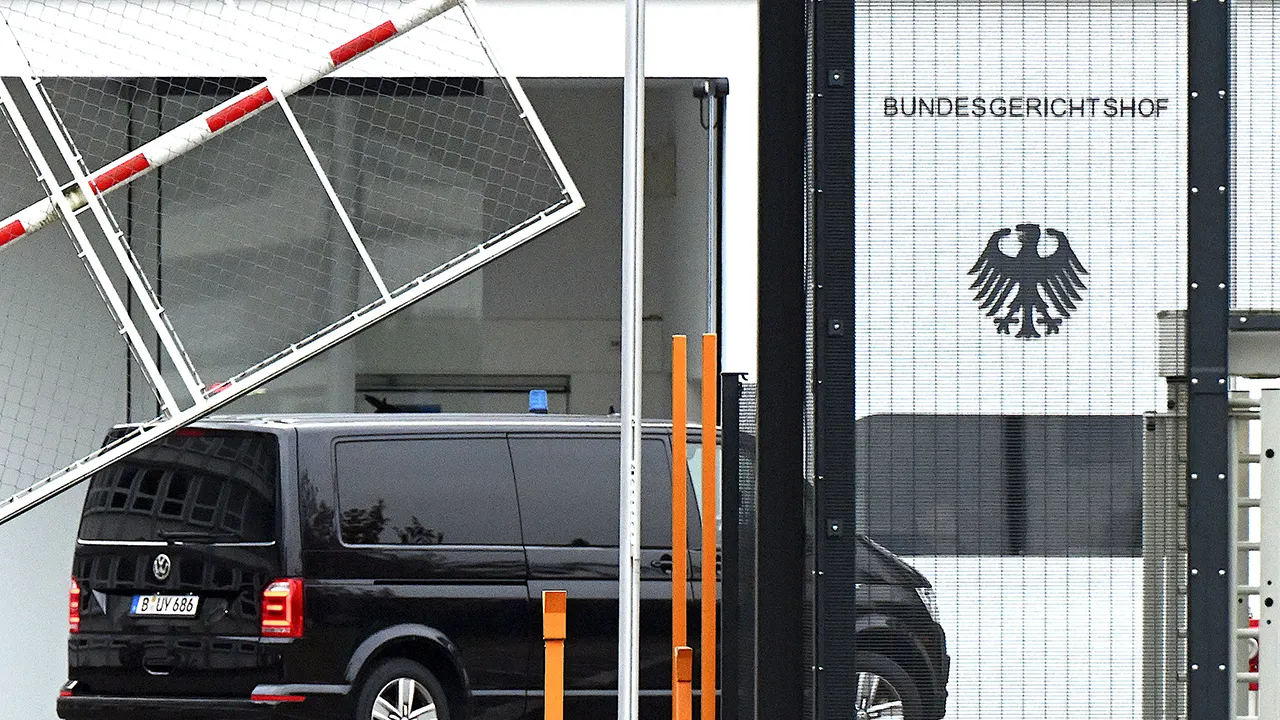
There are moments when a terror threat stops being an abstract headline and becomes something far more personal—a plot to bring guns and ammunition onto the streets of ordinary European cities, aimed at people targeted simply because of who they are. That is what makes the German federal prosecutor’s announcement so disturbing. German prosecutors recently indicted seven people for allegedly securing weapons for Hamas, the United States-designated terrorist organization, with the stated goal of launching attacks on the second anniversary of the Oct. 7, 2023 massacre in Israel. The indictment thrust the danger of Hamas’s European network into the spotlight, revealing that Europe was not just a place for fundraising and recruitment but a potential staging ground for violence. According to the prosecutor’s office, all seven accused are members of Hamas, and the organization’s military wing, the Qassam Brigades, had begun establishing weapons depots in Europe. No later than July 2025, Hamas reportedly planned a concrete assassination in Germany or Austria, targeting representatives of Israel, people of Jewish faith, or persons with pro-Israel views. The attack was meant to occur in close temporal proximity to the second anniversary of Hamas’s assault on Israel—early October 2025. The suspects were arrested between October 2025 and May 2026, and the plot was exposed not as vague rhetoric, but as an alleged conspiracy with real weapons, real planning, and real potential for bloodshed.
The details of the indictment paint a chilling picture of a terrorist plot taking shape within European borders. German prosecutors said the suspected Hamas terrorists had already obtained a functional fully automatic rifle, thirteen functional pistols, and more than seven hundred rounds of ammunition. A man being prosecuted separately, Mohammed A., allegedly transported some of the weapons to Vienna and stored them there. The indictment lists the nationalities and partial names of the suspects: German national Abed Al G., Danish national Yousif C., Lebanon-born Borhan El-K., Lebanon-born Wael F.M., German national Ahmad I., Lebanon-born Kamel M., and Bulgarian national Mohammad S. German law shields the last names of criminal suspects for privacy reasons, but the international makeup of the group underscores how far Hamas’s network reaches. There is also a troubling twist: according to the German newspaper Die Welt, one of the accused was working as a confidential informant for Germany’s domestic intelligence agency. The files reportedly show that this informant continued reporting to his intelligence handler while allegedly failing to disclose the full extent of his own involvement in obtaining ammunition for the group. This raises uncomfortable questions for security services: how much did German authorities know, and how much did they permit? The informant issue transforms the case from a simple terrorism prosecution into an intelligence story full of moral ambiguity, hidden loyalties, and operational pressure. It also highlights the harsh reality that even counterterrorism systems can be exploited by the very individuals they are trying to track.
To understand how this was allowed to happen, it helps to look at Germany’s long, complicated relationship with Hamas and its front organizations. Sascha Adamek, a German journalist and author of the 2026 book “Infiltration: Political Islam Continues Its Advance,” told Fox News Digital that previous federal governments allowed Hamas to use Germany as a “safe haven” for fundraising, recruitment, and the radicalization of young people. For years, the unwritten agreement seemed to be that Hamas could operate openly as long as it did not use violence on German soil. That dirty deal, as Adamek describes it, was already obsolete—and the new indictment proves it. The numbers are sobering. The most recent Federal German domestic intelligence report estimates that Hamas may have had as many as 650 operatives in Germany during 2025, the last year of tracking. In 2024, the number was about 550, and in 2023, it was around 450. The report notes that these figures are partly estimated and rounded. Meanwhile, about 1,250 Hezbollah operatives are believed to be active in Germany as well. For many critics, these numbers reveal that despite official bans and public condemnation, Islamist networks have continued to maintain a significant presence in German society. The human meaning of these statistics is not abstract: these are people living in German cities, attending mosques, building associations, and quietly supporting organizations that the government has outlawed. The alleged weapons plot suggests that for some, quiet support was never enough. The old assumption that Europe could be a safe rear base for Middle Eastern terrorism, with violence kept far away, looks dangerously naive in hindsight.
German authorities, however, insist that they are not ignoring the threat. The Federal Ministry of the Interior told Fox News Digital that Hamas, banned from operating in Germany since November 2023, has a network of supporters and followers, but for many years they have tended to act with restraint in public and avoid any outward signs of connection to the organization. Hezbollah, which has also been banned since April 2020, is not organized under any nationwide umbrella structure; its supporters are spread across various associations throughout Germany, with activities focused on religious and cultural spheres, as well as educational programs that promote conservative Islam and Shi’ite identity. The ministry added that federal and state security authorities consistently investigate leads regarding possible extremist activities and continuously examine all countermeasures available under the rule of law. In its statement, the ministry also acknowledged that the Hamas terrorist attack on October 7, 2023, and the subsequent military operation in Gaza continue to have an impact on the security situation in Germany and Europe. Officials noted the heightened abstract threat level, intense pro-Palestinian protests, and social media agitation, adding that various extremist actors in Germany are inciting hatred and violence against Jews or the State of Israel, or denying its right to exist. This official response is a frank admission that banned organizations can still function in the shadows, and that the threat is not only from terrorists with guns, but also from broader radicalization and antisemitism. Yet critics are likely to remain skeptical, especially after the revelation that a confidential informant was allegedly involved in obtaining ammunition. The difference between monitoring a threat and enabling it can sometimes seem disturbingly thin.
The international dimension of the case makes it even more complex. The presence of Lebanon-born suspects among the indicted highlights the deepening alliance between Hamas and Hezbollah, two U.S.-designated terrorist organizations. Hezbollah joined the fight a day after Hamas invaded Israel in 2023 and slaughtered over 1,200 people. Germany’s Die Welt reported that the weapons operation was allegedly coordinated from Lebanon, where a Hamas operative reportedly oversaw one of the procurement channels linking members of the network across Europe. Israel’s Foreign Ministry seized on the report, posting on X that Palestinian Hamas was planning terror on the streets of Europe, plotting attacks in Berlin and Vienna targeting Jewish communities and Israeli diplomats, as part of a network allegedly using Turkey as a base for terror operations against European targets. The goal, according to the post, was to mark October 7 with more blood. Matthew Levitt, a leading scholar on Hezbollah and Hamas in Europe from the Washington Institute, told Fox News Digital that Hamas continues plotting in Europe, overseen by senior Qassam Brigades officials in Lebanon and with direct ties to senior Hamas leadership. He also noted that one person arrested in Europe is the son of senior Hamas leader Basem Naim. Levitt published an article titled “Hamas Plots in Europe: A Shift Toward External Operations?” in the October 2025 issue of the West Point journal CTC Sentinel. In that article, he cited a 2024 German prosecution indictment of alleged Hezbollah terrorists planning possible attacks against an American military base and Israel’s embassy. German officials concluded that the weapons seized were intended to expand Hamas’s activities in Europe. Investigators also found materials on one defendant’s USB storage device indicating that Hamas operatives were considering specific targets in Germany, including the Israeli embassy in Berlin, the U.S. Ramstein Air Base in Rhineland-Palatinate, and the area around Berlin’s Tempelhof airport. These are not random, distant names in a file; they are places where real people work, live, and travel every day.
Israel’s Ambassador to Germany, Ron Prosor, delivered a stark warning in response to the indictment. He told the German media outlet Redaktionsnetzwerk Deutschland that Germany has gone from being a retreat for Hamas to an active terrorist target. He stressed that Hamas’s ideology and terrorism affect “all of us” and that a coordinated response is required. His words carry the weight of someone who knows that the line between rhetoric and violence can disappear in seconds. The indictment and the surrounding intelligence paint a broader picture of a threat that has been building for years, involving not just Hamas, but Hezbollah, Iranian-backed networks, and the radicalization of young people across Europe. It is also a deeply human story about fear, vigilance, and the difficult balance between liberty and security. Jewish communities in Berlin and Vienna must now live with the knowledge that they were designated targets for assassination. Diplomatic missions, military bases, and public spaces all require heightened protection. Governments must investigate, arrest, and dismantle networks while remaining careful not to profile whole communities based on religion or background. The plot may have been disrupted, but the fact that it existed at all is a warning that open societies cannot take their safety for granted. The memories of October 7 are still raw, and the anniversary that was meant to be marked with more blood instead became a reminder of how close Europe came to another tragedy. As Ambassador Prosor put it, this affects everyone. The challenge now is not just to respond to the latest plot, but to understand why these networks have been allowed to grow, to take the threat seriously before it reaches the streets, and to build the kind of international cooperation that can stop the next plot before it begins. In the end, the human response to such news must be both determined and compassionate: determined to hold accountable those who plan violence, and compassionate enough to remember what is at stake in the ordinary lives of people who simply want to walk to work, gather for prayer, or light a candle in mourning. The German prosecutors’ announcement is a moment for reflection, but also a call to action. The protection of life requires not only intelligence agencies and police, but political will, moral clarity, and a shared commitment across nations to confront terrorism in all its forms.