

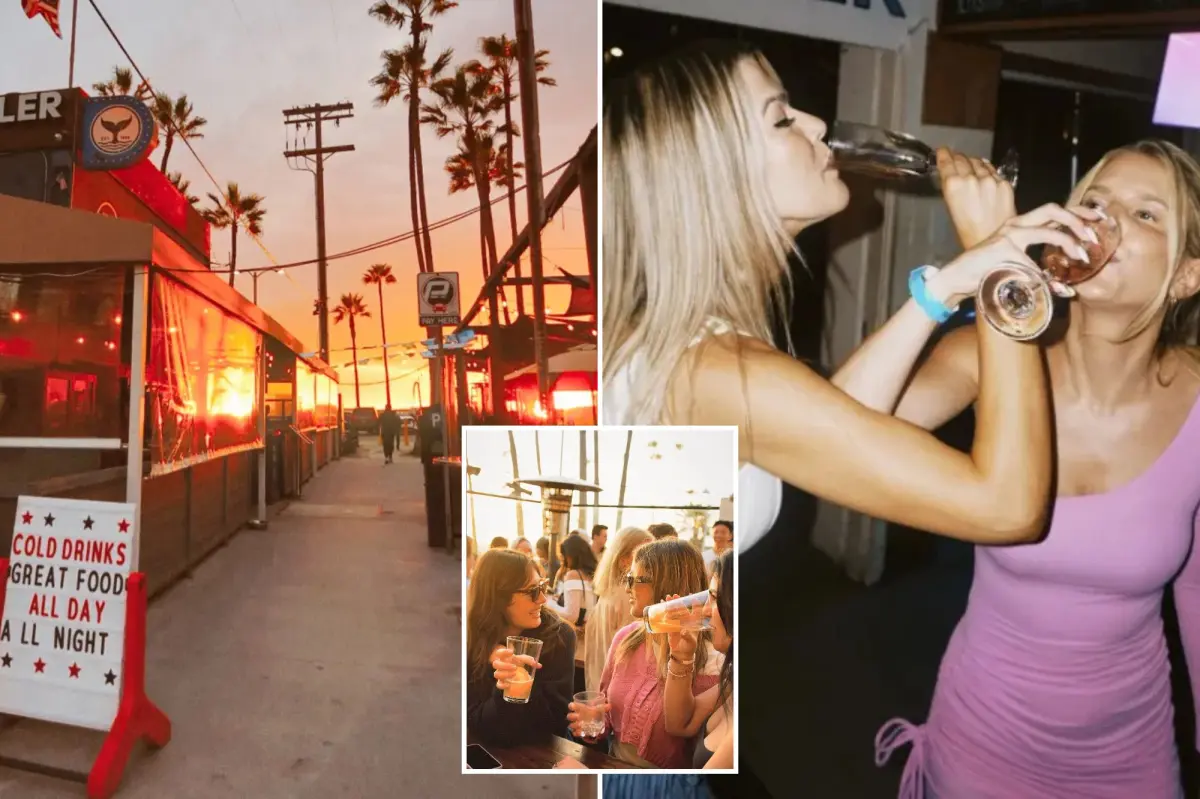
There is a particular kind of magic that settles over Venice Beach in late afternoon, when the Pacific light turns golden, the skateboards click along the boardwalk, and the smell of salt mixes with the aroma of grilled burgers drifting from the beachfront bars. For eighty years, the Venice Whaler has been part of that ritual. A boxy, unassuming institution sitting just a few steps from the famous Venice Fishing Pier, it has served cold drinks to generations of surfers, sunburned tourists, artists, street musicians, and locals who treated the place as an extension of their own living rooms. The Whaler is not a fancy cocktail lounge or a sleek new restaurant. It is the kind of place where the floor is a little worn, the conversation is loud, and the chairs have been sat in by ten thousand different versions of the same eager face. Its website proudly claims it has been making locals feel like they are always on vacation since 1944, eight decades of ocean air and clinking glasses. So when the Whaler announced on a Friday that it would no longer serve alcohol, even temporarily, the news hit the neighborhood like a cold wave. The post was short, almost upbeat, but the meaning was unmistakable: one of Southern California’s most storied watering holes had gone dry. Customers who had bellied up to its bar for decades, or had simply always expected to on their next trip to the beach, were left stunned and searching for answers. The announcement offered no explanation for the sudden absence of beer, wine, and cocktails, only reassurance that the burgers, pizza, and good vibes were still there. But for a place whose very identity is tied to cold drinks and sunset toasts, that reassurance sounded suspiciously like grief.
The Instagram post was friendly, even cheerful, as if the bar were simply swapping one kind of hospitality for another. “We’re temporarily not serving alcohol, but our famous burgers, pizza, and good vibes are still here!” it read, complete with an exclamation point that seemed to be doing a lot of emotional lifting. A second sentence was more direct and more vulnerable. “Behind every Whaler memory is a team that makes it happen. Come grab a bite, bring your friends, and help keep our staff working and our doors open.” That plea made the situation clear. This was not a rebrand, not a wellness experiment, not a favor to teetotalers. It was a survival measure, humanized by the faces of the people who pour the drinks, cook the patties, clear the tables, and show up every day to greet strangers with a smile. The word “temporarily” was important, too. It suggested that the bar hoped to return to normal, but in the hospitality industry, temporary often becomes permanent if the money runs out. The Whaler has weathered decades of changing beach culture, earthquakes, economic crashes, and a pandemic. Yet the greatest threat can be the quiet disappearance of the simple, everyday revenue that alcohol provides. Most bars make a large portion of their income from drinks, not food, and a seaside tavern that cannot sell a beer with its burger is suddenly a different kind of business. The staff, many of whom have served the same regulars for years, rely on tips and the steady flow of thirsty customers. Without alcohol, the tables may still fill at lunch, but the long, lingering evening hours that keep an old bar alive are much harder to sustain. The plea to “bring your friends” was not just an invitation; it was a call to arms. The Whaler wanted everyone to know that its kitchen was still firing, its team still employed, and its doors still open. Behind the upbeat social media voice was a very human worry, familiar to anyone who has ever watched a beloved neighborhood bar fight for its life.
Why has the Venice Whaler gone dry? So far, no official explanation has been offered. Public records show that the bar’s liquor license is listed as suspended by the California Department of Alcoholic Beverage Control, but the agency does not provide a reason in its online records. That leaves a vacuum filled by rumor, speculation, and worry. In California, liquor licenses can be suspended for many reasons: unpaid fines, lapsed renewal paperwork, alleged violations such as serving minors or over-serving customers, complaints from neighbors or police, or administrative problems buried in a thick binder of regulations. A suspension may be temporary while a business corrects an issue, or it can stretch into an expensive, drawn-out process. For the Whaler, the timing could hardly be worse. Summer is the high season at the beach, and the bar sits in one of the most visited spots in Los Angeles, right next to the pier where tourists and locals converge. Every empty cooler and silent tap is a reminder of lost revenue. The Whaler itself has not indicated whether the issue is administrative or disciplinary, whether it is contesting the suspension, or how long this dry spell is expected to last. The California Post reached out to the Whaler and the Department of Alcoholic Beverage Control for comment, but no further details were immediately available. For employees, the uncertainty is brutal. They arrive each day, put on their aprons, flip patties, pour lemonade, wipe down the counter, and greet customers with a smile, all while wondering if the checks they bring home will remain enough to cover rent and groceries. For regulars, the absence of alcohol is less a matter of inconvenience than a sign of fragility. A dry bar is like a theater with its lights half on. Something is missing, and everyone feels it. The lack of communication makes the situation even worse. One day the taps were flowing; the next they were not. Without answers, loyal customers are left to wonder whether their favorite booth, their familiar bartender, and the comforting rhythm of an old beach haunt are disappearing before their eyes. Official silence may be a matter of legal strategy, but in the human world of neighborhood hangouts, silence reads as sorrow.
Upset customers reacted quickly, and their comments on social media ranged from wounded humor to genuine grief. “Venice Whaler without alcohol is like a strip club without strippers,” one person wrote, capturing the existential absurdity of a beach bar without beer. Another predicted doom, saying, “No wonder everywhere is closing and struggling. And if they can’t bring in money for alcohol, this place will most likely be another one closing.” A third offered a shorter, punchier farewell: “Outta beer, outta here!” The tone was joking, but the sentiments were real. Beneath the wisecracks was a deep fondness for a place that has anchored the Venice beachfront for generations. The Whaler is not just a restaurant; it is a landmark, a memory vault, a meeting point. It is a place where people have had their first legal drink, their first date, their engagement dinner, their post-surf refuel, their last good conversation with an old friend before moving away. It is the kind of spot where nobody stays a stranger for long, where a solo traveler can sit at the counter, order something cold, and leave feeling as though they have been adopted by the neighborhood. To lose the alcohol is, for many, the first step toward losing the place altogether. Others channeled their frustration toward local politics, blaming elected leaders for a business climate that makes it harder and harder for established institutions to survive. “Such a shame. We need a new mayor and a city council that cares,” one commenter wrote. That was less about the specific reasons for the license suspension than about a broader feeling that Los Angeles has been slowly losing its historic gathering places. The Whaler, with its weathered walls and prime location, has outlasted countless trends and shifts. But the past few years have been especially cruel to the unpretentious, independent spots that give a city its character. Every closing announcement feels like a small erasure, and the sight of a silent draft line felt like a warning that another beloved institution could be on the way out.
The Whaler’s predicament is not happening in a vacuum. Across Southern California, bars and restaurants have been battered by rising rents, escalating food costs, labor shortages, and unpredictable crowds. The pandemic reshaped the industry in ways that are still being measured, and hospitality businesses have learned to expect the unexpected. Alcohol has traditionally been one of the largest profit centers in a bar or restaurant, a source of steady revenue that helps subsidize cheap burgers, live music, and the long, slow hours between lunch and dinner. Removing that revenue from a business like the Whaler, especially during the busy summer months, could be a serious blow. Yet the announcement specifically directed customers toward the kitchen, and that choice acknowledges the strength of the food side of the operation. The Whaler’s famous burgers and pizza are not afterthoughts; they are part of its identity. For decades, customers have wandered out of the restaurant with greasy bags of food, ketchup on their knuckles, and sand on their shoes. A meal at the Whaler is a beach-day ritual as firmly established as walking the boardwalk or dipping toes in the ocean. But a burger without a cold drink by the water feels incomplete, like a baseball game without the seventh-inning stretch. Tourists may still stop in for lunch, but the locals who return every week to watch a game, celebrate a milestone, or simply decompress after work may be less likely to stay for a long evening without a beer in front of them. And when regulars stay away, the rhythm of the bar changes; the seats are emptier, the tips are lighter, and the atmosphere shifts. Still, there is reason to hope. The Whaler has been through difficult chapters before. It opened during World War II and has lived through every era of Los Angeles, from postwar bungalow culture to the skate-punk heyday, from affordable beach shacks to gentrification. A suspended license is not necessarily a revoked one. Many bars face temporary suspensions and return once the issue is resolved. The question is whether the Whaler can endure this interruption without permanent damage. That depends, in large part, on the people who love it.
So what does the future hold for the Venice Whaler? For now, the doors are open, and that is no small thing. The kitchen is running, the staff is working, and the seaside landmark is still welcoming anyone in search of a familiar face and a hot meal. The absence of alcohol is a disappointment, but it does not have to be the ending of the story. There is something almost poetic about a historic bar asking its community to come for the good vibes instead of the booze. In a city that often measures hospitality by the contents of a glass, the Whaler is discovering whether the connections it has built over eight decades are strong enough to survive a sober stretch. It is a challenge that many small businesses will recognize: adapt, wait, and trust that the people who care will show up. The commenters who joked about strip clubs and empty taps were not being cruel. They were being protective. They love this place, and humor is one of the ways we hold onto the things we fear losing. The best way to honor that love is to stop in, order a double cheeseburger, sit by the window, and remember what the Whaler has always offered: not just a drink, but a sense of belonging. The taps may be off for the moment, but the Pacific is still outside the door, the pier still reaches toward the horizon, and the Whaler is still standing, weathered and proud. If enough people answer the call, the beer will flow again, the glasses will clink, and another chapter in the long story of this beloved Venice institution will be written. Until then, there are burgers to eat, strangers to meet, and good vibes to keep alive — even if the toast is made with a glass of water. The Whaler may be dry right now, but it is not empty. And that is worth celebrating.