

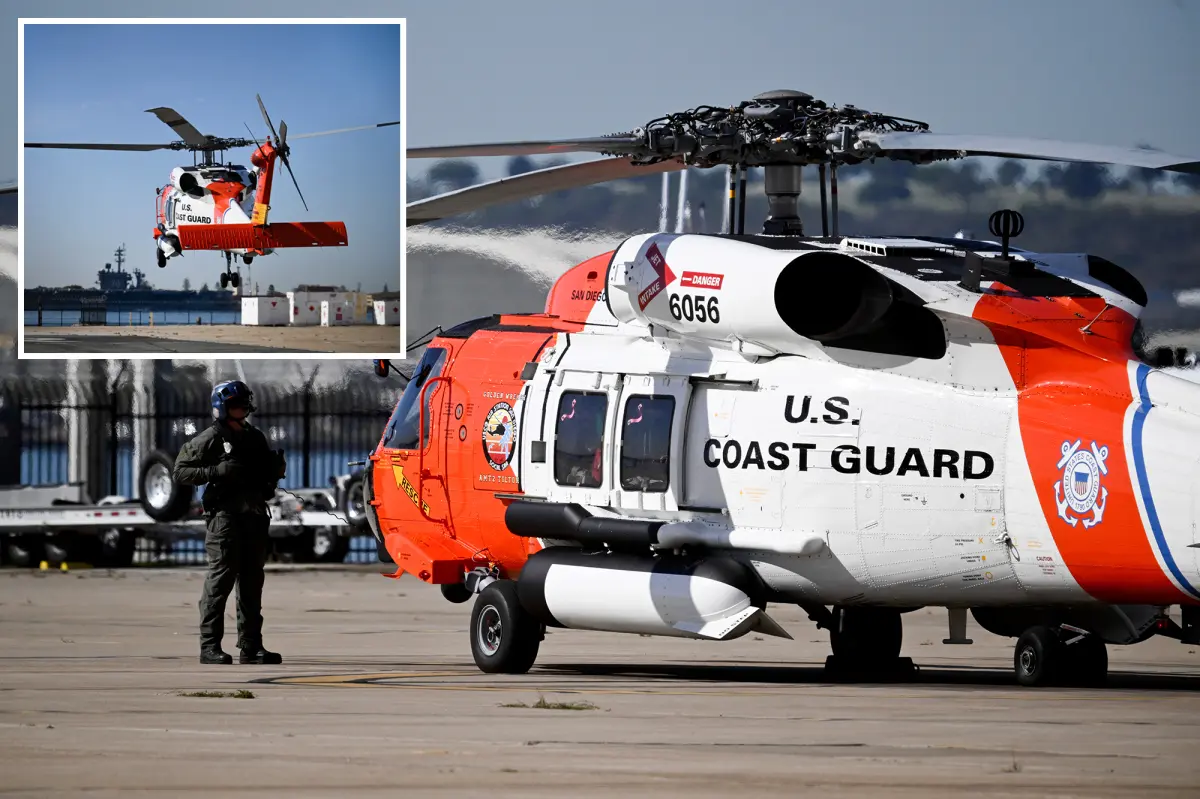
In the predawn darkness of a Friday morning, the Pacific Ocean off Baja California transformed from a quiet stretch of water into a scene of chaos and desperation. A boat carrying 27 people from Mexico capsized roughly 140 miles west of Ensenada, leaving its passengers stranded in cold, open water, far from shore and with little hope of immediate rescue. A mayday call crackled through the air just after 1 a.m., and within two hours, a US Coast Guard helicopter was on the scene. What the rescue crew found there was harrowing: dozens of people scattered in the waves, some badly injured, others clinging to debris or each other, all fighting to stay alive. By the time the rescue operation was underway, 16 people had been pulled from the sea, but 11 others were still unaccounted for. The survivors, all Mexican nationals, told officials that 27 people had been on board, making the missing number even more heartbreaking. The rescue swimmer and crew worked for about 90 minutes to bring the exhausted passengers to safety, a painstaking process in the dark and in rough conditions. But the ordeal was not over. Several of the survivors were suffering from severe injuries consistent with shark bites, and the Coast Guard administered life-saving first aid while speeding toward San Diego. Those injuries added a layer of terror to an already traumatic event—survivors had not only faced drowning and hypothermia, but had been attacked by predators in the very water that was supposed to carry them to a new life. The exact circumstances of the capsizing remain unclear, but the boat went down in an area known to be frequented by smugglers, a grim reminder of the perilous routes migrants take in search of safety and opportunity.
The rescue itself was a race against time, one that tested the limits of human endurance and the skill of the Coast Guard crews. The mayday call was transmitted around 1 a.m. Friday, and a rescue helicopter reached the site about two hours later. For the people in the water, those two hours must have felt like an eternity—time spent bobbing in the cold, struggling to stay afloat, and witnessing the chaos around them. When the helicopter arrived, the crew deployed a rescue swimmer into the water, a brave individual who entered the sea to help bring the stranded passengers to safety. The operation took about 90 minutes, a long stretch for any rescue mission, especially under such difficult circumstances. The crew had to prioritize the most critical cases, pulling the seriously injured from the water first and ensuring that the most vulnerable were hoisted to safety. Among the rescued were several people with deep wounds consistent with shark bites, injuries that required immediate medical attention. The Coast Guard provided emergency first aid while transporting the survivors to San Diego, doing everything possible to stabilize their condition before they reached hospital care. Petty Officer Charlie Valor, speaking about the mission, said simply, “We were able to help, and that’s why we launched our assets.” His words captured the ethos of the Coast Guard—a commitment to serving as a lifeline for those in distress, no matter the circumstances or the nationality of those in need. For the survivors, that help meant the difference between life and death. But for the 11 still missing, the rescue came too late, or perhaps not at all, leaving their families in a painful limbo of hope and grief.
As the sun rose and the search continued, the scale of the effort became clear. The US Coast Guard and Navy deployed helicopters, a fixed-wing plane, a cutter, and a Navy combat ship to comb the waters. The Mexican Navy also joined the search, a collaborative effort that underscored the seriousness of the situation. An additional helicopter was scheduled to be launched later in the day, adding more eyes to a vast and unforgiving ocean. The search area was enormous, and the conditions were far from ideal. The boat had capsized in international or Mexican waters, not far from the smuggling routes that have long been used to move people from Mexico to the United States. The Coast Guard noted that the area is popular with fishing and leisure boats, but it is also a known corridor for smugglers willing to risk the lives of their passengers for profit. The fact that the boat was carrying 27 people is itself a sign of the desperation driving these journeys— too many people crammed into a vessel never designed for such a load, ultimately leading to disaster. The search teams worked tirelessly, scanning the horizon for any sign of survivors, but with each passing hour, the chances of finding the missing alive grew slimmer. For the families of those 11 people, the wait was agonizing. They were left in a state of suspended anguish, not knowing whether their loved ones had been pulled from the water by the current, rescued by a passing boat, or lost to the deep. The physical danger of the sea, the cold, and the sharks made the prospect of survival increasingly remote, but the rescuers refused to give up hope.
This tragedy is not an isolated incident. The waters off Baja California and Southern California have seen a number of migrant boat disasters in recent years, each one a stark reminder of the dangers that migrants face when they take to the sea. In May 2025, at least three people died when a boat flipped off the coast about 35 miles north of the US-Mexico border. In 2023, eight people were killed in one of the deadliest maritime smuggling accidents off the US coast, when two boats approached a San Diego beach in heavy fog and one capsized in the surf. These incidents are not just statistics; they represent the shattered dreams of people who believed they had no other option. The migrants on these vessels often pay smugglers large sums of money for a chance to reach the United States, hoping to escape poverty, violence, or political instability at home. They board overcrowded, flimsy boats in the middle of the night, trusting the smugglers to guide them safely across the border. But the smugglers are not concerned with safety. They overload the vessels, choose dangerous routes, and abandon their passengers when things go wrong. The result is a recurring human catastrophe, played out in the remote waters of the Pacific, often far from the eyes of the public. The survivors of this latest capsizing are now part of a larger story of migration and risk, one that has become all too familiar to first responders in the region. For the Coast Guard, rescue operations like this one are not abstract exercises; they are real, urgent responses to real human suffering. And for every successful rescue, there are others who never make it to shore.
In the aftermath of the rescue, another layer of complexity emerged: the legal and investigative process. The US Coast Guard said that Customs and Border Protection was investigating the incident and interviewing the survivors. The Mexican consulate in San Diego confirmed that all those rescued were Mexican nationals and has been working to provide assistance to them. The survivors, many of whom were likely in the country illegally, now find themselves caught between their ordeal at sea and the uncertain legal consequences of their attempted journey. However, there is a provision that could offer them a measure of protection: humanitarian parole. If the survivors are considered witnesses to a crime—such as the smuggling operation that placed them on the boat—they may be eligible for humanitarian parole, a temporary status that would allow them to remain in the United States for a limited period. This legal mechanism is designed to protect individuals who might be essential to an investigation, but it also carries a subtle irony. The people who boarded that boat were seeking to enter the country without authorization, yet in the wake of the disaster, they may be permitted to stay, at least temporarily. That is little comfort to those who lost relatives at sea, but for the survivors, it could mean a measure of safety and time to recover from their injuries. The investigation will be crucial in determining what happened, who organized the voyage, and how a vessel carrying 27 people ended up capsized in the middle of the night. The survivors’ testimony could help hold the smugglers accountable, but it also places them in a vulnerable position, needing to cooperate with authorities while dealing with the trauma of what they experienced. Their stories, if they are able to tell them, will provide a window into the desperation that drove them to undertake such a dangerous journey.
Beyond the legal and logistical details, this tragedy is, at its core, a profoundly human story. It is about people who risked everything for a chance at a better life, and who found themselves fighting for their lives in the cold, shark-infested waters of the Pacific. It is about the courage of the rescuers who dove into the dark to save strangers, and the resilience of the survivors who endured unimaginable terror. It is also about the 11 people who remain missing—individuals with names, faces, families, and dreams, whose fates are still unknown. Their absence will linger over their loved ones, a painful, unresolved ache that no rescue mission or investigation can fully address. The boat that capsized off Baja California was not just a vessel; it was a symbol of hope for 27 people, a fragile vehicle carrying their hopes and fears across the sea. That hope was shattered in a single moment, leaving behind a trail of injuries, losses, and questions. As the search continues and the survivors begin to recover, the broader tragedy remains: this is a recurring and worsening crisis. Every year, countless migrants die attempting to reach the United States by land and sea, driven by circumstances that leave them few options. The smugglers who profit from their desperation are the real villains, but the underlying causes—poverty, violence, political instability, and the lure of a better future—are far more complex. The Coast Guard can save lives, but it cannot stop the flow of people willing to risk everything. That requires broader solutions, ones that address the root causes of migration and provide safe, legal pathways for those seeking safety and opportunity. Until then, incidents like this will continue, each one a quiet, devastating tragedy carried out on the margins of the world’s attention. The rescue off Baja California was a small act of humanity in the midst of that devastation—a reminder that even in the darkest moments, there are those who will reach out to save a stranger, and that every life lost to the sea deserves to be remembered.