


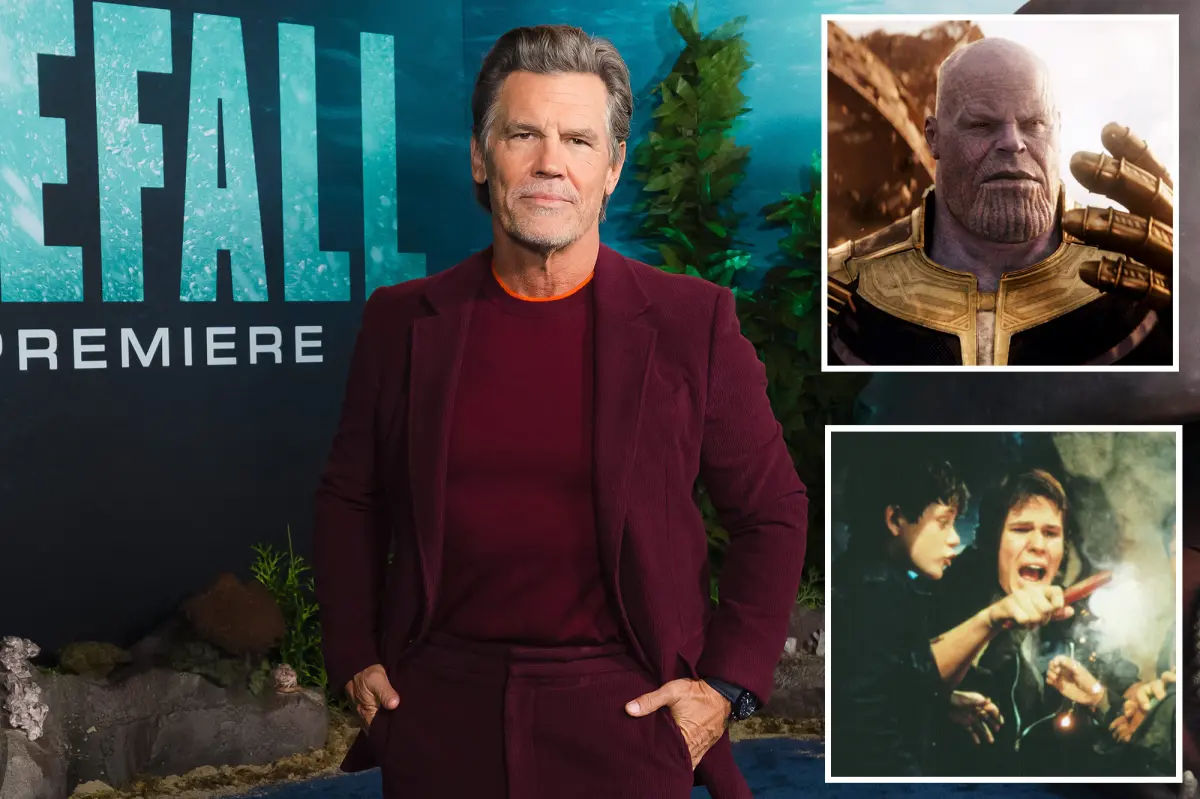
Josh Brolin’s path to Hollywood success is not the neat, shiny story we often imagine when we think of famous actors. It’s a story full of rejection, silence, odd jobs, and long periods where nothing seemed to click. In a candid conversation with Theo Von on the podcast This Past Weekend, Brolin opened up about the strange and humbling road that led him to the 2007 Oscar-winning film No Country for Old Men, the movie that finally made the industry take him seriously. The 58-year-old son of actor James Brolin admitted that for years, despite his famous last name, he couldn’t get anyone in Hollywood to give him a real chance. Before he was cast as Brand in the beloved ’80s adventure The Goonies, he said he went to roughly 350 auditions, and the consistent feedback was simply, “It’s not for you.” He carried those words with him through his twenties and thirties, wondering if acting was ever going to be his life or just a painful dream he couldn’t let go of. That early taste of success with The Goonies might have seemed like a springboard to an outsider, but for Brolin it was just a small moment in a very long stretch of struggle. He wasn’t being handed roles, and he wasn’t being remembered. He was just another actor trying to find his footing in a town that had no idea who he was yet.
What’s striking about Brolin’s story is how much work he put into his craft before anyone cared. After The Goonies, he didn’t chase quick fame. Instead, he moved to New York to study acting and immerse himself in theater. He took the work seriously, really seriously. He described it as 22 years of taking acting seriously, even though the industry was not interested in him for almost all of that time. “I had 22 years of taking it seriously because nobody was interested until really I did ‘No Country,’ and then ‘No Country’ kind of changed s—,” he said. Those two decades were not glamorous. At one point, he worked as a landscaper for a full year, doing manual labor while waiting for his acting life to catch up with his ambition. Then, at age 30, something unexpected happened: he became a full-time stock trader. For almost five years, this was his primary job. He worked from home, surrounded by three screens, with four tabs open on each one, studying the markets the way he once studied scripts. It wasn’t a casual hobby; it was a serious second career that made him real money. And to his own surprise, he was really good at it. He traded both swing trades, which are held for a few days or weeks, and day trades, which happen entirely within one session. It was an odd turn for someone who dreamed of acting, but it gave him financial stability and a strange sense of purpose during an otherwise discouraging period of his life.
The money Brolin made as a stock trader was far better than anything he had earned as an actor up to that point. He admitted that in those four or so years of trading, he made more money than in his two decades of acting combined. “I made more money in those four years, really … than I had made in 20 years acting. But I didn’t really make hardly anything acting,” he said. There’s something both funny and painful about that confession. All those years of auditions, rehearsal rooms, and theater productions had not translated into a reliable paycheck. Meanwhile, sitting in his home office staring at charts, he was finally able to support himself in a way that acting never had. But his love for acting never disappeared. In fact, he talked about how much he loved day trading with real enthusiasm, saying, “Day trading I loved, man.” It was a different kind of rush, one that came with numbers, risk, and split-second decisions. Still, becoming a successful trader wasn’t the same as becoming the actor he knew he was meant to be. It was a detour, not a destination. The trading world gave him freedom, but it didn’t give him the creative fulfillment that he kept chasing. So he kept one foot in the acting world, waiting for a door to open, even as the years stacked up and the rejections continued. It would have been easy to give up entirely and just live off his trading income, but Brolin couldn’t let go of the part of himself that needed to perform. He kept believing that someday, somehow, the right role would come along and change everything.
That day finally arrived with No Country for Old Men. The film, directed by Joel and Ethan Coen, became a massive critical success and won the Academy Award for Best Picture. For Brolin, it was the turning point he had been waiting for his entire adult life. But even this breakthrough didn’t come with the kind of financial reward you might expect from a role that would transform a career. Brolin revealed that he was paid $100,000 for the film, which sounds like a lot until you consider taxes, agent fees, commissions, and all the other deductions that shrink an actor’s paycheck. He put it bluntly: “So I cleared what, $30,000? That’s not considered a great year.” That moment is a powerful reminder that even at the peak of a career defining role, the money doesn’t always match the moment. But what No Country for Old Men gave him was something far more valuable than a massive paycheck. It gave him credibility. It gave him visibility. It showed Hollywood that he was not just some guy who had been floating around for years, but a serious actor who could hold his own in an intense, critically adored film. The industry finally started paying attention, and the roles began to come his way. The years of rejection, landscaping, and day trading suddenly felt less like a wasted life and more like a strange, necessary preparation for the moment when his name would finally mean something.
From that point forward, Brolin’s career began to snowball. While he was still filming No Country for Old Men, he put together an audition tape for Ridley Scott’s American Gangster, and he did it with his own son, who was 16 at the time, reading the lines opposite him. His son played Denzel Washington’s part in the tape, helping Brolin bring the scene to life in an intimate, low-pressure way. That tape turned out to be the last audition he ever did. “And that’s the last audition I ever did,” he said. It’s a beautiful detail, because it shows how the cycle of desperate auditioning, which had once sent him to 350 rooms where strangers told him no, ended not with a business suit or a casting director’s clipboard, but with his son in their home, helping him get a part. After that, his career took on a life of its own, with major roles in everything from Milk and True Grit to Avengers: Infinity War and Endgame. He had finally earned his place, and he didn’t have to audition anymore. Today, he continues to take on challenging, interesting projects. His latest film, Whalefall, is a thriller about a diver who gets swallowed by a whale. In it, Brolin plays the main character’s estranged father, a role that explores complicated family relationships and unresolved pain. It’s fitting for an actor who has spent so much of his life wrestling with questions about identity, persistence, and what it means to be seen.
Brolin’s story is not just a Hollywood success story; it’s a human story about resilience and the quiet courage it takes to keep going when nothing seems to work. For more than two decades, he carried the weight of rejection while also finding creative ways to survive. He tried landscaping, he became a stock trader, he made money in ways he never expected, and he never stopped believing that acting was what he was meant to do. The fact that he loved day trading and was good at it is an important part of his journey, because it proves that we can be good at many things, but that doesn’t mean we should abandon the thing that truly feeds our soul. He could have stayed in the trading world and been financially comfortable, but he would have missed the moment when No Country for Old Men changed everything. He would have missed the chance to show people that an actor who spent years being dismissed had depths they never imagined. His experience reminds us that timing is not always in our control. All we can control is whether we keep preparing, keep learning, and keep showing up even when the answer is no. For Josh Brolin, the answer was no for a very long time. But when the final yes came, it was worth every single detour, every awkward audition, every day spent staring at three screens and hoping for the best. His journey is proof that it’s never too late to become who you were always meant to be.