



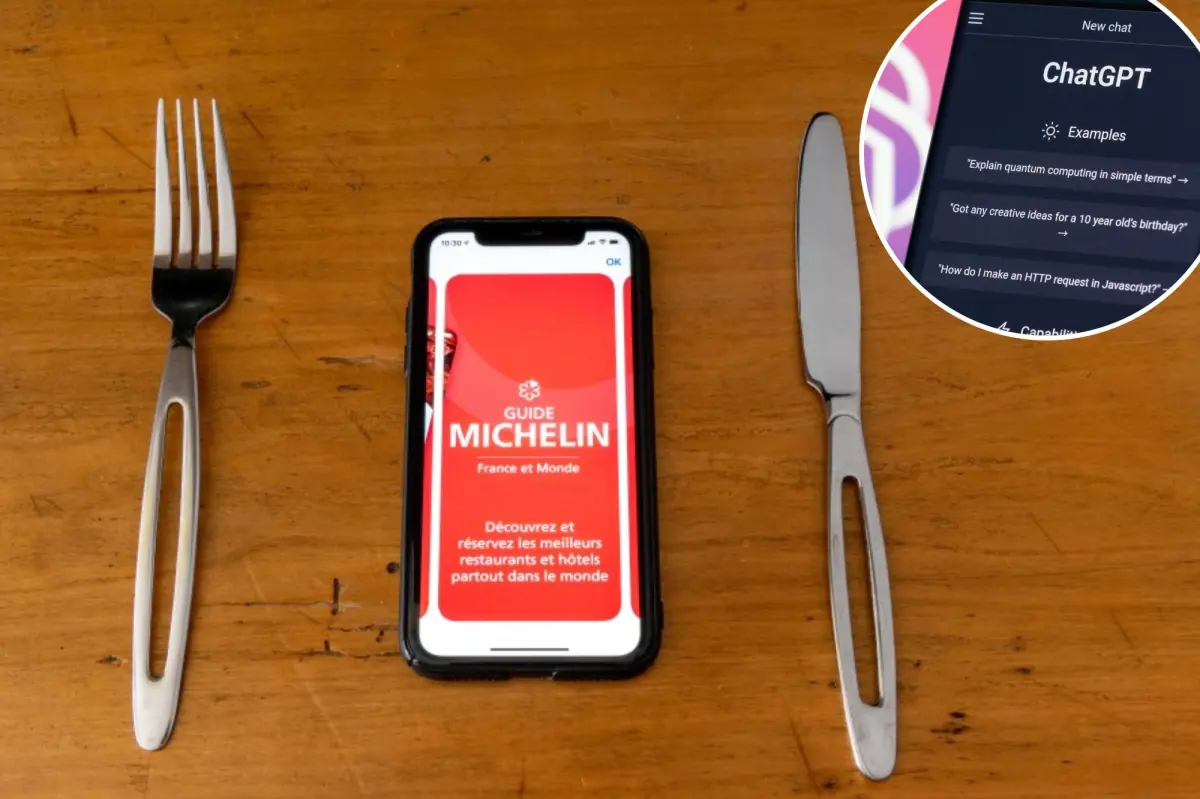
A swing and a Mich for artificial intelligence? The Michelin Guide—that tiny red book with the power to make or break a chef’s career—is suddenly at the center of a strange and bitter controversy. The revered restaurant rating system, long considered the world’s foremost arbiter of fine dining, has been accused of using AI to write its 2026 reviews of Dallas, Texas eateries. According to a jaw-dropping new report from D Magazine, the guide’s latest Dallas entries appear to have been generated by a large language model, leaving foodies with a foul taste in their mouths. Across the internet, outrage has been swift and unsparing. Some have declared that Michelin has “burned” its iconic trademark’s reputation “to the ground,” while others have called the star-spangled guide “a fart in the wind.” The accusation is not just about who typed the words; it is about what those words are supposed to mean. For over a century, Michelin inspectors have been anonymous culinary experts with an almost mythical authority. They walk into restaurants unannounced, sit quietly, order carefully, and judge everything from the quality of the bread to the precision of the chef’s technique. Their reviews have guided millions of diners, shaped gastronomic reputations, and built a mythology around the pursuit of excellence. To think that all of that might have been handed to a chatbot, even for one city, feels like a betrayal of a silent but sacred promise.
The investigation behind this accusation is detailed and troubling. D Magazine was initially tipped off by a concerned local cook, and the outlet then ran Michelin’s Dallas reviews through AI-detection software and consulted academic experts. The results were striking. Pangram, an AI detector, immediately flagged the reviews as “100%” AI-generated. Carnegie Mellon University professors Alex Reinhart and David Brown went a step further, identifying GPT-4o—an older, notoriously saccharine language model—as the likely writer. The evidence was in the prose itself: an overabundance of flowery descriptions, like the “serene” dining room at Mābo and the “carefully sourced” ingredients at Sushi Kozy, along with numerous grammatical anomalies that felt more like the output of a machine than the observations of a human being. The professors also compared the review text to past Michelin appraisals in Dallas and other major cities around the world. Their conclusion was that no other Michelin guide had been written with AI. Only the 2026 Dallas assessment showed signs of algorithmic authorship. That specificity makes the case even more strange, and perhaps more concerning. It suggests that the use of AI was not a company-wide policy but a singular lapse, possibly by an overworked inspector looking for a shortcut. Reinhart and Brown speculated that a real inspector had likely visited the restaurants, taken notes, and then fed those notes into a chatbot before inserting a few personal observations into the resulting copy. “There are chunks of it that seem more AI-ish than others,” Brown said. “Afterwards they might have changed, ‘Oh, this looks good, but I don’t like this sentence.’” The study also highlighted what it called Michelin’s “most perverse” sentence, from a review of Resident Taqueria: “Thoughtful combinations, bold flavors and generous portions reflect the kitchen’s creativity.” The line is grammatically correct, but it is also empty, generic, and disingenuous—the kind of compliment that could be applied to almost any restaurant in the world.
Michelin has denied the allegation, at least for now. In a statement to D Magazine, the company insisted that “all Inspector notes appearing on the MICHELIN Guide website and app are developed collaboratively by the Inspection team based on their firsthand dining experiences.” The statement added, plainly, “AI is not used in the writing of these reviews.” Representatives did not respond to The Post’s request for further comment, but the denial itself has not done much to calm the anger. To many observers, the response sounds like boilerplate—the same kind of mechanical, corporate language that any institution might produce when accused of something it wishes would quietly disappear. Brown, for his part, openly questioned why an organization with so much to lose would ever consider using AI for such a human craft. “Food writing is so human,” he said. “There’s something very human about it. Getting AI to generate it seems a curious choice. Why would you do that?” That question cuts to the heart of the matter. A restaurant review is not just a list of facts. It is a story. It is one person’s subjective, sensory, emotional response to a meal. It is the sound of a sizzling pan, the smell of a freshly opened bottle of wine, the memory of a grandmother’s recipe, the awkward silence on a first date. An AI has no body, no appetite, no past, no joy, no surprise. It can imitate the language of a critic, but it cannot taste anything. If Michelin’s Dallas guide was indeed written by a machine, then the reviews are not critiques; they are echoes. And the chefs who put their lives into those restaurants, who spent years perfecting a sauce or designing a dining space, deserve better than a sentence that was assembled by an algorithm.
This accusation arrives at a moment when artificial intelligence is already testing trust in nearly every corner of public life. Not long ago, President Trump’s strangely lifelike AI-generated tiger-taming clip went viral, eliciting a mixture of laughter and confusion. A separate wave of lawsuits has argued that ChatGPT grooms children for self-harm, raising serious questions about the safety and ethics of large language models. McDonald’s is currently embroiled in a federal court case over claims that it violated US antitrust laws by using an AI-powered system to conspire with franchisees on menu prices. And closer to the restaurant world, a California café called Grind and Unwind recently faced accusations of “false advertising” after posting so-called “AI-slop” menus in its windows. The backlash was immediate: online criticism, negative reviews, and even vandalism. In all of these cases, the underlying fear is the same. People want to know that the things they experience are real. They want to know that a menu was written by someone who cared, that a review was written by someone who ate, and that a rating was earned through talent and effort, not generated by a machine. Michelin, of all institutions, should understand that. Its reputation has always been built on the idea of an anonymous person making a judgment call—a human decision based on human senses. The “stars” that Michelin awards are not computed from data; they are expressions of taste, intuition, and expertise. When a brand like that starts cutting corners with AI, it sends a dangerous message: even the gold standard is willing to fake it.
Perhaps the strangest part of the Dallas scandal is that the AI-generated prose is so plainly soulless. If someone had chosen a sophisticated, subtle model and carefully edited the output, the deception might have gone unnoticed. Instead, the reviews apparently read like they were produced by GPT-4o, a model known for its overly polished, saccharine tone. That is why the professors and the AI detector were able to flag it so easily. Words like “serene” and “carefully sourced” are not inherently bad, but in context they feel hollow. They are adjectives without insight, beauty without truth. The D Magazine study found no evidence that AI had been used in any other Michelin guide, which is reassuring, but it also means that the anomaly is all the more puzzling. Why would an institution with decades of carefully archived human writing suddenly allow one city’s guide to be generated by a machine? Was it a rogue employee? A time-pressed editor? A poorly chosen pilot project? No one outside Michelin knows. But the damage is already done. The Dallas reviews are now under a microscope, and every sentence in them will be read with suspicion. Chefs who earned a mention in the guide might now wonder whether their inclusion was meaningful or arbitrary. Diners who used the guide to choose a restaurant might wonder if they were following a bot’s recommendation. The intangible quality of trust, so carefully built over a century, can be eroded in an afternoon. Brown’s question—“Why would you do that?”—still hangs over everything. There is no practical reason strong enough to justify squandering the world’s greatest restaurant brand. There is no cost savings or efficiency gain that can compensate for the loss of authenticity. Food writing is human, and there is no way around that.
If Michelin wants to recover from this controversy, it will need to do more than issue a terse denial. It will need to open its process, explain exactly how the Dallas guide was produced, and show the public that human beings still have the final word. It may need to audit every guide it publishes, not just Dallas, and prove that the same mistake has not infected other cities. And ultimately, it may need to apologize—not only to its readers, but to the restaurants and chefs who were reviewed. An apology written by a real person might be a good start. But more importantly, the company must recommit to the craft that made it famous. There is a reason people still buy printed guidebooks in an age of endless online reviews. They want a trusted voice. They want to know that the person giving them advice has eaten the food, felt the atmosphere, and understood the point of the meal. A machine can never offer that. It has no palate, no childhood food memories, no favorite waiter, no goosebumps when the dish arrives. As Brown said, “Getting AI to generate it seems a curious choice. Why would you do that?” There is no good answer. The Michelin Guide survived for generations because it was human. If it wants to keep its stars, it needs to remember that—or the little red book may become just another casualty of an age in which algorithms imitate everything, taste nothing, and leave us all hungry for something real. That would be a loss for every chef, every diner, and every person who believes that a great meal is worth writing about.