

The Dig Continues: Inside the Philadelphia Home Haunted by Seven Missing Women
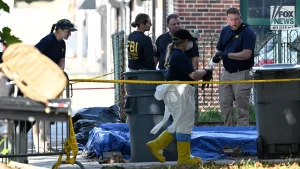
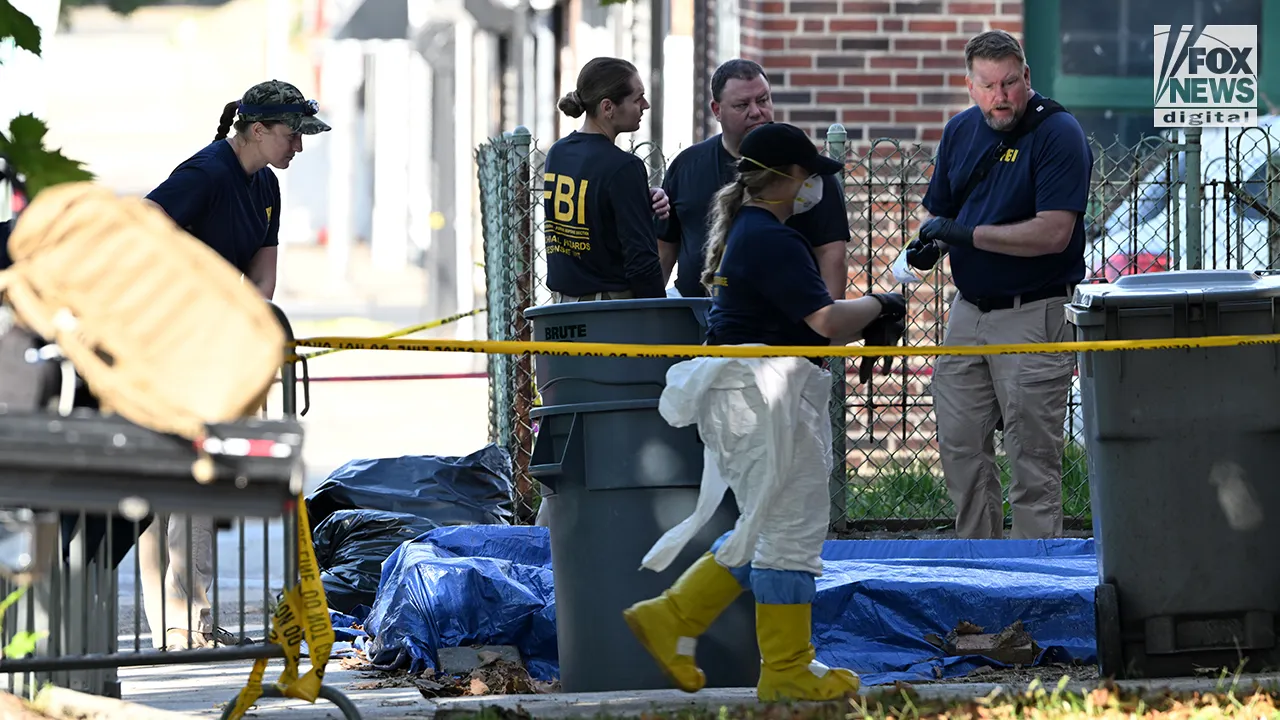
The quiet Philadelphia neighborhood has become a scene of methodical, almost surreal activity this week as police and FBI agents once again descended upon a modest two-story home, their shovels and excavator tearing into the earth of a backyard that may hold secrets too dark to imagine. Yellow police tape flutters in the breeze, cordoning off the property from the curious eyes of neighbors who have watched this grim procession unfold over recent weeks. Investigators in full protective gear—face masks, hazmat suits, rubber gloves, protective sleeves, and booties—move in and out of the house with the quiet efficiency of people who have done this before, each step measured, each movement deliberate. A chemical-spraying backpack worn by one crime scene investigator catches the light as she enters the property, while a photographer documents every corner, every disturbed patch of soil, every artifact that might tell the story of what happened within these walls. The excavator sits idle for moments, then roars to life again, biting into the ground as uniformed officers stand watch, their presence a solemn reminder that this is no ordinary construction project.
What began as a routine arrest in June has mushroomed into one of the most disturbing investigations in recent Philadelphia memory—a case that has already unearthed apparent “snuff” films, ash-filled urns, and evidence linking the property to at least seven women who vanished under mysterious circumstances. The sheer scale of the operation has caught the attention of even seasoned investigators. Joseph Giacalone, a retired NYPD cold case sergeant and adjunct professor at the John Jay College of Criminal Justice, noted that the number of crime scene technicians streaming through the house is highly unusual. “Usually you try to keep it to a minimum because you don’t want people trampling on things,” he explained. “There are so many different nooks and crannies that they have to cover that they need this many people. We’re not talking three or four, we’re talking 10, 12, or 14 people going in and out of this place at one time.” For Giacalone and others watching from the outside, the repeated returns to the property signal an investigation that is far from complete, one that continues to yield new questions even as it seeks answers to old ones. The Philadelphia Police Department, tight-lipped and cautious, would only confirm that investigators “continue to examine evidence and pursue all available leads,” declining to specify what new information prompted this latest excavation or whether anything of significance has been recovered from the mud and debris of the backyard.
The Evidence That Shocked Investigators
The discoveries made inside this unassuming residence have fundamentally altered the trajectory of the investigation and forced law enforcement to confront possibilities that seem ripped from the pages of a horror novel. Earlier this month, investigators carried out boxes of evidence from the home, including one conspicuously marked “glass vials”—an innocuous label that belied the sinister implications of what those vials might contain. But it was the visual evidence that proved most disturbing: images and videos that police say show four of the seven missing women, recordings that have been described in whispers as potential “snuff” films—footage depicting actual deaths rather than staged performances. Alongside these horrifying artifacts, investigators discovered a drum of chemicals hooked directly into the house’s water system, a mechanism that suggests a level of premeditation and cruelty that defies comprehension. Adding to the macabre tableau were ash-filled urns, silent testament to lives that ended and were perhaps disposed of in the most anonymous way possible. The combination of these elements—the films, the chemicals, the urns, the vials—paints a picture of a residence that was not merely a home but potentially a site of unspeakable acts, a place where the boundaries between pornography, violence, and murder may have blurred into something wholly unrecognizable.
The forensic significance of these findings cannot be overstated. Investigators have previously excavated underground pipes running beneath the property, searching for remains that might have been deposited there, yet no bodies have been recovered—at least not yet. The absence of physical remains does not diminish the gravity of the evidence collected, nor does it lessen the determination of the task force assembled to solve this case. Each piece of evidence, each vial, each photograph, each inch of excavated earth brings investigators closer to understanding the full scope of what occurred here. The meticulous nature of the ongoing search, the willingness to return again and again to the same property, reflects a commitment to thoroughness that victims’ families desperately need. As James Gagliano, a retired FBI supervisory agent and Fox News contributor, observed, “Investigations predicated on forensic evidence can sometimes result in repeated trips back to a crime scene. You find something that initiates a search into a different area.” He pointed to the lessons learned from an early release of a crime scene in Tucson that led to lingering questions—a mistake, he suggested, that investigators here are determined not to repeat.
The Horsch Family and the Web of Darkness
At the center of this investigation stands the Horsch family, a name that has now become synonymous with the darkest corners of human depravity. Raymond “RC” Horsch, the family patriarch, died last year at the age of 82, leaving behind a controversial legacy as a producer of BDSM-themed pornography and books. His former home, the very property now being excavated with such painstaking care, has become the focal point of the investigation. But it was his son, Eugene Horsch, whose arrest in June set this entire chain of events into motion. The 44-year-old was taken into custody in a car alongside a woman who was carrying an identification card belonging to Blair Tonzelli, one of the seven missing women now linked to the investigation. How the younger Horsch came to be in possession of that ID, and what his relationship was to the missing woman, remains a question investigators are working feverishly to answer. The arrest, which was unrelated to the disturbing discoveries later made at his father’s former home, has nevertheless placed Eugene Horsch squarely in the crosshairs of an investigation that continues to expand.
The family connection adds another layer of horror to an already nightmarish story. Amy McHale, one of the identified missing women, was Eugene Horsch’s ex-wife, a 54-year-old woman who was 44 when she was last seen on June 13, 2016. That a man’s former spouse could be among the missing linked to his father’s property raises troubling questions about the dynamics within this family and the potential for violence that may have spanned years. The BDSM connection complicates the picture further, introducing the possibility that the line between consensual kink and non-consensual violence may have been crossed, or that the world of alternative sexuality provided a cover for far more sinister activities. Investigators have indicated that they have identified dozens of other people from the images and videos recovered from the home, suggesting that the web extends far beyond the seven missing women currently linked to the case. Whether these other individuals are victims, witnesses, or something else entirely remains unknown, but their existence points to a network of people who crossed paths with the Horsch family in ways that are only beginning to be understood.
The Women Behind the Headlines
Behind the statistics and the forensic terminology are seven human beings, each with a story, each with a family that continues to wait and wonder. Only some of the women have been publicly identified, their names emerging from the fog of investigation to become symbols of a tragedy that has gripped the city. Maribel Fresses was just 26 years old when she vanished in 2018, a young woman with her whole life ahead of her, now reduced to a name on a missing persons list and a photograph in a police file. Gabrielle Amarando was 27, similarly young, similarly full of promise, when she disappeared. Blair Tonzelli, 38, was last seen in Philadelphia in February 2023, her ID found in the possession of a woman riding with Eugene Horsch at the time of his arrest—a detail that suggests she may have been one of his more recent encounters. Nicole “Nikki” Fusaro was 34 when she was last seen, but she was just 27 when she vanished near the intersection of Kensington and Allegheny Avenue in July 2019, swallowed up by a city that can be unforgiving to those who find themselves in its margins. And then there is Amy McHale, the ex-wife, whose disappearance in 2016 went unresolved for years until a search of her former father-in-law’s home suddenly thrust her case back into the spotlight.
These women were daughters, sisters, mothers, friends. They had hopes and dreams, struggles and triumphs. Some may have been involved in the adult entertainment world that the Horsch family inhabited; others may have crossed paths with them in ways that are only now coming to light. Their disappearances, spread across years and seemingly unrelated at the time, now appear to be threads in a single, dark tapestry. The fact that their cases were not connected until now is a painful reminder of how easily missing women—particularly those living on the margins—can fall through the cracks of an overburdened system. For their families, the discovery of this investigation has brought a complicated mix of emotions: anguish at the confirmation that their loved ones may have met with foul play, but also a glimmer of hope that answers may finally be within reach. Every excavation, every evidence box carried out of that house, brings them one step closer to knowing what happened, even if that knowledge comes with a price too heavy to bear.
The Forensic Marathon and the Search for a Network
The investigation at the Horsch property has evolved into something of a forensic marathon, with investigators returning to the scene repeatedly as new evidence emerges and new theories are developed. This is not a single search but an ongoing process of discovery, each visit building on the findings of the last. The excavation of underground pipes suggests that investigators are exploring the possibility that remains were disposed of through the home’s plumbing system, a method that would be both efficient and devastatingly effective at erasing evidence. The drum of chemicals connected to the water system could have been used for any number of purposes, none of them benign. The hazmat-level protective equipment worn by investigators indicates that what they are encountering inside the home and in the surrounding soil may pose biological or chemical hazards—potential evidence of decomposition or of substances used to accelerate the process. The glass vials removed earlier this month could contain any number of substances, from drugs to chemical agents, each requiring careful analysis and preservation.
The scope of the investigation has led some experts to speculate about a larger network operating behind the apparent “snuff” films. The presence of dozens of other individuals captured in the recovered images and videos raises the possibility that the Horsch property was not merely the lair of a single predator but potentially a node in a broader web of exploitation and violence. Whether these individuals were willing participants in consensual BDSM activities or unwitting victims of a far more sinister operation remains unclear, but the question itself underscores the complexity of this case. Gagliano’s observation about repeated trips back to a crime scene rings true here, as each search seems to yield new avenues of inquiry. The careful, methodical approach—the tarps, the tents, the protective suits, the photographers—reflects an understanding that this case will be won or lost on the integrity of the evidence collected. Every item must be cataloged, every photograph must be clear, every chain of custody must be unbroken if the investigation is to result in justice for the victims and their families.
The Waiting and the Weight of Justice
As the excavation continues and the investigation grinds forward, no arrests have been made in connection with the women’s disappearances. Eugene Horsch, despite being at the center of this storm, has not been charged in their cases, and his initial arrest was unrelated to the evidence later discovered at his father’s property. This reality is a source of frustration for those who have followed the case and profound agony for the families of the missing. The wheels of justice are turning, but they are turning slowly, as they must in a case of this magnitude. The Philadelphia Police Department’s refusal to provide details, while frustrating, is also understandable; the integrity of the investigation depends on keeping certain information confidential until the full picture can be assembled.
But eventually, this chapter will come to a close. The excavation will end, the evidence will be processed, and the investigation will either yield answers or remain tantalizingly incomplete. For the families of Maribel Fresses, Gabrielle Amarando, Blair Tonzelli, Amy McHale, Nicole Fusaro, and the three women who have not yet been publicly identified, the waiting continues. Each day brings them closer to a resolution that may offer closure, or may open new wounds that will never fully heal. This case, with its horror-movie elements and its deeply human tragedy, serves as a sobering reminder that evil often hides in plain sight, in quiet neighborhoods, behind unremarkable facades. The men and women who have spent weeks digging through dirt and debris are not just investigators; they are the last best hope for seven families who deserve answers. As the excavator continues its work and the investigators continue their grim task, the city of Philadelphia watches and waits, hoping that justice will ultimately be served and that the memory of these women will be honored not just by the investigation that uncovered the truth, but by a system that refuses to let them be forgotten.