

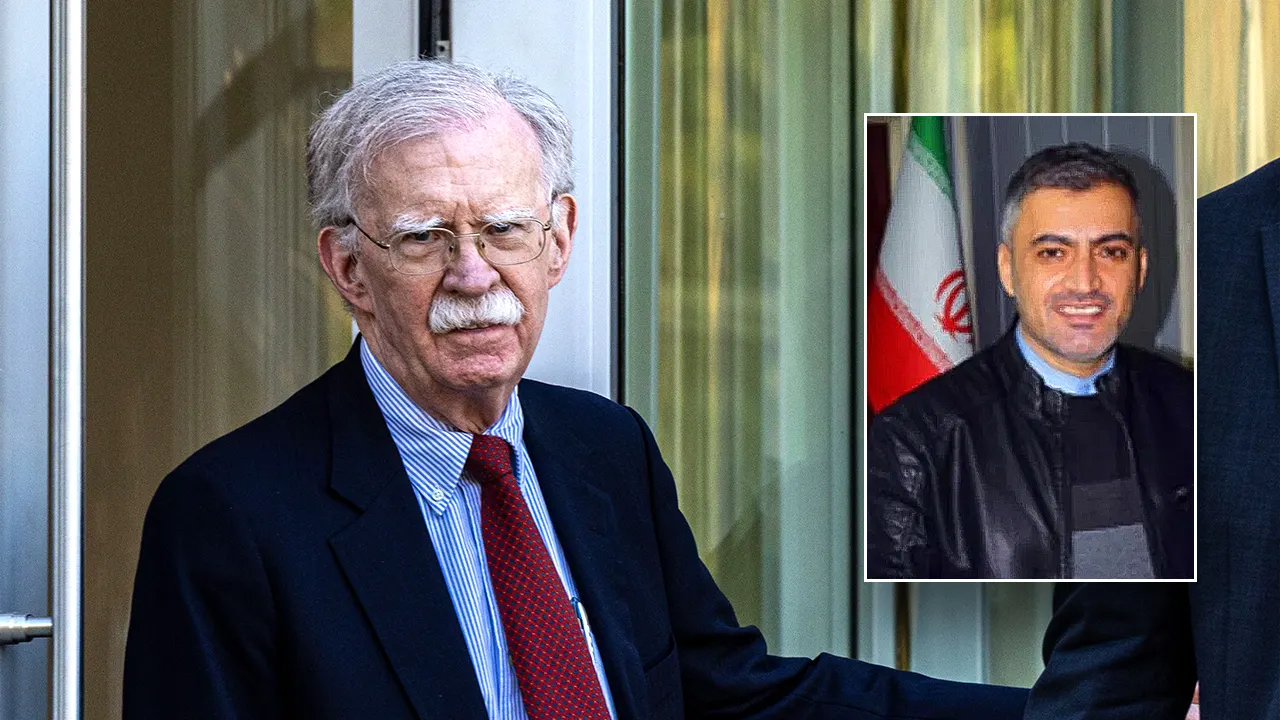
It begins like the outline of a Hollywood thriller: a shadowy operative, a foreign intelligence service known for covert violence, a retired American statesman in the crosshairs, and a plot paid for in cold, hard cash. But this is not fiction. The FBI announced Tuesday that it has placed Shahram Poursafi, a member of Iran’s Islamic Revolutionary Guard Corps, or IRGC, on its Most Wanted Terrorists list, accusing him of soliciting the murders of two former U.S. government officials. According to the FBI’s Washington Field Office, Poursafi allegedly hired individuals to carry out assassinations between October 2021 and April 2022. Court documents name one target explicitly: former National Security Advisor John Bolton. What makes the story all the more chilling is the motive. Investigators believe the assassination plot was an act of retaliation for the January 2020 U.S. drone strike that killed Maj. Gen. Qasem Soleimani, the commander of the IRGC’s Qods Force. For years, the IRGC had made no secret of its desire for vengeance, and this plot, as laid out in federal filings, appeared to be one of its most concrete attempts to strike on American soil. It is the kind of story that reminds us, in vivid and unsettling terms, that national security is not just about distant battlefields, but about protecting real people with families, homes, and histories—people like John Bolton, a man animated by his career at the highest levels of American power.
The details of the alleged plot, drawn from the 2022 Justice Department complaint, read like a cautionary tale about digital trust and the dangerous games state actors play. Poursafi is said to have first cultivated a relationship online with a U.S. resident, someone he had never met in person but with whom he built enough rapport to ask for a strange favor: take photographs of John Bolton. The cover story was benign, almost charming. Poursafi claimed he was writing a book and needed images for his research. It is a strangely human detail—the idea that an assassin would hide behind the identity of an author—and yet it underscores the deceptive, patient nature of intelligence work. Over time, the request shifted. What began as asking for photographs transformed into a proposition for something far darker: Poursafi allegedly offered another U.S. contact up to $300,000 to “eliminate” the former national security advisor. As if that were not enough, he reportedly hinted at an additional “job” with a one-million-dollar payout, dangling the kind of money that could tempt the desperate or corrupt the vulnerable. But fortunately for Bolton and for the nation, the entire scheme never stood a chance. The person at the center of the plot was not an eager operative or a mercenary criminal. He was a confidential human source working for the FBI—often called an informant—a civilian who had slipped into the world of intelligence gathering and helped turn a would-be assassination into a federal case. The plot collapsed under the weight of its own false foundations, leaving Poursafi charged with using interstate and foreign communications to orchestrate a murder-for-hire scheme and providing material support to an international assassination conspiracy.
To fully understand why this story matters, one must step back to the killing of Qasem Soleimani. In January 2020, Soleimani, a man many considered the second most powerful figure in Iran, was killed by a U.S. drone strike at Baghdad airport. He was not just a general; he was the architect of Iran’s proxy network across the Middle East, the commander of the Qods Force, a unit so secretive and lethal that the U.S. designated it a foreign terrorist organization. His death triggered huge mourning crowds in Iran and a wave of reprisal promises from Tehran. In the years that followed, U.S. officials became increasingly concerned that Iran would try to avenge Soleimani on American soil. Intelligence reports began to surface of plots targeting current and former U.S. officials, including Bolton. The FBI memo warned of a “substantially increased” effort by Iran to target Americans abroad. In that tense climate, the charges against Poursafi were more than a legal formality. They were a confirmation of a pattern. Poursafi allegedly worked directly on behalf of the Qods Force, specifically in the division responsible for developing lethal plotting operations. This is not the work of a rogue loner or a freelancing criminal; it is state-sponsored violence, organized by a powerful apparatus and aimed at intimidation. The plot itself may have been clumsy, even amateurish in its execution, but the intent was real, and it carried the weight of an entire regime’s promise of revenge.
The FBI’s announcement, however, did not stop with Poursafi. In an equally dramatic move, the Bureau released wanted posters for three other alleged IRGC operatives, all tied to the same Qods Force unit, underscoring the breadth of the threat. The names are Mohammad Reza Ansari, Abolfazl Alizadeh, and Mohammad Hossein Shamoradizadeh. According to federal officials, Ansari is a deputy who has supported IRGC operations in Syria and allegedly helped plan and attempt to assassinate those two former U.S. government officials with Poursafi’s support. Alizadeh and Shamoradizadeh are described as battalion commanders who have participated in violent plotting operations. These men, in the FBI’s telling, are not just administrators or distant figures in an institutional hierarchy. They are hands-on participants in a shadow war, individuals who have selected targets, coordinated logistics, and moved money and messages in attempts to kill those they oppose. What makes this humanly compelling is the realization that the targets are not abstract symbols of American power. They are former officials who, after leaving government, might reasonably assume they could live quieter lives. But as this case shows, the reach of a determined adversary is long, and the memories of old grievances do not fade easily. The release of wanted posters is a forceful reminder that justice can be patient as well. By putting these faces before the public, the FBI is inviting ordinary citizens to become participants in democracy, to keep their eyes open, and to share a thread of vigilance in the everyday spaces of life—online, at work, in airports, in neighborhoods.
The FBI’s response has been characterized by both resolve and a grounding sense of duty. Gregory Heeb, the special agent in charge of the Washington Field Office’s Counterterrorism Division, delivered a statement that carried the weight of the moment. “The FBI will not stand for the IRGC’s brazen attempts to silence, harm or murder activists, dissidents, journalists, public officials or anyone else it deems a threat,” he said. The words are significant not only for their defiance but also for their inclusiveness. Heeb did not limit the concern to high-ranking officials like Bolton. He spoke of activists, dissidents, and journalists—people who have long been targeted by repressive regimes, people whose strength comes from their voices, not their security details. The FBI is offering up to $20 million for information leading to the capture of Poursafi, a sum that signals both seriousness and desperation. Such a reward is designed to penetrate the secrecy that surrounds individuals like him, to encourage insiders with knowledge to come forward, and to make clear that the United States is willing to invest heavily in accountability. But beyond the money, there is the quieter work of law enforcement: the patient gathering of evidence, the protection of witnesses, the quiet conversations with informants, and the constant vigilance against threats that may be years in the making. In a world that often feels defined by chaos, the FBI’s methodical approach is a reminder that there are still institutions devoted to the rule of law, and that those who plot murder will be met not with panic but with process, persistence, and eventually, prosecution.
This case also lands at a delicate moment in international affairs, one in which the Biden administration has had to balance diplomacy with deterrence. John Bolton, not surprisingly, responded to the assassination plot with characteristic bluntness, calling it an “act of war” and urging the administration to “terminate” negotiations with Iran over its nuclear program. His words were provocative, but they reflected a deeper anxiety shared by many national security veterans: that engagement with Tehran must never be built on weak assumptions or a willingness to overlook hostile actions. Iran’s reported “substantially increased” efforts to target Americans abroad, mentioned in an intelligence memo, have added urgency to these debates. The tension between diplomacy and force is one of the oldest dilemmas in foreign policy, and every assassination plot, every intercepted message, every wanted poster shifts the calculations slightly. For the broader public, though, the human dimension is what lingers. We do not always know the names of the intelligence officers who disrupt these plots, nor the informants who risk their lives by stepping into darkness, nor the family members who wait nervously at home while a loved one is threatened. But we do know this: in a democracy, no one should be silenced by fear. The plot against John Bolton—and the alleged willingness of the IRGC to kill two unnamed former officials—is a reminder that ordinary citizens and public servants alike live in an open society with dangers as well as freedoms. As the FBI continues its pursuit of Poursafi and his alleged associates, the story is far from over. It is a story about revenge, but also about resilience; about state-sponsored terror, but also about the quiet courage of informants and agents; about the long arm of an authoritarian regime, but also about the longer arm of justice. In the end, the greatest answer to terror is not fear, but the calm and stubborn determination to carry on, and to ensure that those who threaten our people understand something essential: they may force us to look over our shoulders, but they will never force us to look away.