


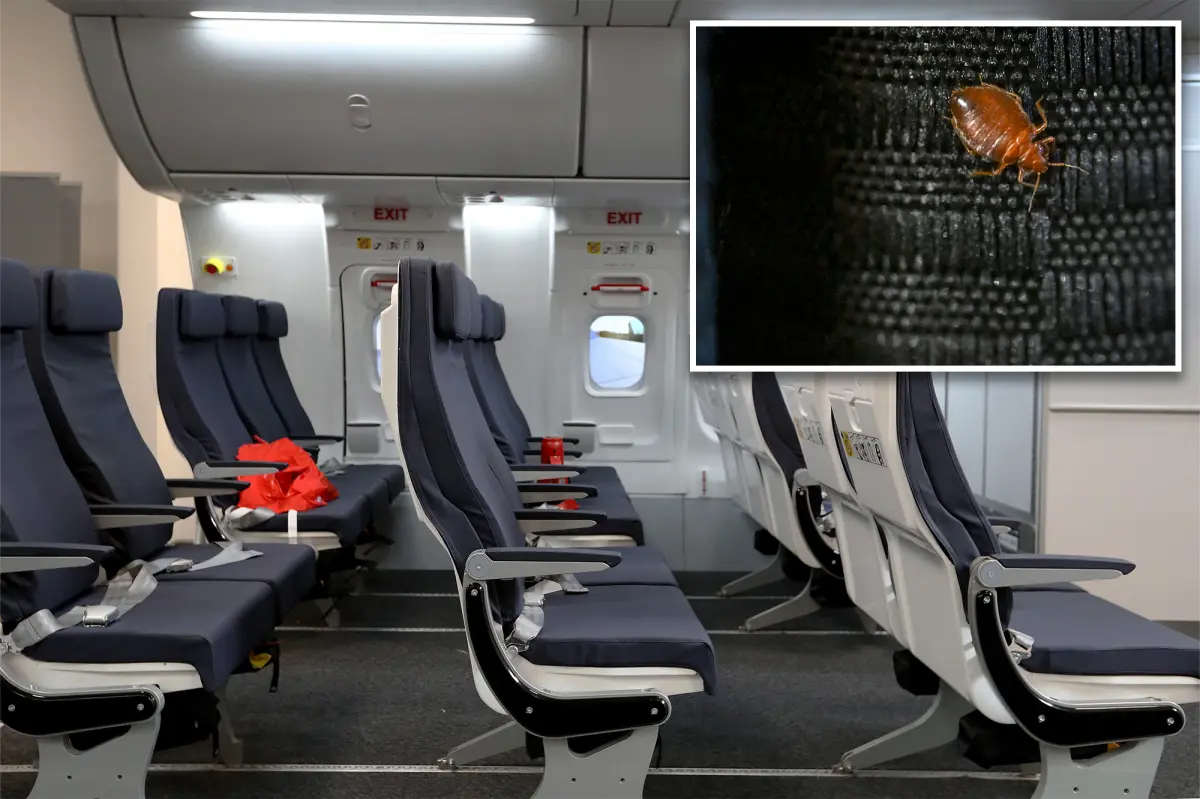
For the passengers aboard the Qantas flight that touched down in Rome from Perth on October 9th, what should have been the triumphant end of a nearly seventeen-hour journey quickly turned into a scene of creeping horror. As travelers gathered their belongings, stretched their legs, and prepared to embrace the Italian morning, they began to notice tiny, dark insects moving across their seats, their clothing, and even the airline blankets meant to keep them comfortable at 30,000 feet. Within minutes, the initial confusion gave way to revulsion and alarm. Bedbugs had apparently made themselves at home in the cabin of a Boeing 787 Dreamliner, and the passengers had unknowingly served as unwilling hosts. The discovery was not just a minor inconvenience; it was a deeply unsettling violation of the most personal space, prompting one traveler, Hailey Bagnall, to describe how the pests were “crawling over our belongings, our clothing, our Qantas blankets, and they were even crawling along the window.” The situation was so distressing that the airline made the dramatic decision to cancel the return flight from Rome to Perth, grounding the aircraft for an intensive deep cleaning and issuing a public apology to affected customers. For the people caught in the middle, the dream of a holiday had suddenly been replaced by the nightmare of a potential infestation traveling home with them.
The accounts that emerged from that flight paint a vivid picture of chaos and discomfort that no traveler ever expects to encounter. Another passenger told the Australian news program “9News Sydney” that they were “woken by screaming,” a sound that immediately pierced the quiet hum of the cabin and signaled that something was very wrong. Yet another described how “the bugs just kept coming,” as if the aircraft had become a living, moving reservoir of pests. As passengers collected their bags and tried to make sense of what had happened, they discovered the insects in even more intimate places: inside their shoes, nestled in the folds of their clothes, and clinging to the fabric of their carry-on luggage. The sense of helplessness was overwhelming. There is something uniquely distressing about discovering that tiny creatures have been feeding on you while you slept, especially in an environment as controlled and modern as an airplane. The passengers had no way to escape, no room to retreat, and nowhere to go until the plane landed. They were essentially trapped with the problem for hours, all while trying to manage the itching bites that began to appear on their skin. Perhaps most frustratingly, some travelers later revealed that they had alerted the flight crew about the bedbugs during the earlier domestic leg from Sydney to Perth, before the long international flight to Rome ever began. That raised uncomfortable questions about whether the situation could have been handled differently, and whether the spread of the insects could have been prevented before it spiraled into a full-blown infestation at 40,000 feet.
In response to the incident, Qantas moved quickly to contain the damage and reassure the public. The airline issued a statement sincerely apologizing for the cancellation of the Rome-to-Perth service, explaining that the grounding allowed engineers and maintenance teams to carry out a deep clean of the aircraft after an issue was identified on a small number of economy seats. Before the aircraft had even departed on the long-haul leg to Rome, the airline said that staff had taken several preventative measures, including deep cleaning the cabin, removing seat coverings and soft furnishings, and cordoning off the impacted seats. Yet somehow, the bedbugs had persisted, and the return flight had to be canceled anyway. To make matters worse, passengers who had been bitten were offered antihistamines to alleviate the itchy welts, but the crew reportedly ran out of medication before everyone could be treated. That detail, while small, captures the reality of a situation that was likely more chaotic than any corporate statement could fully convey. For the affected travelers, the aftermath was a blur of confusion, waiting, and worry. The canceled return flight left them stranded in Rome, far from home, with luggage that might contain unwelcome hitchhikers. Qantas arranged hotel accommodations and rebooked passengers on alternative flights within forty-eight hours, but the emotional damage had already been done. Even after landing safely back in Australia, many passengers would spend days checking their bags, laundering their clothes, and wondering whether they had brought bedbugs into their own homes.
This incident is not just a single airline’s bad day; it is a reminder of the remarkable resilience of bedbugs and their uncanny ability to travel the world as stowaways. Benjamin Hottel, an entomologist with the pest control company Orkin, explained that bedbugs are exceptionally skilled at hitchhiking on personal belongings. Measuring between one and five millimeters, these tiny insects feed on human blood, and they have evolved to survive in the nooks and crannies of luggage, clothing, and furniture. They do not discriminate between a five-star hotel and an economy-class airplane seat. They only need warmth, a hiding place, and a steady supply of sleeping humans to thrive. Health officials are quick to note that bedbugs are not known to spread disease, and they are not considered a public health hazard in the way that mosquitoes or ticks are. Their bites, while itchy and uncomfortable, generally cause only minor swelling and irritation. But the psychological impact is often far greater than the physical harm. The very idea of tiny creatures crawling over your skin while you sleep is enough to make anyone’s skin crawl. For the passengers on that Qantas flight, the experience was not just an inconvenience; it was an assault on their sense of safety and cleanliness. It is the kind of experience that lingers in the mind long after the bites have healed, turning every small itch into a moment of panic and every unfamiliar speck of lint into a potential threat.
Fortunately, there are practical steps that travelers can take to protect themselves and their homes from these persistent pests. Hottel recommends thoroughly inspecting luggage and clothing after a trip, especially if you have stayed in a hotel, used public transportation, or been in a crowded space where bedbugs might be present. He also advises placing travel clothes in a dryer on high heat for about thirty to forty-five minutes if exposure is suspected. The heat is effective at killing both the insects and their eggs, providing a simple and reliable way to neutralize the threat before it can spread inside the home. For those who are worried about bringing bedbugs home from a flight, it is also wise to keep luggage off the bed and away from soft furniture until it has been inspected and cleaned. Washing clothes in hot water, vacuuming suitcases, and sealing items in plastic bags for a few days can also help. While these precautions may seem excessive to someone who has never encountered bedbugs, they are a small price to pay for peace of mind. The reality is that bedbugs have made a global comeback in recent decades, and no destination is entirely immune. They are not a sign of poor hygiene or a reflection of a person’s cleanliness; they are simply opportunistic survivors that have learned to live alongside humans. The more we understand them, the better equipped we are to deal with them without panic.
In the end, the Qantas bedbug incident is a story about vulnerability and resilience. It reminds us that even the most carefully managed aspects of modern travel can be disrupted by something as small and stubborn as a bedbug. For the passengers involved, the trip to Rome was likely overshadowed by an experience they never imagined, and the journey home was probably filled with anxiety rather than nostalgia. The airline, for its part, has taken responsibility and promised to do better, but the incident also serves as a broader warning to the travel industry and to travelers themselves. Bedbugs are not going anywhere, and the best defense is vigilance, education, and a willingness to act quickly when a problem is discovered. For the rest of us, the story is a reminder to check our surroundings, to be kind to those who have been affected, and to remember that a tiny insect can cause a disproportionately large amount of stress. But it is also a reminder that these situations are manageable. With the right knowledge, the right precautions, and a little patience, we can protect ourselves from becoming unwilling hosts and ensure that our journeys remain the adventures we dreamed they would be, rather than the nightmares we fear they might become.